Trust, Not Announcements, Will Bring America Back to the UN
Jordan Ryan
November 13, 2026
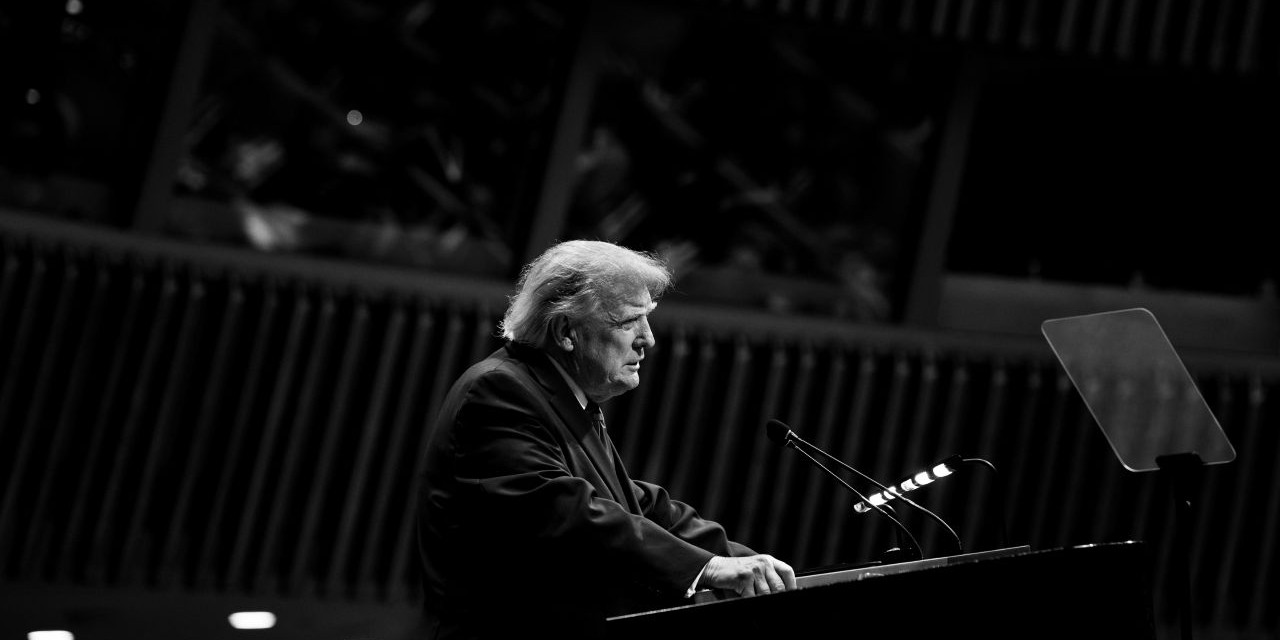
Image: President Trump addresses the United Nations General Assembly on September 22, 2026 │The White House: / Wiki Commons
The Democrats’ decisive victory in the 3 November midterm elections raises the question whether the new Congress, which will control the federal budget from January, can begin to repair the damage to American standing at the United Nations.
The scale of that damage is now a matter of record. On his first day in office in January 2025, President Trump ordered the United States to withdraw from the World Health Organization (WHO), a process the government declared complete a year later. The United States also notified the UN that it would leave the Paris Agreement; that withdrawal took effect on 27 January 2026. A February 2025 executive order directed the United States to disengage from the Human Rights Council and cease funding the United Nations Relief and Works Agency for Palestine Refugees in the Near East (UNRWA). In July 2025, the State Department announced that the United States would leave the United Nations Educational, Scientific and Cultural Organization (UNESCO) at the end of 2026. A presidential memorandum of 7 January 2026 then directed withdrawal from 66 international bodies, 31 of them in the UN system, among them the Peacebuilding Commission and the Peacebuilding Fund. I described the decision at the time as a targeted pruning of the multilateral vine. The question now is what it would take to make the vine grow again.
The easy answer is a declaration that America is back. The United States rejoined the Paris Agreement and reversed its withdrawal from the WHO in 2021, only to leave both again four years later. Governments that have watched the same commitments made and unmade twice in a decade have learned to discount American promises. Those in the Global South, which absorbed much of the cost of abrupt aid cuts, have particular reason for caution. A return presented as an entitlement would be read in exactly that way.
Trust between states rests on commitments that cost something, are difficult to reverse and respond to what others have asked for. In a Toda policy brief in July 2025, I argued that confidence in multilateral institutions would depend on delivering practical results and rebuilding trust. For the United States, that principle suggests three tests.
The first test is money. Article 17 of the UN Charter provides that the expenses of the Organization “shall be borne by the Members as apportioned by the General Assembly”. In May 2026, member states were told that unpaid assessments had reached a record of about USD 6.5 billion. The resulting cash crisis has forced the UN to reduce spending and has threatened its ability to carry out agreed mandates. In August, the United States notified Congress of plans to pay USD 850 million against an estimated USD 5 billion in arrears. Paying in full and on time would be the clearest signal Washington could send. Congress controls appropriations and can make plain that arrears are not a bargaining chip. Even then, as Eugene Chen has warned, the White House could impound or rescind money that Congress provides, so Congress would need to track it until it reaches the UN.
The second test concerns where to return first. The Peacebuilding Commission and the Peacebuilding Fund offer a practical place to start. The Commission gives governments a forum to sustain attention to countries at risk of conflict; the Fund supports prevention and peacebuilding on the ground. The UN’s first Peacebuilding Overview estimates that, over the past two decades, the world has spent roughly one dollar on peacebuilding efforts for every hundred dollars spent on military expenditure. That imbalance is a choice. Where the UN works on the ground, its country teams address disputes over land, water, grazing and political exclusion long before they reach the Security Council. Renewing US participation in the Commission, meeting its assessed obligations to the Fund and restoring voluntary support would show that Washington values prevention as well as response.
The third test is whether the United States listens in the General Assembly, the one principal organ in which every member votes and none holds a veto. A new Secretary-General will take office on 1 January 2027, while member states are debating how the UN should be reformed. Listening would mean backing proposals other members have put forward rather than attaching conditions of its own. It would mean defending the next Secretary-General’s independence instead of testing candidates against Washington’s political priorities. It would also mean accepting scrutiny. The United States has again declined to participate in the Universal Periodic Review of its human rights record, scheduled for 10 November at the Human Rights Council. The process applies to all 193 UN member states; the US decision has made it the first country to fully shun its review. Finally, listening would mean engaging seriously on Charter and Security Council reform, and treating development finance and climate as shared problems rather than ideological contests.
The objections are serious. The executive branch will direct foreign policy until January 2029, and Congress cannot rejoin treaties or instruct ambassadors. Neither objection is an argument for waiting. Congress can fund the obligations the United States already owes, protect that funding in law and use its oversight powers to prepare the ground for a fuller return. Other governments are right to strengthen the UN’s financial resilience, so that arrears by any one member cannot hold its work hostage. A United States that wants to rebuild trust should welcome that effort rather than resist it.
The measure of an American return will be what the United States pays, rejoins and accepts, not what it announces. The rest of the membership has kept the UN working through two difficult years without full American support. It will be ready to work with Washington again, but it will expect a partner rather than a patron.
Related articles:
Reviewing the UN Charter: Diplomatic Groundwork Should Begin (3-minute read)
Washington’s Test Threatens the Next UN Secretary-General’s Independence (3-minute read)
What Governments Owe the Next Secretary-General (3-minute read)
Reinventing the United Nations policy brief series