Policy Brief and Reports

February 17, 2026
The Arab Spring Rollback and Varieties of Arab ‘Autocratization’
Toda Peace Institute presents a report series, “An Eye on Arab De-democratization,” that seeks to capture the nature of democratic erosion in a MENA Arab cluster of nine countries plus one case study covering the…
View more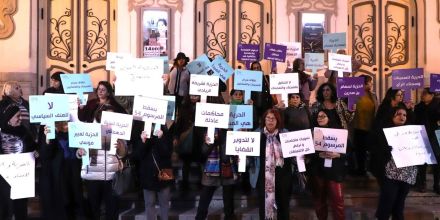
February 17, 2026
Arab Women’s Inclusiveness: Navigating Terrains of De-Democratization and Conflict
This paper surveys the landscape of women’s inclusion in Arab politics since 2011 and to analyze the status of gender relations in Arab authoritarian domestic politics. It identifies three interrelated trends that have variously unfolded…
View more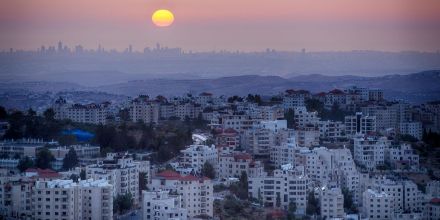
February 17, 2026
Policy Challenges to Democratization in the Occupied Palestinian Territory
This paper contends that the future of Palestinian governance requires more than technocratic fixes. Palestine is increasingly besieged, externally by the genocidal campaign in Gaza and the enduring Israeli colonial control over the Occupied Palestinian…
View more
February 17, 2026
An Eye on Moroccan Democratization: Towards an Adaptation?
This report evaluates the implications of Morocco’s political trajectory, arguing that it represents a form of adaptive governance rather than substantive democratization. It highlights Morocco’s specific model of managed pluralism, in which periodic multiparty elections…
View more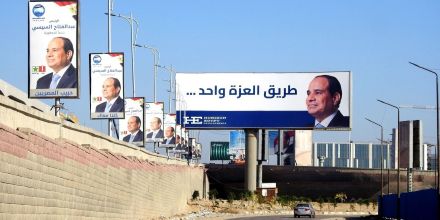
February 24, 2026
Egypt’s Divided Political Society and ‘Loyal Opposition’
This report analyses Egypt’s opposition, which has failed to rise up to the challenge of being a democratic force in the country’s politics. Horizontal solidarity and mounting challenges to incumbent governments are currently missing components…
View more
February 24, 2026
Iraq’s Precarious Political System: Consociationalism and Permanent Crisis
This report examines Iraq’s post-Saddam Hussein political order, a consociational arrangement known as muhasasah, or the apportionment of power resources among the country’s ethno-sectarian groups. Designed to accommodate societal diversity, muhasasah has become a fundamental…
View more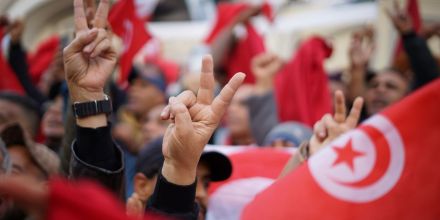
February 24, 2026
On the Erosion of Tunisia’s Once-Promising Democratisation Experiment
This report aims to examine the process of Tunisia’s autocratisation, which continues to reverse the gains from the 2011 Arab Spring. With receding civic freedoms and the rising tide of populist politics, there does not…
View more
March 3, 2026
Lebanon’s Democratization: The Impasse of Political Parties Reform
This report focuses on the impasse of legal and political reform in Lebanon, with special reference to political parties. It examines some of the chief challenges Lebanon’s political parties face in a fragile and sectarian…
View more
March 3, 2026
Democratic Backsliding in Mauritania: Challenges and Trends
This report examines recent political developments in Mauritania which show signs of democratic backsliding, with increasing restrictions on political freedoms and declining public trust in political institutions. In recent years, the country has witnessed attempts…
View more
March 3, 2026
A New Syria in a ‘New Middle East’: Challenges and Opportunities for Democratization
This report seeks to chart the political transition and the prospects for pluralist, if not democratic, rule in a situation that remains very much in flux since the fall of the Assad regime in Syria…
View more
March 3, 2026
Yemen: An Aborted Democratic Dream
This report analyses the challenges in Yemen which has for fourteen years suffered from the problem of aborted democratization. This is aggravated by acute and continuous state failure. After a discussion of state fragility since…
View more