After Shenzhen, the Wider UN Membership Must Shape Reform
Jordan Ryan
November 24, 2026
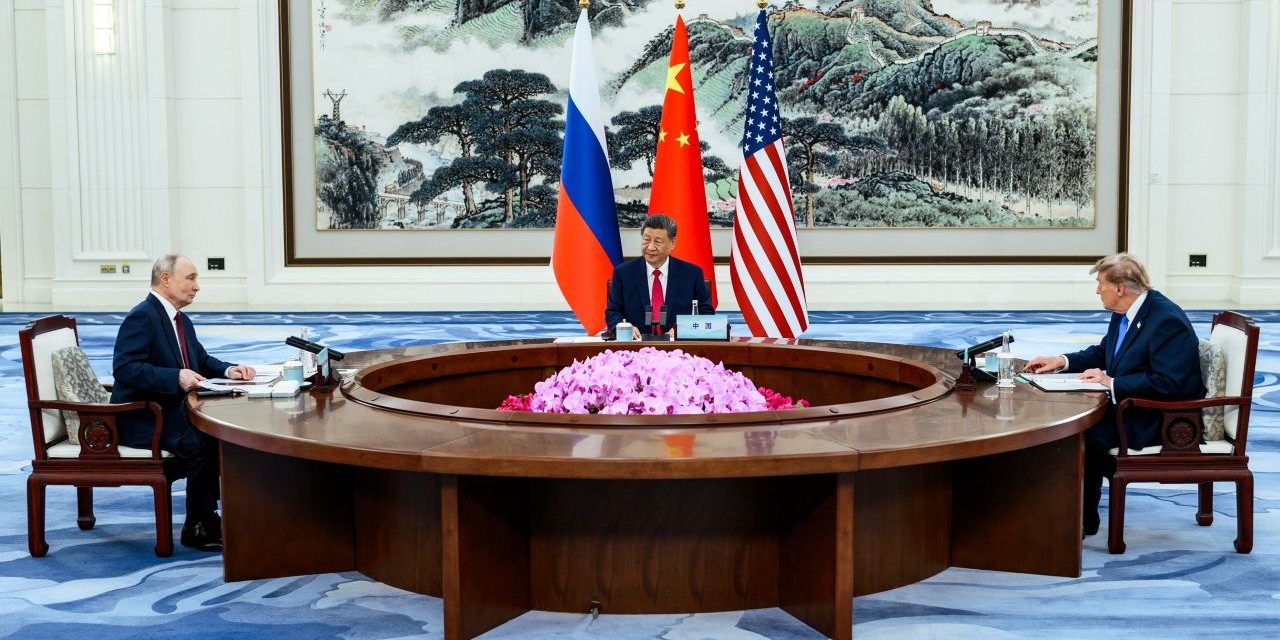
Image: The White House / Wiki Commons
On 19 November the presidents of China, Russia and the United States met in Shenzhen at the Asia-Pacific Economic Cooperation (APEC) summit and issued a four-point Declaration toward Peace. Commentators compared the meeting with Yalta in 1945, where three powers shaped the post-war order. Asked about the comparison, Russian President Vladimir Putin said that just as Yalta cemented the “realities” of its time, “they will have to accept the realities in today’s conflicts.” Two parts of the declaration matter most for the other 190 member states: a general commitment by three powers to reform the United Nations, and language on immunity that could weaken international criminal accountability.
On the positive side, the three leaders reaffirmed that a nuclear war cannot be won and must never be fought, a pledge the five permanent members last made in January 2022, seven weeks before Russia invaded Ukraine. Joseph Rodgers of the Center for Strategic and International Studies notes that the declaration marks “the first time that a Chinese president has personally committed to Beijing’s participation in nuclear risk reduction.” Yet the text sets no timetable. Concrete steps, such as a three-way crisis hotline and a shared commitment to keep nuclear launch decisions under human control, would confirm the commitment.
In their first point, the three countries, as permanent members of the Security Council, commit to reform the UN so that it responds more effectively to global challenges. They add that it should conform to its fundamental mission of international peace and security. France and the United Kingdom, the other two permanent members, do not belong to APEC and had no part in this pledge. Article 1 of the Charter adds other purposes, including economic and social cooperation and respect for human rights. The three-power declaration sets out no proposals, but a reform built on that narrower reading would risk shrinking the UN. Asked about follow-up, China’s foreign minister, Wang Yi, promised only to “fully implement the consensus reached at the summit.”
Middle and smaller powers have the most at stake in how that commitment is carried out. Zhang Baohui of Lingnan University told the Financial Times that such states prefer a multilateral system because it rests, in theory, on rules and on sovereign equality. A great-power concert, he said, “makes middle powers and small powers irrelevant.” Yet Article 2(1) of the Charter founds the UN on that equality. India’s foreign ministry said it would await “a fuller accounting of the concrete outcomes.” Japan’s prime minister, Sanae Takaichi, attended the APEC summit but held no formal bilateral meeting with President Xi. Cooperation among the three powers can serve everyone, but only within the rules of the Charter, not above them.
The Charter gives the wider membership real weight in that choice. Under Article 108, an amendment must be adopted by a two-thirds vote of the General Assembly and ratified by two thirds of UN member states, including all five permanent members. The three governments cannot meet either threshold alone. The General Assembly should invite the three governments to put their proposals in writing, and other states should table their own. The next Secretary-General is due to take office on 1 January 2027. The Security Council has yet to recommend a candidate. Whoever is chosen should open an early reform agenda to the whole membership.
The second issue raises a related question: whether powerful states can set the terms for the International Criminal Court (ICC) and other institutions that constrain them. The declaration calls state consent and “respect for immunities of State officials” matters of paramount importance, and says that the ICC and “other similar bodies” must not abuse their jurisdiction. None of the three countries is a party to the Rome Statute, the ICC’s founding treaty. Ukraine had accepted the court’s jurisdiction over alleged crimes on its territory and became a party to the Statute in 2025. In March 2023 the court issued an arrest warrant for President Putin over the alleged unlawful deportation and transfer of Ukrainian children to Russia. The United States has sanctioned officials of the court. Washington has now joined Russia and China in endorsing language that could weaken international accountability. Left undefined, “other similar bodies” could reach other tribunals, including some the UN itself created. The UN deputy spokesperson, Farhan Haq, responded that the Secretary-General believes the court is “one of the crucial bodies for international justice in the world.” The rule of law, he added, “must be reinforced and not weakened.”
The immunity language should concern every state that values international justice. More than 120 states have joined the Rome Statute, whose Article 27 provides that official capacity does not exempt a person from criminal responsibility under the Statute. The three-power declaration does not mention Ukraine. In October, Ukraine’s foreign minister, Andrii Sybiha, warned that a meeting of the three leaders would “encourage Putin to continue this war.” Nor does the declaration mention the Charter’s ban on the use of force against other states, which the General Assembly invoked in March 2022 when 141 states voted to demand Russia’s withdrawal. The day after Shenzhen, the Associated Press reported that two Russian missiles and a suspected drone came down in Poland during an attack on Ukraine, and NATO called it a “grave violation” of Polish airspace. Together, the reform and immunity points suggest a UN that manages relations among the strongest states and asks fewer questions about how any state uses its power. States that have joined the Rome Statute should restate that they stand by Article 27.
Agreement among the three largest nuclear powers to talk is better than silence among them. Agreement among great powers was also crucial to the founding of the United Nations in 1945. The Charter that emerged gave those powers privileges, yet it also bound them to the same rules as every other state. The test of Shenzhen is whether the reform it promises keeps both halves of that bargain, and the wider membership is best placed to insist that it does.
Related articles:
Takeaways from the 2026 APEC Shenzhen Summit (3-minute read)
Jackson’s Warning and America’s Way Back to the UN (3-minute read)
Shenzhen Is Not Yalta: What a Historic China–US–Russia Summit Can—and Cannot—Achieve (3-minute read)