Non-Nuclear Weapons for First Strike Missions: Assessment of Current Conventional Weapons for Strategic Counterforce and Mutual Reassurance
Dan Plesch and Manuel Galileo
May 29, 2026
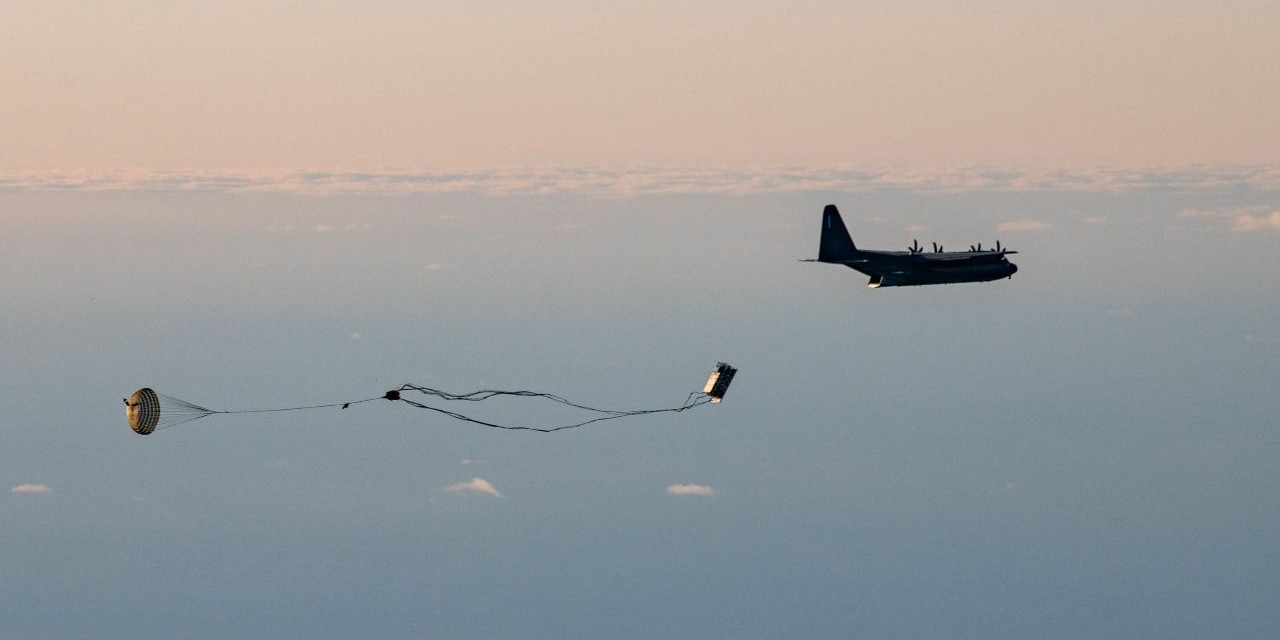
Image: Tech. Sgt. Brigette Waltermire / U.S. Air National Guard
This report examines how currently deployed conventional strike systems affect US–China–Russia strategic stability. Current debates on strategic competition focus overwhelmingly on AI, cyber, hypersonic, and space systems, while neglecting the increasingly blurred conventional–nuclear nexus. Today’s long-range conventional weapons possess the range, precision, and lethality to threaten the nuclear forces of major powers. Major powers increasingly possess entangled nuclear and non-nuclear capabilities with strategic effects, thereby undermining the foundations of strategic stability. Accordingly, to uphold some kind of strategic stability, practical and feasible steps must be taken to reduce miscalculation and inadvertent escalation. The strategic conventional counterforce problem is absent from Western debates but important in China and Russia. This problem is vital in any attempt to restore strategic arms control and disarmament processes. Nuclear only diplomacy cannot work when the systems are entangled; this report aims to open this debate.
Contents
- Abstract
- 1. The quiet revolution in long-range conventional strikes: ‘The Sword’
- 2. Detection and tracking: ‘The Eyes’
- 3. Missile defence on land, sea, and in the air: ‘The Shield’
- 4. Escalation risks in a conventional strategic conflict
- 5. Policy recommendations to reduce escalation risks
“On the conventional side, when you apply precision to the equation, what we have learned [is] the size of the weapon reduces to get the [same] effect…Gee, I always held this at risk with a nuclear weapon for some reason. But I’ve got 10 years of history [and] two to three wars that show that I can do this very comfortably with a conventional weapon. Why am I still holding it at risk with a nuclear weapon?’”
Marine Corps Gen. James Cartwright, head of the U.S. Strategic Command,- Speech in Washington, December 15th, 2005, in Grossman (2006)
“[The United States has] accelerated development of global rapid-strike capabilities…once actually deployed, [this and other advanced weapons] will fundamentally change the traditional pattern of offensive and defensive warfare.”
“[The] emergence of high-precision, long-range, non-nuclear arms capable of hitting distant targets in short time horizons, in effect, allows the possibility of a disarming first strike.”
President Vladimir Putin, 2015
Abstract
This brief examines how currently deployed conventional strike systems affect US–China–Russia strategic stability. Current debates on strategic competition focus overwhelmingly on AI, cyber, hypersonic, and space systems, while neglecting the increasingly blurred conventional–nuclear nexus. Today’s US deployed long-range conventional weapons, such as the US Rapid Dragon [1] system and Russia’s dual capable Kinzhal, are blurring the boundary between nuclear deterrence via Mutual Assured Destruction and ‘blended’ conventional/nuclear strategic war planning in ways without historical precedent. Such weapons now possess the range, precision, and lethality to threaten the nuclear forces of major powers, although analysts usually talk of them in regional contexts only. Conventional Prompt Strike’s [2] development shatters the foundations of strategic stability. Conventional counterforce—the elimination of the adversary’s strategic nuclear capabilities with non-nuclear weapons—challenges the long-standing assumption of mutual vulnerability that underpins deterrence. If no-one can reliably distinguish strategic nuclear and non-nuclear weapons deployments and the threats they pose then retaliatory nuclear capability becomes unreliable, collapsing deterrence, especially in crisis. In extreme circumstances, a state could decide to employ nuclear weapons not because nuclear weapons have been used against it, but because it fears losing them to conventional attack. Accordingly, to uphold some kind of strategic stability, practical and feasible steps must be taken to reduce miscalculation and inadvertent escalation. Worst case analysis is a driver of policy and procurement in states, and realities are always nuanced. Our point is that the strategic conventional counterforce problem is absent from Western debates but important in China and Russia. This problem is vital in any attempt to restore strategic arms control and disarmament processes. Nuclear only diplomacy cannot work when the systems are entangled.
Our purpose is at least to open this debate.
1. The quiet revolution in long-range conventional strikes: ‘The Sword’
The technical assessment that follows draws on worst-case assumptions, and it should be read with the caveats this implies. The interaction between conventional counterforce capabilities and nuclear survivability has been studied for decades, and the empirical record is highly nuanced. States have developed substantial countermeasures against precisely this class of threat. China’s ‘Underground Great Wall’, begun in the 1980s, was designed to ensure the survivability of nuclear forces against both conventional and nuclear strikes. The recent Russian and Chinese ICBM silo fields appear configured primarily to absorb a US nuclear attack rather than isolated conventional strikes. Even smaller nuclear-armed or nuclear-aspirant states such as Iran and North Korea have invested heavily in deeply buried and hardened facilities to protect fixed assets, complemented by electronic-warfare capabilities intended to complicate strikes against mobile systems. The recent Israeli–US campaign against Iran’s missile forces, the most ambitious conventional counterforce operation to date, produced results that were significant but mixed, and it serves as a contemporary reminder that the operational reality of disarming strikes diverges sharply from theoretical assessments. The argument advanced in this report is therefore not that conventional capabilities can reliably disarm an adversary’s nuclear forces, but rather that their accuracy, range, and integration with ISR have advanced far enough to generate powerful incentives for worst-case planning in Beijing and Moscow. It is this perceptual shift, more than any single technical capability, that is reshaping strategic stability.
In late 2022, the United States military successfully demonstrated [3] a system that allows long-range cruise missiles, including JASSM-XR, to be launched from ordinary transport aircraft. Known as Rapid Dragon, the system uses palletised launch modules that can be rolled into cargo planes and deployed mid-flight by parachute as if it were dropping cargo. Aircraft normally used for logistics or humanitarian missions can, with minimal preparation, release precision-guided missiles capable of striking targets more than a thousand kilometres away, including adversary ‘deterrent’ missile silos. These non-nuclear strategic ‘swords’ are being integrated with ever more effective than expected missile ‘shields’. Russian developments reinforce this shift, albeit through a different operational pathway. Rather than relying on transport aircraft, Moscow has expanded its arsenal of long-range, precision conventional strike systems deployable from diverse and often mobile platforms. Air-launched weapons such as the Kh-47M2 Kinzhal—carried by a modified MiG-31K—compress engagement timelines and are designed to penetrate hardened or high-value targets. Similarly, sea-and land-based cruise missiles like the 3M-14 Kalibr and the quasi-ballistic 9K720 Iskander extend precision strike reach from submarines, surface vessels, and mobile ground launchers. The cumulative effect is to diversify vectors of attack against fixed infrastructure supporting nuclear forces—airfields, command-and-control nodes, and bomber bases most prominently—while also raising questions about the survivability of more hardened systems, including silos, under sustained or penetrator-based strike packages.
These emerging ‘swords’ are being integrated by the US, Russia, and China with increasingly capable, though still imperfect, missile ‘shields’. Russia’s layered air and missile defence systems, including the S-400 Triumf and the newer S-500 Prometey, aim to protect critical assets from precisely such threats. However, operational experience in Ukraine [4] and recent conflicts in the Middle East [5] suggests that even dense air defence networks face persistent challenges from saturation attacks, low-flying cruise missiles, and mixed strike packages combining different trajectories and speeds.
Historically, long-range counterforce missions were associated primarily with nuclear weapons. Conventional capabilities were generally considered too slow, too inaccurate, or too vulnerable to defences to perform such missions. Nuclear weapons and the idea of Mutual Assured Destruction have long provided a sense of stability and clear understanding by publics and policymakers alike. There is an important comparison: in the Cold War, so-called tactical nuclear weapons were installed on all manner of ‘normal’ artillery guns, ships, and short range missiles, causing much debate and internal concerns in states about ‘limited nuclear war in Europe’. However, no one thought that such conventional–nuclear entanglement would occur at the level of long-range weapons between the superpowers. Today, the deployed short-range weapons are gone thanks to the wisdom of the Reagan–Gorbachev years, but the same dangerous blending now exists at the strategic level for the first time. Meanwhile Russia maintains non-deployed short range nuclear capability. The effort to create a disarming nuclear first strike was a driver of the US–USSR arms race of the Cold War, with associated risks of accident and miscalculation of ‘hair trigger’ alert systems. Today, technological advances create concerns that non-nuclear strike (sword) and defence (shield) have the same potential. The entirely new dimension is the possibility that ‘victory is possible’ using non-nuclear systems to negate nuclear.
Over the past two decades, several technological trends have converged. First, stand-off range has increased significantly. Modern air-launched cruise missiles such as Tomahawks and JASSM-XR can now travel well over one thousand kilometres. This allows them to be launched from outside heavily defended airspace, reducing the risks to the launching platform while still reaching deep inland targets. Russia has developed comparable long-range systems, including the Kalibr family of sea-launched cruise missiles and the Kh-101 air-launched cruise missile, which similarly extend Russian conventional strike reach against regional targets. China, by contrast, has been rapidly expanding its conventional precision-strike inventory, but its ability to conduct sustained long-range non-nuclear strikes against the continental United States remains far more limited.
Second, US accuracy has improved, and while Russian and Chinese accuracy has likewise improved, both lack the non-nuclear capabilities to target the continental US. Satellite navigation, terrain-matching systems, and advanced seekers enable missiles to strike within a few metres of their intended aim points. Third, warhead design has evolved. Conventional munitions now include specialised penetrators capable of damaging or disabling hardened structures, including some facilities associated with strategic forces. Nuclear silos can be incapacitated [6] during multiple and successive attacks over targets, as conventional missiles can plausibly ‘rattle’ the missile cage, even without fully destroying them. Today’s modern cruise missiles, launched from aircraft, ships, submarines, or mobile ground systems, can reach strategic targets with high precision and limited warning time. When combined with stealth platforms and advanced surveillance, these systems begin to approximate [7] destructive and penetrative capabilities once thought to require nuclear weapons. As these capabilities spread among allies and partners, the number of platforms able to conduct long-range precision strikes will increase, further complicating crisis stability. Understanding this shift is essential for policymakers. Without updated arms control rail guards, transparency measures, and risk-reduction mechanisms, technologies designed to enhance military flexibility may instead increase the danger of unintended escalation between nuclear-armed states.
Rapid Dragon is the ‘tip of the Iceberg’ of weapons with similar effect. This development is part of a broader transformation in conventional military technology, whereby strike capabilities can be distributed across a wide range of platforms, some of which may be indistinguishable from civilian or support aircraft at long range.
China and Russia, as well as the US and its Allies, are engaged in dual use programmes, with one critical difference. For reasons of geography, the US and its allies can reach [8] into China and Russia’s heartlands from outside their borders, but the reverse is not as feasible with conventional weapons systems.
The adaptation of traditional nuclear-armed ballistic missiles for conventional roles, proposed since the 2000s in initiatives such as the Conventional Trident Modification (CTM) [9] is a system Chinese and Russian planners cannot ignore. In Washington’s arms control community, however, it is a system that died under pressure from those concerned with strategic stability, and because a non-nuclear Trident was neither accurate nor powerful enough to be useful. The now-demonstrated accuracy of GPS guidance, highlighted by then USSTRATCOM Commander General Cartwright, has largely been overlooked. Equally neglected is the fact that the Pentagon’s own assessment set aside concerns about strategic ambiguity with peer-rivals, and nonetheless identified CTM as the most viable option by 2010. At this point, the system ceased to have its own budget and arms controllers declared victory. John Young, the Undersecretary of Defense for Acquisition, Technology, and Logistics in 2008 highlighted [10] in Washington: “my experience in the Pentagon is ideas never die, they just get new labels…There is an advocacy that has a voice and that voice will find its way as far as it can, so I would not [say that Conventional Trident Modification program] is dead.” Young’s role included such ‘labelling’. Although Congress denied the funding request for the continuation of CTM, it provided [11] research and development funding for a more general category of “prompt global strike initiatives”.
Analysts in Beijing and Moscow, in their worst-case assumptions, assume that another incremental advance in precision, range, or real-time targeting might further erode the survivability of their land-based strategic nuclear forces, particularly if such capabilities are used. The increase of ambiguity by any nuclear armed state increases the risk of miscalculation. If a state believes that its nuclear forces are under threat from conventional systems, it may feel pressure to respond quickly, potentially before confirming the nature or scale of the attack. The result can be compressed decision time and heightened incentives for early escalation by a targeted adversary. What may initially appear as a conventional military operation could be interpreted by the adversary as a disarming strike aimed at its nuclear forces—i.e., a strike intended to disable or significantly degrade its second-strike retaliatory capability. Because modern non-nuclear systems (including precision conventional strike and ISR-enabled targeting) may plausibly threaten such forces, this perception can become credible in crisis conditions. As a result, the targeted state may fear that its ability to retaliate will be neutralised, thereby increasing incentives for nuclear first use under conditions of uncertainty and perceived strategic vulnerability.
In reality, the US fields multiple layers of anti-ballistic missile systems capable of engaging far more than a single incoming missile—potentially dozens—though still fewer than the large salvos seen in conflicts such as those launched by Iran in the Middle East. Against more complex adversaries, the challenge is greater: Russia and China together deploy hundreds of hardened missile silos, many designed to survive initial strikes.
However, the US also maintains a far broader range of interception capabilities than usually discussed. Today, American missile defence extends beyond ground-based interceptors to include air and sea launched systems such as naval Aegis and Gunslinger SM6. Advanced military capabilities are now producing effects historically associated with nuclear counterforce strategies through two related but analytically distinct pathways. First, precision conventional strike systems, enabled by improved intelligence, surveillance, and targeting, can threaten elements of an adversary’s nuclear forces, particularly mobile or time-sensitive components, thereby raising doubts about the survivability of a second-strike capability without crossing the nuclear threshold.
Second, advances in missile defence systems can similarly affect deterrence stability by creating the perception that a significant portion of an adversary’s retaliatory arsenal might be intercepted, especially in a disarming scenario involving prior conventional strikes. Taken together, these developments do not collapse the nuclear–conventional distinction in operational terms, but they do blur it in strategic perception, as both types of capability can undermine confidence in assured retaliation and thereby complicate established deterrence relationships.
As a result, advanced conventional strike and defence capabilities are now creating capabilities historically associated with nuclear counterforce strategies. They do so without crossing the nuclear threshold, yet their impact on perceptions of survivability and intent may be similar. This growing overlap blurs the distinction between conventional and nuclear operations, complicating deterrence relationships that were previously structured around a clearer separation between the two domains.
2. Detection and tracking: ‘The Eyes’
As analysed elsewhere [12], Russian and Chinese SLBMs and strategic aviation are vulnerable to US detection and interception. While SLBMs themselves remain extremely difficult to intercept once launched, and have been since the Cold War, when the US was able to hold Soviet SSBNs under threat with conventional weapons, improvements in sensing, data fusion, and maritime surveillance may now increase the vulnerability of SSBNs to detection and tracking prior to launch, thereby undermining their assured retaliatory role.[13] Strategic aviation is even more exposed, given its reliance on fixed bases and pre-launch procedures that are increasingly susceptible to precision conventional strike.[14] Even the question of tracking [15] transporter erector launchers is now easier due to significant increases in tracking capabilities. The growing reach of conventional strike systems is reinforced by parallel advances in detection and tracking. Satellites, high-altitude drones, and networked sensors are improving [16] the ability of militaries to locate, monitor, and target mobile or concealed systems.
These technologies have implications to strategic forces. Mobile missile launchers and concealed facilities have long been central to nuclear survivability. Their purpose is to ensure that a state can retain the ability to retaliate even after absorbing an attack. In practice, this includes systems such as road-mobile intercontinental ballistic missiles (for example, China’s DF-31AG and DF-41 or Russia’s Yars), as well as hardened or buried facilities—China’s Underground Great Wall being the most prominent example—designed both to conceal launchers and command nodes and to harden them against conventional or even nuclear attack. The protection such facilities offer is not unconditional, however. Deep tunnel networks may resist direct destruction, but their operational value depends on access portals, launch shafts, and ventilation points that remain vulnerable to precision strike. The structure may survive intact even when the forces inside cannot be launched.
However, improvements in persistent surveillance, data processing, and sensor fusion are placing these survivability measures under increasing pressure. High-resolution satellite imagery, signals intelligence, and other forms of remote sensing can reveal patterns of movement, maintenance cycles, and logistical activity associated with mobile forces that were previously difficult to detect or exploit. Even if surveillance is imperfect and does not reliably enable continuous tracking, the perception that mobility and concealment are becoming less dependable can itself be destabilising. Leaders may begin to doubt whether their strategic forces would survive a determined conventional strike. Such doubts can shape crisis behaviour. If decision-makers fear that waiting could leave their forces exposed, they may feel pressure to disperse, raise alert levels, or even consider early use of nuclear weapons.
3. Missile defence on land, sea, and in the air: ‘The Shield’
The strategic implications of missile defence have long been contested. Proponents frame it as a limited, defensive shield against rogue threats. Critics argue that even modest intercept capabilities can undermine deterrence if paired with offensive strike systems. In practice, the destabilising effect lies less in technical perfection than in how such systems are interpreted by potential adversaries.
Public debate often focuses on ambitious homeland projects, such as President Trump’s proposed “Golden Dome”, or legacy Ground-Based Interceptors in Alaska and California. However, other more consequential developments are operational and already integrated across domains. At sea, the US Navy deploys the Aegis Afloat System with Standard Missile-3 (SM-3) interceptors capable of exo-atmospheric interception, or the midcourse phase. Exo-atmospheric interception is advantageous because it targets missiles during the longest portion of their flight, giving more time and multiple opportunities to intercept. Intercepting in space also supports layered defence: if a midcourse attempt fails, terminal systems can still engage later. It further reduces risks to populated areas by destroying the missile before re-entry, limiting debris or hazardous fallout. While discrimination remains a challenge due to decoys, midcourse interception combines early engagement, redundancy, and reduced damage risk—making it a central element of modern missile defence.
These mobile systems operate in regions such as the Pacific and near the Korean Peninsula, allowing intercept capacity to be repositioned dynamically in a crisis. Aegis-equipped destroyers and cruisers operate at sea, while Aegis Ashore installations in Romania, operational since 2016, and Poland, declared operational in 2023, extend SM-3 interceptor coverage on land. Although officially configured to counter limited ballistic missile threats, these deployments are viewed [17] by Moscow as components of a broader strategic architecture. Recent testing has reinforced those perceptions. In 2020, an SM-3 Block IIA interceptor successfully destroyed [18] an ICBM-class target during a controlled environment test. While such demonstrations do not prove reliable boost-phase interception against a large-scale strike—and operational constraints remain significant—they signal technical evolution toward engaging longer-range threats. Even partial effectiveness against a small number of surviving missiles can have psychological and strategic consequences. Critics argue [19] that incremental improvements—rather than technological breakthroughs—may gradually threaten portions of an adversary’s retaliatory capability. Missile defence becomes strategically significant when combined with improvements in accuracy, earth-penetrating conventional warheads, and long-range precision strike. Shrinking error margins and enhanced tracking raise the possibility that degraded surviving forces could be intercepted after an initial strike. Even if intercept reliability remains uncertain, the perception of narrowing second-strike confidence can erode mutual vulnerability. This is particularly salient in the Chinese case, where US official assessments have explicitly linked Beijing’s rapid nuclear expansion to concerns about the future survivability of its deterrent. The US Department of Defense, for example, has argued that China’s accelerated buildup reflects a desire to ensure a more robust and less vulnerable second-strike capability in response to perceived improvements in US missile defence, ISR, and precision strike capabilities.[20] In this sense, it is not only technical effectiveness but perceived trajectory that can drive worst-case planning and fuel quantitative and qualitative force expansion.
The interaction between offensive conventional strike capabilities and missile defence thus creates a multiplier effect. Conventional systems that could be deployed in a war that had not yet crossed the nuclear threshold could threaten the survivability of ground-based nuclear systems; missile defence could threaten the effectiveness of what remains. Together, they narrow the perceived window for assured retaliation, even if neither capability alone could eliminate a major nuclear arsenal. It is this interaction, rather than any single technological breakthrough, that risks closing the retaliation gap.
4. Escalation risks in a conventional strategic conflict
These technological trends [21] of the last twenty years create particular dangers in conflicts that begin with conventional operations. Long-range precision strikes may initially target air defences, radar systems, command centres, or logistical infrastructure. However, if such strikes hit—or appear to threaten—nuclear-related facilities, the attacked state may interpret them as the opening phase of a disarmingfirst strike. This risk is no longer confined to traditional nuclear powers. Japan’s recent shift [22] toward acquiring what it calls “counterstrike capabilities” (反撃能⼒), also described as “stand-off defense capabilities” (スタンド・オフ防衛能⼒), illustrates the widening diffusion of long-range conventional strike systems. Tokyo is extending [23] the range of its Type 12 surface-to-ship missile to enable strikes hundreds of kilometres beyond its territory and has also agreed [24] to acquire US Tomahawk cruise missiles for deployment by the Japan Self-Defense Forces. Framed domestically as defensive and consistent with Japan’s constitutional constraints, these systems are nonetheless designed to hold adversary launch sites and military infrastructure at risk.
From Beijing’s perspective,[25] such capabilities may not be viewed purely as defensive. Long-range precision strike assets capable of targeting bases, missile sites, or command nodes blur the boundary between deterrence and warfighting. In a crisis, China—or any nuclear-armed state facing similar threats—may struggle to determine whether incoming missiles are intended to disable conventional forces, degrade strategic assets, or both.
Misinterpretation becomes more likely because many modern strike platforms and delivery systems serve dual roles. A missile capable of hitting a conventional airbase may also be able to reach facilities linked—directly or indirectly—to nuclear forces. Under conditions of uncertainty and stress, worst-case assumptions can dominate decision-making. Decision time is also compressed. Precision strikes launched from extended distances reduce warning time and increase the tempo of operations. Leaders may have only minutes to assess whether their strategic forces are at risk. Under such pressure, cautious deliberation becomes harder, and pre-planned response options may be activated more quickly.
In extreme circumstances, a state could decide to employ nuclear weapons not because nuclear weapons have been used against it, but because it fears losing them to conventional attack. The pathway to escalation would therefore begin with non-nuclear means but end in nuclear use. As more states acquire stand-off and ‘counterstrike’ capabilities, the probability of such entanglement increases. The danger lies not in any single system, but in the cumulative interaction of long-range conventional strike, dual-use ambiguity, and compressed decision timelines.
5. Policy recommendations to reduce escalation risks
Adversaries today must assume that what they consider secure second-strike forces could be degraded by non-nuclear high-explosive weapons before launch. As our technical research has argued [26], the convergence of these capabilities—long-range precision-guided munitions, space- and air-based ISR, and data-fused command-and-control systems—creates the technical possibility of rapidly locating, tracking, and striking critical components of an adversary’s strategic forces in a compressed timeframe. Even if such systems cannot guarantee disarming success, their increasing accuracy and responsiveness generate powerful incentives for worst-case planning, as states must account for scenarios in which portions of their retaliatory forces could be neutralised before they can be employed. Such perceptions are strategically consequential in their own right.
They contribute to a broader environment in which deterrence calculations are no longer based solely on assured destruction, but on contested assumptions about survivability under modern reconnaissance-strike complexes. As a result, these dynamics continue to shape strategic thinking in Washington, Moscow, and Beijing alike, reinforcing concerns about vulnerability, compressing decision times in crisis scenarios, and incentivising investments in dispersal, redundancy, and force expansion as hedges against perceived counterforce advantages.
Mistrust is deep between the major powers. In the West, it is common to say that the West lacks sincere partners in Russia and China; citing Russian Treaty violations over INF and START. For Russia, the removal by the US of the ABM Treaty began the collapse of arms control and disarmament. For most states the 1990s was a period of expectation for continued disarmament which provided a context for accepting technical restraints on weapons development through the CTBT. Mutual recognition of adversary fears, is essential to diplomacy. If even ‘scientific’ strategic studies succumb to political requirements, this becomes impossible and hazardous.
After all, the INF and START treaties came into being while the Cold War was still freezing and facilitated its rapid thaw. Accordingly, practical steps can be taken without waiting for comprehensive arms control treaties:
5.1 PRIORITIZE RESEARCH ON THE CONVENTIONAL–NUCLEAR ENTANGLEMENT
The interaction between artificial intelligence, advanced sensing, boost-phase missile defence, and long-range precision strike remains underexamined. Independent research, Track 1.5 and 2 engagement, and academic–policy collaboration are urgently needed to clarify escalation pathways and identify guardrails before crisis conditions test them.
5.2 ADVANCE THE CONCEPT OF MUTUAL (RE)ASSURANCE
Reviving and updating the logic of mutual vulnerability does not require accepting strategic weakness. Instead, it requires acknowledging that attempts to escape vulnerability entirely may produce greater instability. A doctrine of mutual (re)assurance—focused on preserving credible second-strike survivability rather than achieving counterforce primacy—could stabilize expectations even amid competition, therefore re-strengthening strategic stability at a time when deterrence appears frail. Mutual (re)assurance therefore requires a degree of reciprocal signalling and transparency. This could include clearer doctrinal statements emphasising retaliation over pre-emption, limits or declaratory constraints on targeting practices against nuclear forces, and selective confidence-building measures to reduce ambiguity around dual-capable systems. Existing mechanisms—such as those embodied in the New START—demonstrate that even adversaries can sustain transparency and verification regimes that reinforce confidence in second-strike survivability. Updating such practices to account for emerging technologies would help anchor expectations in a more complex strategic environment.
5.3 DEVELOP TRANSPARENCY AND NOTIFICATION MEASURES FOR LONG-RANGE CONVENTIONAL SYSTEMS
Confidence-building mechanisms—such as advance notification of certain missile tests, geographic clarification of deployments, or selective data exchanges regarding missile defence architecture and, where feasible, publicly observable characteristics of advanced conventional capabilities—could reduce ambiguity. Such measures would not constrain underlying capabilities, but they could mitigate misinterpretation by improving shared awareness of deployment patterns, system scope, and doctrinal intent.
5.4 MODERNIZING ARMS CONTROL FOR A NEW ERA
The gap between rapid technological change and an increasingly outdated and debilitated arms control architecture is widening. As conventional capabilities blur the line between conventional and nuclear warfighting, even limited dialogue and risk-reduction measures are essential to prevent misperception from escalating. One drastic, if presently unlikely, option would be a ‘Global Zero’ for missiles: banning not nuclear warheads themselves, but the delivery systems that enable prompt, long-range strikes. This builds on the logic of the Intermediate-Range Nuclear Forces Treaty, extending it from a bilateral ban on a class of missiles to a broader, global prohibition on the most destabilising strike systems, including dual-capable and conventionally armed platforms. Another option, however, may be to move toward a standing multilateral forum—a kind of “COP for weapons”—where states meet regularly to manage emerging risks. Much like climate COPs structure ongoing negotiation rather than one-off treaties, such a framework could institutionalise transparency, notifications, and informal constraints on missile deployments and use. Over time, this could help rebuild predictability in a domain where formal arms control agreements are increasingly difficult to negotiate and sustain.
5.5 ESTABLISH A CONVENTIONAL STRATEGIC RISK DIALOGUE
A standing trilateral (or parallel bilateral) forum dedicated specifically to the conventional–nuclear nexus would acknowledge the problem without prematurely committing states to formal arms control constraints, which are currently politically and strategically infeasible. Its primary value would lie in creating a structured channel for clarifying perceptions of capability development and doctrinal intent at the intersection of advanced conventional strike, missile defence, intelligence, surveillance, and reconnaissance (ISR), and nuclear command-and-control systems. Such a dialogue could focus on areas where technical developments are increasingly intertwined but poorly understood across strategic communities. This would include, inter alia, how long-range precision conventional strike systems are integrated into force planning, the evolving role and scope of missile defence architectures, and the ways in which ISR and targeting networks contribute to perceptions of first-strike vulnerability. It could also address concerns about potential entanglement between conventional and nuclear command-and-control infrastructure, particularly where dual-use systems or shared enablers create risks of misinterpretation in crisis conditions. Crucially, the objective would not be to negotiate limitations on capabilities, but to reduce strategic ambiguity through structured explanation, scenario discussion, and exchange of doctrinal perspectives. Over time, such a forum could help establish a baseline understanding of red lines, clarify escalation pathways, and reduce the risk that technological advances as described in this report are misread as preparation for a disarming first-strike mission
BIBLIOGRAPHY
Colby, Elbridge. The Strategy of Denial: American Defense in an Age of Great Power Conflict. New Haven, CT: Yale University Press, 2022.
Committee on Conventional Prompt Global Strike Capability, National Research Council. U.S. Conventional Prompt Global Strike: Issues for 2008 and Beyond. Washington, DC: National Academies Press, 2008.
GlobalSecurity.org. “Conventional Strike Missile / Conventional Trident Modification (CTM)”.
Lee, Curtis. “Japan Completes All Improved Type 12 Anti-Ship Missile Tests.” Naval News, December 23, 2025.
Lendon, Brad. “Japan Is Arming a Warship with US Missiles That Can Hit Targets Up to 1,000 Miles Away as Pacific Arms Race Heats Up.” CNN, October 1, 2025.
Lieber, Keir A., and Daryl G. Press. “The New Era of Counterforce: Technological Change and the Future of Nuclear Deterrence.” International Security 41 (Spring 2017).
Meredith, Sam. “What Is Israel’s Iron Dome? Here’s How the Missile Defense System Works.” CNBC, June 13, 2025.
Palowski, Jakub. “Aegis Ashore Missile Defence System in Poland Opened.” Defence24, November 14, 2024.
Plesch, Dan, and Manuel Galileo. Masters of the Air: Strategic Stability and Conventional Strikes. London: SOAS University of London, 2024.
Reuters. “Russia Says New US Base in Poland Raises Overall Nuclear Danger.” Reuters, November 21, 2024.
Sankaran, Jaganath. “The Motivations and Unintended Consequences of the US Pursuit of Missile Defense.” The Non–proliferation Review, published online May 6, 2025.
Snyder, Ryan. “Assessing the Lethality of Conventional Weapons against Strategic Missile Silos in the United States, Russia, and China.” Science & Global Security 32, nos. 1–3 (2024): 105–73.
Takao, Yasuo. “Commentary: Japan Faces a Fundamental Dilemma on Counterstrike Missiles.” Channel News Asia. September 26, 2025.
U.S. Department of Defense. Military and Security Developments Involving the People’s Republic of China 2024. Washington, DC: U.S. Department of Defense, December 18, 2024.
U.S. Navy. “U.S. Successfully Conducts SM-3 Block IIA Intercept Test Against Intercontinental Ballistic Missile Target.” Press release, November 17, 2020.
Waltermire, Brigette. “AFSOC Conducts Live-Fire Exercise with Rapid Dragon.” U.S. Air Force, November 14, 2022.
Wilson, Henrietta, Olamide Samuel, and Dan Plesch. Open Source Investigations in the Age of Google, Security Science and Technology. London: World Scientific, 2024.
Wolf, Fabrice. “Why Has Japanese Rearmament Become an Obsession for the Chinese Authorities?” Meta–Defense, January 16, 2026.
Woolf, Amy F. Conventional Prompt Global Strike and Long–Range Ballistic Missiles: Background and Issues. Washington, DC: Congressional Research Service, August 26, 2014.
Notes
[1] AFResearchLab, Rapid Dragon (YouTube video, September 22, 2021) https://www.youtube.com/watch?v=2d-lQ5dUh8c
[2] Amy F. Woolf, Conventional Prompt Global Strike and Long-Range Ballistic Missiles: Background and Issues (Washington, DC: Congressional Research Service, July 16, 2021)
[3] Brigette Waltermire, “AFSOC Conducts Live-Fire Exercise with Rapid Dragon” (U.S. Air Force, November 14, 2022).
[4] Jakub Palowski, “Aegis Ashore Missile Defence System in Poland Opened” (Defence24, November 14, 2024).
[5] Sam Meredith, “What Is Israel’s Iron Dome? Here’s How the Missile Defense System Works” (CNBC, June 13, 2025).
[6] Ryan Snyder, “Assessing the Lethality of Conventional Weapons against Strategic Missile Silos in the United States, Russia, and China” (Science & Global Security 32, nos. 1–3, 2024:105–73).
[7] Ibid.
[8] Dan Plesch and Manuel Galileo, Masters of the Air: Strategic Stability and Conventional Strikes (SOAS University of London, 2024).
[9] GlobalSecurity.org, “Conventional Strike Missile / Conventional Trident Modification (CTM)”.
[10] Amy F. Woolf, Conventional Prompt Global Strike and Long-Range Ballistic Missiles: Background and Issues, (Washington, DC: Congressional Research Service, August 26, 2014).
[11] Ibid.
[12] Dan Plesch and Manuel Galileo, Masters of the Air: Strategic Stability and Conventional Strikes (SOAS University of London, 2024).
[13] Keir Lieber and Daryl Press, “The New Era of Counterforce: Technological Change and the Future of Nuclear Deterrence” (International Security, vol. 41, Spring 2017)
[14] Elbridge Colby, The Strategy of Denial: American Defense in an Age of Great Power Conflict (Yale University Press, 2022).
[15] Henrietta Wilson, Olamide Samuel, and Dan Plesch, eds., Open Source Investigations in the Age of Google, Security Science and Technology (London: World Scientific, 2024)
[16] Ibid.
[17] Reuters, “Russia Says New US Base in Poland Raises Overall Nuclear Danger” (Reuters, November 21, 2024).
[18] U.S. Navy, “U.S. Successfully Conducts SM-3 Block IIA Intercept Test Against Intercontinental Ballistic Missile Target” (U.S. Navy press release, November 17, 2020).
[19] Jaganath Sankaran, “The Motivations and Unintended Consequences of the US Pursuit of Missile Defense” (The Nonproliferation Review, published online May 6, 2025).
[20] U.S. Department of Defense, Military and Security Developments Involving the People’s Republic of China 2024 (Washington, DC: U.S. Department of Defense, December 18, 2024).
[21] Committee on Conventional Prompt Global Strike Capability, National Research Council, U.S. Conventional Prompt Global Strike: Issues for 2008 and Beyond (Washington, DC: National Academies Press, 2008).
[22] Yasuo Takao, “Commentary: Japan Faces a Fundamental Dilemma on Counterstrike Missiles” (Channel News Asia, September 26, 2025)
[23] Curtis Lee, “Japan Completes All Improved Type 12 Anti-Ship Missile Tests” (Naval News, December 23, 2025).
[24] Brad Lendon, “Japan Is Arming a Warship with US Missiles That Can Hit Targets Up to 1,000 Miles Away as Pacific Arms Race Heats Up” (CNN, October 1, 2025).
[25] Fabrice Wolf, “Why Has Japanese Rearmament Become an Obsession for the Chinese Authorities?” (Meta-Defense, January 16, 2026).
[26] Dan Plesch and Manuel Galileo, Masters of the Air: Strategic Stability and Conventional Strikes (SOAS University of London, 2024).

The Author

Dan Plesch

Manuel Galileo
Manuel Galileo, CEng, is a foreign affairs, AI, public policy, and military analyst, and a Chartered Civil Engineer
Toda Peace Institute
The Toda Peace Institute is an independent, nonpartisan institute committed to advancing a more just and peaceful world through policy-oriented peace research and practice. The Institute commissions evidence-based research, convenes multi-track and multi-disciplinary problem-solving workshops and seminars, and promotes dialogue across ethnic, cultural, religious and political divides. It catalyses practical, policy-oriented conversations between theoretical experts, practitioners, policymakers and civil society leaders in order to discern innovative and creative solutions to the major problems confronting the world in the twenty-first century (see www.toda.org for more information).
Contact Us
Toda Peace Institute
Samon Eleven Bldg. 5thFloor
3-1 Samon-cho, Shinjuku-ku, Tokyo 160-0017, Japan
Email: contact@toda.org