What If Britain’s Political Volatility Is a Sign of Democratic Resilience?
Debasish Roy Chowdhury
July 22, 2026
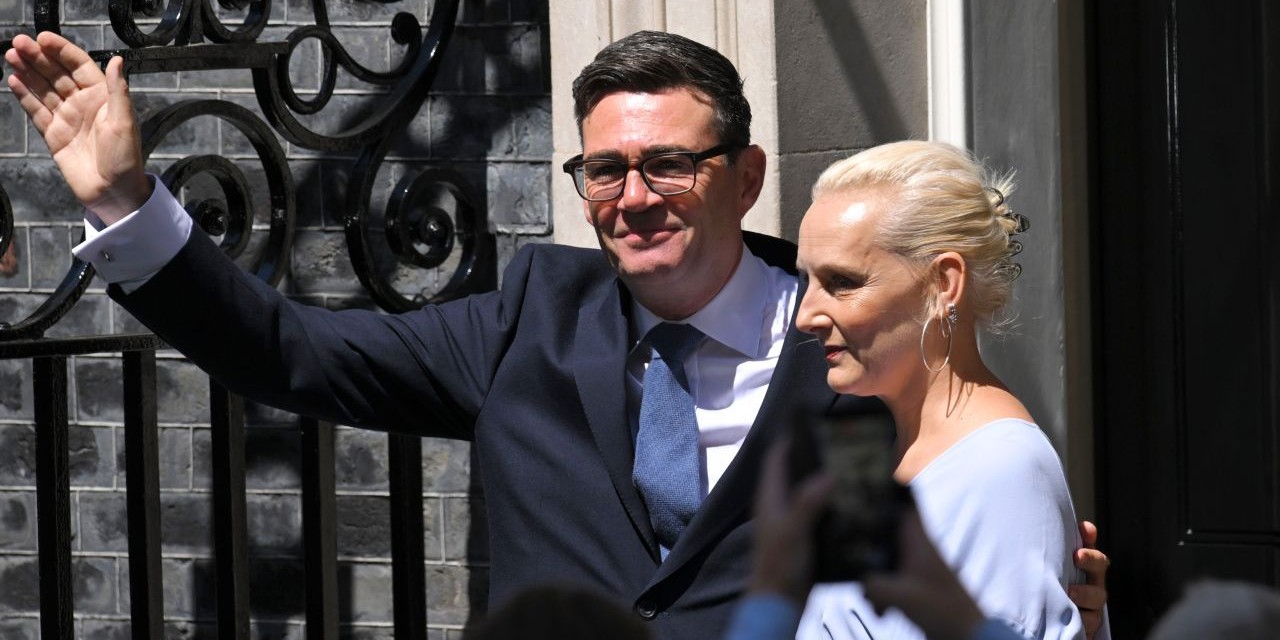
Image: David Fisher / Shutterstock
Another change of guard in Downing Street has triggered a renewed bout of concern—and sniggers—over the fragility of British politics and its democracy. Not for the first time, as the country gets its seventh prime minister in 10 years. Four years ago, openDemocracy reported “Boris Johnson has quit, but Britain’s democracy is still broken.” This time, when Keir Starmer put in his papers paving the way for fellow Labour leader Andy Burnham to take over as prime minister, The Economist asked “Is British politics broken?”
In many ways, it is. Repeated leadership upheavals have caused persistent government dysfunction. It’s a sign of the growing transience of voters’ loyalties to parties, making politics inherently volatile. Support for Labour, which won a landslide just two years ago, ebbed, and Keir’s ratings as prime minister plummeted, forcing his hand. The instability, now a chronic feature of British politics, undermines the prime minister’s authority, raising questions about the country’s governability and the quality of its democracy. Germany’s Der Spiegel compares Downing Street to a transit station. It’s a situation apparently bad enough for Russia’s state broadcaster RT to call—without any sense of irony at all—an “illusion of democracy.”
But is it really that bad? After all, when did stability become a marker of democratic quality? Undemocratic regimes are actually far better at providing stability because they eliminate the uncertainties that are part and parcel of competitive democracy. Unlike authoritarian regimes, where outcomes are more predictable—leaving aside sudden ruptures such as coups and purges—because competition is constrained, uncertainty is intrinsic to democracy. In the formulation of the political theorist Adam Przeworski, democracy is in fact a system of “organized uncertainty.” Is it even a democracy if it is anchored in predictable stability?
Take the world’s largest democracy, India, where the government is super-stable, the prime minister commands authority—a bit too much—and the democracy is questionable. Sweden-based democracy tracker V-Dem Institute now classifies it as an “electoral autocracy.”
Like many endangered democracies, India is characterised by its captured media and governing institutions that help Prime Minister Narendra Modi tighten his grip on power. The checks and balances to arbitrary power now barely work. The judiciary is happy to be the executive’s handmaiden, looking away from his government’s excesses and even chipping in on its projects to cement his power. The strength of his party and its allies in Parliament make the legislature a rubber stamp of executive will. The cabinet bows to him in unquestioned submission, an extension of the cult of personality that his ruling Bharatiya Janata Party (BJP) has created around him.
As major democratic institutions, the party and the cabinet are supposed to provide the first level of internal checks on arbitrary or personalised rule. In the cabinet system, the prime minister is not the boss, only the first among equals (primus inter pares) in the cabinet, based on the principle of collective responsibility in executive decision-making. Similarly, the governing party isn’t just supposed to be the vehicle for power, but also the primary mechanism that constrains how that power is exercised by the executive. These are a far cry from the fan-boy-like behaviour that is de rigueur for Modi’s cabinet colleagues and party members.
The Indian right-wing ecosystem has been gloating at Britain’s newest leadership change to underscore the stability that Modi’s rule supposedly provides. But the fact is that in Britain, from where India borrowed this system of government, the party and the cabinet still provide enviably robust guardrails of institutional checks—as evident from the regular party revolts that have unseated prime ministers in the past decade. Fellow ministers and party leaders aren’t just lackeys of the chief executive, but zealous watchdogs and competitors looking for the tiniest slip to pounce. Many troubled democracies across the world today would envy this in-house scrutiny to which the two main British parties subject their leaders when they sense voter discontent. It’s a minor miracle that they manage to do so in this time of worldwide disconnect between parties and people.
With growing atomization of society, the decline of mobilizing party organizations such as unions and associations, and the emergence of dark money as the prime determinant of electoral outcomes, politics feels increasingly remote and elite-captured. This hollowing out of political parties lies at the heart of the ongoing crisis of popular democracy. Increasingly functioning less as social organizations and more as appendages of the state, parties have lost their ideological distinctiveness, party loyalties have waned, and popular withdrawal from political life intensified. “Party-voter differences have become more stretched as a result, party-party differences have shrunk,” Peter Mair argues in ‘Ruling the Void: The Hollowing of Western Democracy’.
It’s no accident that Labour and the Tories increasingly look indistinguishable—pushing voters towards Reform and the Greens in search of authentic representation; it is symptomatic of larger trends in democracies everywhere as catch-all parties dilute their ideologies to chase the median voter. By early 2026, 25 per cent of Labour voters complained that Labour and the Conservatives had become similar—nearly double the share immediately after the 2024 election (13 per cent). What sets British politics apart is the alacrity with which its parties still manage to respond to shifts in public mood. From the viewpoint of many democracies elsewhere, that British parties can do so with leadership change—even while in —feels like yet another minor miracle.
In India, even parties that lose elections cannot question their leaders, let alone those in power. Ruled by cliques, devoid of internal democracy, and absent an ideologically charged cadre base, they have little strength to break the despot’s hold. For weeks now, capital New Delhi has been witnessing a budding Gen Z movement of students and activists frustrated by the government’s failure to deliver, and the opposition’s failure to make it. The movement successfully taps the mountain of resentments in a way the opposition parties could not, and has been so successful that top opposition leaders have now been forced to join it. The so-called “cockroach movement” began with an online meme fest in reaction to a throwaway comment by the chief justice equating jobless youths to cockroaches, and has now snowballed into a full-fledged mass movement resonating across India. It is an expression of a deeply felt crisis of representation, with people ceasing to connect with political parties across the board.
If party responsiveness to public mood is a core measure of democratic health, Britain’s democracy is alive and kicking. Its newest change of leader is a testimony to the high standard of public accountability of its leading parties. Ignore the naysayers: compared to many polities elsewhere, its democracy is actually thriving. Downing Street is far better off with the “revolving door” than the thrones that elected despots are carving out in failing democracies.
Related articles from this author:
Cockroaches Crawl Over Decaying Parties in Modi’s Parallel Universe (3-minute read)
Breaking Point Bengal: An Election Heralds India’s Managed Democracy (10-minute read)
Party Like Mamdani (10-minute read)