Before Washington: Xi and the Contest Over Global Leadership
Taiyi Sun
September 3, 2026
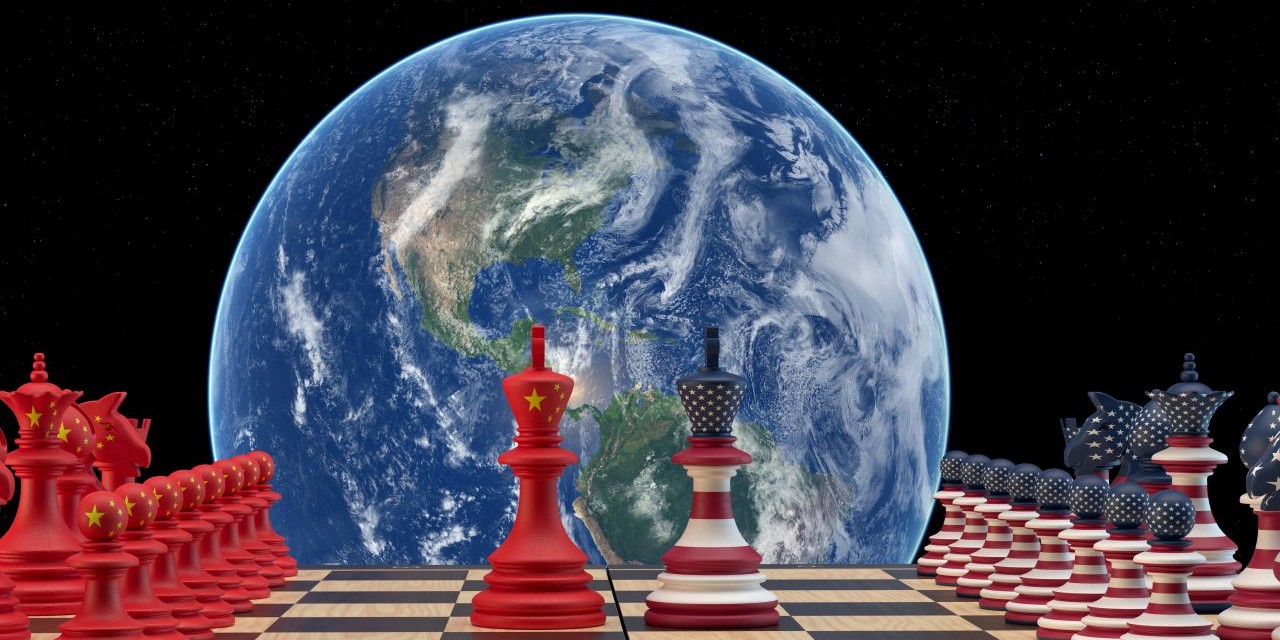
Image: Mike Mareen / Shutterstock
Three scenes from the past week capture a growing divide in world politics.
Chinese President Xi Jinping travelled to Kyrgyzstan for the Shanghai Cooperation Organisation summit and then to Egypt, where he received a warm state welcome and signed agreements covering artificial intelligence, digital infrastructure, manufacturing, supply chains, and local-currency cooperation. Meanwhile, G20 finance ministers gathered in Asheville, North Carolina, amid disputes over China, Russia, and even which G20 members should be allowed in the room. At almost the same time, US forces again struck targets in Iran, prompting Iranian retaliation and another surge in concern over oil prices and the Strait of Hormuz.
These events are connected. They illustrate not simply a competition between China and the United States, but an emerging contest over what international leadership should provide.
For Egypt, the logic of closer relations with China is straightforward. Cairo remains a major US security partner, and abandoning that relationship would make little sense. But the war in Iran, the Gaza conflict, and repeated shocks to regional trade and shipping have made dependence on any single great power more dangerous. Egypt is therefore pursuing what its leaders increasingly call strategic balance.
China fits naturally into that strategy because it offers something different. In Cairo, Xi spoke about industrial development, digital transformation, infrastructure, supply chains, and making Egypt a regional hub connecting Asia, Africa, and Europe. The joint statement also called for greater coordination among the Global South and more representative global institutions.
The contrast with Washington is becoming difficult for many governments to ignore. The United States still possesses vastly greater coercive capabilities. It can impose financial sanctions, cut entities off from the dollar system, conduct military strikes, and use access to the American market as leverage. China, by comparison, has increasingly tried to present itself as a builder: of infrastructure, industrial capacity, renewable-energy supply chains, trade connections, and multilateral institutions.
This distinction should not be exaggerated into a simple narrative of a benevolent China replacing a destructive America. China has its own coercive economic tools, and its export model is generating serious resistance. Indeed, at the latest G20 finance meeting, the United States achieved something significant: nineteen members supported language addressing excessive trade surpluses and non-market distortions, leaving China isolated on the issue. Washington still has enormous coalition-building power when other countries believe their own economic interests are threatened.
Yet the same G20 meeting revealed the other side of the American position.
European officials were angered by Washington’s decision to invite Russian Finance Minister Anton Siluanov back to an in-person G20 meeting while the war in Ukraine continues. South Africa, a founding G20 member and Africa’s largest economy, was not invited at all. Canada arrived while engaged in an extraordinary new trade confrontation with the United States after negotiations collapsed and Washington imposed 50 percent tariffs on billions of dollars of Canadian goods.
Nor is the tension limited to economics. Trump abruptly shortened the annual US–South Korean Ulchi Freedom Shield exercise from eleven days to five, citing both his relationship with North Korean leader Kim Jong Un and Seoul’s refusal to support the United States in its war against Iran. A longstanding alliance mechanism was thus partially adjusted not after a lengthy strategic review, but partly in response to disagreement over another war thousands of kilometres away.
For many countries, especially middle powers such as Egypt, these episodes reinforce a simple lesson: do not put all your eggs in one basket.
They also provide important context for Xi’s expected September 24 visit to Washington.
Xi’s travels before that meeting carry a symbolic dimension that should not be overlooked. Xi first appeared at a major multilateral gathering in Kyrgyzstan, then received full state honours in Cairo. This diplomatic sequence can be read as a subtle message to Washington. China’s president is not travelling to the United States as a supplicant seeking an audience. He arrives after demonstrating that Beijing has other partners, platforms, and diplomatic options.
Protocol therefore matters. When Trump visited Beijing in May, China provided a red carpet, military honours, a 21-gun salute, and a state banquet. Trump himself promised that Xi’s return visit would be reciprocal. Beijing will reasonably expect that reciprocity to be visible. The precise choreography may sound trivial compared with tariffs, Taiwan, or Iran, but great-power diplomacy is partly about status. After state receptions in Kyrgyzstan and Egypt, anything conspicuously less impressive in Washington would stand out.
For Trump, however, that creates a domestic political complication. September 24 comes less than six weeks before the midterm elections. An elaborate welcome for Xi could give China hawks images of a Republican president celebrating America’s principal strategic competitor just as candidates campaign on economic nationalism, manufacturing, and toughness toward Beijing.
The same electoral calendar helps explain Washington’s current Iran policy.
The administration has launched Operation Economic Outcast, which Treasury Secretary Scott Bessent has described as an economic ‘D-Day’ intended to sever Iran’s remaining financial lifelines. Nearly 60 entities, individuals, and vessels were targeted, and secondary-sanctions exposure was expanded across digital assets, technology, gold, aviation, and shipping.
But the shift toward maximum economic pressure is not necessarily evidence that military coercion has succeeded. It may indicate the opposite. US munitions stocks have been heavily depleted, the Pentagon is pressing manufacturers to accelerate production, and administration officials reportedly want to keep the Iran war relatively quiet until after the midterms. Only 31 percent of Americans approved of the war in a late August Reuters/Ipsos poll, while higher fuel prices remain politically dangerous.
Economic pressure therefore serves both strategic and political purposes. It allows Trump to claim that pressure on Tehran is intensifying while reducing, at least in theory, the need for a sustained high-tempo military campaign.
The difficulty is that successful secondary sanctions require cooperation from the very countries Washington is simultaneously alienating, pressuring, or threatening. They also require Chinese cooperation because China remains central to Iran’s external economic lifelines.
That is the deeper significance of Xi’s current diplomacy. China does not need every Global South country to choose Beijing over Washington. What China benefits from is a world in which countries such as Egypt insist on maintaining multiple relationships and preserving strategic autonomy.
The United States remains the stronger coercive power and can still rally broad coalitions, as the G20 trade debate demonstrated. But coercion alone cannot sustain leadership indefinitely. Before September 24, both Washington and Beijing should recognize that the real competition is not simply over who can impose greater costs. It is over which country can persuade others that its power leaves them with more security, more prosperity, and, most importantly, more room to choose.
Related articles:
The September 24 Test: Iran, Protocol, and the Future of Xi-Trump Diplomacy (3-minute read)
Trump’s Escalation Trap with Iran (3-minute read)
Why China Insists on the “Existing International Order”: The Politics of UN Centrality and Reform (3-minute read)