Is the United States Retreating from the Institutional Order It Built in Asia?
Andrew Yeo
November 06, 2026
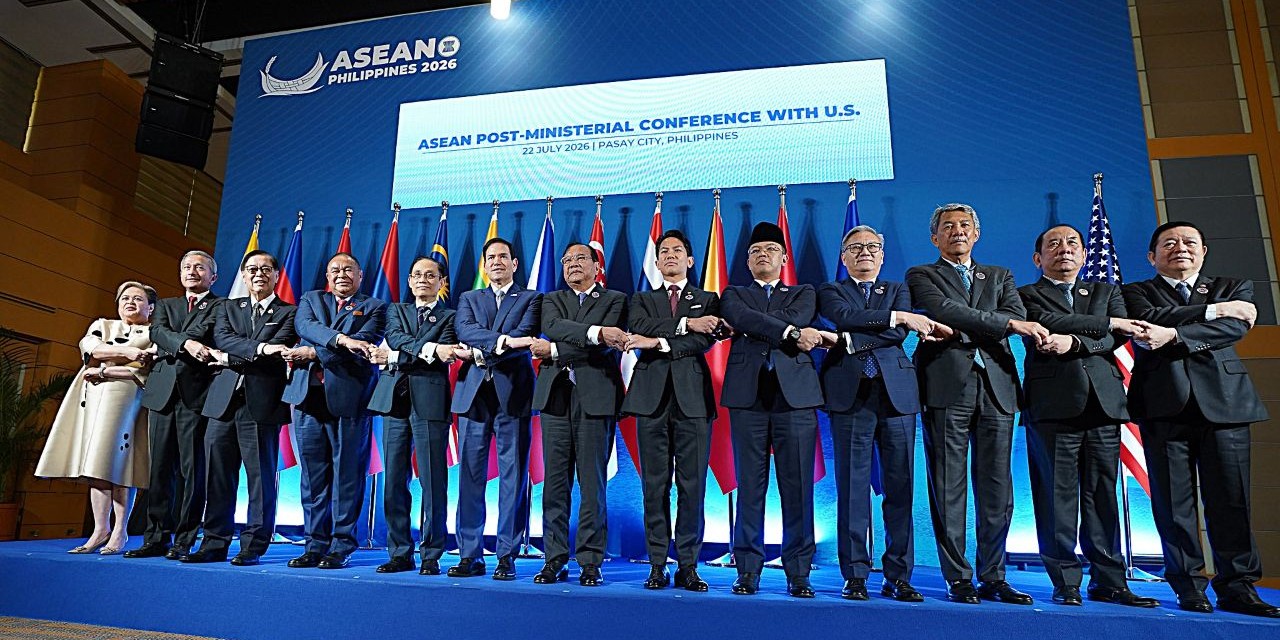
Cover image: United States Department of State / Wiki Commons
This policy brief examines US institutional strategies in Asia and their consequences for regional stability and order. With Asian multilateralism at a crossroads, in no small part due to the second Trump administration’s disengagement with regional institutions, the paper argues that assertions of complete US disengagement are premature: institutional inertia, a durable foreign policy consensus on countering Beijing, and ongoing alliance cultivation maintain strong US regional agency. Rather than a total retreat, future US strategy will likely adapt to a modified regional architecture, one still anchored in the traditional ‘hub-and-spokes’ alliance structure, but increasingly shared with China and regional middle powers. Despite fluctuations in the United States’ approach to regional institutions and coalition-building in Asia over the past decade, Washington must remain actively engaged in strengthening the region’s institutional architecture.
Contents
- Abstract
- Introduction
- 1. US institutional strategies from the Asia pivot to the Free and Open Indo-Pacific
- 2. The Second Trump Administration and the future of Asian multilateralism
- 3. Policy implications and conclusion
Abstract
Asian multilateralism is at a crossroads, in no small part due to the second Trump administration’s disengagement with regional institutions. This policy brief examines US institutional strategies in Asia and their consequences for regional stability and order. It argues that assertions of complete US disengagement are premature: institutional inertia, a durable foreign policy consensus on countering Beijing, and ongoing alliance cultivation maintain strong US regional agency. Rather than a total retreat, future US strategy will likely adapt to a modified regional architecture, one still anchored in the traditional ‘hub-and-spokes’ alliance structure, but increasingly shared with China and regional middle powers. Despite fluctuations in the United States’ approach to regional institutions and coalition-building in Asia over the past decade, Washington must remain actively engaged in strengthening the region’s institutional architecture.
Introduction
A strong perception exists among scholars and practitioners that multilateralism in the Asia–Pacific is facing a crisis. Despite the proliferation of multilateral and mini-lateral groupings in Asia since the 1990s, the region is now characterized by “leadership vacuums, fragmented agency, and strategic indeterminacy.”[1] Over the past decade, the United States expanded its network of alliances and institutions in the Indo-Pacific security architecture. However, the second Trump administration’s reduced engagement with Asian institutions has put into further question the future of Asia’s regional architecture and the role of multilateralism. This policy brief explores US strategy in the Indo-Pacific and its implications for regional order. The question at hand is whether US strategy is moving away from the traditional post-Cold War pattern of deep regional engagement, thereby triggering a shift in regional order.
Since the end of the Cold War, the United States has moved beyond relying on its bilateral treaty alliances to embracing an overlapping array of bilateral, trilateral, and other plurilateral institutions in Asia. The Obama administration’s strategic rebalance to Asia, followed by the Free and Open Indo-Pacific (FOIP) strategies pursued under the first Trump and Biden administrations, accelerated this shift toward a US-driven Indo-Pacific security architecture. However, US President Donald’s Trump’s disdain for alliances and multilateral institutions, which has been more pronounced in his second term, undermines US standing and position in the region. It also undercuts the idea that the United States maintains a robust and coherent US grand strategy in Asia. The perceived US retreat from the liberal international order has helped create space for other actors—most notably China, but also middle powers—to fill in a political void, resulting in a more fragmented and multiplex regional order. Nevertheless, claims of US disengagement should also be treated with caution. Institutional inertia, as well as a strong consensus within Washington and Asian capitals to keep the United States vested in the region for as long as possible, suggests US long-term engagement, if not leadership, in the Indo-Pacific for some time.
1. US institutional strategies from the Asia pivot to the Free and Open Indo-Pacific
Since US President Barack Obama’s pivot to Asia, each US administration has argued for the prioritization of the Asian region in US grand strategy. In addition to reinforcing US bilateral alliances, the Obama administration recognized the importance of cultivating influence through multilateral institutions.[2] Washington became a signatory to ASEAN’s Treaty of Amity and Cooperation in 2010, which paved the way for membership in the East Asia Summit (EAS) and the establishment of a permanent mission to ASEAN in Jakarta in 2011. The Obama Administration also sought to elevate the stature of the EAS as a multilateral institution aimed at addressing political issues. Although initially interpreted primarily as a shift in the military balance away from the Middle East and toward Asia, the strategic rebalance to Asia also entailed regular US participation in regional multilateral forums and greater leadership in multilateral trade initiatives, such as the Trans-Pacific Partnership (TPP). By the end of the Obama administration, the United States was advancing the idea of a “principled security network” based on inclusivity, practical cooperation, and a rules-based order designed to strengthen deterrence, regional stability, and security.[3]
1.1. THE FIRST TRUMP ADMINISTRATION AND THE EMERGENCE OF AN INDO-PACIFIC REGIONAL ARCHITECTURE
Despite President Trump’s nationalist and mercantilist ‘America First’ foreign policy, the first Trump administration’s institutional approach to Asia did not depart significantly from that of the Obama administration. With the notable exception of US withdrawal from the TPP and its retreat from regional economic leadership, the Trump administration continued to support key US allies and partners in the region. Trump attended the APEC Leaders’ Meeting and the ASEAN Summit in 2017, while senior officials from the Departments of Defense and State regularly participated in regional forums such as the ARF, EAS, ADMM-Plus, and Shangri-La Dialogue.
At the strategic level, the first Trump administration also introduced its Free and Open Indo-Pacific (FOIP) strategy to underscore the significance of Asia and the return of great power competition. The Indo-Pacific Strategic Framework, which the Trump administration drafted in 2017, provided strategic guidance across all US agencies for framing and implementing US policy in Asia. The top-line guidance in the framework reiterated the importance of maintaining US strategic primacy in the Indo-Pacific region and promoting a liberal economic order.
Geopolitical competition with China emerged as a key motivating factor behind Trump’s FOIP and regional institution-building strategy. More than the preceding Obama administration, senior officials in Trump’s national security team viewed China as a threat to regional stability and US long-term interests in Asia that extended into the Indian Ocean. Although multilateralism may not have been a high priority for Trump, the administration did work to build an Indo-Pacific architecture centred around US-led institutions.
The State Department’s FOIP strategy mentioned strengthening bilateral alliances and partnerships, including new bilateral partnerships in South Asia, Southeast Asia, and the Pacific Islands. More tellingly, the FOIP strategy included a section on multilateralism which stated that “a strong, rules-based architecture anchors the US vision for the Indo-Pacific region.”[4] Similarly, the Pentagon in the 2018 National Defense Strategy (NDS) called for an expansion of Indo-Pacific alliances and partnerships, stating, “A free and open Indo-Pacific region provides prosperity and security for all. We will strengthen our alliances and partnerships in the Indo-Pacific to a networked security architecture capable of deterring aggression, maintaining stability, and ensuring free access to common domains.”[5]
The revival of the Quad is illustrative of the Trump administration’s institutional strategy in Asia. From Washington’s perspective, the Quad fits a longer-running effort to supplement the traditional US ‘hub-and-spokes’ alliance system with a more networked regional security architecture, linking US allies, such as Japan and Australia, with increasingly important partners, such as India.
1.2. THE BIDEN ADMINISTRATION’S ACCELERATION OF AN INDO-PACIFIC “LATTICEWORK”
Although the US FOIP strategy emerged under the first Trump administration, it was the Biden administration that accelerated and broadened the corresponding institutional architecture to match the scope and vision of FOIP—what Biden officials referred to as the “latticework” of strong and “mutually reinforcing coalitions.”[6] Guided by liberal internationalism, the Biden administration unabashedly referenced the “strategic necessity” of the United States’ consistent role in the region, envisioning an overlapping network of alliances and institutions that would anchor the United States to the Indo-Pacific. Both in public and private, Biden administration officials repeated that America’s role in the region would be enduring to ensure peace and stability. Toward that end, Biden officials stated the need to “modernize alliances, strengthen emerging partnerships, and invest in regional organizations to “empower the Indo-Pacific to adapt to the 21st century’s challenges.”[7]
During this period, Washington elevated the importance of trilateral and minilateral arrangements, including the US–Japan–ROK (UJK) trilateral, AUKUS, and the Quad. Rather than creating a single overarching Asian institution, it pursued a flexible architecture in which overlapping arrangements addressed different strategic needs and functions. The UJK trilateral strengthened deterrence on the Korean Peninsula and Northeast Asia, even as the three countries expanded the reach of the trilateral to cover broader Indo-Pacific issues. AUKUS deepened military-technological integration into the second island chain. The Quad brought together four major Indo-Pacific democracies to address several traditional and increasingly non-traditional security issues; and the Indo-Pacific Economic Framework (IPEF) added an economic dimension to a strategy otherwise heavily weighted toward security.
2. The Second Trump Administration and the future of Asian multilateralism
Scholars Kai He and Huiyun Feng argue that Asia has entered a new phase of multilateralism that they refer to as liminal multilateralism, defined as “a transitional condition in which multilateral institutions endure but lack clear leadership, shared purpose, and stable legitimacy.”[8] US retreat from multilateralism is not the sole cause of today’s liminal multilateralism. Nevertheless, two years into the second Trump administration, Washington is objectively less involved in the Indo-Pacific region and has reduced its engagement with trilateral and minilateral coalitions at the leaders’ level. The US attack against Iran in February 2026 has diverted military resources and diplomatic attention away from the Indo-Pacific and back to the Middle East. It remains unclear if US engagement in the Middle East represents just a temporary distraction from an otherwise long-term focus on Asia, or if the United States is indeed reversing from its nearly two-decade pivot to Asia, thus weakening the Indo-Pacific security architecture built by previous US administrations.
If the United States is truly disengaging from the region, then liminal multilateralism is likely to characterize Asia’s institutional order for some time. But if China remains the long-term pacing challenge, and if US economic interests remain deeply tied to a region encompassing roughly two-thirds of the global economy, we should expect the United States to continue cultivating regional coalitions and partnerships. Halfway through the second Trump administration, however, the record appears mixed.
The US Department of War continues to identify deterring China and defending the first island chain, in concert with allies, as a top priority. However, the Trump’s administration’s level of engagement and frequency with Indo-Pacific institutions has markedly declined from the Biden era with less visibility at the leader level. For example, the frequency of US–Japan–Korea (UJK) trilateral meetings among foreign ministers and senior officials has been fairly consistent between the Biden and Trump second administrations. However, the UJK trilateral has not achieved the same degree of high-level political attention under the second Trump administration in the absence of a leaders level meeting. Participation in existing minilaterals and multilateral coalitions continues, but without necessarily the degree of visibility that was exhibited during the Biden or even the first Trump administration.
US engagement has become more selective, transactional, security-focused, and less invested in regional institutions. US efforts to rebuild economic multilateralism (i.e. IPEF) fell short under Biden’s leadership, but it is now virtually non-existent under Trump. The Trump administration’s tariffs have hit allies and Southeast Asian partners alongside China, undermining the proposition that Washington is organizing a coalition of states with shared interests. On the contrary, the threat and use of tariffs have undercut Washington’s messages about US commitment to the region, and it is pushing countries, particularly in Southeast Asia, to seek alternative economic partners. Despite US attendance at regional forums and reassurances from cabinet and senior officials, trade disputes and other security and economic demands have undermined the Trump administration’s message of continuity. For instance, US Secretary of State Marco Rubio declared US commitment to the region at the ASEAN-PMC in July, despite the fact that on the very same day, President Trump imposed new tariffs on the Philippines and six other ASEAN members.
Despite Trump’s uneven policy toward bilateral partners and multilateral networks, the United States will remain engaged in the Indo-Pacific for the foreseeable future given the strategic and economic importance of the region. Enduring threats and strategic interests, reinforced by institutional inertia, will likely sustain the US-led security architecture in Asia for some time. But whether it can command the same degree of regional leadership is less certain. In other words, a growing distinction has emerged between US presence and US leadership in the region and Washington’s ability to steer the future of Asian regional order. US forces remain forward deployed, and treaty alliances remain intact. Trump administration officials continue to attend regional forums such as the ARF, APEC, and the Shangri-La Dialogue, while minilateral arrangements, such as AUKUS, the US–Japan–Korea and US–Japan–Philippines trilaterals, and the Quad, remain active. Washington has expanded military cooperation with the Philippines, including access to additional bases, and sustained trilateral cooperation with Japan and South Korea.
Yet these reassuring measures have been accompanied by steps that suggest a diversion of attention and resources away from the Indo-Pacific, and an ambivalent regional strategy marked by contradictory signals that risk diminishing US influence, including calls from some quarters to reduce US military presence in the region, suspend arms sales to Taiwan, reduce the frequency of joint military exercises in South Korea, or scale back US forces to the second island chain. The US-led regional architecture that developed from the Obama through Biden administrations is now far less certain. Economic protectionism, pressure on allies, scepticism toward multilateralism, reductions in foreign assistance, and the diversion of political and military attention to other regions all undermine Washington’s capacity to portray itself as the architect and provider of an open and networked regional order.
3. Policy implications and conclusion
Although perceptions of reduced US engagement and a retreat from a rules-based order persist, US allies and partners in Asia retain strong incentives to preserve their security ties with the United States while simultaneously developing alternative economic relationships, middle-power coalitions, and regional institutions to hedge against uncertainty about American leadership. First, institutional inertia is likely to sustain the existing regional architecture for some time, especially the deeply embedded US-led bilateral alliance system. Second, a relatively strong consensus persists within the US national security establishment (and also Asian capitals) in favour of long-term engagement in Asia, not least because of the enduring geopolitical challenge posed by China. Despite varying presidential priorities regarding Indo-Pacific competition, US policy toward Asia has maintained remarkable continuity over the past two decades. Third, the United States continues to exercise considerable agency in the region by cultivating its alliances and partnerships, both bilaterally and through plurilateral arrangements. The idea of continuity in US presence, even if not in leadership, in the Asian region leads to several policy implications and recommendations outlined below:
- The foreign policy of the second Trump administration does not necessarily represent US disengagement from Asia so much as a retreat from the liberal internationalist model of institutional leadership that underpinned the US-led regional order. Washington remains deeply invested in alliances, deterrence, and maintaining a favourable balance of power, but it is less willing to provide the economic, institutional, and diplomatic public goods associated with liberal internationalist leadership.
- Although liberal internationalism is declining, future US administrations will likely aim for a modified version of it—preserving the core hub-and-spokes alliance network while negotiating if not accommodating greater influence from China and middle powers.
- The nature of US engagement with multilateral institutions depends on the direction and tenor of US–China competition and how regional actors respond to great power competition.
- The institutional strategies adopted by the United States in the 2010s will not necessarily suffice for the challenges of the 2030s. This is particularly true in the economic domain, where supply-chain reconfiguration and the expanding importance of digital trade, emerging technologies, and e-commerce have made it increasingly difficult for the United States to rely simply on traditional alliances and like-minded partnerships as the principal basis for regional order.
- Washington should develop a core economic framework or project that sets basic rules, principles, and standards that promote fair trade, development, economic growth, and prosperity that regional stakeholders can gravitate toward. Rather than stand on the sidelines, the United States should actively seek to shape the region’s economic architecture.
- The shape of ‘multilateralism 3.0’ will depend not only on whether the United States remains engaged in Asia, but on how effectively Washington adapts its institutional strategy to a regional order in which it increasingly shares influence with China, middle powers, and a more diverse array of regional institutions.
- The US must offer a positive message to the region that clearly identifies the benefits and advantages (particularly for ASEAN members) of partnering or collaborating with the United States and not overplay the US–China rivalry paradigm.
- The US should work with its allies, particularly Australia, Japan, and South Korea, to improve infrastructure (including digital infrastructure) and strengthen human capital in the Indo-Pacific region.
NOTES
[1] Kai He and Huiyun Feng, “The Emerging Multilateralism 3.0 in the Asia-Pacific: Liminal Multilateralism amid U.S.-China Rivalry” (working paper, Toda Peace Conference on Asian Multilateralism, 2026), 6.
[2] Kurt M. Campbell, The Pivot: The Future of American Statecraft in Asia. (New York, NY: Twelve 2016), 271-75.
[3] Ash Carter, “The Rebalance and Asia-Pacific Security: Building a Principled Security Network,” Foreign Affairs, October 17, 2016. https://www.foreignaffairs.com/articles/united-states/2016-10-17/rebalance-and-asia-pacific-security
[4] U.S. Department of State, Bureau of East Asian and Pacific Affairs, A Free and Open Indo-Pacific: Advancing a Shared Vision (Washington, DC: U.S. Department of State, 2019), 7. https://2021-2025.state.gov/a-free-and-open-indo-pacific-advancing-a-shared-vision/
[5] U.S. Department of Defense. Summary of the 2018 National Defense Strategy of the United States of America (Washington, DC: Department of Defense, 2018), 9.
[6] The White House, “Statement on Indo-Pacific Economic Framework for Prosperity, (Washington, DC: The White House, May 23, 2022), 9. https://bidenwhitehouse.archives.gov/briefing-room/statements-releases/2022/05/23/statement-on-indo-pacific-economic-framework-for-prosperity/
[7] Ibid.
[8] He and Feng, “Emerging Multilateralism 3.0.”
The Author

Toda Peace Institute
The Toda Peace Institute is an independent, nonpartisan institute committed to advancing a more just and peaceful world through policy-oriented peace research and practice. The Institute commissions evidence-based research, convenes multi-track and multi-disciplinary problem-solving workshops and seminars, and promotes dialogue across ethnic, cultural, religious and political divides. It catalyses practical, policy-oriented conversations between theoretical experts, practitioners, policymakers and civil society leaders in order to discern innovative and creative solutions to the major problems confronting the world in the twenty-first century (see www.toda.org for more information).
Contact Us
Toda Peace Institute
Samon Eleven Bldg. 5thFloor
3-1 Samon-cho, Shinjuku-ku, Tokyo 160-0017, Japan
Email: contact@toda.org