Deliberative Technologies in Central Asia: Reflections On Using Pol.Is and Remesh.Ai in Peacebuilding and Participatory Processes
Samara Papieva
October 31, 2026

Image: Provided by Search for Common Ground
This paper explores the experience of using two deliberative technology tools, Pol.is and Remesh.ai, in social dialogue and participatory processes in Central Asia. It reflects on their application within peacebuilding and civic engagement initiatives carried out in collaboration with civil society.
Since August 2024, Search for Common Ground Kyrgyzstan has integrated deliberative technologies across a variety of contexts, including internal team reflections and organizational learning processes, as well as multi-stakeholder dialogues, cross-border design work, and community-level discussions.
The paper presents analysis from two perspectives: the experience of those who designed and facilitated processes using these tools, and the feedback of participants who engaged with them directly. It aims to contribute to a broader understanding of how deliberative technologies can strengthen collective reasoning and support more inclusive forms of dialogue and participation.
Contents
Ⅰ.Introduction
This paper explores the experience of using two deliberative technology tools, Pol.is and Remesh.ai, in social dialogue and participatory processes in Central Asia. It reflects on their application within peacebuilding and civic engagement initiatives carried out in collaboration with civil society, drawing on experiences from 2024– 26. This project is part of a broader exploration of deliberative technologies by Search for Common Ground, the world’s largest peacebuilding organization, operating in more than 20 countries.
Since August 2024, Search for Common Ground Kyrgyzstan has integrated deliberative technologies across a variety of contexts, including internal team reflections and organizational learning processes, as well as multi-stakeholder dialogues, cross-border design work, and community-level discussions. This was not a single initiative, but an iterative process of experimentation across different scales, audiences, and purposes. Each occasion added to our understanding of how these tools work in practice, from both a process facilitator and end-user perspective. The paper presents analysis from two perspectives: the experience of those who designed and facilitated processes using these tools, and the feedback of participants who engaged with them directly.
The paper aims to contribute to a broader understanding of how deliberative technologies can strengthen collective reasoning and support more inclusive forms of dialogue and participation. This iterative experimentation also forms the foundation for the next steps, as Search for Common Ground is currently working to localize Agoracitizen.app, another deliberative technology tool, for the Kyrgyzstan context.
Ⅱ.Using deliberative technology: cases
Through repeated application across different settings in Central Asia, four situations emerged in which deliberative technologies proved useful.
2.1 OPEN DIALOGUE ON SENSITIVE OR COMPLEX TOPICS
When there is a need to discuss issues that are difficult to name openly in public due to power dynamics, institutional hierarchies, or political sensitivity, deliberative tools provide a space where participants can express honest views anonymously. Participants can also see how others respond, and collectively sense where agreement and division lie. This is particularly valuable in mixed demographic groups where some participants are unlikely to speak openly about challenges.
During Yntymak Week 2025,[1] a dialogue titled “Navigating Change Together: Rethinking Peacebuilding” brought together civil society representatives, donors, and government institutions. The aim was to reflect critically on the changing nature of peacebuilding in Kyrgyzstan. This is a conversation that would have been difficult to hold openly given the room’s composition, the diverse power dynamics in the room, and the lack of time for trust-building prior to the reflection. Pol.is made it possible to initiate that discussion constructively, surfacing honest and widely shared concerns that might not have emerged in an open, non-anonymous reflection format. In the context where participants were from different sectors—from civil society, communities, government, and donor organizations—some participants may feel hesitant to speak out loud about issues and critical reflection.
At the preparation stage, a critical part of the process was framing the key question to open a conversation on Pol.is (for background, see Annex p12). The team wanted to avoid overly technical or overly negative language while still being specific enough to invite practical suggestions. After discussion in a team with an expert facilitator, we agreed on the following question:
What should people and organizations continue doing, stop doing, and start doing to achieve better peacebuilding results?
One challenge was that this effectively combined three questions into a single prompt. We made this compromise because Pol.is does not allow multiple opening questions within one conversation.
Another challenge was language. Participants had different language preferences, with some more comfortable in Kyrgyz, others in Russian or English. To address this, we created three separate QR codes with the same question, each in a relevant language, allowing participants to engage in the language they preferred. This allowed participants to share their opinions in their language while the deliberation took place in parallel in language groups, and the facilitator read out in different languages.
The session produced a set of consensus statements:
- Start tracking the long-term impact of projects after their completion
- Start maintaining close contact with communities even after projects end
- Stop focusing only on short-term projects without ensuring sustainability and impact
- Government institutions should stop perceiving NGOs as competitors or dissenters
- NGOs should stop working in isolation and focus on collaboration
- Donors should stop requesting overly detailed proposals in advance
- Stop duplicating initiatives without coordination, which leads to wasted resources
Within 30 minutes, 72 participants submitted 82 individual responses and cast 1099 reactions. On average, participants submitted 1.7–1.9 responses each and cast on average 15 reactions.
Pol.is made it possible to collect, structure, and visualize that volume of input in real time, giving facilitators an immediate read of collective dynamics before the live discussion began. Taken together with that discussion, these findings formed a concrete basis for a deeper collective reckoning with the state of peacebuilding in Kyrgyzstan. As one facilitator noted:
It makes it possible to see not just a collection of individual opinions but the movement of the overall norm — where the audience’s sentiment is shifting, which positions become central, and which remain peripheral. Pol.is helps clarify expectations, reveal the structure of consensus tendency, and distinguish majority trends from rare extremes.
2.2 LARGE-SCALE CONSULTATION AND INPUT COLLECTION
Both tools are well-suited for collecting structured input from large, geographically dispersed groups in a short time and with limited resources. Participants across different locations can contribute simultaneously by adding their own perspectives and responding to others. These tools auto-generate a visual snapshot of collective opinion that is immediately available to facilitators. One practical advantage is the ability to run a consultation across several days of an event, with QR codes guiding participants to different questions. defended.
2.2.1. Indicator Development at Yntymak Week
Search for Common Ground used Pol.is across the Yntymak Week 2023 and 2025 to gather participants’ perspectives of key peacebuilding concepts, including social cohesion, effective governance, and natural resource management. We designed the process to use digital tools to ask simple questions (e.g., “What is social cohesion?” and “What is not social cohesion?”). Participants responded, offering definitions grounded in their own experience. The QR codes were available over several days, allowing different participants to contribute at different times, and responses were aggregated across sessions and days.
For example, on effective governance, participants provided their understanding, such as:
- People feel their voice counts and is valued in governance processes
- Civil society has genuine access and voice within consultative bodies
- Government reflects the diversity of its population
- Equal access to justice and independence of the judiciary
- Two-way dialogue channels exist between the national and local levels of governance
- The government creates conditions that allow citizens to live normally and fulfill their potential
- Government institutions ensure effective and responsible use of public resources
On natural resource management, contributions included:
- Balanced use of natural resources, ensuring economic and social benefits while maintaining resources for future generations
- Different social groups participate in natural resource governance
- Protection of flora and fauna and natural ecosystems
On social cohesion:
- Community problems are solved collectively by citizens, government, and businesses
- Social cohesion begins with individual responsibility and behaviour
- People interact freely across social groups without conflict
- Respect for diversity (religion, language, identity) within communities
- Freedom to express opinions and discuss sensitive issues publicly
- Community discussions and initiatives addressing local development
- People feel safe participating in public life and community initiatives
- Social cohesion is when people are not afraid to invest in and contribute to public spaces
- Within families, people can talk about taboo topics
- Freedom to discuss sensitive topics
- Social cohesion is good when it leaves space for individual freedom (the ability to be together while remaining free)
- When society cares for children
Asking participants to define both ‘what is’ and ‘what is not’ a concept like social cohesion can reveal how people draw boundaries around ideas, though participants tend to engage more with the positive framing.
Participants shared fewer examples of what is NOT social cohesion:
- High gates and walls
- Lack of public spaces
Participants contributed ideas throughout the multi-day event. As responses were accumulated across sessions from participants representing different sectors, organizations, and communities, they formed a diverse, community-informed evidence base that guided the subsequent development of the indicators.
2.2.2. Fergana Peace Forum
During the 2025 Fergana Peace Forum,[2] the Peacebuilding Hub (the Hub) introduced Remesh (for background, see Annex p12) to make the Communiqué development and adoption process more interactive. Organizers posed two questions to participants through Remesh: 1) whether they supported the Communiqué’s text and 2) whether they had any suggestions to add.
Only 32 participants engaged with the exercise due to a QR code error that redirected users to advertisements. In addition, there were challenges facilitating participation in a large plenary setting. Nevertheless, the consultation generated several inputs. Among the suggestions that received broad support were:
- Hold the Fergana Peace Dialogue in each of the three countries
- Continue strengthening regional cooperation
- Hold this forum annually and give it a regional character — the current name is more associated with the Fergana region than with the broader valley
While the scale of participation was limited, the exercise was significant as an entry point. The process allowed the Hub to build collaboration with government institutions, where trust-building and gradual adoption are key to introducing deliberative tools. The feedback gathered demonstrated that even a small step toward structured digital input can complement and enrich traditional formats like show-of-hands voting.
2.3. ORGANIZATIONAL LEARNING, REFLECTION, AND PLANNING
Another area where Remesh proved useful was organizational reflection, strategy development, and planning processes. These are often situations where teams need to work through several stages: reflecting on experience, identifying priorities, understanding where different perspectives converge or diverge, and ultimately developing a shared direction or action plan.
Collecting opinions is only part of the work. What matters just as much is whether participants can see where others stand, challenge their own assumptions, and arrive together at a shared sense of priorities. Remesh supports this through its structured, question-by-question format, which allows groups to move from exploration to prioritization and, eventually, to decision-making within a single process.
For this reason, Remesh became one of the tools Search for Common Ground uses not only in Kyrgyzstan, but globally for organizational discussions, including communication strategy development, organizational strategy reviews, annual planning processes, and team reflections. The platform enabled the team to gather input from everyone, rather than relying primarily on those most vocal in meetings. At the same time, the results provided a clear record of where views aligned, diverged, or evolved throughout the discussion, creating a stronger foundation for developing documents, strategies, and action plans that reflected the group’s thinking.
A related example comes from Search’s Program Quality Learning (PQL) process. This was an internal exercise designed to assess program quality across several criteria. Previously, the process relied on facilitated discussion and facilitator-defined scoring. By combining it with Remesh tools, team members were able to contribute examples, reflections, and ratings individually before discussing the results collectively. Currently, Search globally has accepted Remesh as a tool to use during PQLs.
2.4. CO-DESIGN AND IDEA GENERATION
Our experience shows that deliberative tools can also be valuable when the goal is to generate ideas and develop something new. They create a structured space for creative thinking, allowing participants to contribute suggestions, build on each other’s ideas, and collectively shape concepts and questions.
This is especially useful when developing initiatives, products, or approaches intended to resonate across different groups, countries, or cultural contexts. Deliberative tools make it possible to test ideas, understand which proposals resonate most broadly, and refine concepts through collective input. In this way, they support not only idea generation, but also the development of outputs that are more likely to feel relevant and meaningful across diverse settings and contexts.
One example is the development of Search for Common Ground “Maek” (Conversation) Cards. These cards offer a set of questions organized into four categories: Connect, Challenge, Imagine and Innovate, and Build Trust.
Developing questions that would work across different countries and contexts required more than internal brainstorming. Pol.is was used to open the process to Search team members from different country teams, allowing participants to submit questions and vote on which resonated. Seeing how people from different national and cultural backgrounds voted made it possible to identify which questions felt genuinely cross-contextual and which carried assumptions that limited their reach. The result was a set of questions that Central Asia teams now use.
Examples of questions that emerged from this process include:
- What’s a piece of advice you once dismissed but later found to be true?
- Can you remember someone very different from you with whom you achieved something that brought you joy?
- What’s a societal norm or expectation that you think should be challenged?
- What moments make you realize you genuinely trust someone?
- What could bring you closer to someone you dislike?
A similar logic applied within a cross-border peacebuilding initiative engaging communities across Kyrgyzstan, Uzbekistan, and Tajikistan in the Ferghana Valley, where partners used Pol.is to develop questions for community consultations collaboratively. The initial challenge was to find questions that were culturally sensitive enough to work across three different contexts, yet grounded enough to generate genuine dialogue on shared issues. Examples of the questions developed through this process include:
Warm Up
- What are you proud of in your community?
- What achievements do you consider important over recent years?
Social cohesion
- What strengthens unity in your village? What gets in the way?
- What examples of solidarity have you witnessed?
- How can women and youth contribute to social cohesion?
Gender equality
- What are the main unmet needs of women in your community?
- Who helps address women’s challenges?
- How often do people come together to solve community problems—and what issues are most likely to unite them?
The questions developed through this process were later used in ‘Speed Dating’ community consultations involving more than 1,000 participants across Kyrgyzstan, Uzbekistan, and Tajikistan.
Ⅲ.Learnings
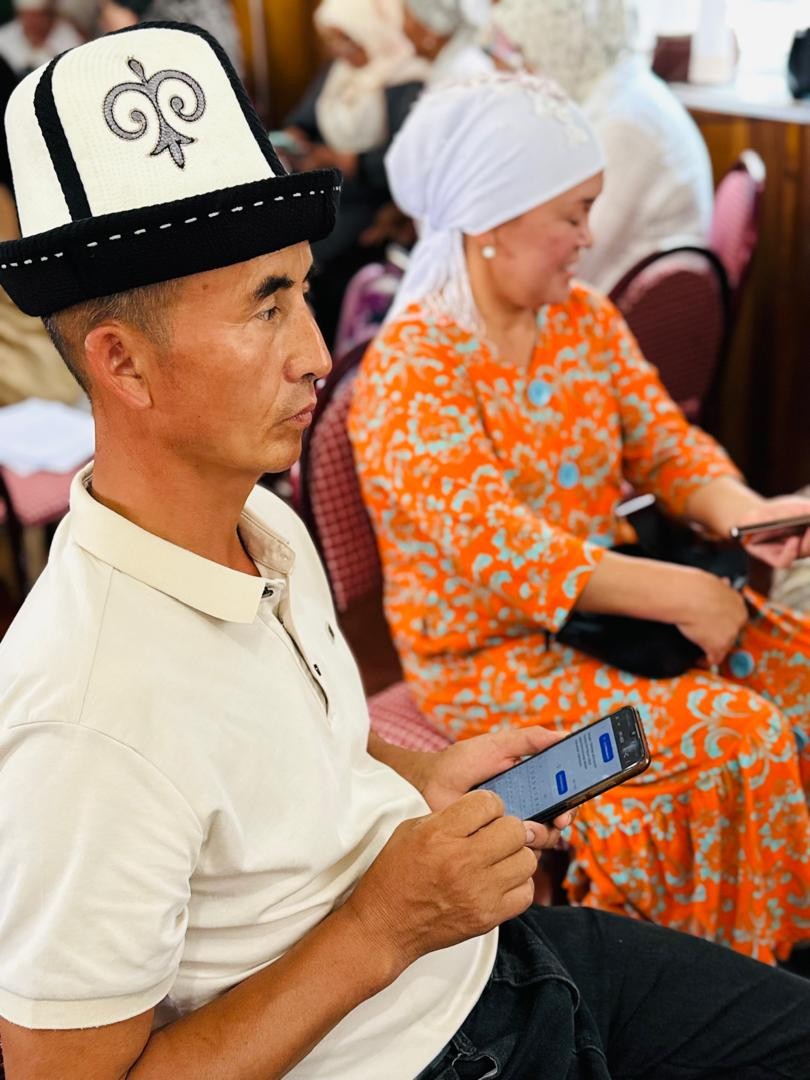
The observations below reflect insights accumulated across multiple uses of Pol.is and Remesh.ai with different groups. While individual experiences varied, certain learnings emerged consistently.
The barrier is not engagement, but entry
We found that the main barrier is often not engagement, but entry. Once participants access the platform and start interacting with the questions, many find the process engaging and continue contributing. However, when participants are dispersed across countries and invited to participate independently, it can be difficult to encourage initial engagement. A simple but effective practice was to convene participants briefly online, introduce the process, and provide dedicated time for them to access the platform and begin contributing before continuing asynchronously.
Question design
We found that a broad or multilayered question made it harder for participants to focus. The Yntymak Week dialogue showed that combining three sub-questions in one might dilute the depth of responses. In addition, participants tended to gravitate towards answering only one of the two. We also noticed that when participants contribute statements that use overly complex/technical language, other participants tend to pass rather than engage with it. The character-limited format of Pol.is encourages concise contributions, but it can also result in statements that are only partially developed. While Pol.is helps to collect a broad range of perspectives in a short time, it often leaves room for interpretation and may not capture the reasoning behind particular views. For this reason, Pol.is is generally most effective when used as an entry point for deeper discussion, reflection, or a complementary qualitative method.
Dynamics within the session
Because participants generate statements on the spot, contributions can feel rushed, and we noticed that giving people more time for reflection leads to clearer, more developed input. At the same time, early statements may create strong anchoring effects; later participants may tend to follow the first visible inputs, limiting diversity of views. Highly active and quick users can disproportionately shape the conversation, since one person can submit many statements. It is worth noting that neither of these two dynamics is unique to Pol.is. Anchoring and the oversized impact of a few participants on the discussion are limitations of in-person discussions as well—though our assumption is that deliberative technology tools still mitigate this since the format surfaces a wider diversity of views.
Anonymity encouraged honesty—this was feedback from participants inviting critical thoughts that would not appear in an open discussion. However, the same feature can also enable the expression of views that participants might not voice publicly, including statements that are offensive, discriminatory, or harmful to others. This highlights the importance of carefully considering moderation settings during the design phase and ensuring that facilitators are prepared to address sensitive or problematic content that may emerge during the process.
For example, during a session with peacekeeping officers on the importance of gender equality, a few comments were gender insensitive. This experience highlighted the importance of anticipating potentially harmful contributions and planning facilitation strategies in advance to ensure they are addressed constructively.
Multilingual settings
Having participants engage in different languages may create distinct clusters. For example, those who wrote in Kyrgyz tended to raise similar issues and vote in similar patterns, as did those who wrote in Russian and English, whose responses emphasized different themes. At the same time, rather than being purely a limitation, this revealed that language groups also reflect different perspectives and priorities. Automatic translation may help bridge language groups by enabling participants to engage with each other’s statements across languages.
At the same time, automatic translation may introduce inaccuracies and miss cultural and contextual nuances. Search for Common Ground is currently working on localizing Agora Citizen Network for Kyrgyzstan (see Annex p12). This involves building a dynamic translation system so that participants can choose their language
—Kyrgyz, Russian, or English— and see all statements in it regardless of the input language, as well as a local landing page.
Access and participation
The fact that Pol.is and Remesh work without registration is a significant factor in motivating participation. In our experience, participants did not express concerns about data privacy or government surveillance. The main question they asked was where the platform came from and who developed it.
Another aspect to consider about participation is the use of QR codes. They must be tested in advance using ad-free generators. We experienced several instances in which more than 30 participants tried to join the conversation; the advertisement appeared before the conversation link. Participants had to find a small “Skip” button, which many did not notice. In a smaller facilitated group of 70 people, we were able to provide instructions and help everyone access the link. However, at a larger official event with more than 150 participants (facilitated by government officials), providing clear instructions was not feasible, which reduced participation.
Format and scale
Running online deliberative consultations asynchronously over several days increases reach and allows participants who missed earlier sessions to still contribute.
The significance of the Fergana Peace Forum case lies less in the scale of participation and more in what it represented institutionally. In contexts where formal events traditionally follow a fixed script with outcomes largely predetermined and public input limited to symbolic gestures such as a show of hands, the very decision to introduce a tool that collects real-time, anonymous feedback marked a meaningful shift. Even with just two questions, the exercise demonstrated to institutional partners that deliberative technology can generate constructive suggestions without disrupting the process.
User experience
In using Pol.is, participants were often unsure whether their responses had been submitted, and sometimes sent them multiple times. Even tech-savvy participants felt confused at the start, and with limited digital literacy found it harder to navigate. At the same time, in smaller groups, facilitators were able to help participants. Once participants are able to submit their initial comments and vote on others’ statements, they became highly engaged and curious to see what new comments would appear. Participants expressed interest in a thread-style comment feature under statements. On the one hand, it would help clarify meaning and surface the reasoning behind different viewpoints, and on the other, to add further thoughts if they agree with the statement and want to contribute additional ideas.
We also found that user experience matters significantly, particularly when participants are unfamiliar with deliberative platforms. In self-guided processes in which participants access a platform via a QR code and engage independently, even small design or navigation challenges can discourage participation. People who do not regularly interact with new digital tools may decide within the first few moments whether to continue or leave. This makes intuitive design, clear navigation, and a welcoming user experience critical to sustaining participation.
Working with institutions
Introducing deliberative tools in collaboration with government institutions requires patience and trust-building. The Fergana Forum experience showed that even a small, imperfect first step can lay the foundation for further engagement in this direction
The chat format encourages engagement but can limit depth
Because Remesh’s interface resembles a chat where participants see one question after another, it creates a fast rhythm of interaction and encourages active engagement. At the same time, this format can sometimes lead to shorter responses to open-ended questions. In practice, asking the same question on Polis and Remesh often yields noticeably briefer answers on Remesh.ai. This likely occurs because the chat-style interface prompts quick reactions rather than detailed reflection.
To address this, it is essential to formulate open-ended questions that invite participants to provide more specific or elaborate answers. Adding brief clarifying phrases such as “please explain why” or “give one example” can encourage participants to include more background in their responses.
Information imbalance based on response pace affects engagement
When using Remesh.ai, the experience of participation varies with the participant’s pace. As people respond to questions, others’ answers appear for them to react to. Those who respond quickly move through the session faster, while those who take more time find themselves with a longer queue of reactions accumulated in the meantime. Participants who moved at a slower pace reported that it became harder to sustain full engagement toward the end. This is most relevant in sessions with multiple questions and detailed responses.
Ⅳ.Limitations
Even with a more capable tool, several challenges persist. The digital access gap remains: rural participants and those with limited digital literacy may face barriers that no application resolves. Online technology, be it Pol.is, Remesh.ai or Agora Citizen Network requires a stable internet. There is always a risk in Central Asia that internet connectivity may be low, limiting participants’ ability to participate, so it is important to have a plan B.
Anonymity, while enabling honesty, can also produce shallow or unreflective responses. Without a reputational stake, some participants may invest less effort in formulating their contributions or reviewing statements carefully. A high volume of input does not necessarily translate into depth of insight. The risk of unreflective voting, where participants click through options without reading carefully, increases as the number of statements rises. Facilitators should incorporate measures to encourage thoughtful engagement. For example, complex conversations can be divided into 2 parts: first, surfacing inputs; second, exploring them in greater depth (unpacking). Facilitators can ask clarifying and probing questions throughout the process and encourage participants to provide elaborated responses.
Introducing these tools also requires effort. Most participants encounter them for the first time, and resistance is common; participants often prefer familiar formats. Acceptance depends partly on digital confidence and partly on whether participants trust the tool and understand its purpose. Facilitators should explain why the technology is being used and how the collected input will inform other processes. Deliberative technology is a part of the process, not the process itself.
The most important investment is in process design: the right question, the right participants, the right moment, and a facilitator/organizer who can translate digital outputs into dialogue and follow-up action. At Search for Common Ground Kyrgyzstan, for example, we integrate deliberative technology into a broader dialogue-and-action process we call Amplify. The process is designed to identify and prioritize local conflict issues, co-develop solutions, and support their implementation. As part of this broader process, we use the AgoraCitizenApp (Agora) to both identify and validate shared cross-community issues, with participation from more than 1,000 people across 12 communities. The initial in person Agora discussion is followed by facilitated dialogue to explore prioritized areas in greater depth. Participants then return to Agora to prioritize potential solutions. All these discussions/conversations will be available on a dedicated landing page, creating a transparent record of the process and enabling participants to see how their contributions influenced subsequent stages and to track progress over time.
The tools are most effective when they serve the facilitator, not when they replace them. What they offer is a structured, transparent, and scalable way to show what a group actually thinks. What they cannot offer is the judgment, context, and human sensitivity needed to act on that knowledge.
It is also important to manage both facilitators’ and participants’ expectations. For example, Remesh.ai has an integrated AI element that can summarise inputs. In our work we do not place emphasis on this feature so that facilitators and participants do not come to see this as the main outcome of the discussion. We instead emphasize the fact that its key value lies in listening to what others say, reacting and suggesting, and seeing where consensus lies.
Ⅴ.Conclusion
The experience described in this paper produced a set of insights: question design is important, anonymity unlocks honesty but does not guarantee depth, that real consensus is more common than our assumptions might suggest, and that the tool succeeds only when it serves a well-designed process.
Deliberative technologies, if used carefully, at the right moment, with the right question and a skilled facilitator, offer a transparent and inclusive space where what people actually think becomes visible—and where that visibility can serve as the starting point to find common ground.
As these technologies continue to evolve, their potential to create online spaces for inclusive processes and finding common ground will likely grow. Openness to learn, reflect, and adapt, remaining mindful of the potential risks they may bring, and having realistic expectations about what they can help achieve are important. At Search for Common Ground Central Asia, we remain committed to exploring and responsibly applying deliberate technologies in ways that strengthen dialogue and inclusion.
ANNEX: BASIC INFORMATION ON POL.IS , REMESH.AI, AND AGORA.CITIZEN. NETWORK
Pol.is developed by The Computational Democracy Project is an open-source platform for large-scale, real-time conversations. Participants anonymously contribute short statements in response to a guiding open-ended question and vote agree, disagree, or pass on statements submitted by others. The algorithm clusters participants based on voting patterns and visualizes where opinions converge and diverge. Facilitators can identify points of consensus, polarization, and uncertainty. Pol.is generates a report presenting all submitted statements alongside voting data. It does not perform interpretive analysis—this simplicity is also its strength, allowing for transparent and comparable results.
It helps detect where emerging norms are forming, how far polarities extend, and what central tendencies define the majority view. In peacebuilding contexts, this provides practitioners with a practical way to identify common ground for cooperation.
Remesh.Ai – Remesh (remesh.ai) is a commercial, AI-assisted platform for real-time structured discussions. It supports more complex dialogue by integrating multiple question types within a single session—opinion, experience, poll, or rank. Participants respond to questions while simultaneously viewing and voting on others’ answers. The platform aggregates inputs and automatically generates a summary report that combines quantitative data with qualitative insights, including word clouds, key themes, and voting distributions. Remesh performs best in English and can process Russian, but currently cannot summarise responses in Kyrgyz.
Agora.Citizen. Network – Agora Citizen Network is an open-source deliberative engagement platform designed to support large-scale participation and collaborative decision-making. It enables participants to contribute ideas, respond to others’ statements, and vote to identify areas of agreement, disagreement, and shared priorities. Like Pol.is, Agora uses opinion mapping based on participants’ voting patterns rather than the wording of statements to visualize where opinions converge and diverge. In addition to opinion mapping, the platform includes features such as topic mapping, priority ranking, demographic analysis, customizable participation options, and AI-assisted synthesis of participant input. Participants can also view real-time analysis of emerging themes and patterns of agreement as the deliberation unfolds. Agora can be used for public consultations, community dialogues, citizen assemblies, and other participatory decision-making processes.
NOTES
[1] The Yntymak Week—an annual, week-long event dedicated to the International Day of Peace, uniting around 50 organizations and over 1,000 participants from civil society, academia, and business to advance dialogue on peace and social cohesion each in a relevant language across Kyrgyzstan and Central Asia. The event is organized jointly by the Peacebuilding Hub—informal network of peacebuilding organizations/institutions in Central Asia.
[2] The First Fergana Peace Forum was held on October 15–16, 2025, in Fergana, Uzbekistan, under the theme “Fergana Valley: Uniting Efforts for Peace and the Progress.” Organized by the Institute for Strategic and Regional Studies under the President of the Republic of Uzbekistan, in partnership with counterpart institutions from Kyrgyzstan and Tajikistan, the Forum brought together over 300 participants from Central Asia and beyond. It concluded with the adoption of a joint Communiqué, subsequently circulated as a UN General Assembly document (A/80/530).

The Author

Toda Peace Institute
The Toda Peace Institute is an independent, nonpartisan institute committed to advancing a more just and peaceful world through policy-oriented peace research and practice. The Institute commissions evidence-based research, convenes multi-track and multi-disciplinary problem-solving workshops and seminars, and promotes dialogue across ethnic, cultural, religious and political divides. It catalyses practical, policy-oriented conversations between theoretical experts, practitioners, policymakers and civil society leaders in order to discern innovative and creative solutions to the major problems confronting the world in the twenty-first century (see www.toda.org for more information).
Contact Us
Toda Peace Institute
Samon Eleven Bldg. 5thFloor
3-1 Samon-cho, Shinjuku-ku, Tokyo 160-0017, Japan
Email: contact@toda.org