The Appeal and Futile Quest for Escalation Dominance
Herbert Wulf
October 07, 2026
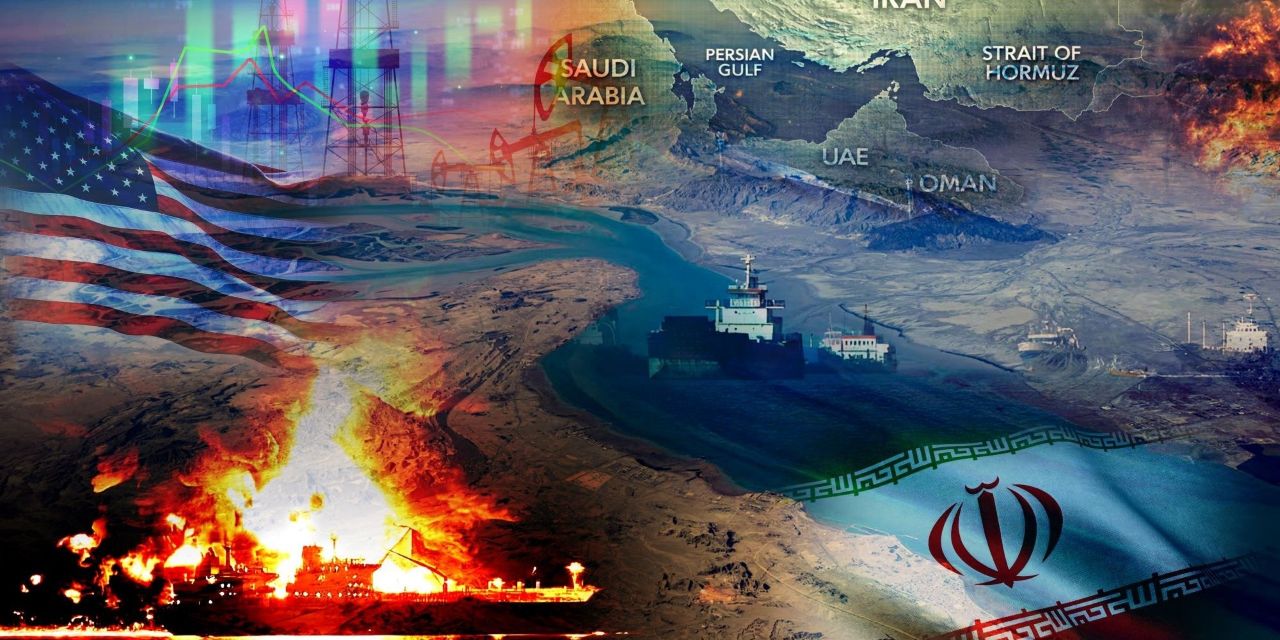
Image: HD-Warrior80 / Shutterstock
This report discusses the futile quest for escalation dominance in the context of the Russia–Ukraine and USA–Iran wars. Wars are generally started because at least one of the adversaries is convinced of a military victory. While military planners usually design detailed procedures for the start of a war, the power to terminate wars is typically lacking and often opponents blunder into a quagmire. The central strategic concept behind this behaviour is escalation and the belief in escalation dominance. Escalation in armed conflicts frequently spirals toward acute brinkmanship, because one or both warring parties anticipate success from further escalation. In doing so, however, they do not necessarily consider the risks associated with a spiral of escalation.
Contents
- Abstract
- Introduction
- Escalation ladders
- Patterns of escalation
- Why escalation dominance remains elusive
Abstract
Russia’s full invasion of Ukraine is now in its fifth year. Many wars last long and few end with a military victory. Despite this empirical evidence, wars are generally started because at least one of the adversaries is convinced of a military victory. While military planners usually design detailed procedures for the start of a war, the power to terminate wars is typically lacking and often opponents blunder into a quagmire. The central strategic concept behind this behaviour is escalation and the belief in escalation dominance. Escalation in armed conflicts frequently spirals toward acute brinkmanship, because one or both warring parties anticipate success from further escalation. In doing so, however, they do not necessarily consider the risks associated with a spiral of escalation. Today’s wars of Russia against Ukraine and the USA against Iran follow this pattern. They illustrate how futile the quest for escalation dominance is and how far the warring parties are from ending these wars.[1]
Introduction
Only an estimated 30 percent of wars end with a military victory for one side. Around 40 percent of all wars end without a formal agreement, and many end with some form of compromise, ranging from a stalemate to a ceasefire or peace treaty.[2] Often contemporary wars drag on for years: Russia’s war against Ukraine is already in its fifth year and Russia’s army has been fighting in Ukraine longer than Stalin’s Red Army fought Hitler’s Wehrmacht in World War II. The dynamics of war are volatile and not linearly predictable—seemingly limited conflicts can drag on unexpectedly long. Amos Harel, an Israeli defence analyst, dubs the conflict between Israel and the Palestinians “forever wars,”[3] a term that originated in the US counter-terror approach after 9/11, indicating that warmaking would continue indefinitely.[4]
At the outset of the present US–Iran conflict, President Donald Trump stated that the operation would last “four to five weeks.” These statements changed repeatedly, ranging from “two to three weeks” and “six to eight weeks” to vague phrases like “as long as necessary.” An end is not predictable. In the Russia-Ukraine war, Vladimir Putin and his military strategists were completely mistaken about the duration of the conflict, which they expected to terminate in a blitzkrieg manner.
In his seminal book Every War Must End, Fred C. Iklé, a Swiss-American sociologist, foreign policy expert and undersecretary of defence, addresses the neglected problem of how wars end and argued that “those with power to start a war frequently come to discover that they lack the power to stop it.”[5] This recurring pattern has been described as a lack of an exit strategy. Military planners plan for combat (more force leads to victory, and victory will secure peace), but they neglect that wars seldom go according to plan. Many wars (Vietnam, Afghanistan, also Ukraine and Iran), illustrate that it is extremely difficult to de-escalate and broker a settlement.
A significant factor underlying this outcome is the seemingly attractive process of escalation, the limited ability to control escalation, and the futile quest for escalation dominance.
Escalation ladders
Escalation theory is well established in strategic thinking and several theorists described escalation ladders in conflicts. The best-known escalation ladder was developed by Hermann Kahn in the 1960s.[6] Most of the 44 rungs in his escalation ladder address the use of nuclear weapons. He and other escalation strategist suggested that options for decisions at every stage of escalation existed and that at least six “stopping points” could be identified. Closely related to these is the concept of escalation dominance, originally a shorthand for a school of thought in deterrence and nuclear strategy, but later also applied to conventional wars. [7] Thomas Schelling’s works provided the conceptual ideas of graduated, controlled escalation for its application in the Vietnam war.[8] Escalation dominance describes a situation where one side supposes it has superior leverage and credible options to impose greater costs on the adversary than vice versa.
Escalatory risks and the danger of confrontation escalating to higher levels of violence are highly unpredictable
The Austrian economist and conflict researcher Friedrich Glasl developed a nine-stage escalation ladder, primarily to be used in conflict mediation, that can also be applied to explain the situation in today’s wars.[9] In his model he describes the first three stages as a “Win-Win” situation where cooperation is still possible. The focus then shifts from problem solving to open threats, which he calls “Win-Lose” stages. His conflict model ranges from hardening to polemics and deeds instead of words to loss of face, threatening strategies, limited destructive strikes, and catastrophe, in which both are threatened by the common abyss. In the Ukraine war, the warring parties have already climbed several of the nine stages and have reached the level of the last three stages which Glasl defines as a “Lose-Lose” situation, where military destruction takes place.
Why does escalation dominance so often fail? Escalation is based on a few assumptions that need to be questioned for their practical utility:
First, escalation strategists proceeded from the assumption that the escalation process can be controlled. Escalation is seen as a process with distinct steps. But often escalations unfold dynamics that can lead to undesirable results on both sides. Escalatory risks and the danger of confrontation escalating to higher levels of violence are highly unpredictable.[10]
Second, escalation depends on ideas that coercion and escalation dominance will lead to victory. The premise is that if an actor in a conflict or war threatens his adversary with costly consequences this may alter the opponent’s behaviour—for instance, to stop fighting or secure a ceasefire. The logic of the coercion concept boils down to: “I will impose penalties if you do not do X or Y.” The superior power believes to be able to control the moves up the ladder to achieve its ends. Especially in a situation of military superiority, there is a temptation to seek solutions in escalations.
Third, misperceptions are often present on one or both sides. Robert Jervis, with his concept of “deterrence and misperception” has described how misperceptions can lead to uncontrollable conflicts.[11]
Fourth, the anticipated ‘escalate to force de-escalation’ strategy almost always fails. Even in hopeless and desperate situations, escalation is still regarded as a way to achieve military victory. Apparently, it is difficult for either side to limit or terminate a conflict once a certain threshold of escalation has been reached, “creating an overall tendency toward escalation rather than de-escalation.”[12]
Two historical events with contrasting escalation processes and results—the Cuban Missile Crisis and the Vietnam War—demonstrate how risky escalation is. The Cuban missile crisis of 1962 is probably the most prominent and explicit case, when efforts to manage the risk of escalation through signalling resolve and restraint and offering an off-ramp eventually led to avoiding a catastrophe. In the Vietnam war, by contrast, despite restraint shown by the USA, China, and the Soviet Union at the outset of the conflict, a gradual but steady escalation called “flexible response” ensued: financial assistance, military advisors, coercion to drive North Vietnam to the negotiation table, the use of chemical weapons, bombing of neighbouring countries, finally to a full-scale war. The conflict lasted two decades, from the division of the country at the Geneva conference in 1954 to the withdrawal of US forces in 1973 and collapse of South Vietnam in 1975.
Patterns of escalation
Escalation can take different forms and the risks of a spiral of escalation can be both horizontal (with military confrontations beyond the contested territory, for example in the war against Ukraine into NATO territory) and vertical (up to the possible use of nuclear weapons). The logic of escalation undoubtedly played a role both in the US conflict with Iran and explains the escalation spiral into which the two adversaries have entered, and the Russia–Ukraine dynamic. Beyond the battlefield, escalation also takes place in different fields: semantic, political, economic, military and technological.
First, on the semantic level, propaganda and disinformation in Russia led to a completely different narrative about the causes and the course of the war than in Ukraine and the West. The main reason given by the Russian was a need to counter NATO’s expansionist tendencies, install a favourable regime in Kyiv and take control of the country. On its side, the government in Ukraine calls the Russian war of aggression a violation of international law. Similarly, the narrative about the US–Iran war produces contrasting stories about the causes for the latest military encounters. In the US it is mainly the Iranian nuclear programme, Iran terrorizing the Middle East, and the authoritarian regime suppressing its population. In contrast, the Iranian government pursues an ideological mission in which both Israel and the United States are depicted since decades as the arch enemy.
Second, politically, escalation is mainly carried out in the attribution of blame for the war. During the first year of the war in Ukraine, Russian war crimes played an important role in political comments and in the media.
During the final stages of escalation, Glasl argues, warring parties might deny the other side’s “human quality”. In the Iran war, Donald Trump has repeatedly—and in violation of international law—threatened to wipe out Iranian civilization. In vulgar language he even threatened: “Open the Fuckin’ Strait, you crazy bastards, or you’ll be living in Hell—JUST WATCH.”[13] Even Oman, a US ally, was threatened by Trump following their contacts with the Iranian leadership: “If Oman gets in the way, we’ll bomb the shit out of them.” [14] Similarly, the Russian President Vladimir Putin labelled the Ukrainian government as “neo-Nazis” and claimed the military action is aimed at the “denazification of Ukraine.”[15]
Third, economically, sanctions are the core escalation mechanism, both in the case of Russia’s aggression as well as against Iran. The highest possible level of escalation in the economic area has not yet been reached as the constant newly adopted sanctions packages illustrate. Certain economic sectors, both against Russia and Iran, remain unaffected or are excluded because of high costs for the sanctioning countries and the global economy. Iran retaliates by closing the Strait of Hormuz, using it as an economic lever to prevent its military defeat.
Fourth, militarily, the level of “limited annihilation strikes” was reached in Ukraine at what Glasl describes as stage seven in his nine-stage model. In the Ukraine war the Russian threat of nuclear use brings this conflict closer to the final stage (“together into the abyss”). During the first years of the war, various leading figures in Russia threatened the use of nuclear weapons. Likewise, the on-again, off-again war in Iran flares up and fades away, with a constant risk of the situation spiralling out of control again. The US government seems bogged down in conflict where it has lost control, despite declarations of victory. Shortly after beginning this war President Trump declared on March 12: “We’ve won. Let me tell you, we’ve won. You know, you never like to say too early you won. We won. In the first hour it was over. But we won.”[16]
Fifth, in wars, the application of technologies plays an important role. Modern and advanced weapons are being deployed. The war in Ukraine has transformed from a war of attrition along the front and largely frozen, to a technologically-driven air and drone war, each side using a constantly modernized arsenal of missiles and drones. In late June 2026, Ukraine’s President Volodymyr Zelensky opened a 40-day campaign aimed at terminating this war by using similar drone tactics as Russia to destroy military targets and critical infrastructure. The term ‘bloody stalemate’ describes the present situation.
Why escalation dominance remains elusive
Neither in the Ukraine war, nor in Iran has the hope of a rapid military victory through escalation achieved its goal. In contrast to the Ukraine war, some conscious de-escalatory steps have been taken in the conflict in the Middle East; however, a resurgence and intensification of the fighting cannot be ruled out.
Escalation dominance assumes the capability to coerce the opponent, while bearing lower costs oneself. While the opposing sides in both wars do have asymmetric capabilities to escalate, the course of the wars shows a certain symmetry. Military superiority could not be translated into victory. In purely quantitative terms, Russia is superior to Ukraine. Nevertheless, Ukraine has managed to respond to Russia’s escalatory steps, although at a high cost. The US is militarily far superior to Iran; yet, contrary to the expectations of the administration in Washington, the US has failed to force Iran to its knees militarily. Iran has managed to establish a certain degree of symmetry through its ability to attack US military bases and allies in the Gulf region, as well as through the economic leverage provided by the closure of the Strait of Hormuz.
A second flaw can be the trap of determinism, the fact that the escalation ladder suggests possibilities of upward and downward steps on the ladder. Leaders become entrapped by their actions, decisions and statements of the past and it might be difficult or impossible for them to retreat. A barrier to de-escalation is not only the objective conditions of a conflict or war (especially the military situation on the battlefield, the economic and the political environment), but the subjective and political beliefs and calculations of leaders. In both the Ukraine and the Iran war, in an eye-for-an-eye or tit-for-tat campaign both sides try to pummel the other into submission. So far, there is no evidence that this escalation will weaken the other side’s willingness to continue fighting.
A third aspect, often underestimated in escalation models, is domestic influences. Domestic factors can be either conducive or counterproductive to ending the war. Putin, for instance, appears reluctant to ask the Russian public to accept a departure from his stated war aims and shift toward unconditional negotiations, as this could potentially undermine regime stability. Donald Trump, with his low approval ratings regarding the war with Iran, has ample reason to search for a way out of the conflict. A quick end to the war, however, is not necessarily a top priority for the Iranian government. For the Iranian government to end the blockade and stop fighting would require far-reaching concessions from the US government.
Finally, escalation models assume rational behaviour of the opponents. Looking at the mistaken faith in escalation dominance and coercion as an achievable path towards a militarily-based victory of the stronger power, it seems that both the Russian and the US governments refuse to accept the present stalemate and recognize that they may end in a quagmire.
Every war must eventually end, preferably in a negotiated agreement. But how can conditions be created to prevent further escalation?
Peace research and mediation experiences suggest that it is helpful for successful negotiations to rely on a mediator or a third party. All attempts in these wars to conduct negotiations have so far failed, which means that these conflicts are not yet ripe for serious negotiations.[17] However, rational considerations of the military, economic, and political situation ought to prompt the warring parties to seek a negotiated solution. An initial round of negotiations between the US and Iran, brokered by the Pakistani government, ended with a bilateral memorandum of understanding that provided for a cessation of hostilities. However, an agreed 60-day period for further negotiations was broken and both sides attacked each other again. As a result, they no longer considered themselves bound by the agreement and the conflict is far from being settled.
In the Ukraine war numerous proposals to negotiate an armistice or a peace treaty have been made, so far without success. A significant gap exists between Ukraine’s and Russia’s positions. No matter how impatiently the American president spoke at the beginning of his second term in office of ending this war quickly, a peace treaty or even a ceasefire seems a long way off. Neither Trump’s personal August 2025 meeting with Russian President Putin in Alaska nor the numerous interventions of his envoys Steve Witkoff and Jared Kushner have led Russia to abandon its maximum positions, i.e., secession of territories in eastern Ukraine and Crimea, demilitarization and no NATO membership of Ukraine, and no participation of European troops as security guarantees. In the categories of ripeness theory, the situation is thus not ripe for negotiation, as Russia continues to believe that it can achieve a military victory.
Our examination of the two wars leads to an extremely pessimistic assessment. Every war must eventually end, preferably in a negotiated agreement. But how can conditions be created to prevent further escalation? War weariness isn’t hard to find in these conflicts, but it has not led to a loss of faith in a possible military victory. Despite extremely high costs, Russia is not prepared to terminate its war. In the US–Iran conflict the situation is similar. As of now, the warring parties appear to be adamant that they will pay whatever price—human or financial—necessary to achieve what they hope will be a victory.
NOTES
[1] The author would like to thank Keith Krause and Stein Tønnesson for comments on an earlier draft of the article.
[2] Uppsala Conflict Data Program, https://ucdp.uu.se/encyclopedia and CSID https://www.csis.org/analy sis/peace-ceasefire-or-stalemate-how-wars-end-and-road-ahead-ukraine.
[3] Amos Harel, “Can Israel End Its Forever Wars?”, Foreign Affairs, Sept. 2, 2026.
[4] Andrew R. Hom and Luke Campbell, “Wartime in the 21st century”, International Relations, 36 (4), 2022, 525–546, https://doi.org/10.1177/00471178221134341.
[5] Fred C. Iklé, Every War Must End, Rev. ed by Iklé, Columbia Univ. Press, 1991, 106.
[6] Hermann Kahn, On Escalation: Metaphors and Scenarios, Prager, 1965.
[7] Michael Fitzsimmons, The False Allure of Escalation Dominance, War on the Rocks, 16 November 2017, https://warontherocks.com/false-allure-escalation-dominance/.
[8] Thomas Schelling, The Strategy of Conflict, Harvard University Press, Cambridge, MA, 1960.
[9] Friedrich Glasl, Konfliktmanagement, in: Berthold Meyer (ed.), Konfliktregelung und Friedensstrategien: Eine Einführung. Wiesbaden: VS Verlag, 2011, 125–145.
[10] Rand Corporation, Understanding Escalation: A Framework for Evaluating the Escalatory Risks of Policy Actions, Santa Monica, 2025.
[11] Robert Jervis, Perception and Misperception in International Politics, Princeton University, Press, 1976.
[12] Rand Corporation, (note 10), 9. See also Iklé (note 5) on de-escalation.
[13] The New York Times, 5 April 2026 https://www.nytimes.com/2026/04/05/world/middleeast/trump-truth-social-post-iran-allah-strait-of-hormuz.html,
[14] BBC, 17 August 2026. https://www.bbc.com/news/articles/cy5dzk0ryzdo,
[15] BBC, 21 February 2023. https://www.bbc.com/news/64718139,
[16] Quoted in The New York Times, 18 August 2026, https://www.nytimes.com/2026/08/18/opinion/us-israel-gaza-hezbollah-hamas-houthis.html
[17] Zartman has written numerous articles explaining his ripeness theory and tested it in case studies. I. William Zartman, Ripe for Resolution, New York, Oxford University Press, 1985/1989; I. William Zartman, Ripeness: The Hurting Stalemate and Beyond, National Academies of Sciences, Engineering, and Medicine, 2000; International Conflict Resolution After the Cold War. Washington, DC: The National Academies Press, 225–250. https://doi.org/10.17226/9897.

The Author

Toda Peace Institute
The Toda Peace Institute is an independent, nonpartisan institute committed to advancing a more just and peaceful world through policy-oriented peace research and practice. The Institute commissions evidence-based research, convenes multi-track and multi-disciplinary problem-solving workshops and seminars, and promotes dialogue across ethnic, cultural, religious and political divides. It catalyses practical, policy-oriented conversations between theoretical experts, practitioners, policymakers and civil society leaders in order to discern innovative and creative solutions to the major problems confronting the world in the twenty-first century (see www.toda.org for more information).
Contact Us
Toda Peace Institute
Samon Eleven Bldg. 5thFloor
3-1 Samon-cho, Shinjuku-ku, Tokyo 160-0017, Japan
Email: contact@toda.org