Reinventing the United Nations: Report on the Uppsala Workshop, 27–28 August 2026
Jordan Ryan
September 26, 2026
Image: Hasbi Sahin / Shutterstock
What would it take for the United Nations to act more effectively on today’s conflicts and cross-border challenges? This report draws on a workshop convened by the Toda Peace Institute and the Dag Hammarskjöld Foundation in Uppsala on 27–28 August 2026 to discuss drafts of seven commissioned policy briefs. Participants examined what can be done when the Security Council cannot agree, what the General Assembly can realistically achieve, and how collective action can remain legitimate and accountable. The report argues that reinvention should begin with the problem, identify who has the authority, knowledge and resources to address it, and connect those capacities without assuming that the United Nations must become larger or more centralised. Jan Eliasson, former UN Deputy Secretary-General and a former President of the General Assembly, joined the workshop and helped frame its closing reflections.
Contents
- Overview
- 1. The workshop
- 2. Beginning with the world
- 3. The Security Council and the limits of collective action
- 4. The General Assembly: fallback or overload?
- 5. Legitimacy as a design principle
- 6. Values, norms, and agreed commitments
- 7. The international civil service
- 8. China and wider Global South perspectives
- 9. A conversation with Jan Eliasson
- 10. From publication to process
- 11. Scope and questions for further work
- 12. Concluding reflections
Overview
The Toda Peace Institute and the Dag Hammarskjöld Foundation convened a two-day workshop in Uppsala on 27–28 August 2026 to review drafts of seven commissioned policy briefs on how the United Nations might be reinvented to meet contemporary challenges. The papers will be published together as a series. This report examines the main arguments and questions that emerged from the workshop. It draws mainly on the second day, when discussion turned from the individual papers to the larger argument connecting them. Participants considered the questions the papers had left unanswered and how their proposals might be taken forward.
The point of departure was the world the United Nations now faces: more armed conflict, acute humanitarian need, rapid technological change and problems that no state can manage by itself. These conditions framed the questions that ran through the workshop. What can the organisation do when the Security Council cannot agree? How much can reasonably be expected of a General Assembly whose 193 member states have widely differing interests? What gives collective action legitimacy? Participants repeatedly returned to a common concern: institutional design matters, but so does the capacity to act on problems that people and governments recognise as urgent. In this report, ‘reinvention’ begins with the problems themselves. It asks who already has the authority, knowledge and resources to address them, inside and outside the United Nations, and what would enable those actors to work together more effectively.
Other discussions concerned the independence of the international civil service: the officials and staff who serve the organisation rather than their home governments. Participants also examined how the series discusses values and agreed norms, and how it addresses China and perspectives from across the Global South. Jan Eliasson, former Deputy Secretary-General and former President of the General Assembly, joined the group and helped frame its closing reflections. To preserve the freedom of those discussions, participants’ views are unattributed, except where invited guests spoke on the record. The report records differences as well as areas of convergence; it does not imply that participants endorsed every argument or proposal.
1. The workshop
This was a working meeting. Its purpose was to test the seven papers against one another. Where did they reinforce each other? Where did they diverge? What had they left unanswered? Above all, could the papers, taken together, guide someone interested in these problems who does not know the United Nations system from the inside?
The project grew out of Toda’s report From Reform to Reinvention: Reimagining the United Nations for the 21st Century.[1] The seven new papers address different parts of the problem: the legitimacy of international decisions; aggression; collective security when the Security Council cannot agree; authority without consensus; the governance of artificial intelligence and other cross-border challenges; prevention as a responsibility of the system as a whole; and the political consequences of United Nations financing.
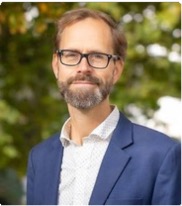
The first day was devoted mainly to discussion of the individual drafts. That evening, participants visited Dag Hammarskjöld’s grave and reflected on the tradition of international service associated with his years as Secretary-General. Professor Isak Svensson of Uppsala University then spoke about what Hammarskjöld’s example might mean today. At a time of exceptionally high levels of armed conflict, he argued, neither easy optimism nor resignation would suffice. The United Nations needed to recover three qualities evident in its earlier history: hope, speed, and a readiness to experiment.
The second day turned to the series as a whole: its central argument, unresolved questions, and what should follow publication. The conversation with Jan Eliasson came later that day, before a final discussion on publication and follow-up.
2. Beginning with the world
Where should the series begin? Several participants argued that it should begin with the world as it is, before turning to the internal problems of the United Nations.
The Uppsala Conflict Data Program recorded 65 state-based armed conflicts in 2025, 13 of which reached the intensity classified as war. It also recorded eight conflicts between states, the highest number since the dataset began in 1946.[2] Participants also pointed to wildfires across several continents and to the heavy loss of life caused by glacier collapse and glacial flooding in the Himalayas. Against this background, a discussion confined to mandates, structures and procedures would miss the point. The United Nations exists to address dangers that states cannot adequately manage alone. The series should begin there.
History supplied the other part of the argument. The United Nations was created after a world war had exposed the cost of a failed international order. Today’s case for reinvention is not simply that the organisation has become cumbersome or that the Security Council is often blocked. The world now combines familiar dangers, including war and great-power rivalry, with cross-border challenges and forms of technological and economic power increasingly exercised outside governments. The institutions created in 1945 were not designed to address all of these challenges. Each paper, in its own way, asks what the United Nations would need to do under these conditions.
For this project, that is what distinguishes reinvention from reform. Much reform debate asks whether the United Nations is fit for purpose without first considering what its purpose demands under present conditions. Reinvention begins with more basic questions: why international cooperation is needed, what the United Nations is for, and what it contributes to an order governed by agreed rules. It then asks how existing authority can be used more fully, how institutions with different responsibilities, resources and expertise can work together, and which ways of working must change.
Reinvention does not necessarily require a larger or more centralised organisation. The series should describe the challenges plainly while showing what already works, how existing capacities could be used more effectively and where new approaches or institutions may be needed.
3. The Security Council and the limits of collective action
The difficulty of securing agreement in the Security Council recurred throughout the discussion, including in papers that did not address the Council directly. The Charter gives the Council primary responsibility for international peace and security, while allowing each permanent member to block a substantive decision with its veto.[3] The possibility of such deadlock is embedded in the original design. Because Charter amendment is politically implausible at present, the papers ask what can be done under the Charter as it stands. Some turn to the General Assembly when the Council cannot act. Others look to regional organisations, coalitions or capabilities elsewhere in the United Nations system. The financing paper shows how concentrated power also operates through control of money.
Three questions followed. What action remains possible when the Council cannot agree, and on what legal and political basis? How much can reasonably be expected of the General Assembly? Could periodic review of the Council’s legitimacy help the wider membership scrutinise the exercise of its authority? These questions linked proposals that approached the problem from different directions.
Several participants questioned the description of the Council as paralysed. It continues to act on many matters, while remaining unable to agree on others of grave consequence. Describing every blockage as a malfunction can obscure the political choices behind it and the privileges granted to the permanent members in the founding settlement.
Who identifies a danger early?
Who mobilises the United Nations system and outside networks?
At what point does the General Assembly enter?
Nor does shifting action elsewhere remove the possibility of great-power obstruction. Powerful states exert influence through finance, diplomacy, and the General Assembly as well as through the veto. Any proposal to shift decision-making elsewhere must therefore explain how it would avoid reproducing the same concentration of power in another forum.
The series also needs to explain more clearly how its proposals would work in practice. It contains no developed proposal for restraint in the use of the veto in mass-atrocity cases and, apart from one paper, says little about Council membership. The reader also needs to understand how the proposed arrangements would work from beginning to end. Who identifies a danger early? Who mobilises the United Nations system and outside networks? At what point does the General Assembly enter? Who decides, and on what authority? How is legitimacy maintained along the way? The same questions arise in fields such as artificial intelligence, where collective governance is needed but the allocation of authority remains contested.
4. The General Assembly: fallback or overload?
When the Security Council is blocked, the United Nations is not necessarily powerless. Under Article 99 of the Charter, the Secretary-General can formally bring before the Council any matter that, in the Secretary-General’s opinion, may threaten international peace and security.[4] The 1950 “Uniting for Peace” resolution provides for the General Assembly to consider a crisis and recommend collective action when disagreement among the permanent members prevents the Council from fulfilling its responsibility for international peace and security. It allows the Assembly to meet in an emergency special session if necessary.[5] The Council also reports to the General Assembly. The Assembly itself may discuss and recommend action on many peace and security questions. Its recommendations on these matters are not legally binding on member states.[6] The question is how these powers might be used more effectively without treating the Assembly as a substitute Security Council.
Hammarskjöld’s test for the international civil servant was “integrity in the sense of respect for law and respect for truth”
There were good reasons for caution. The Assembly represents the full United Nations membership, but 193 governments do not move quickly or easily sustain attention to a fast-changing crisis. If several papers make the Assembly their chief answer to Council deadlock, the series may be assigning too many tasks to the same institution.
The Assembly can nevertheless acquire political weight when presented with a clear and consequential question. A recent debate on the international civil service, convened at the Secretary-General’s suggestion, kept delegations engaged for more than two hours in a discussion of Dag Hammarskjöld’s 1961 Oxford lecture on the international civil servant. Hammarskjöld’s test for the international civil servant was “integrity in the sense of respect for law and respect for truth.”[7] The example did not show that the Assembly is agile. It did show that a specific issue, framed clearly, can turn it into a serious political forum.
One practical suggestion was to develop specific proposals that the President of the General Assembly could take forward. A defined question, a clear procedure, and an identifiable purpose would give the Assembly a more credible role than general appeals for it to compensate for Council deadlock. The discussion also challenged the habit of treating the Security Council as the United Nations’ only source of political authority.
5. Legitimacy as a design principle
Legitimacy became a test for the series as a whole. For member states and the wider public, it turns on three questions: who decides, how decisions are made and whether they produce results. A Charter mandate provides legal authority, but political legitimacy can erode if the process is regarded as closed or unfair, or if decisions prove ineffective.
Several participants proposed placing the paper on legitimacy at the beginning of the series. It would establish a test for every subsequent proposal: if action moves to another institution or grouping, how will those affected be represented, how will decisions be scrutinised and who will answer for the results?
The proposed periodic review of the Council’s legitimacy raised a more difficult issue: who would conduct it? A review by the Council itself could be avoided, delayed or reduced to a restatement of members’ positions. A report to the General Assembly would allow the wider membership to examine patterns in the Council’s exercise of authority. No mechanism was agreed. There was, however, support for the underlying principle that legal authority and political legitimacy are not identical. The Council’s authority derives from the Charter; the legitimacy of its exercise depends on representation, procedure and performance.
Results matter to this judgement. Sound rules and representative procedures cannot by themselves sustain confidence in an institution that repeatedly fails to respond to the problems it exists to address. Equally, effectiveness alone cannot justify the exclusion of those affected by its decisions.
6. Values, norms, and agreed commitments
Talk of shared values immediately raised two questions: whose values, and shared on what grounds? One participant recalled a senior United Nations official making a useful distinction. The organisation’s values are not a collection of personal or cultural preferences. They are set out in the Charter, human rights treaties and other undertakings negotiated and accepted by member states. A series written for a global audience needs to make that distinction clear.
In countries under authoritarian rule or emerging from war, the United Nations may represent respect for individual dignity in a way that institutional debates in New York seldom capture.
Integrity cannot be separated from effectiveness. An efficient police force without integrity may be more dangerous than an ineffective one. Similarly, a United Nations reform debate concerned only with cost and efficiency may lose sight of what the institution is for. Participants noted with concern that member states had shown less interest in attending a discussion framed around ethics than one framed around effectiveness.
Some felt that the drafts still did not say plainly enough what the United Nations stands for. Dag Hammarskjöld’s public service drew authority from a clear moral purpose. The same point is visible far from headquarters. In countries under authoritarian rule or emerging from war, the United Nations may represent respect for individual dignity in a way that institutional debates in New York seldom capture.
There is no present agreement, however, on a single vocabulary of values. Governments differ over individual and collective rights, and over the relative place of civil and political rights and social and economic rights.
One participant illustrated how positions change. Some West African states, the participant suggested, now defend the women, peace and security commitments established under Security Council resolution 1325 more firmly than some governments that once championed that agenda but have since stepped back.[8] Claims about the proper character of the state and its duties towards citizens remain contested, including in countries that once promoted them strongly. The firmer starting point may be commitments already made: what governments owe the people within their borders and the obligations they have accepted in responding to challenges that cross borders.
The distinction between values, norms, principles and ethics matters because these terms are often used interchangeably. For the work discussed at Uppsala, the firmest basis was the Charter, international law, human rights obligations and other commitments formally accepted by states. These provide grounds for assessing conduct without assuming agreement on every moral or political question.
7. The international civil service
The independence of the international civil service is a condition of the United Nations’ capacity to act. Under the Charter, staff serve the organisation and may not seek or receive instructions from governments.[9] Political pressure on senior appointments, staffing decisions, or professional advice therefore has consequences well beyond personnel management. An organisation whose officials are effectively answerable to individual governments cannot exercise the impartial judgement expected of it.
Participants considered whether this subject warranted a separate paper. A serious examination would need to go beyond restating Charter principles to consider recruitment, incentives, the hierarchy of staff categories and the system for settling employment disputes. Each raises substantial questions about whether the organisation’s rules and practices encourage professional judgement and protect staff independence.
Senior appointments offered one possible focus. Nationality patterns can become entrenched unless consciously addressed. Yet merit, independence, and geographical diversity need not be competing aims. The practical challenge is to sustain a professional service that reflects the membership while retaining the impartiality required by the Charter.
No decision was reached at the workshop on an additional paper. The discussion nevertheless made clear that institutional authority and independence cannot be considered separately from the people who exercise them. The international civil service therefore remains relevant to the series’ central argument, even if a fuller examination lies beyond the scope of this series.
8. China and wider Global South perspectives
China had been largely absent from the discussion until one participant asked whether that absence was deliberate. The discussion then turned to the Chinese government’s June 2026 white paper on global governance. It presents China as a defender of the United Nations and places strong emphasis on development and state sovereignty. It states: “Every nation’s sovereignty and dignity must be respected.”[10] Participants contrasted this emphasis with the greater prominence given to human rights and democracy in Western approaches. Nobody proposed endorsing the paper. The point was that any credible argument about the future of the United Nations must engage with different understandings of international order, including those advanced by China and by states across the Global South.
Participants did not want China to appear only as a source of risk. That would make the series look narrowly Western to many readers. Engagement does not require avoiding disagreement. The papers should remain candid about human rights, democracy, and international law.
The approach that emerged was to use the Chinese white paper where it speaks directly to a paper’s argument, without organising the series around any one country. The audience extends well beyond Europe and North America. The series should address the concerns of countries across the Global South and draw on their institutional experience and approaches to multilateral cooperation. Smaller states should receive attention as actors shaping international cooperation in their own right.
9. A conversation with Jan Eliasson
The group was joined by Jan Eliasson, former Deputy Secretary-General of the United Nations and former President of the General Assembly, who had read summaries of the seven papers. He began by saying that he had rarely seen the organisation at so low a point, and that in his own field, mediation, demand had weakened because governments were reaching for coercive solutions. That was why the discipline he had always urged on colleagues in a crisis was needed more than ever: hold two perspectives at once. Be unsentimental about the world as it is, but never lose sight of the world as it should be, because principles supply the fixed point of direction and are not available for compromise.
He recalled the formula he helped to shape for the 2005 World Summit Outcome: there is no peace without development, no development without peace, and neither without respect for human rights. He would now add respect for international law. One of the deepest faults of the organisation, he argued, is that it treats these as separate enterprises rather than as mutually reinforcing. The method should run from the problem, to a realistic analysis, to who is capable of acting, and only then to a division of labour.[11]
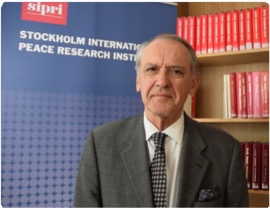
On the machinery of the Charter he was specific, asking the group to read Articles 33, 34 and 99. He described the provisions on peaceful settlement as an underused treasure. Article 99, which allows the Secretary-General to bring before the Security Council any matter that in his opinion may threaten international peace and security, had been used far too sparingly. When the Council is blocked, he argued, some of the vacuum can be filled by the Secretary-General and by the General Assembly, which he had mobilised both as its President and later over Syria.
General Assembly decisions do not bind, but they can express the considered opinion of the wider membership and could be used much more forcefully.
He also returned to a problem he had encountered as Deputy Secretary-General: the persistence of silos within the United Nations. His own authority had allowed him to bring together peace and security, development, legal and agency perspectives around a common problem. The wider system, he said, still fails too often to do this. Its capacities are substantially underused because the organisation continues to treat mandates and institutional responsibilities as separate when they should be brought together around the problem to be solved.
He was blunt about the reductions in development and humanitarian assistance, which he called shameful, and about mixing migration and development policy to solve domestic political problems, which he called egotistic. Double standards in Western responses to Ukraine and to the Middle East had cost real credibility, and he saw the consequences in United Nations voting on Ukraine, where support had weakened particularly among states of the Global South. On climate change his formulation was simpler: there is no Planet B.
On international law he recalled a line he had written for Olof Palme to deliver at the United Nations in June 1982: respect for international law is the first line of defence for nations, above all for small and medium-sized states that would otherwise be exposed to the spheres of interest of great powers. He said the sentence described the present moment exactly. For that reason, he rejected the argument that the post-1945 system is finished. The system exists, he said; it is not being sufficiently used or respected. A negotiation conducted today would probably yield considerably less than is already in hand. What was achieved in 1945 and 1948 should not be surrendered in the search for something new, but fully mobilised.
Asked whether the next Secretary-General should mediate personally or work through envoys, Eliasson answered that the calculation should be about the seriousness of the situation, not the odds of success. The Secretary-General must act because the world needs to hear a voice of fairness, justice, and peace. He named Sudan as an outstanding failure, since no overriding great-power interest even explains the international inaction there, and argued for combinations with regional organisations and other political arrangements rather than a default to peacekeeping operations.
His broader method was consistent throughout the discussion: put the problem at the centre, analyse it closely, ask which member states, ambassadors, organisations, or other actors are capable of moving it, and assemble a small group able to act. On China he advised frankness rather than avoidance. Engagement was necessary because of China’s importance and commitment to parts of the multilateral system, but it should not require silence on human rights, truth or democracy. He returned more than once to the proposition that the most important word in the world is together.
He closed with an argument from history. The years between 1930 and 1945 were among the darkest on record, yet in 1942, in the middle of them, preparations began for a different international order. Those efforts eventually produced the Charter, the Universal Declaration of Human Rights, the Geneva Conventions, and other foundations of the post-war system. The opportunity that came at the end of the Cold War was not fully taken. His conclusion was that a low point is precisely when direction has to change. The selection of a new Secretary-General offers such a moment, and the work should be undertaken without too many opportunistic calculations about the chances of success.
10. From publication to process
The final session dealt with audiences, messages and follow-up. Publication should open the next stage of the work, not close it. Each paper will remain a policy brief with its own recommendations. The series, however, should be offered as a set of arguments and proposals to be tested and developed further, not as a finished design for the future United Nations.
The incoming Secretary-General and senior leadership are an important audience. Member states are equally important, particularly smaller states and the varied groupings often described as middle powers. Neither smaller states nor middle powers form a single bloc. Each paper should translate the series’ account of reinvention into practical choices, distinguishing steps that can be taken soon from those requiring longer political or institutional work.
Rather than one large launch, participants favoured a succession of smaller conversations at United Nations headquarters and in national capitals. Existing meetings and consultations offer ready openings. Other initiatives are preparing advice for the next Secretary-General; the sensible course is to connect with them rather than compete for attention. Experienced United Nations staff below the highest ranks should also be heard. They often know why a reform works or fails yet rarely enter the discussion.
Most readers will not work through the full collection. Short action notes, one-page summaries, interviews, video, and opinion pieces can carry the individual arguments further. Research institutions in the Global South should be invited to respond. The purpose goes beyond dissemination: the arguments and proposals need testing with people in a position to use, challenge, or develop them.
The papers will be published online in October, both individually and as a collection with a foreword and introduction, ahead of United Nations Day on 24 October.
11. Scope and questions for further work
Peace and security are the series’ main concern. Development, humanitarian action and human rights receive less attention. That boundary should be acknowledged without implying that these parts of the United Nations matter less. Some governments now argue for a narrower organisation centred on peace and security. Many others, especially in the Global South, judge the United Nations largely by what it delivers in development.
Nothing in the series should be read as support for withdrawal from development or indifference towards humanitarian action and human rights.
The workshop deliberately set aside the larger question of whether the United Nations should continue to provide services directly in countries. This was a practical decision, not a judgement on the merits. The subject cannot be handled responsibly in a paragraph and would require substantial work of its own. A partial account could also be used by those pressing for indiscriminate cuts. It lies outside this series.
The paper on cross-border problems takes artificial intelligence as its principal case, with climate and health as related examples. Its wider concern is how to build coalitions around problems that exceed the capacity of individual states or existing institutions. The discussion of this paper thus addressed a question extending well beyond technology: how can governments and the United Nations work with companies and other organisations that hold essential expertise and resources for addressing such problems while ensuring public accountability?
Accessibility was a further consideration. The arguments must be intelligible to an informed general reader as well as to United Nations specialists. Explaining what an institution does, why a proposed change matters and who could carry it forward is also a test of the proposal itself. Internal terminology cannot substitute for a clear account of how action would become possible.
12. Concluding reflections
The workshop did not produce a blueprint for a reinvented United Nations. It produced a clearer account of why the organisation often struggles to turn existing authority, knowledge, and capabilities into effective collective action.
Formal authority remains concentrated in institutions created in 1945, while the power, expertise, and resources needed to address problems are increasingly spread across governments, regional bodies, international organisations, businesses, and other networks. Reinvention therefore does not necessarily mean creating a larger or more centralised United Nations. It means deciding what must remain at the centre, what can be handled elsewhere, which capabilities need to be connected, and to whom those exercising authority must answer.
The same question arises at the country and regional levels. Working together more effectively need not mean moving more decisions to headquarters. Resident Coordinators lead United Nations country teams, bringing together the United Nations organisations working on development in a country. These teams combine local knowledge and relationships with the expertise of specialised agencies and other United Nations entities. Regional organisations and United Nations regional commissions contribute wider regional perspectives and connections. The task is to make better use of these different strengths while keeping decisions close to the problem and avoiding new layers of control.
This approach builds on the Charter. Much of the discussion started from powers and instruments that already exist but are not fully used. The seven papers ask what the United Nations can do under the Charter as it stands when existing arrangements struggle to meet demands for collective action. They approach that question from different directions and do not amount to a complete programme. Read together, they suggest that the organisation’s legitimacy depends both on the rules under which it acts and on its capacity to act fairly, effectively and accountably when action is needed.
Several sessions returned to a persistent institutional failure: the United Nations often has the information and analysis it needs but fails to turn them into decisions and action. Assessments reach the relevant offices, meetings take place and courses of action are discussed, yet responsibility for acting can remain unclear or agreed action may not follow. Reinvention must address the political and institutional reasons for that failure. Additional reporting requirements or new mechanisms will achieve little if the connection between knowledge, decision and action remains weak.
The workshop also clarified a method. Start with the problem rather than the organisational chart. Identify who has the authority, knowledge, resources and influence needed to address it, who stands to lose from change, and what interests or coalitions could make action politically possible. Connect capabilities that institutional boundaries now keep apart. Be explicit about who can act, on what authority and with what accountability.
Then put practical proposals before people able to use them.
Publication should therefore invite argument, testing, and adaptation. Eliasson put the obligation plainly: calculations about the likelihood of success must not become an excuse for inaction. The task is to act together wherever possible.
NOTES
[1] Jordan Ryan, From Reform to Reinvention: Reimagining the United Nations for the 21st Century, Report No. 293 (Tokyo: Toda Peace Institute, 7 April 2026)
[2] Shawn Davies, Therése Pettersson, and Magnus Öberg, “Organized Violence 1989–2025, and Violent Political Protests,” Journal of Peace Research 63, no. 4 (2026): 705–723, https://doi.org/10.1093/jopres/xjag046; Uppsala University, “UCDP: Record Number of Conflicts Between States,” press release, 9 June 2026,
https://www.uu.se/en/press/press-releases/2026/2026-06-09-ucdp-record-number-of-conflicts-between-states.[
[3] Charter of the United Nations, arts. 24(1) and 27(3), https://www.un.org/en/about-us/un-charter/full-text.
[4] Charter of the United Nations, art. 99, https://www.un.org/en/about-us/un-charter/full-text.
[5] United Nations General Assembly, “Uniting for Peace,” resolution 377 A (V), A/RES/377(V), 3 November 1950, https://legal.un.org/avl/HA/ufp/ufp.html.
[6] Charter of the United Nations, arts. 10–12 and 24(3), https://www.un.org/en/about-us/un-charter/full-text.
[7] Dag Hammarskjöld, The International Civil Servant in Law and in Fact: A Lecture Delivered to Congregation on 30 May 1961 (Oxford: Clarendon Press, 1961), reissued by the Dag Hammarskjöld Foundation in 2021, https://www.daghammarskjold.se/publication/the-international-civil-servant-in-law-and-in-fact/.
[8] United Nations Security Council, resolution 1325 (2000) on women and peace and security, 31 October 2000, S/RES/1325(2000), https://digitallibrary .un.org/record/426075.
[9] Charter of the United Nations, arts. 100 and 101, https://www.un.org/en/about-us/un-charter/full-text.
[10] State Council Information Office of the People’s Republic of China, More Just and Equitable Global Governance: China’s Principles, Proposals and Actions (June 2026), released 17 June 2026, https://english.www.gov.cn/archive/whitepaper/202606/17/content_WS6a326192c6d00ca5f9a0bab7.html.
[11] United Nations General Assembly, “2005 World Summit Outcome,” resolution 60/1, A/RES/60/1, 16 September 2005, para. 9, https://digitallibrary .un.org/record/556636/. The discussion of General Assembly decisions in this section concerns recommendations on peace and security; the Assembly also takes binding decisions on certain internal and budgetary matters under the Charter. See Charter of the United Nations, arts. 10–12 and 17.
The Author

Toda Peace Institute
The Toda Peace Institute is an independent, nonpartisan institute committed to advancing a more just and peaceful world through policy-oriented peace research and practice. The Institute commissions evidence-based research, convenes multi-track and multi-disciplinary problem-solving workshops and seminars, and promotes dialogue across ethnic, cultural, religious and political divides. It catalyses practical, policy-oriented conversations between theoretical experts, practitioners, policymakers and civil society leaders in order to discern innovative and creative solutions to the major problems confronting the world in the twenty-first century (see www.toda.org for more information).
Contact Us
Toda Peace Institute
Samon Eleven Bldg. 5thFloor
3-1 Samon-cho, Shinjuku-ku, Tokyo 160-0017, Japan
Email: contact@toda.org