Hollow Parties in India’s Cockroach-Eaten Democracy
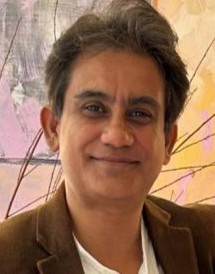
Debasish Roy Chowdhury
September 15, 2026

Image: Firdous Nazir NurPhoto / Shutterstock
This paper discusses important lessons for democratic decay held by India’s political parties. A Gen Z movement has brought Modi to heel but cannot slow India’s plunge into illiberalism under his watch thanks to the country’s severely diminished opposition parties. The Indian case shows how democratic resilience is threatened by the universal pathology of withering political parties. Democratic backsliding is not just about power grab by a totalizing political force eviscerating governing institutions; it’s also about a broken party system failing to push back despotic rule through institutional means, and gatekeep power.
Contents
- Political consultants
- Dark money and demagogues
- The end of the party
- Lacking resilience
- Post-party politics
- Cockroaches and lame-duck parties
A Gen Z movement has brought Modi to heel but cannot slow India’s plunge into illiberalism under his watch thanks to the country’s severely diminished opposition parties. The Indian case shows how democratic resilience is threatened by the universal pathology of withering political parties. Democratic backsliding is not just about power grab by a totalizing political force eviscerating governing institutions; it’s also about a broken party system failing to push back despotic rule through institutional means, and gatekeep power
Political consultants
High drama erupted in the small hours of a suspense-filled January day in Kolkata, capital of the Indian state of West Bengal. Masked officers of the Enforcement Directorate (more commonly known as ED) from the federal government swept into the glossy offices of I-PAC (Indian Political Action Committee), one of the country’s leading political consultancies.
They hauled away computers and files as the stunned staff looked on. Mamata Banerjee, the charismatic (then) chief minister leading Bengal’s governing party, the Trinamool Congress (TMC), rushed to the scene and walked out with several files. She complained to the reporters at the site that the “politically motivated”[1] raid was being orchestrated by the federal government to steal information on her party’s election strategy and potential candidate lists for the 2026 state Assembly elections scheduled later in the year.
Having held power in Bengal for 15 years on winning three straight elections, Banerjee has been considered one of the tallest opposition leaders against Prime Minister Narendra Modi for successfully thwarting his party’s push into this eastern state. She herself has been fancying herself as the leader of the national coalition against Modi that is led by the Congress party by default as the largest opposition party. A former Congress leader herself, Banerjee broke away and launched the TMC after being expelled from the Congress in 1997. Leading her Bengal party with great success ever since, she had emerged as a key player in the pushback against the momentum of Modi’s governing Bharatiya Janata Party (BJP).
Television channels played on loop the drama of one mystery-filled ‘green file’[2] she had walked out with, in this latest episode of Banerjee’s running battles with Modi’s federal government. Local media reported that ED officers seemed interested in “electoral intelligence”[3] as they had been asking I-PAC staff questions about the company’s data operations that suggested they were trying to understand how the company created, organised, and stored data for the party. In the high-profile court battle that ensued between the state government and the ED, the latter alleged it was only conducting a corruption probe on a private company, which Banerjee had obstructed by taking away key evidence—an unprecedented charge against a chief minister.
It was only the beginning of I-PAC’s woes—and Banerjee’s—as the BJP was closing in on her. The BJP, which has had historically negligible presence in the state, has been hell-bent on winning Bengal in the recently concluded state Assembly election in April. From zero seats in the 294-seat Assembly, it won 3 in 2016. That shot up to 77 in 2021, positioning the BJP as the main opposition party in the state in the previous state election. This time it aimed higher, and left nothing to chance.
It unleashed federal probe and regulatory agencies like the ED to break Banerjee’s aides and financiers, flew in top BJP leaders and ace workers for the campaign, and poured money like water for the April election. Simultaneously, through an electoral rolls revision drive called the Special Intensive Revision (SIR), the BJP federal government through the Election Commission under it made sure that the state’s 27 percent Muslims—who tend to rally behind Banerjee fearing the BJP’s Hindu supremacist politics—were strategically whittled down in the electoral list. The war on I-PAC was a surgical strike on the TMC’s campaign machine delivered on top of these multiple strategies to break Banerjee’s 15-year grip on power in Bengal. A few months later, the ED would arrest I-PAC’s co-founder and director on a money laundering case just two weeks before the election in April.
Modi eventually got what he wanted and the BJP won a landslide with a two-thirds majority in the state Assembly, his strategies of vote capture complemented by the strong undercurrent of aversion for Banerjee’s party for its pervading corruption and thuggery. Thus ended the reign of Banerjee, popularly called ‘Didi’, or elder sister, a firebrand leader credited with unseating a Leftist government in 2011 that had ruled Bengal for 34 years.

Source: Suvendu Das India / Shutterstock
In power, she built on her street-fighter image with a governance model based on targeted welfare, bureaucratic responsiveness, and a tightly knit grass-roots organisation (trinamool is literally the Bengali word for grass-roots) that almost made her invincible till she wasn’t. It would seem odd that a consulting firm would be so central to a political party with what looked like a high level of grass-roots connect and organisational strength. But it presents a stark reality of the deepening global recession of democracy: the professionalization of politics with the withering of traditional political parties.
As foundational institutions of democratic governance, political parties worldwide are experiencing organizational decay and popular disengagement, eroding their capacity for connecting citizens to the state and political processes. As parties are becoming ever more dependent on big money while grass-roots party organizations such as unions and associations decline as primary sources of funding and mobilization, political accountability shifts from party constituents to shadowy patrons. And, politics increasingly moves from volunteer-driven social activism to specialized, expert-managed campaigns driven by data analytics, PR strategies, and digital marketing. Elections come to resemble corporate marketing campaigns rather than battles of ideas. Political consultancies are the key in mediating this transition.
They provide voter databases, targeted messaging strategies, ground‑level micro‑campaigning and organisational planning—functions that would once be considered the domain of political parties but which are now too incapacitated to perform these themselves. Consultancies even find and rent crowds[4] to attend rallies to help parties and leaders project popularity. In this managerialisation of politics, corporate management ideologies, techniques, and values replace ideological contestation. Nothing screams crisis of democracy louder than political parties having to pay consultants to tell them what voters want and how to talk to them.
Dark money and demagogues
In India, the 2014 general election that catapulted Modi to national power also marked the beginning of the rise of political consultancies in a major way. Modi himself benefited hugely from a professionalized campaign modelled on US presidential strategies, primarily focusing on the person of the candidate rather than the party’s programmes. A pioneering consultancy co-founded by political strategist Prashant Kishor that managed Modi’s campaign revolutionized Indian elections with data-driven outreach, voter analytics, booth-level mapping and social media drive. Kishor’s team later evolved into I-PAC that was consulting Banerjee; Kishor himself has stepped away from consulting to try his hand at active politics, having launched his own party.
Private consultancies may have in fact begun to influence Indian elections even earlier. The parent company of the controversial political consulting firm Cambridge Analytica conducted behavioural research and polling for several elections in India between 2003 and 2012, a company whistleblower revealed in the depositions in 2018 before the UK Parliament on Facebook data breaches that impacted over 50 million users. The company had incidentally also played an important role in US President Donald Trump’s 2016 campaign.[5]
The whistleblower named India’s Congress party as its client, while a data protection expert revealed in the same depositions that an Indian billionaire[6] had paid the company to ensure that Congress lost the elections. A former top executive of the company had apparently been “pretending to work for one party but actually paid underhand by someone else” before he died in Kenya under mysterious circumstances.
In a country with poor campaign finance laws, this shadowy managerial invasion of politics has grave cost implications for campaigns, and in turn, for its democracy. Indian elections are now among the costliest in the world. In India’s 2019 general election, campaign spending reached $7.2 billion,[7] surpassing the $6.5 billion spent in the 2016 US presidential and congressional elections put together—despite India’s per capita income being just three percent of that of the United States.
Election campaigns were never cheap, but when professional managers and specialists replace voluntary political workers, somebody has to foot the additional bill. With the decline of traditional sources of party funds such as trade unions, parties have become even more dependent on business fat cats to meet the rising expenses. This not only makes parties more accountable to financial patrons than their constituencies, it also tilts the balance decisively in favour of politicians with access to pots of money, affecting the quality of representation. Elite capture is exacerbated, adding to the already debilitating pathologies of poor internal democracy that has long characterized the institutional weakening of Indian political parties.
While parties have become ever more dependent on Big Money, concentration of executive power has exponentially increased the ability of governing party leaders to raise funds and distribute patronage. That allows them greater leverage not just over rival parties but over rival leaders within their own parties as well. This centralization of political and financial power, and the resultant personalization of politics are glaringly evident not just in the quasi-deification of Modi in his BJP, but also in other parties, such as Banerjee in her TMC. Her cult of personality in her party—till her fall from power—rivalled Modi’s.
The concentration of power and Big Money naturally tilts the electoral balance in favour of the party in power. Just as the BJP has profited from this dynamic at the federal level and the states it controls, so have the opposition leaders like Banerjee. They have used captured institutions for political fund-raising that give them an edge with their ability to buy professional campaign resources that make up for the gaps in party organization, such as the absence of volunteer cadres and frontal organisations embedded in society.
The end of the party
These deficiencies of political parties lie at the core of the worldwide loss of public trust in politicians and governments. It is manifested in Gen Z movements from Kenya to Nepal, and most recently in India itself, where a meme-inspired ‘cockroach movement’[8] against the country’s broken public examination system forced Modi’s hand in accepting the resignation of his education minister. Gen Z movements have stepped into the void left by hollow parties that can no longer mobilize the masses.
In The Hollow Parties: The Many Pasts and Disordered Present of American Party Politics, Daniel Schlozman and Sam Rosenfeld describe US political parties as hard shells lacking internal cohesion and positive loyalties, failing to link citizens to governments or build governing coalitions. The book traces this hollowness through over 200 years and concludes that party weakening in the US accelerated since the 1970s, with external groups filling the void in the political parties as the parties themselves lost the capacity for mobilization, fundraising, candidate recruitment and agenda-setting with Vietnam, stagflation, and the 1960s civil rights revolution ending the New Deal order of regulated capitalism and welfare expansion.
Political consultancies, pressure groups like Political Action Committees (PACs) and think-tanks emerged to fill the void as political reforms made nominations and funding more participatory but weakened party gatekeeping. By the 1990s, political consultants were handling polling, media, and voter targeting—tasks once handled by parties. They grew into a billion-dollar industry, which simply exploded after 2010 when the US Supreme Court removed legal limits on independent political spending. In India, political consultancies began to boom soon after, replicating the model used in the US.
The corporatization of political parties and campaigns has the effect of accentuating an old pathology of democratic politics: the tendency towards elitism. There is a long line of political thinking—from Plato and Machiavelli to Strauss and Huntington—on the need of an elite, and often secretive, authority to manage the limitations of democracy. Corporatization hastens the process.
Popular participation today, as we understand it, can in fact be argued to be a lot less democratic than we imagine. In political theorist Sheldon S. Wolin’s reckoning, democracies create built-in institutional buffers to withstand what James Madison described as “the confusion and intemperance of the multitude.”[9] In Democracy Incorporated: Managed Democracy and the Specter of Inverted Totalitarianism, he argues the whole architecture of the US Constitution’s separation of powers through institutional checks and balances was designed to make it difficult for popular majorities to institute policies in the interests of the majority. After all, modern democracy, as argued by thinkers like Joseph Schumpeter and Robert Michels, is essentially controlled by a small elite group even if it allows for mass participation.
In India, political parties, which are mostly personality-oriented, highly centralized and lack internal elections, have long embodied Michels’ ‘iron law of oligarchy’[10]. In his 1911 classic, Political Parties, Michels posited that democracy within organizations is unsustainable because of technical necessities of leadership, bureaucracy, and specialization. Rank-and-file members become passive, deferring to leaders who control information, resources, and expertise, creating a self-perpetuating elite. All complex organizations, including political parties or unions, thus inevitably evolve into oligarchies ruled by a small elite.
As greater professionalization of politics necessitates more financial resources to wage political campaigns, democratic elitismdeepens. Power becomes more concentrated among a small, privileged group with wealth and connections helping them to gain primacy and leverage over the grass-roots. Power also becomes stickier as access to power increases a party’s ability to afford technocratic avenues of retaining power, such as the services offered by political consultancies. Power begets money, and money begets power.
Noticeably in India, since Modi’s rise to national power in 2014, the turnover rates in governments, both at federal and state levels, have dropped sharply. The electoral outcome in Bengal ending Banerjee’s grip on power is one of the few exceptions to this rule but the scale of the challenge mounted against her regional party could only have been pulled off by a party like the BJP that has access to power, and hence the resources; Modi’s party now gets 10 times[11] the corporate donations received by all other national parties put together.
The traditionally strong parties in Bengal, namely the Congress and the Communist Party of India (Marxist) that have ruled the state in the past and still have a fair bit of organisational presence could not have remotely matched either the TMC’s or the BJP’s campaign. Lack of power and money can spell political death in this post-political, technocratic world of politics that comes to be inhabited by zombie parties as hollow shells of the mighty machines once embedded in the society.
Banerjee’s party, now stripped of state power and the associated access to business funding minted on the ability to dispense state favours, joins this vast landscape of zombies. Within days of her being trounced by the BJP (that won 207 to the TMC’s 80 seats in in the 294-seat Bengal Assembly), her party began to collapse like a house of cards.[12] The majority of her 80 state legislators have joined a rebel faction, while 20 of the 28 of her members in the national Parliament have joined a little-known party that is now part of the BJP-led alliance. Having lost control over the legislative wing of the party, Banerjee is now at the very real risk of losing the registered name and symbol of the party that she built from scratch.
The TMC’s unravelling again shows the ability of technocracy in surrogating power in hollowed out parties. If Banerjee’s TMC had a semblance of the social-movement qualities or ideological particularities and organisational coherence that bind together parties, it would have been impossible to disintegrate at the pace it has. Absent all of these, it was held together by what the Russians call ‘politicheskya tekhnologiya’, or political technology. It is the engineering of politics that fills polities with zombie parties rolling on dark money and dark structures with no ideological or programmatic coherence, and sustained instead by media manipulation, administrative leverage and transactional loyalties designed to reproduce power rather than produce policy. In countries like India, where political parties are exempt from income tax, and electoral funding and party financing are highly opaque, political parties are prime sites of political technology through their role in money laundering and deal-making rather than as vehicles of social change.
An extreme form of this is registered unrecognised political parties, or RUPPs, which fail the minimum threshold of vote share and seats to be recognised as political parties but cannot be legally de-registered either. The unknown party that Banerjee’s TMC rebels joined was one such party, called Nationalist Citizens Party of India (NCPI). There are over 3,200 such parties that received more than $1 billion in electoral donations in two years from 2022 to 2024, pulling in more than the two main parties, the BJP and the Congress. Since political donations are tax-exempt, many of them are used in money laundering rackets.
Democracy is supposed to be about popular demand, but political technology, which spans everything from manipulating the news agenda to seeding proxy parties and political organisations, works to engineer the political system from the supply side. As Andrew Wilson writes in Political Technology: The Globalisation of Political Manipulation, “Political technology helps explain the speed of democratic deterioration in previously stable liberal democracies…Democracy has lost power to technocracy.”[13]
Consultants are at the centre of this technocratic churn, making the political playing field highly uneven. In the ‘competitive authoritarian’[14] regimes where competition is real and democratic institutions are not entirely a façade, consultants make political contestation progressively unfair and democracy weaker.
Lacking resilience
Like elsewhere, political consultants in Modi’s India are as much a sign of democratic erosion as they are of the cause of it. Checks on executive power in India have weakened considerably since Modi’s rise to national power in 2014. Democracy trackers like Sweden’s V-Dem Institute now label India as an electoral autocracy, while Freedom House classifies India as only partly free. The deterioration shows up in reduced media freedom, pressure on journalists and NGOs, weaker legislative oversight, judicial capitulation, and heightened vulnerability of minorities and government critics.
Since the Congress party, which led India to freedom in 1947 and dominated its politics for decades thereafter, began to lose its primacy and coalition governments at the federal level became the norm since the 1990S, India’s democratic resilience rested less on flawless governance and more on institutional dispersion: power was more fragmented across parties, state governments, courts, the press, and other stakeholders, making it harder for any single executive to centralize control. The system was not perfect, but the overall pattern was one in which elections, federalism, media pluralism, and opposition parties still constrained the centre more effectively than they do since the return of one-party dominance under Modi.
The centralisation under Modi has severely undermined this era of resilience. Opposition parties have also struggled as resilience is institutional rather than electoral. Even when the opposition parties win, they no longer build durable coalitions, protect institutions, defend civil liberties, and maintain organizational strength across states and time. In any case, the governing party’s control over the agenda, resources, media, and the administrative machinery give it a distinct edge. So, even when they survive electorally, opposition parties fail to restore the broader ecosystem needed for democratic resilience. It is this erosion of the mediating institutions that can no longer buffer Indian democracy from executive overreach, rather than the rise of a self-aggrandizing demagogue.
Among these institutions, political parties have themselves been hit particularly hard. Not only have they become less resilient to demagogic influence, their organizational evolution itself leaves them less suitable for their centrality in the democratic process. Political parties are the main bridge between citizens and the state: they organize interests, compete in elections and mobilize voters, recruit and train leaders, form governments, and hold rulers accountable. Without strong parties, democracy becomes less effective because citizens have weaker channels to influence policy. As the main institutions connecting voters to government, the hollowing out of political parties has contributed significantly to the loss of resilience of India’s democracy, as elsewhere.
Technocratic professionalization has not only hollowed out parties, it has also hollowed out party identity as well. As big-tent parties’ old functions of mobilizing members and voters is replaced by short-term competition for funds and media attention mediated by the same technocratic experts and donor networks focused on the same electoral logic of chasing the same median voter, the parties begin to resemble one another and their programmatic differences begin to lose practical salience.
Politics begins to resemble a marketing war between different sets of elites clustered around the centre. Public trust in conventional parties erodes as politics looks performative and detached from ordinary life and voters look for authenticity, even it is to be found in the extremities. Like, the virtually indistinguishable Tories and Labour are driving voters towards Reform and the Greens in the U.K; by early 2026, 25 percent of Labour voters complained that Labour and the Tories had become similar.[15]
The unqualified malice of polarization’s ‘us versus them’ appeal is an easy foil to the technocracy-mediated political ambiguity of hollow parties. Polarization helps differentiate a distinct ideological brand in an anodyne political space. The rabid Hindu supremacism of Modi’s BJP affords it a clear brand advantage in a crowded field of parties mouthing the same homilies of development, welfare and governance.
The combination of its incremental capture of governing institutions and the backing of Big Money along with its ideological appeal makes the BJP a juggernaut on a roll. A rudderless opposition struggling with the universal pathologies enervating conventional parties everywhere offers no roadblock. If anything, they smoothen its ride.
Post-party politics
The erosion of the working-class base of big-tent parties; the changes in the fund-raising template with the decline of party mobilizing wings like trade unions; the neoliberalism-bred culture of individualism and social atomization that manifests in worldwide collapse of party membership; the emergence of social media that allows for direct candidate-voter connection without the need of a party infrastructure; and a 24×7 news cycle that rewards partisan appeal, are among the many different trends that have affected big-tent parties. The slow, deliberative, coalition-building mass parties are a relic of the past in an age of speed, conflict and polarization.
Political consultancies are a symptom of these pathologies. With technocratic solutions of data analytics and communication strategies, they provide parties the mojo they have lost organisationally. TMC is hardly the only one that has depended on one. Political consultancies have now become an integral part of India’s party politics. The BJP itself works with multiple consultancies, some contracted to exclusively serve the party. Most parties have also themselves created in-house consultancy-like wings staffed with professionals, often drawn from consulting firms.
As consultancies like I-PAC take over the functions that party cadres and leaders ought to be performing, they both symbolise and deepen the pathology of party weakening that lies at the heart of the global crisis of democracy. In his seminal book, Ruling the Void: The Hollowing of Western Democracy, Peter Mair argues that political parties have become so disconnected from society that they no longer seem capable of sustaining democracy in its present form. As parties have stopped functioning as social organizations and become appendages of the state,[16] the ‘representative disconnect’[17] between citizens and governing elites have grown. Unlike before, when mass parties were socially rooted in civic networks like churches and unions, the technocrat-driven party structures today struggle to aggregate durable social blocks and loyalties. Citizens encounter politics through media, polling, consultants, and state institutions rather than through membership-based party life.
Thus hollowed out, political parties offer little resistance to authoritarian encroachment, because when parties lose organizational strength, the opposition becomes fragmented and easier to sideline, reducing the possibility that abuses of power will be checked before they metastasize into a new regime. Without organized parties, civil society pushbacks lose sting as such pressures lack a durable route into state power, helping authoritarian actors consolidate. Just as the recent Gen Z ‘cockroach movement’ has dented Modi’s aura, but is unlikely to dent his power.
Cockroaches and lame-duck parties
The so-called cockroach movement began with an online meme fest and snowballed into a full-fledged mass movement resonating across India, tapping a mountain of youth resentments in a way the opposition parties could not. Its single-point demand was the education minister’s resignation over a raging examination paper leaks scandal. Hundreds of thousands of people, mainly students, across the country joined the leaderless protest spontaneously. In the end, the government was forced to concede their demand and let the minister go.
The movement has brought out the pent-up anger over joblessness, economy general misgovernance of Modi’s rule. It has destroyed the strongman’s air of invincibility, and exposed the limits of his control over the message. Yet, without translation into political change, policy, or institutional reform, which is only possible through political parties, the energy of such mass movements can dissipate. Which increasingly appears to be the case as hollowed out opposition parties are in no state to act on the opening created by the success of the cockroach movement.
As political parties become less rooted in the society and become more appendages of the state, stability becomes their thing rather than disruptive mass movements. Wedded to the state and Big Money, India’s hollow parties increasingly manifest these pathologies. When a fully captured Election Commission launched a voter verification drive called the Special Intensive Revision (SIR) of electoral rolls last year in one state, they launched protests alleging it was a ploy to manipulate voter lists to steal elections—then went on to participate in, and validate, the same election rather than boycott it. The SIR has been rolled out nationwide since, helping Modi’s party pull off incredible wins even in states where it had little presence earlier, such as Bengal, without much resistance from the opposition parties.
India’s political parties thus hold important lessons for democratic decay. Parties, central to democratic politics, are often overlooked in the analyses of degrading democracies, but democratic politics cannot be bolstered without addressing the pathologies that lie at the heart of it—the political parties themselves. As the Indian case shows, hollow parties can’t make solid democracies.
Much of the contemporary literature on democracy rests on institution capture (or, supply-side backsliding), the rising inequality and the associated resentments paving the way for demagogues (demand-side), and distortions of intermediary institutions like the media. The supply-side analyses mostly deal with governing institutions such as the legislatures and the courts, which modern despots capture and systematically hollow out. But that is not the only way democracies go bad. As India shows, they also begin to rot when political parties lose the vitality to act as a countervailing force against totalising power. And, open the gates to cockroaches.

The Author
Toda Peace Institute
The Toda Peace Institute is an independent, nonpartisan institute committed to advancing a more just and peaceful world through policy-oriented peace research and practice. The Institute commissions evidence-based research, convenes multi-track and multi-disciplinary problem-solving workshops and seminars, and promotes dialogue across ethnic, cultural, religious and political divides. It catalyses practical, policy-oriented conversations between theoretical experts, practitioners, policymakers and civil society leaders in order to discern innovative and creative solutions to the major problems confronting the world in the twenty-first century (see www.toda.org for more information).
Contact Us
Toda Peace Institute
Samon Eleven Bldg. 5thFloor
3-1 Samon-cho, Shinjuku-ku, Tokyo 160-0017, Japan
Email: contact@toda.org