From Memes to Movements: The Gen Z Accountability Crusade and Democratic Resilience in Southeast Asia
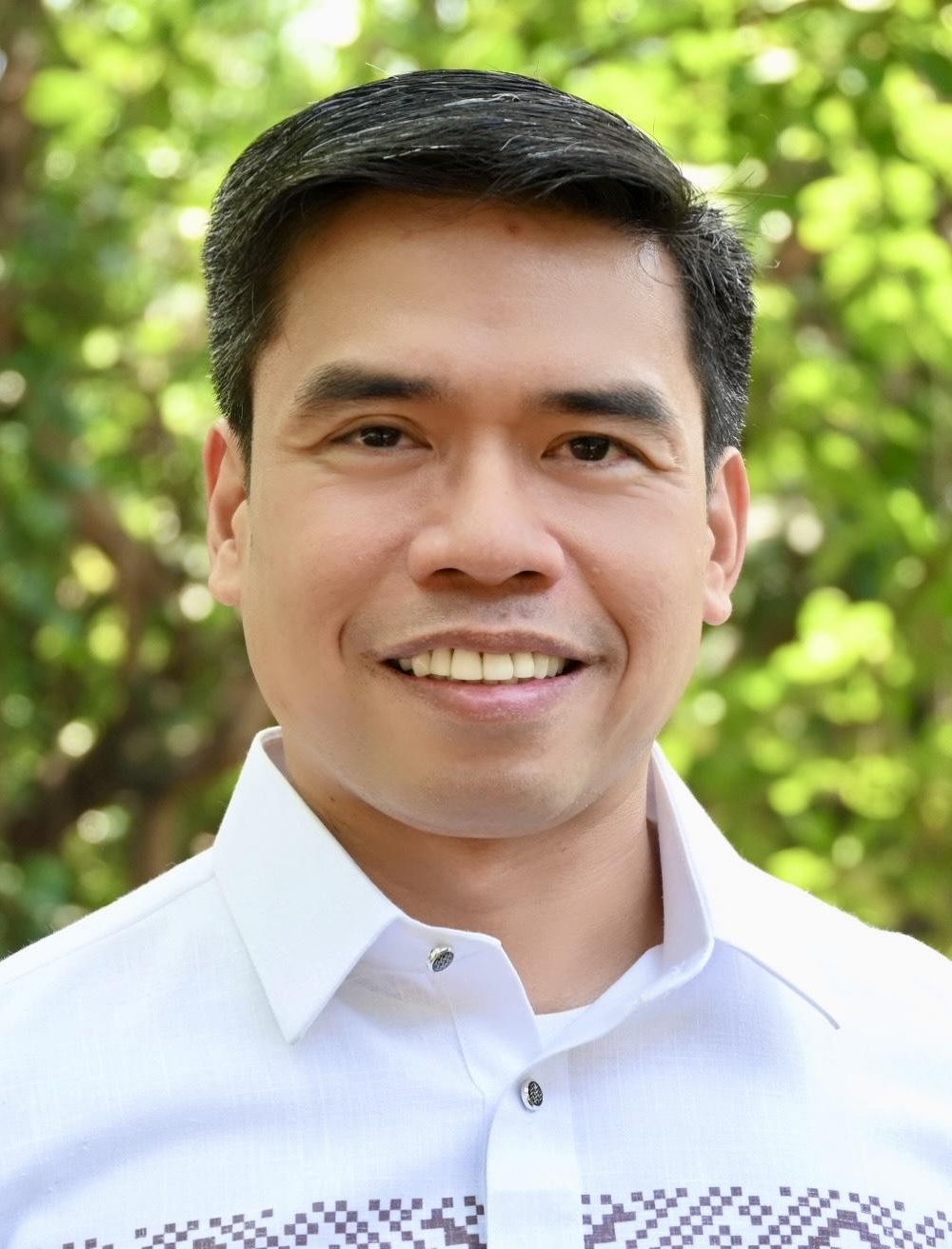
Aries A. Arugay
August 19, 2026

Image: The One Piece flag used during an anti-corruption protest in Manila, 2025 │MJX Studio / shutterstock_2686394273
This paper examines how a younger digitally native generation is redefining political participation and democratic accountability across Southeast Asia’s fragile democracies. Building on a comparative study of youth movements in the Philippines, Indonesia, and Thailand, it explores how youth culture transforms humour, irony, and popular culture—often dismissed as ‘mere memes’—into potent tools of resistance and mobilization for more democratic accountability from political elites. It discusses how these new social movements can affect ongoing democratic resilience efforts particularly by revitalizing civil society and inspiring more participation in democratic processes such as elections and beyond. It argues that their propensity for digital technologies complements their grounded political participation in the streets and the ballot box. Through social media activism, young people expose corruption, counter disinformation, and demand transparency from political elites, reflecting both innovation and frustration. Yet this ‘accountability crusade’ also reveals tensions between performative and substantive democracy, as online engagement intersects with enduring clientelism, elite capture, and increasingly sophisticated state repression and disinformation. The paper closes with policy implications for strengthening democratic resilience from below across the Global South.
Contents
- Abstract
- Introduction
- Democratic resilience and the role of political accountability
- Digital activism in the Philippines
- Gen Z protests: Case studies in the Philippines
- Comparative analysis: Thailand and Indonesia
- Gen Z activism, participation, and the accountability paradox
- Conclusion
Abstract
This paper examines how a younger digitally native generation is redefining political participation and democratic accountability across Southeast Asia’s fragile democracies. Building on a comparative study of youth movements in the Philippines, Indonesia, and Thailand, it explores how youth culture transforms humour, irony, and popular culture—often dismissed as ‘mere memes’—into potent tools of resistance and mobilization for more democratic accountability from political elites. It discusses how these new social movements can affect ongoing democratic resilience efforts particularly by revitalizing civil society and inspiring more participation in democratic processes such as elections and beyond. It argues that their propensity for digital technologies complements their grounded political participation in the streets and the ballot box. Through social media activism, young people expose corruption, counter disinformation, and demand transparency from political elites, reflecting both innovation and frustration. Yet this ‘accountability crusade’ also reveals tensions between performative and substantive democracy, as online engagement intersects with enduring clientelism, elite capture, and increasingly sophisticated state repression and disinformation. The paper closes with policy implications for strengthening democratic resilience from below across the Global South.
Introduction
Since 2024, a wave of young protesters belonging to Generation Z (Gen Z) [1] has rolled across Asia with remarkable force. What began with the student uprising in Bangladesh that toppled Sheikh Hasina’s government has since reached Nepal, where youth protests brought down yet another government in September 2025, and Indonesia, where demonstrations against parliamentary salary increases and elite capture drew hundreds of thousands into the streets (Chenoweth and Cebul 2026). In the Philippines, anti-corruption protests, sparked in significant part by social media mobilization, signalled that Southeast Asia’s oldest electoral democracy was not immune to this wave of generational political awakening. As of early 2026, there have been at least 120 significant anti-government protests in no fewer than 73 countries globally over the past twelve months—the highest figures since 2017—with Gen Z activism at their centre in various countries including Serbia, Kenya, Nepal and Bangladesh (Khilji 2026; Magoga 2025).
In Southeast Asia in particular, digitally connected youth have emerged as important political actors in moments of democratic contestation (Sastramidjaja 2024). Thailand’s #FreeYouth protests in 2020 used social media platforms to challenge long-standing political taboos surrounding the monarchy and military influence (Sinpeng 2021). In Indonesia, the #ReformasiDikorupsi campaign in 2019 also relied heavily on social media to oppose legislation perceived to weaken anti-corruption institutions and democratic safeguards (Sastramidjaja 2024). Meanwhile, youth activists in Myanmar used online memes and other forms of viral imagery following the 2021 military coup (Dolan 2021). These episodes were not isolated national events; they were nodes in a connected regional repertoire, frequently linked through the transnational #MilkTeaAlliance network that emerged from the 2019 Hong Kong protests and spread through Thailand and beyond (Chachavalpongpun 2025).
Why focus on this particular generation? Southeast Asia is home to one of the world’s largest cohorts of Generation Z youth. Individuals born between 1997 and 2012 comprise approximately one-quarter to one-third of the region’s population (up to 250 million of the 650 million total), reflecting a reverse trend in other parts of Asia and Western societies. As Gen Z enters adulthood, its demographic weight is expected to shape economic development, political participation, and digital transformation across the region (ASEAN Secretariat 2017). This is particularly salient given the prevalence of democratic deficits in this region, including electoral authoritarianism, restrictions on civil liberties, weak horizontal accountability, and the enduring political influence of military and dynastic elites (Arugay and Sinpeng 2018). While several states have experienced periods of democratic opening, democratic backsliding and authoritarian resilience continue to constrain the consolidation of liberal democratic institutions across much of the region (Morgenbesser 2020).
These developments reflect broader shifts identified in the academic literature on youth-led movements and digital activism. Younger generations now increasingly rely on flexible, decentralized, and digitally mediated forms of participation that differ from older models of party-based or organization-based activism (Bennett and Segerberg 2013). Rather than relying entirely on these ‘traditional’ forms of activism, many contemporary youth movements use online tools such as memes, hashtags, and short-form videos. In this paper, the term ‘memes’ is used broadly to refer not only to viral images, but also to satirical videos, edited clips, reaction content, and short-form political commentary shared online. These forms of expression are important because they allow political concerns to be translated into content that is accessible, visual, and easy to circulate (Anderau and Barbarrusa 2024).
For many Filipinos, social media has blurred the lines between personal interactions and political engagement, with political debates increasingly unfolding alongside entertainment content and viral trends
This paper takes the Philippines as its primary case and compares it with Thailand and Indonesia. The Philippines reflects many of the broader regional developments, with Filipino youth increasingly using social media platforms as spaces for political engagement where commentary, criticism, and dissent circulate rapidly (Agojo et al. 2023). As this paper argues, Gen Z Filipinos have increasingly transformed digital practices into means of political participation. It must be noted that youth activism itself is not new in the Philippines.
Students and young people have long played important roles in the country’s political movements and democratic struggles, with one of the clearest examples being the student movement which was part of the larger EDSA or People Power revolution that ousted Ferdinand Marcos Sr. (Valte 1987). More contemporary digital activism therefore builds on a history of youth political engagement, even if the forms, platforms, and strategies of participation have changed significantly.
What distinguishes the current phenomenon of ‘Gen Z’ activism is the media and technological environment in which political participation now takes place. The prevalence of digital and social media has inevitably transformed how information is produced, consumed, and circulated. In the Philippines, social media platforms such as Facebook, TikTok, YouTube, and Twitter/X have become central spaces for news consumption, public discussion, and political commentary (Cabañes 2020). This is unsurprising given the country’s reputation as the “social media capital of the world” (Arugay and Baquisal 2023). For many Filipinos, social media has blurred the lines between personal interactions and political engagement, with political debates increasingly unfolding alongside entertainment content and viral trends.
Younger generations are thus significant political constituencies, and it is imperative to understand how they engage with politics and even perhaps contribute to democratic resilience (Merkel 2026). This paper examines how Gen Z Filipinos use digital spaces to participate in politics and demand accountability within a fragile democratic setting, and how comparable dynamics are unfolding in Thailand and Indonesia. It asks how newer forms of digital activism relate to more conventional forms of political participation. To what extent do memes, satire, and online political commentary contribute to broader forms of civic engagement and collective action? And how can they encourage other more powerful political actors such as political elites and political institutions to reform towards democratic resilience?
This paper argues that Gen Z digital activism should not simply be dismissed as ‘slacktivism’ or performative politics. Rather, these practices reflect an emerging form of digital citizenship in which political participation increasingly takes place through decentralized and digitally mediated networks. Memes, viral political content, and online commentary are not distractions from ‘real’ politics; they function as tools through which younger citizens communicate dissent, engage in politics, and at times facilitate broader collective action. At the same time, the paper argues that this activism unfolds within significant structural constraints—entrenched elite power, weak institutions, shrinking civic spaces, and contested information environments—visible in the Philippines, Thailand, and Indonesia alike.
The next section elaborates on the paper’s conceptual framework that integrates democratic resilience with monitory democracy and social accountability. The third section examines Gen Z digital and offline activism in the Philippines and compares it with the cases of Indonesia and Thailand. The last section draws out implications for democratic resilience theory and policy.
Democratic resilience and the role of political accountability
The scholarly attention from democratic consolidation (Diamond 1999) to democratic resilience reflects a substantive change in what democracies—particularly in the Global South—are actually contending with. The question is no longer whether fragile democracies will ‘consolidate’ toward a liberal democratic endpoint imagined in the immediate post-Cold War years. It is whether they can survive, adapt, and recover in the face of persistent and compounding democratic stressors (Riedl et al. 2025).
Merkel’s model (2026) organizes democratic resilience around four interdependent arenas:constitutional powers, party systems, civil society, and political community. These arenas interact, such that democratic or anti-democratic infections spread rapidly from one to the others. A populist executive who erodes judicial independence does not merely damage the constitutional-powers arena, he also weakens civil society’s ability to secure legal protection, degrades the party system’s capacity to provide accountability, and corrodes the political community’s trust in institutions. Conversely, a vibrant and bridging civil society can reinforce judicial independence, support democratic parties, and deepen citizens’ attachment to democratic norms.
Merkel (2026) further distinguishes three modes of resilience—to withstand, to adjust, and to recover—that suggest a temporal logic of crisis response: mobilizing existing resources to resist threats, adapting institutional routines to changed circumstances, and repairing democratic damage after the fact.
Applying this framework to the Southeast Asian context requires modification. Merkel’s model assumes a liberal democratic baseline from which resilience is measured and towards which it is oriented. The Philippines, Thailand, and Indonesia are better described as hybrid or ‘defective’ democracies: systems that hold elections and maintain formal institutions but are substantially colonized by elite capture, military influence, and patrimonial networks that systematically undermine accountability (Merkel and Croissant 2004; Mietzner 2021). For these cases, democratic resilience is less about the textbook ‘recovery’ of a consolidated democratic order than about what might be called construction under fire: building accountability norms that were never fully institutionalized in the first place. Gen Z activism, this paper argues, operates most visibly in the civil–society and political–community arenas, but it presses on the others as well: the Thai People’s Party reaches into the party-system arena, while the Philippine flood-control prosecutions and Indonesian policy concessions implicate the constitutional-powers arena.
At the nexus between democratic resilience and Merkel’s multiple arenas lies addressing the accountability deficit present in Southeast Asia’s defective democracies (Arugay 2005). This is where Keane’s (2011) concept of “monitory democracy” complements Merkel’s democratic resilience framework. Keane argued that the defining feature of contemporary democracy is the proliferation of power-scrutinizing institutions (i.e., ‘monitoring’) and practices that operate both inside and outside the formal architecture of the state. Courts, audit bodies, ombudsmen, and investigative journalists are monitory institutions in the traditional sense.
But so, increasingly, are NGOs, social-movement organizations, and the networked publics of social media. Gen Z digital activism in Southeast Asia is, at its core, monitory democracy in digital and grounded form: it watches, exposes, amplifies, and shames the exercise of political power in ways that formal accountability institutions in these countries have either failed or been prevented from doing. This monitory function is especially consequential where formal accountability institutions are captured or compromised. For example, the viral exposure of an official’s corruption may not produce a criminal conviction, but it can shift the terms of public discourse, raise the reputational costs of corruption, and influence how voters reward or punish political actors which also coincides with other concepts such as social or diagonal accountability.[2]
Digital activism in the Philippines
The expansion of digital activism in the Philippines became visible during the administration of Rodrigo Duterte (2016–2022). Although social media had long been important in Philippine politics, the Duterte period highlighted how digital spaces could function not only as tools for political campaigning, but also as alternative arenas for dissent and criticism. During this period, scholars pointed to the narrowing of civic spaces and the increasingly hostile environment surrounding political opposition, independent media, and civil society groups (Arugay and Baquisal 2023). Journalists, activists, and critics were frequently subjected to online harassment, intimidation, red-tagging, and legal pressure. Under these conditions, digital platforms became important spaces where citizens could continue expressing political frustrations despite real risks surrounding conventional activism. What distinguishes much of digital activism in the Philippines is the way political critique is communicated through humour, irony, parody, and popular culture. Complex issues such as corruption scandals and policy failures are reframed through humour and popular references that resonate with wider audiences, particularly younger users—forms of engagement shaped by a political culture where entertainment, celebrity, and politics are already deeply intertwined (Centeno 2016).
Much of the earlier literature on political participation focused on institutional forms of engagement such as voting, party membership, or involvement in formal organizations. Online activism, by contrast, is often dismissed as ‘slacktivism’ or treated as largely symbolic (Morozov 2009). Critics argue that online engagement may create visibility and emotional expression without producing deeper political change. The Philippine experience, however, suggests this binary is too narrow. In the case of Indonesia, Lim (2013) argues that online campaigns can sustain public attention, spread political information, connect individuals across communities, and facilitate participation in collective action. In the Philippine case too, digital engagement intersects with broader forms of political mobilization rather than simply replacing them. Digital activism should therefore be understood not solely in terms of immediate institutional outcomes, but in relation to how citizens communicate dissent and build political communities under changing political and technological conditions.
This becomes particularly visible in moments of “digitally networked action” where platforms enable decentralized political coordination and participation (Bennett and Segerberg 2013). Collective action emerges through connected networks rather than strict hierarchies or centralized leadership. Political messages, protest materials, and calls for action circulate rapidly, and individuals contribute by amplifying messages within their own networks. According to We Are Social’s annual report, Filipinos spend approximately 3 hours and 32 minutes on social media daily, an hour higher than the global average.[3] From the perspective of democratic resilience, digital activism is one way that democratic engagement can persist: in fragile democracies, citizens may grow frustrated with formal institutions while remaining politically engaged through alternative spaces. The significance of Gen Z activism lies not only in whether it produces immediate change, but in how it reshapes the practice of participation itself—often serving as an ‘entry point’ for younger citizens into broader political engagement.
Gen Z protests: Case studies in the Philippines
This section examines several Philippine cases that show how digital activism moves beyond online commentary and becomes connected to broader political participation and collective action. These cases show that memes, satire, parody videos, and viral content do not simply circulate as entertainment; they also function as tools for political communication and public criticism and even mobilization for democratic reform.
An example is the Pink Movement that emerged during the 2022 presidential elections in support of Leni Robredo. Unlike traditional campaigns reliant on formal party machinery, the Pink Movement drew its momentum from volunteer-driven participation sustained through online networks (Encinas-Franco and De Luna 2024). Supporters created memes, TikTok videos, livestreams, fan edits, and digital campaign materials, and social media platforms were key spaces for fundraising and coordination. What made the movement significant was not simply its online visibility, but the way digital participation translated into offline mobilization on an unprecedented scale (Wee 2022). Large rallies were attended by hundreds of thousands and grassroots house-to-house campaigns undertaken, resulting in many first-time voters and non-voters participating. At the same time, the movement revealed the structural limits of digitally mediated activism. Despite the scale of volunteer mobilization, Robredo lost to Ferdinand Marcos Jr., whose campaign also benefited from extensive digital machinery and disinformation networks. The Pink Movement thus revealed both the possibilities and the limits of networked mobilization in a political environment shaped by entrenched elite power and disinformation (Arugay et al. 2024).
Once again, humour became an important vehicle for criticizing political elites
More recent controversies involving Vice President Sara Duterte demonstrate how digital activism continues to shape public debate over accountability. Allegations involving confidential funds and government spending circulated widely, with clips from speeches, interviews, and public appearances transformed into memes, satirical videos, and commentary (Ku 2024). Once again, humour became an important vehicle for criticizing political elites. Clips from congressional hearings were reposted within hours, often with captions or reaction videos that mocked statements or questioned the use of confidential funds—allowing users who would not normally follow legislative proceedings to become familiar with the issue through short-form content.
The 2025 flood control controversy revealed serious allegations of corruption involving large-scale flood control and infrastructure projects that many Filipinos blamed for worsening severe flooding. The scandal gained explosive momentum after President Marcos Jr. disclosed during his July 2025 State of the Nation Address that roughly 100 billion Philippine pesos (1.6 billion US dollars)—about 20 percent of the P545-billion flood-mitigation budget from July 2022 to May 2025—had been awarded to just 15 contractors, several linked to the contractor couple Pacifico “Curlee” and Cezarah “Sarah” Discaya (Mendoza 2026).
Political cartoons, memes, and satirical graphics circulated widely and became important tools for explaining the issue in accessible, emotionally resonant ways. Major protests on 21 September 2025—the anniversary of the 1972 martial-law declaration by Marcos Jr.’s father—reportedly drew more than 100,000 participants, split between the “Trillion Peso March” at the EDSA People Power Monument and “Baha sa Luneta” at Rizal Park (GMA Integrated News 2025). Images, slogans, and messages at the demonstrations closely reflected the memes and graphics that had circulated online. Many posts focused on the gap between the billions supposedly spent and the conditions people experienced during heavy rains; videos of submerged streets were juxtaposed with budget figures and contracts. Notably, the online-to-street pressure helped compel an institutional response: the Marcos administration created an Independent Commission for Infrastructure (ICI), and by late 2025 the Ombudsman and Sandiganbayan [4] had begun filing graft and malversation charges and issuing arrest warrants against contractors and public-works officials.
Across these cases, digital expressions such as memes do not remain confined to the online sphere. They evolve into broader political conversations and, at certain moments, contribute to offline mobilization. The boundary between online and offline activism is far less rigid than older accounts of digital politics suggest. At the same time, the cases reveal the contradictions of digital activism: the same platforms that facilitate civic engagement are shaped by organized disinformation networks and entrenched interests, making online spaces deeply contested environments in which activism, propaganda, and entertainment overlap. Their significance lies in how they illustrate broader transformations in political participation—an emerging digital citizenship rooted in networked participation and everyday engagement, revealing both democratic innovation and the enduring limits imposed by weak institutions and contested civic spaces.
However, the pathway from online expression to coherent and sustained mobilization is not always clear. And the downside of dispersed and leaderless protests is the lack of an effective strategy for change. Gen-Z protesters are often making it up as they go along in an ad hoc fashion—winning concessions almost by luck, rather than due to any well-planned strategy. Therefore, these acts of contentious mobilization are in search of leadership that could give the movement the necessary direction toward democratic change.
Comparative analysis: Thailand and Indonesia
The Philippine experience is distinctive but not exceptional. Across Southeast Asia, digitally connected youth have converted online grievance into street power, and a comparison with Thailand and Indonesia sharpens our understanding of both the promise and the limits of the Gen Z accountability crusade. The two cases bracket the Philippine experience usefully: Thailand illustrates what happens when protest energy is channelled into a formal political party only to collide with entrenched institutional vetoes, while Indonesia illustrates the explosive potential—and the human cost—of leaderless, platform-driven mobilization confronting a coercive state.
THAILAND: FROM THE STREETS TO THE BALLOT, AND BACK AGAIN
Thailand’s recent history is the clearest regional demonstration that youth protest energy can be institutionalized—and that an entrenched establishment can resist that institutionalization. The youth-led protests of 2020–2021, mobilized through Twitter/X communities and the #FreeYouth and #MilkTeaAlliance hashtags, broke long-standing taboos by openly demanding reform of the monarchy and the military’s role in politics (Sinpeng 2021). Protesters borrowed and adapted a transnational repertoire—the three-finger salute from The Hunger Games, rubber ducks turned into memes, and the Hong Kong-derived ‘be water’ tactic of fluid, leaderless mobilization.
That energy found electoral expression in the Move Forward Party (MFP), successor to the dissolved Future Forward Party, which stunned observers by winning the most seats in the 2023 general election on a platform of military, economic, and lèse-majesté reform that resonated with young, urban voters (Al Jazeera 2024). The establishment’s response was decisive. In August 2024, the Constitutional Court ordered Move Forward dissolved, ruling that its campaign to amend Article 112—the lèse-majesté law—amounted to an attempt to overthrow the constitutional monarchy, and barred its leaders, including former prime ministerial candidate Pita Limjaroenrat, from politics for ten years (Time 2024). The party promptly reincarnated as the People’s Party, but the message was unambiguous: in Merkel’s terms, an assault on the party-system arena of democratic resilience was launched from within the constitutional-powers arena.
The Thai case also reveals the steep costs borne by activists. According to Thai Lawyers for Human Rights, between July 2020 and October 2025 nearly 1,500 people were charged under the emergency decree penalizing protest, hundreds more under illegal-assembly, sedition, and Computer Crimes Act provisions, and dozens under Article 112 itself (Time 2026). The repression has even attempted to intimidate activists abroad but a growing diaspora of young, educated Thais now sustains the movement transnationally, integrating Milk Tea Alliance symbols into protest from the United States, Europe, and Australia (Chachavalpongpun 2025).
Thailand thus shows that the move ‘from memes to movements’ can reach the ballot box—but also that judicialized repression can blunt it, deinstitutionalizing reformist parties faster than they can consolidate (Horatanakun 2024)
INDONESIA: SCALE, REPRESSION, AND THE GIG-ECONOMY GENERATION
If Thailand shows the institutional ceiling, Indonesia shows the combustible floor. The August–September 2025 protests were triggered by a stark juxtaposition of elite excess and the economic vulnerability of the masses: the revelation that 580 members of the House of Representatives had been receiving a monthly housing allowance of 50 million rupiah—roughly US$3,000, about ten times the Jakarta monthly minimum wage and more than twenty times the minimum wage in poorer provinces—amid generalized austerity under President Prabowo Subianto (Blackburn 2025). The House of Representatives is among the least-trusted institutions in the country, and the allowance crystallized a widely felt sense of injustice.
As in the Philippines and Thailand, the mobilization was decentralized, online-driven, and richly symbolic. Demonstrators flew the One Piece pirate flag—from the Japanese manga about outlaws defying a corrupt world government—as an emblem of generational defiance, and the green jackets of ride-hailing and food-delivery drivers became a recurring image of the precarious gig economy at the heart of the protests. The movement turned tragic and then explosive when a 21-year-old motorcycle food-delivery driver, Affan Kurniawan, was run over and killed by a police tactical vehicle on 28 August. He had reportedly not been protesting but fulfilling a delivery order (Al Jazeera 2025). Video of his death circulated instantly, transforming a protest over allowances into a nationwide uprising against police impunity and elite capture.
The state response combined repression with concession. Authorities detained well over 1,200 people, the death toll reached at least seven, and the National Human Rights Commission acknowledged that police had used excessive force (Reuters 2025). Within days, Prabowo and party leaders announced the rollback of several parliamentary perks—a striking, if partial, concession to street pressure—even as the president warned that some acts amounted to “terrorism” and “treason.” The episode confirms that: violent repression in a connected information environment frequently backfires, amplifying outrage and drawing previously uncommitted citizens into the movement (Khilji 2026). One year on, Indonesian student groups returned to the streets on the anniversary of Prabowo’s government, signalling that the grievances were structural, not episodic (Japan Times 2025).
From a comparative perspective, the three cases reveal a shared structural logic and divergent outcomes. In each country, the drivers are strikingly similar: economic suffering colliding with conspicuous elite excess, in information environments saturated enough to make that collision impossible to ignore. In each, the tactical repertoire converges on decentralized, leaderless, meme-driven mobilization that fuses local idioms with a shared transnational grammar of protest. And in each, the same fundamental tension recurs: between the impressive mobilizing capacity of these new forms of contention and the durability of elite capture, patronage, and institutional weakness of the democratic regimes in Southeast Asia.
Gen Z activism, participation, and the accountability paradox
One central question raised by the rise of Gen Z digital activism is how these forms of engagement relate to broader political participation. Discussions of online activism are often framed through a binary between ‘real’ activism and ‘slacktivism’ (Morozov 2009). The Southeast Asian cases suggest this distinction is too narrow to capture how participation operates in digital environments today. Digital campaigns surrounding the Anti-Terrorism Bill, the Pink Movement, and the flood control scandal in the Philippines, like the #FreeYouth mobilizations in Thailand and the allowance protests in Indonesia, show how online participation can circulate political narratives and facilitate broader collective action. In these instances, digital activism did not replace traditional participation; the two forms interacted and reinforced each other. This paper does not claim that memes or online campaigns are sufficient on their own to transform entrenched structures. Rather, digital activism should be understood in relation to how citizens participate in public life and sustain engagement under changing conditions; where formal mechanisms are perceived as weak or inaccessible, online engagement becomes one way for younger citizens to continue demanding accountability from below.
Protests can go viral but democratic reforms require sustained, organized, institutionally embedded work that is hard to maintain in a decentralized, episodic, algorithmically driven environment
At the heart of Gen Z digital accountability politics lies a paradox: the gap between the remarkable visibility these movements generate and the limited structural change they have so far produced that could facilitate democratic resilience. Protests can go viral but democratic reforms require sustained, organized, institutionally embedded work that is hard to maintain in a decentralized, episodic, algorithmically driven environment. But even when individual episodes do not produce reform, they deposit cumulative democratic pressure on institutions and actors, raising the reputational costs of future misconduct and shifting the climate in which accountability norms are contested. The Philippine flood-control case is illustrative—viral pressure helped force the creation of the ICI and the filing of charges, even if convictions remain uncertain. Secondly, this accumulation effect is fragile, reversible, and dependent on information environments that states are increasingly able to capture or degrade. Disinformation, in other words, is not incidental to these movements but woven into the same infrastructure that empowers them.
The Philippines occupies a distinctive position in Southeast Asian democratic politics. It is the region’s oldest and most enduring electoral democracy, one that has survived two People Power revolutions, multiple coup attempts, successive populist governments, and the systematic assault on liberal norms that characterized the Duterte administration (Arugay 2026). And yet it remains, in fundamental respects, a democracy captured.
Political dynasties control the legislative and executive branches at both national and local levels. The party system is little more than an electoral vehicle for personality politics. Formal accountability institutions—the courts, the Ombudsman, the Commission on Audit—oscillate between moments of genuine independence and longer stretches of political colonization (Arugay 2005). The Marcos-Duterte realignment that swept the 2022 elections concentrated political resources in a small number of elite families while leaving institutions formally intact but substantively weakened; the collapse of that alliance by 2025, and the impeachment proceedings against Vice President Sara Duterte, opened a period of intense competition that both created accountability opportunities and revealed institutional fragility (Arugay and Encinas-Franco 2025). The accountability deficit—the gap between formal democratic procedures and the substantive accountability those procedures are supposed to produce—has not been closed by institutional reform. It has been partly, imperfectly, and episodically addressed by the informal accountability mechanisms of a digitally mobilized youth public. The Southeast Asian cases differ greatly with some of the wide-ranging democratic reforms implemented in Nepal and Bangladesh. Moreover, the Gen Z protest movement in Nepal also used various social media platforms in order to go around the government bans implemented to undercut their resistance (Khalili 2026).
The democratic optimism that runs through this paper—the image of a digitally native generation mobilizing memes and viral content in the service of accountability, transparency, and anti-corruption—must be qualified by a sobering comparison. In much of the Global North and the West, the most visible form of Gen Z political mobilization in recent years has not been progressive accountability politics but a pronounced rightward, and in places far-right, turn among young men. The 2024 European Parliament elections delivered unprecedented far-right support among young voters, driven overwhelmingly by young men: roughly 21 percent of men aged 18–29 expressed support for far-right parties, compared with about 14 percent of young women, a gap roughly double that found among older cohorts and one unique to Millennials and Gen Z (Milosav et al. 2025). In the 2024 United Kingdom general election, men under 24 backed Reform UK at twice the rate of women the same age (Parker 2025). This emerging ‘gender gap’ in youth political identity is one of the most discussed features of contemporary democratic politics in the West, even as some analysts caution that issue positions remain less polarized than ideological self-identification and that the trend may prove volatile rather than fixed (Bracho 2024).
The very platform affordances that allow Filipino youth to translate corruption scandals into shareable satire also allow recommended algorithms to channel young men toward the ‘manosphere’
What makes this counterpoint analytically important is that it runs on the same digital infrastructure that empowers the Southeast Asian accountability crusade — yet produces strikingly different political content. The very platform affordances that allow Filipino youth to translate corruption scandals into shareable satire also allow recommended algorithms to channel young men toward the ‘manosphere’, a loose network of antifeminist and misogynist online communities whose influencers have moved from niche forums into mainstream TikTok, YouTube, and Instagram feeds (Gerrand et al. 2025). The drivers are partly structural and resonate uncomfortably with the Southeast Asian cases: economic vulnerability, status anxiety, and a sense of lost futures. But here they are refracted through narratives of ‘identity threat’ and aggrieved masculinity rather than anti-elite accountability. The comparison underscores a central argument of this paper: the political valence of Gen Z digital mobilization is not given by the technology. The same memes, hashtags, and networked affordances that sustain monitory democracy in Manila, Bangkok, and Jakarta can, in different structural and cultural contexts, sustain reactionary and exclusionary mobilization.
Conclusion
This paper has examined how Gen Z youth use digital spaces to participate in politics and demand accountability in fragile democratic settings, taking the Philippines as its primary case and reading it against Thailand and Indonesia. Digital activism, it argued, should not be dismissed as performative participation or ‘slacktivism’. Rather, these practices reflect an emerging form of digital citizenship in which participation increasingly takes place through decentralized, digitally mediated networks, offering an important way of examining democracy ‘from below’. Online campaigns surrounding the Anti-Terrorism Bill, the Pink Movement, and the 2024–2025 corruption controversies in the Philippines, alongside the #FreeYouth protests and party-building in Thailand and the allowance protests in Indonesia, demonstrate how online engagement can contribute to broader civic participation and, at certain moments, support offline mobilization.
Contemporary Gen Z digital activism reflects both continuity and change: younger citizens continue earlier traditions of dissent, but now operate within an environment heavily shaped by social media. This paper does not suggest that digital activism automatically leads to institutional accountability or democratic reform. The Philippine experience demonstrates the continuing influence of elites, clientelist politics, and disinformation; the Thai experience shows how judicial institutions can dissolve the parties that protest energy builds. And the Indonesian experience shows how quickly mobilization can be met with lethal force even as it wins concessions. The significance of Gen Z digital activism therefore lies less in its ability to immediately transform institutions and more in how it reshapes the practice of participation itself which could feed into current theorizing on democratic resilience.
More broadly, the regional comparison reflects wider shifts in democratic participation across Southeast Asia and the Global South. As younger generations become more digitally connected, political engagement is increasingly shaped by networked forms of communication and mobilization. Yet the Asian experience analyzed here should not be read as a universal template. In much of the Global North, the most conspicuous form of Gen Z digital mobilization has been a rightward, often far-right turn among young men. From the youth gender gap in far-right voting across Europe to the manosphere’s algorithmic mainstreaming, it is a reminder that the same digital affordances can channel anti-elite accountability in one context and reactionary, exclusionary politics in another.
The decisive question for the years ahead is therefore whether the institutions of Southeast Asian democracy can evolve quickly enough to give this generation’s accountability energy durable structural traction: through independent courts, responsive parties, and information environments that support rather than suppress democratic accountability. In this sense, Gen Z digital activism reflects both the possibilities and the limits of democratic engagement in the digital age. The feed, in the end, can become a forum. Whether it yields democratic resilience—in Asia or beyond—depends on the institutions that receive its demands, and on the political will, domestic and international, to build them before it is too late.
REFERENCES
Agojo, K.N.M., Bravo, M.F.J., Reyes, J.A.C., Rodriguez, J.A.E. and Santillan, A.M.A. 2023. “Activism beyond the streets: Examining social media usage and youth activism in the Philippines.” Asian Journal of Social Science 51(3), pp.180–187.
Al Jazeera. 2024. “Thai election authorities seek to dissolve poll-winning Move Forward Party.” 12 March, https://www.aljazeera.com/news/2024/3/12/thai-election-authorities-seek-to-dissolve-poll-winning-move-forward-party.
Al Jazeera. 2025. “Indonesia in chaos: Five Indonesians give views on why and how to fix it.” 5 September, https://www.aljazeera.com/news/2025/9/5/indonesia-in-chaos-five-indonesians-give-views-on-why -and-how-to-fix
Anderau, G. and D. Barbarrusa. 2024. “The Function of Memes in Political Discourse.” Topoi 43: 1529–1546.
Arugay, A.A. 2026. “Performative or Substantive? Democratic Resilience After Autocratization in the Philippines.” Trends in Southeast Asia 2026/11, Singapore: ISEAS-Yusof Ishak Institute.
Arugay, A.A. 2005. “The Accountability Deficit in the Philippines: Implications and Prospects for Democratic Consolidation.” Philippine Political Science Journal 26(49): 63–88.
Arugay, A.A., and J.K. Baquisal. 2023. “Bowed, Bent, & Broken: Duterte’s Assaults on Civil Society in the Philippines.” Journal of Current Southeast Asian Affairs 42(3): 328–349.
Arugay, A.A., and J. Encinas-Franco. 2025. “The Philippines in 2024: Dueling Dynasties, Disruptive Threats.” Asian Survey 65(2): 297–307.
Arugay, A.A., Encinas-Franco, J., and Baquisal, J.K.A. 2024. “Introduction: Change and Continuity Narratives in the Philippines from Duterte to Marcos Jr.” In A.A. Arugay, and J. Encinas-Franco, (eds.). Games, Changes, and Fears: The Philippines from Duterte to Marcos Jr. Singapore: ISEAS-Yusof Ishak Institute, 1–30.
Arugay, A.A. and A. Sinpeng. 2018. “Varieties of Authoritarianism and the Limits of Democracy in Southeast Asia.” In M. Beeson and A. Ba (eds.) Contemporary Southeast Asia, 3rd ed. London: Palgrave Macmillan, 91–110.
ASEAN. 2017. First ASEAN Youth Development Index. Jakarta: ASEAN Secretariat, https://asean.org/wp-content/uploads/2021/01/First-ASEAN-Youth-Development-Index.pdf
Bennett, W.L. and A. Segerberg. 2013. The Logic of Connective Action: Digital Media and the Personalization of Contentious Politics. Cambridge: Cambridge University Press.
Blackburn, G. 2025. “Riot police and students clash during protest against MPs’ allowances in Jakarta.” 25 August, https://www.euronews.com/2025/08/25/riot-police-and-students-clash-during-protest-against-mps-allowances-in-jakarta
Bracho, S. 2024. “Media reporting about the gender Gen Z political divide.” 16 September, https://www.media-diversity .org/media-reporting-about-the-gender-gen-z-political-divide/
Cabañes, J.V.A., 2020. “Digital disinformation and the imaginative dimension of communication.” Journalism & Mass Communication Quarterly 97(2), 435–452.
Centeno, D.D. 2016. “Parasociality and Habitus in Celebrity Consumption and Political Culture: A Philippine Case Study.” Asian Journal of Social Science 44(4/5): 441–484.
Chachavalpongpun, P. 2025. “Dissent from a Distance: Rising Political Activism of Young Thai Diasporas.” Journal of Current Southeast Asian Affairs 44(2), https://doi.org/10.1177/18681034251336767
Chenoweth, E. and Cebul, M. 2026. “Why Gen-Z Is Rising.” Journal of Democracy 37(1), 5–14.
Diamond, L., 1999. Developing Democracy: Toward Consolidation. Baltimore: Johns Hopkins University Press.
Dolan, R. 2021. “Myanmar: memes and mantras of a new generation of democracy protesters.” The Conversation, 12 February https://theconversation.com/myanmar-memes-and-mantras-of-a-new-generation-of-democracy -protesters-155223.
Encinas-Franco, J.S., and B.P. De Luna. 2024. “Decentralized Campaign Management: The Motivations, Training, and Recruitment of Leni Robredo Volunteers during the 2022 Philippine Elections.” In J. Lees-Marshment (ed.), Political Management in Practice. London: Routledge, 39–55.
Gerrand, V., D.Ging, J. M.Roose, and M. Flood. 2025. “Mapping the Neo-Manosphere(s): New Directions for Research.” Men and Masculinities 28(5), 443–464.
GMA Integrated News. 2025. “September 21 rallies: Over 100k marchers call for arrest of corrupt officials, cohorts.” GMA News Online, 21 September, https://www.gmanetwork.com/news/topstories/nation/959856/september-21-rallies-anti-corruption-flood-control-projects/story /
Horatanakun, Akanit . 2024. “Thailand’s deinstitutionalised democracy movement.” 23 December, https://www.newmandala.org/thailands-deinstitutionalised-democracy -movement/.
Japan Times. 2025. “Indonesian students to protest as Prabowo marks one year in office.” 20 October, https://www.japantimes.co.jp/news/2025/10/20/asia-pacific/politics/indonesia-students-protest-prabowo/
Keane, J. 2011. “Monitory Democracy?” In S. Alonso, J. Keane, and W. Merkel (eds.), The Future of Representative Democracy. Cambridge: Cambridge University Press, 212–235.
Khalili, M. 2026. “It’s time for movements to rethink social media.” Waging Nonviolence: People Powered News and Analysis, 13 August, https://wagingnonviolence.org/2026/08/movements-rethink-social-media-activism-organizing/
Khilji, U. 2026. “Gen Z Protests Across Asia Offer a Delicate but Renewed Democratic Order.” Carnegie Endowment for International Peace, 24 March, https://carnegieendowment.org/russia-eurasia/research/2026/03/gen-z-protests-across-asia
Ku, Russel. 2024. “‘Iyaking Kaibigan’? Filipinos poke fun at VP Sara’s book.” 21 August, https://www.rappler.com/philippines/filipinos-online-reaction-memes-sara-duterte-isang-kaibigan-book/
Lim, M. 2013. “Many Clicks but Little Sticks: Social Media Activism in Indonesia.” Journal of Contemporary Asia 43(4): 636–657.
Lührmann, A., Marquardt, K.L. and Mechkova, V., 2020. “Constraining governments: New indices of vertical, horizontal, and diagonal accountability.” American Political Science Review 114(3), 811–820.
Magoga, C. 2025. “How Young People are Rewriting Democracy.” European Democracy Hub, 11 September, https://europeandemocracyhub.epd.eu/misunderstanding-youth-activism/
Mendoza, J.E. 2026. “Year-end 2025: Record flood control corruption unravels” and “Flood control scandal: Most Filipinos say culprits will be jailed — poll.” Philippine Daily Inquirer, 12 January, https://newsinfo.inquirer.net/2166880/fwd-most-filipinos-still-believe-flood-control-scandal-culprits-will-go-to-jail-poll
Merkel, W. 2026. “What is Democratic Resilience?” Democratization 33(3): 472–493.
Merkel, W. and Croissant, A., 2004. Conclusion: Good and defective democracies. Democratization 11(5), 199–213. Mietzner, M., 2021. Democratic Deconsolidation in Southeast Asia. Cambridge: Cambridge University Press.
Milosav, Ð., Dickson, Z., Hobolt, S.B., Klüver, H., Kuhn, T. and Rodon, T., 2026. The youth gender gap in support for the far right. Journal of European Public Policy 33(2), 444–468.
Morgenbesser, L., 2020. The rise of sophisticated authoritarianism in Southeast Asia. Cambridge University Press.
Morozov, E. 2009. “The Brave New World of Slacktivism.” Foreign Policy, 19 May,
https://foreignpolicy .com/2009/05/19/the-brave-new-world-of-slacktivism/.
Parker, Jessica. 2025. “Why more young men in Germany are turning to the far right.” BBC, 10 February, https://www.bbc.com/news/articles/cy082dn7rkqo.
Riedl, R.B., Friesen, P., McCoy, J. and Roberts, K. 2025. “Democratic Backsliding, Resilience, and Resistance.” World Politics 77(1): 151–177.
Reuters. 2025. “Deadly Indonesia protests force U-turn on lawmakers’ perks.” 1 September, https://www.reuters.com/world/asia-pacific/deadly -indonesia-protests-force-u-turn-lawmakers-perks-2025-08-31/.
Sastramidjaja, Y. 2024. “Rhizomatic Protest, Generational Affinity and Digital Refuge: Southeast Asia’s New Youth Movements.” In G. Facal, E.L. de Micheaux, and A. Norén-Nilsson (eds.), The Palgrave Handbook of Political Norms in Southeast Asia. London: Palgrave Macmillan, 501–520.
Sinpeng, A. 2021. “Hashtag Activism: Social Media and the #FreeYouth Protests in Thailand.” Critical Asian Studies 53(2): 192–205.
Time. 2026. “Article 112 and the Thai Election: The Elephant Kicked Out of the Room.” 6 February, https://time.com/7372530/thailand-election-lese-majeste-article-112-peoples-party -lookkate-bhumjaithai/.
Time. 2024. “Thai Court Disbands Popular Opposition Party Over Its Royal Reform Campaign.” 7 August, https://time.com/7008607/thailand-move-forward-dissolved-constitutional-court/
Valte, M. 1987. “The Philippine student movement: Prospects for a dynamic student politics.” Kasarinlan 2(3): 49–62.
Wee, S.L. 2022. “‘We Want a Change’: In the Philippines, Young People Aim to Upend an Election.” The New York Times, 1 May, https://www.nytimes.com/2022/05/01/world/asia/philippines-election-marcos-robredo.html
To cite this report:
Arugay, Aries A. 2026. From Memes to Movements: The Gen Z Accountability Crusade and Democratic Resilience in Southeast Asia. Report No. 314, Toda Peace Institute. https://toda.org/publications/policy-briefs-and-reports/from-memes-to-movements-the-gen-z-accountability-crusade-and-democratic-resilience-in-southeast-asia/
Notes
[1] Gen Z are individuals born between 1997 and 2012.
[2] This refers to civil society and media’s role in exacting accountability in contrast to vertical accountability which is vested with the electorate and horizontal accountability which is given to other government bodies or institutions (Lührmann et al. 2020).
[3] “Filipinos spend more time than global average on social media,” Campaign Asia, 6 February 2025, https://www.campaignasia.com/article/filipinos-spend-more-time-than-global-average-on-social-media/jzis9koymcsceocdmk4kap67p1
[4] The Sandiganbayan is a special court in the Philippines that has jurisdiction over criminal and civil cases involving graft and corrupt practices and other offenses committed by public officers and employees.

The Author
Toda Peace Institute
The Toda Peace Institute is an independent, nonpartisan institute committed to advancing a more just and peaceful world through policy-oriented peace research and practice. The Institute commissions evidence-based research, convenes multi-track and multi-disciplinary problem-solving workshops and seminars, and promotes dialogue across ethnic, cultural, religious and political divides. It catalyses practical, policy-oriented conversations between theoretical experts, practitioners, policymakers and civil society leaders in order to discern innovative and creative solutions to the major problems confronting the world in the twenty-first century (see www.toda.org for more information).
Contact Us
Toda Peace Institute
Samon Eleven Bldg. 5thFloor
3-1 Samon-cho, Shinjuku-ku, Tokyo 160-0017, Japan
Email: contact@toda.org