The Quiet Erosion and Resilience of New Zealand’s Democracy
Kevin Clements and Ria Shibata
July 28, 2026
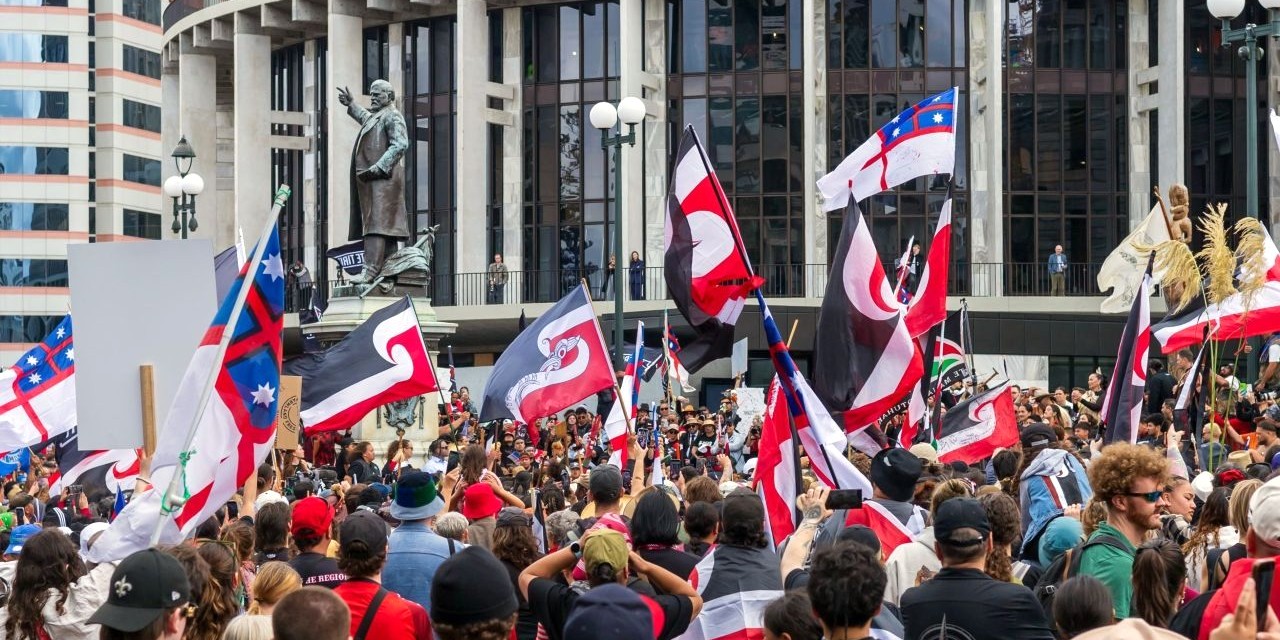
Cover image: NataliaCatalina.com / Shutterstock
This report argues that New Zealand’s reputation as one of the world’s most stable social democracies increasingly obscures a quieter democratic erosion, evident across four domains: collapsing institutional trust, the structural collapse of the fourth estate, growing executive reliance on parliamentary urgency and fast-tracked legislation, and deepening constitutional tension over Māori rights. Yet erosion is only half the picture. The 2024 Hīkoi mō te Tiriti, record labour action, an independent judiciary, and a growing non-profit media ecosystem show that democratic culture is also renewing itself from below, though unevenly. Resilience is strongest where organised civil society infrastructure already exists, and weakest in domains, such as media and parliamentary process, that lack it. New Zealand is not approaching an acute constitutional crisis, but occupies a more insidious position—one where warning signs are visible enough to be noticed, yet not urgent enough to compel sustained corrective action.
Contents
- Abstract
- Introduction
- A nation falling out of trust
- The collapse of the Fourth Estate
- Concentrated executive power and restricted democratic processes
- Immigration policy, public opinion, and the spectre of populist nationalism
- The Treaty fault line and Indigenous rights
- Exhaustion, grievance, and managed decline
- Democratic resilience in New Zealand beneath the exhaustion
- Conclusion
Abstract
New Zealand has long been regarded as one of the world’s most stable social democracies. This paper argues that reputation increasingly obscures a quieter democratic erosion, evident across four domains: collapsing institutional trust, the structural collapse of the fourth estate, growing executive reliance on parliamentary urgency and fast-tracked legislation, and deepening constitutional tension over Māori rights. Yet erosion is only half the picture. The 2024 Hīkoi mō te Tiriti, record labour action, an independent judiciary, and a growing non-profit media ecosystem show that democratic culture is also renewing itself from below, though unevenly. Resilience is strongest where organised civil society infrastructure already exists, and weakest in domains, such as media and parliamentary process, that lack it. New Zealand is not approaching an acute constitutional crisis, but occupies a more insidious position—one where warning signs are visible enough to be noticed, yet not urgent enough to compel sustained corrective action.
Introduction
New Zealand has long worn its democratic credentials as a badge of honour. It was the first self-governing territory in the world to grant women the right to vote, in 1893. Between 1935 and 1938, it developed one of the first welfare states in the world—a bold attempt to tame the capitalist market and provide womb-to-tomb security for all citizens. New Zealand’s welfare state was the political expression of a new social contract between governors and the governed: a deliberate effort by the state to work with civil society to reduce inequality, promote social inclusion, and provide a political safety net for those who, through no fault of their own, could not afford health care, education, or a basic living wage. Citizens who had just come through the Great Depression were willing to grant the state extraordinary powers in return for social security and peace of mind.
The First Labour Government was able to accomplish these reforms because it commanded a parliamentary majority under first-past-the-post, but it consolidated them through a deliberate strategy of coalition-building across a strong civil society—trade unions, religious organisations, and a media that supported the welfare state. New Zealand’s strong ‘democratic spirit’ emerged from nineteenth-century social reforms and a high level of commitment to political, economic, and social equality. New Zealand settlers deliberately turned their back on the British class system in favour of egalitarian values and beliefs.
For most of its history, New Zealand had a first-past-the-post electoral system, which allowed the largest political parties to dominate electorates and the Parliament. In the 1990s, however, New Zealand moved beyond first-past-the-post to a Mixed-Member Proportional (MMP) system, giving each citizen two votes: one for a party and one for a local representative. This was a deliberate effort to provide more representation of diverse political views. The result is a House of Representatives that reflects both majority and minority perspectives, with strong Māori, Pacific Island, Indian, Chinese, and women’s representation.
New Zealand consistently ranks among the least corrupt nations on earth. In the most recent Freedom House assessment, it scored 99 out of 100, retaining its “Free” status alongside a handful of the world’s most stable liberal democracies (Freedom House, 2025). By almost any international metric, New Zealand remains one of the most successful social democracies in the world.
And yet something is quietly shifting—not with the sudden drama of a coup or an authoritarian power grab, but in a quieter, more insidious register that scholars have come to call ‘democratic backsliding’: a gradual erosion of the norms, institutions, and cultural dispositions that hold social democracies together (Levitsky & Ziblatt, 2018; Lührmann & Lindberg, 2019). New Zealand appears to be part of this global trend. Evidence drawn from a widening range of surveys and indices suggests that the country is not immune to the global tide of democratic backsliding. Trust is falling. The media landscape is fracturing. Parliamentary processes are being short-circuited. And a public that once engaged with its political institutions with relative optimism and confidence is beginning to feel that the system is rigged against ordinary people. The social contract that underpinned the development of the welfare state no longer seems fit for purpose, or capable of delivering welfare, education, health, and essential infrastructure.
This paper examines the evidence for the erosion of the social contract and democratic decline across four interconnected domains: public trust in institutions; the collapse of the fourth estate; expanded executive power and a systematic assault on democratic processes; and deepening constitutional tensions around Māori rights. It then turns to an equally important counter-narrative: evidence of democratic resilience—ethnic and civic mobilisation, judicial independence, labour activism, and emerging media ecosystems—that suggests New Zealand’s democratic culture is vibrant and has not yet conceded the field to autocrats.
Together, these trends paint the portrait of a democracy in genuine tension: structurally intact but culturally contested, eroding in some areas and regenerating in others.
A nation falling out of trust
The most immediate and measurable sign of democratic erosion is the collapse of public trust in institutions (Worboys, 2024). Trust is not merely a sentiment—it is the connective tissue of democracy itself. When citizens trust their government, courts, parliament, and press, as they did across the period from 1935, when the First Labour Government founded the welfare state, to 1984, when the Fourth Labour Government’s neoliberal reforms began to unwind the postwar consensus, they are more willing to participate in democratic processes, accept electoral outcomes they dislike, and engage in the kind of deliberative compromise that democracy requires. When trust erodes, those foundations weaken.
In New Zealand, the numbers are stark. The 2023 General Social Survey, conducted by Stats NZ, found that trust in the country’s key institutions—the health system, education system, Parliament, media, police, and courts—had declined across the board since 2021. Parliament fared worst: trust in the legislature fell from 5.7 to 4.9 on a ten-point scale in just two years. This may sound like a modest decline, but given that trust in Parliament is foundational to the legitimacy of the entire system of representative government, it is a figure that needs serious attention (Stats NZ, 2023).
Of particular concern is the growing scepticism about the ability of political parties to deliver on their electoral promises. Parties are the actors most directly responsible for translating public preferences into democratic politics and governance. The OECD’s 2024 Survey on Drivers of Trust found that political parties (32%) and news media (37%) are the least trusted institutions in New Zealand, trailing the police (71%), the courts (60%), the central government (46%), and even local government (45%) by wide margins (OECD, 2024). That only one in three New Zealanders trust the political parties that form governments represents a profound legitimacy deficit at the very heart of representative democracy. It is notable that trust in political parties sits 14 percentage points below trust in the central government: New Zealanders are more willing to trust the state as an institution than the political parties and individual politicians that control it.
This disillusionment extends beyond institutions to democratic participation itself. Voter turnout at the 2023 general election fell to 78.2% of enrolled voters, down from 82.2% in 2020, and from the 90% participation rates of the 1950s and 60s. This unwillingness to vote continues a long-term decline that political scientists have described as particularly steep and persistent by international standards (Electoral Commission, 2023). Bryce Edwards, then director of the Democracy Project at the Victoria University of Wellington, described 2023 as “the most hollow and unsatisfactory [election] in living memory,” attributing the drop to parties and politicians failing to inspire voters, and a campaign atmosphere that turned citizens—especially young people
—away from politics “in disgust” (Edwards, 2023; New Zealand Herald, 2023). The demographic pattern is consistent: non-voting is concentrated among the young, the poor, and the less-educated. It could be argued that such systematic disengagement risks entrenching the very inequalities that drove people away in the first place. Making matters worse, the combined party vote share of the traditionally dominant National Party and Labour Party reached its third-lowest level under MMP in 2023, as voters focussed on minor parties and non-participation in roughly equal measure (Electoral Commission, 2023).
The Helen Clark Foundation’s Social Cohesion in New Zealand reports provide the most granular data on what this crisis looks like at the level of democratic values. The 2025 report (Eaqub & Collins, 2025), based on a survey of 2,882 respondents, found that while 81% broadly agreed that democracy was a good way of running the country, a third of respondents also said that having a “strong leader” who did not have to bother with Parliament or elections would be a good way to govern—a figure that rose to 48% among men under 44. The report described the findings as reflecting “an extraordinary fracturing” in which people no longer feel their interests or values are represented (Eaqub & Collins, 2025). The 2026 follow-up found conditions had deteriorated further: trust in the government fell three additional points to 39%, and the share who viewed New Zealand as a land of opportunity fell from 51% to 45% in a single year (Helen Clark Foundation, 2026).
Helen Clark herself warned that the “alienated group”—approaching a third of the population—was “particularly fertile territory for populism to stir.” New Zealand’s overall social cohesion score of 49% lagged 8 percentage points behind Australia’s on every dimension measured—a comparison that has grown more troubling given the scale of One Nation’s resurgence [1] across the Tasman, where Pauline Hanson’s long-established party has surged to lead several 2026 opinion polls on primary vote, illustrating what cohesion collapse can produce politically.
The country has crossed a psychological and empirical threshold: a majority of New Zealanders now effectively distrust the country’s
major institutions
The 2025 Acumen Edelman Trust Barometer (Acumen, 2025) deepens that concern. For the first time in the survey’s 25-year history, New Zealand’s overall trust index fell into what Edelman classifies as outright “distrust” territory—dropping to 47%, below the global average of 56%. The country has crossed a psychological and empirical threshold: a majority of New Zealanders now effectively distrust the country’s major institutions.
Compounding this is the Ipsos data (2024), which found that nearly two-thirds of New Zealanders—65%—believe the economy is “rigged to advantage the rich and powerful.” Only 17% disagreed. Sixty-three percent agreed that “the political and economic elite don’t care about hard-working people,” and 55% felt that traditional politicians “don’t care about people like me” (Ipsos, 2024a).
These are not the attitudes of citizens who feel democratic institutions have their interests at heart. They are the attitudes of a people who feel dominated by the state and alienated from their representatives.
What makes this particularly significant is the structural dimension of the trust gap. OECD data reveal that women in New Zealand are substantially less likely to trust the central government (37%) than men (55%)—an 18-percentage-point gap that is the largest of any OECD country surveyed (OECD, 2024). The trust gaps between younger and older New Zealanders, and between those with lower and higher educational attainment, are likewise larger than the OECD average. Trust, in other words, is not just declining in aggregate—it is dividing along demographic fault lines in ways that could, over time, generate sharply divergent political cultures within a single country.
Freedom House (2025, 2026) has noted this specifically in relation to younger New Zealanders: they do not reject democracy as a principle, but are deeply cynical about its capacity to deliver. That distinction—between belief in the idea of democracy and scepticism about its current institutions—is precisely the zone in which democratic erosion tends to operate. It is much harder to defend an institution you distrust than one you believe in.
The collapse of the Fourth Estate
If trust is the connective tissue of democracy, the free press is its immune system. Independent journalism holds power accountable, surfaces information that governments would prefer to suppress, and provides the shared factual basis on which democratic deliberation depends. The destruction of that immune system does not produce immediate symptoms. The body politic can appear healthy for years after the press begins to fail. But when it does finally sicken, recovery is slow and uncertain.
New Zealand’s media industry is in crisis, and the crisis deepened dramatically in 2024. In February of that year, Warner Bros. Discovery announced that Newshub—one of the country’s major television and online news operations—would shut down entirely by the end of June, laying off close to 300 journalists and staff. This followed a sustained period of contraction across the sector and the purchase of Newshub’s parent company by overseas entrepreneurs. Weeks later, TVNZ, the state-owned broadcaster, announced its own restructuring, cutting more than 60 jobs across the business—around half of them in news and current affairs—and axing long-running programmes including Fair Go and Sunday.[2] The closure of Newshub left TVNZ as New Zealand’s sole major commercial television news provider, though Whakaata Māori (Māori Television) continued to produce news separately.
The structural numbers are alarming. The number of working journalists in New Zealand fell from 4,071 in the 2006 census to 3,381 by 2018, and to an estimated approximately 1,400 by early 2024 (Holden, 2024)—before that year’s further Newshub and TVNZ cuts reduced the figure again, to roughly 1,439. Media concentration has reached the point where the large majority of the country’s remaining journalists work for just five employers: Stuff, Radio New Zealand, NZME, TVNZ, and Allied Press. The International Institute for Democracy and Electoral Assistance (IDEA) has flagged this concentration, alongside the growth of disinformation online and a shrinking news ecosystem, as a long-term threat to media integrity and freedom of expression (International IDEA, 2024).
Perhaps most telling is what has emerged in the media’s place. Public relations professionals now outnumber their journalistic counterparts by a ratio estimated at ten to one. Bryce Edwards has used the resulting dynamic to describe New Zealand as effectively becoming “a public relations democracy”—a polity in which the dominant form of political communication is managed messaging from government and corporate communications teams, rather than independent journalism (Edwards, 2024). The pattern recalls the ‘spin’ era of Tony Blair’s government in the UK: a style of governing in which shaping the narrative becomes as central to political strategy as the policy itself, often at the expense of the scrutiny a healthy fourth estate would otherwise provide.
The implications for democratic accountability are significant. When there are more people paid to shape the narrative than to scrutinise it, the balance of power between citizens and institutions shifts toward the latter.
The media crisis also intersects with the trust crisis in a self-reinforcing spiral. The 2025 Acumen Edelman Trust Barometer found that 68% of New Zealanders feel it is becoming harder to tell whether news comes from reputable sources or someone trying to deceive them (Acumen, 2025). When citizens cannot distinguish reliable journalism from managed information, the very concept of a shared factual basis for democratic debate breaks down. And when media (35%) and government (45%) are the two least trusted of the four core institutions the Barometer tracks—behind business (54%) and NGOs (53%)—the mechanisms by which citizens hold power accountable are precisely those they trust the least.
Concentrated executive power and restricted democratic processes
Democratic systems do not only require trust and a free press. They also require procedural integrity—the willingness of governments to work through the established channels of scrutiny, consultation, and deliberation, even when doing so is slow or inconvenient. It is precisely these procedures—select committee hearings, public submissions, regulatory impact assessments, consultation processes—that allow citizens to participate in governance between elections and that constrain the arbitrary exercise of executive power.
When they are routinely bypassed, democracy is diminished not through any single dramatic act but through the accumulation of small procedural shortcuts.
The current National-led coalition government, which came to power following the 2023 general election, has drawn significant criticism on this front. Two legislative mechanisms in particular have attracted sustained commentary from constitutional scholars, legal practitioners, and civil society organisations: the use of parliamentary urgency and the Fast-Track Approvals Act.
Parliamentary urgency is a legitimate procedural tool—it allows certain parliamentary procedures to be suspended to pass legislation quickly in an emergency or in threatening circumstances that warrant it. But its value as a genuine emergency measure depends entirely on it being used sparingly. Critics argue that the current government has used it with abnormal frequency, converting what should be an exception into something closer to standard practice—an instance of what Levitsky and Ziblatt (2018) and Bermeo (2016) term “executive aggrandizement”: the gradual concentration of power through nominally legal channels rather than sudden rupture. The consequences are not merely technical. When urgency is invoked, select committee hearings—the primary mechanism through which public submissions on proposed legislation are received and considered—are bypassed or compressed. The Crown Minerals Amendment Bill is a case in point: referred to select committee under urgency, it had a submissions period of just four working days, a window widely criticised by legal and environmental bodies, including the Parliamentary Commissioner for the Environment, as insufficient for meaningful public input.
A second, more recent example illustrates the same pattern. On 12 May 2026, the government announced it would amend the Climate Change Response Act 2002 to prevent companies from being found liable in tort for climate-related harm caused by greenhouse gas emissions—a change aimed squarely at halting the landmark Smith v Fonterra litigation. The resulting Climate Change Response (Tort Liability) Amendment Bill was itself introduced and passed its first reading under urgency, with select committee submissions given a matter of weeks. The change will prevent findings of liability in tort—a type of civil case in which one person or entity claims that another has caused them harm—for both current and future proceedings, effectively extinguishing an active Supreme Court-sanctioned case through legislative fiat rather than judicial process.
The Fast-Track Approvals Act, introduced in 2024, raises similar concerns about the concentration of executive power (Equal Justice Project, 2025). Under the Act, development projects can be referred to expert panels—selected by the government—for approval, bypassing the pre-existing requirements for public consultation and adherence to the Resource Management Act. The Act has been defended as a necessary tool to accelerate housing and infrastructure development in a country with pressing supply-side constraints. But critics argue that its effect is to remove the public from consequential decisions about land use, development, and environmental impact.
Former senior public servant Mark Feary (2025), writing from nearly five decades of experience inside the New Zealand government, has articulated the systemic risk with particular force. He argues that when governments normalise disregard for consultation, evidence, and good-faith engagement, the public service begins to mirror that behaviour. Officials learn to draft advice that fits the minister’s tone rather than the public interest. Legal cautions are softened. The culture of stewardship that once distinguished New Zealand’s public service from more politicised systems begins to erode.
Immigration policy, public opinion, and the spectre of populist nationalism
Immigration has become one of the more contested fault lines in New Zealand’s democratic culture—and one that connects the domestic erosion described above to a wider regional and global pattern of right-wing populist mobilisation. The data reveal a picture that is neither uniformly restrictionist nor comfortably liberal: public attitudes are shifting, policy is tightening in selective but significant ways, and the political space for anti-immigration rhetoric is visibly expanding.
On public attitudes, the Ministry of Business, Innovation and Employment’s (MBIE) Public Perceptions of Immigration Survey, conducted across 3,500 respondents, presents a complicated portrait (Ipsos, 2024b). A record 72% of New Zealanders reported feeling positive about migrants, up eight percentage points since 2021, and 82% agreed that diversity made for a better society. Yet in the same survey, the proportion of respondents who believed immigration made New Zealand a worse place to live also increased, pointing to a widening polarisation of views. Growing majorities expressed concern that immigration placed pressure on infrastructure (65%) and public services (56%), and 25%—up from previous waves—believed migrants took jobs away from New Zealanders. The picture, in other words, is not one of straightforward hostility to migrants but of an electorate that largely welcomes diversity in principle while growing more anxious about the pace and scale of arrivals in practice. That combination—rather than outright restriction—is precisely what populist parties have historically been able to mobilise: it is not the already-hostile minority but this larger, ambivalent middle, uneasy about pace rather than principle, that provides the movable constituency which populist rhetoric is designed to win over.
New Zealand First Party leader Winston Peters, heading into the 2026 election year, was once again warning of “mass immigration” rendering New Zealand “unrecognisable”—rhetoric with deep roots in the nativist populism Peters has deployed since the 1990s
That anxiety has not been politically idle. New Zealand experienced its largest-ever immigration intake in the twelve months to February 2024, with net migration reaching 130,900 and overall annual population growth hitting 2.3%—nearly four times the OECD average (Stats NZ, 2024). Immigration Minister Erica Stanford described the situation as “unsustainable,” and the National-led coalition government moved quickly to tighten lower-skill visa settings. Reforms effective from April 2024 made New Zealand a deliberately ‘less attractive’ destination for lower-skilled workers through new English language requirements, mandatory work experience thresholds, and accreditation enforcement. Net immigration fell sharply thereafter: the OECD recorded just 53,000 long-term immigrants in 2024, a 56% decrease from 2023 (OECD, 2025).
The more significant democratic concern lies not in these policy adjustments but in the competitive dynamics they are generating within the coalition. The Spinoff‘s reporting in May 2026 described the ACT Party (originally the Association of Consumers and Taxpayers) as “chasing NZ First who are chasing the anti-immigration vote” (Dann, 2026; RNZ, 2026a), with ACT releasing a policy package that included cutting off migrants from welfare, establishing a dedicated overstayer enforcement unit, and conditioning immigration on applicants’ demonstrable commitment to democratic values—proposals that immigration lawyers characterised as “xenophobic dog-whistle politics.” Meanwhile, New Zealand First Party leader Winston Peters, heading into the 2026 election year, was once again warning of “mass immigration” rendering New Zealand “unrecognisable”—rhetoric with deep roots in the nativist populism Peters has deployed since the 1990s and that scholars have explicitly compared to the Hansonist tradition across the Tasman (Betz, 2019; Murphy, 2026).
Whether a fully Hansonist movement—defined by ethno-nationalist rather than skills-based immigration restriction, and organised as a dedicated populist vehicle—will gain durable traction in New Zealand remains genuinely uncertain. The structural conditions are, however, increasingly recognisable. Pauline Hanson’s One Nation surged to second place nationally in Australian polling in early 2026, capitalising on cost-of-living grievance, institutional distrust, and the fragmentation of the centre-right; analyses of its support base find its strongest gains in electorates with high rates of low-income earners, blue-collar workers, and low postgraduate education—precisely the demographics in which New Zealand’s own trust deficits are most acute (RNZ, 2026b; OECD, 2024; Acumen, 2025). New Zealand’s MMP system offers some structural resistance: the five-percent threshold discourages fragmentation, and NZ First’s ability to function as a kingmaker across both major blocs gives nativist sentiment a parliamentary outlet that may moderate its demand for a stand-alone vehicle. But the same grievance ecology—economic anxiety, institutional distrust, xenophobia, and a sense that ordinary people are governed over rather than with their representatives—that has fed One Nation’s Australian resurgence is well documented in New Zealand. The direction of competitive pressure within the coalition is unmistakably toward hardening, not moderating, immigration rhetoric. That trajectory warrants close attention in any assessment of New Zealand’s democratic health.
The Treaty fault line and Indigenous rights
Nowhere are the tensions within New Zealand’s democratic culture more visible—or more contested—than in the domain of Māori rights and the Treaty of Waitangi. The Treaty, signed in 1840 between the British Crown and Māori chiefs, is considered one of New Zealand’s founding constitutional documents and has served, however imperfectly, as the basis for an ongoing negotiation between the state and the country’s Indigenous population. How that negotiation is conducted speaks directly to the quality of New Zealand’s democracy—not merely as a procedural matter but as a substantive one, since the exclusion of any significant population from meaningful democratic participation is itself a form of democratic failure.
The current coalition’s record on this front has generated sustained and serious criticism. The government eliminated the Māori Health Authority in early 2024, reduced the use of te reo Māori [3] in official government communications, and brought forward the Treaty Principles Bill—a piece of legislation, sponsored by the junior coalition party ACT, that proposed a wholesale reinterpretation of the Treaty’s foundational terms. The Bill was defeated at its second reading on 10 April 2025, by a margin of 112 votes to 11, with only ACT voting in favour; National and NZ First, having committed at the outset to support it no further than first reading and select committee, voted it down alongside every opposition party. Its introduction had nonetheless generated some of the most intense public mobilisation New Zealand has seen in decades, including a nationwide hīkoi (protest march) and a haka [4] initiated by Māori party MPs and performed in the debating chamber that drew international attention.
International IDEA’s global democracy tracking framework has flagged the government’s approach to indigenous rights as a key watch area (International IDEA, 2024), noting specifically “the seeming policy turn towards the gradual reinterpretation of indigenous rights.” Freedom House has similarly noted concerns about policies that could weaken rights and protections for the Māori population (Freedom House, 2025, 2026).
The Treaty Principles Bill episode also illustrated something more specific about the state of democratic culture. The Bill, it has been widely observed, was never genuinely expected to become law: National and NZ First’s public commitment to vote it down at second reading was made before the Bill had even had its first reading. It functioned, in the language of coalition politics, as a policy concession to ACT—the price of ACT’s support for the broader coalition agreement—rather than a genuine attempt at legislative reform. But that framing raises its own democratic questions. If a government is willing to introduce and advance legislation to select committee stage that it does not intend to pass into law—legislation that, in the interim, generates months of social division, mobilisation, and constitutional anxiety—purely to satisfy a coalition partner’s electoral base, it reveals a willingness to use the parliamentary process as a performative rather than a deliberative space. Critics go further, arguing that the episode reflects a broader pattern of resistance, from parts of the political right, to the emergence of Māori political power-sharing and to Indigenous approaches to governance more generally—though this is a contested interpretive claim rather than an empirical finding, and one this paper takes up in more depth below.
Exhaustion, grievance, and managed decline
What ties these individual threads together is a broader mood—a pervasive sense that something has gone wrong with New Zealand’s political culture that cannot be attributed to any single government, party, or policy. Political journalist Andrea Vance captured it in her end-of-year assessment for 2025, writing that if New Zealand politics had a “Spotify Wrapped” for the year, the soundtrack “would be a joyless beat of disappointment on repeat,” with the hit single titled “Managed Decline.” It is a phrase that has lodged in public discourse because it names something real: the feeling, shared across the political spectrum, that the country is drifting rather than being steered.
Commentator Ani O’Brien, writing in the Democracy Project’s 2025 year-end briefing, put it more starkly still: by the close of the year, New Zealanders were “not so much disengaged from politics as exhausted by it” (Democracy Project NZ, 2025). Trust in institutions, media, and leadership remains abysmally low. Sixty-one percent of New Zealanders in the Acumen Edelman survey worried that officials, business leaders, and journalists are purposely misleading the public. And a striking 67% reported a sense of grievance against business, government, and the wealthy—a figure substantially above the global average of 61% (Acumen, 2025).
Political exhaustion of this kind is not politically neutral. When ordinary democratic engagement feels futile—when submitting on legislation produces four working days of opportunity, when political classes appear more interested in coalition management than problem-solving, when the media that might hold power accountable is shrinking faster than it can be replaced—citizens do not simply disengage. They look elsewhere. Some turn to grievance politics. Others become susceptible to the kind of populist narratives that promise simple solutions to complex problems. A few are drawn toward the conspiratorial fringe: the 2023 election saw the Electoral Commission targeted by disinformation campaigns alleging voter fraud; this was debunked but persistent.
None of this has yet produced the kind of democratic crisis visible in Hungary, Poland, the United States, or Brazil. New Zealand’s institutions retain significant resilience. Its courts remain independent. Its elections remain free and fair. Its civil society is active, its press—depleted as it is—continues to investigate and expose. And by the hard metric of international comparison, a trust-in-government score of 46% that sits above the OECD average of 39% is not the sign of a failed state.
Yet the possibility of state failure should not be disregarded. The combination of falling institutional trust, a media ecosystem in structural decline, process norms being routinely compressed or bypassed, constitutional tensions around indigenous rights being inflamed for coalition management purposes, and a public mood of deep grievance and exhaustion—these are not simply the normal frictions of democratic governance. They are the conditions under which democracies become vulnerable. This is especially so when there are fiscal constraints that detract from and undermine robust education, health and welfare institutions.
The comparative literature on democratic backsliding offers a useful account of the mechanism at work. Varol (2015) describes “stealth authoritarianism”: the use of legal and seemingly democratic tools—legislation, litigation, media regulation—to achieve outcomes that would be recognised as anti-democratic if pursued more openly. Levitsky and Ziblatt (2018) similarly argue that in modern democratic backsliding, leaders test the limits of institutional tolerance incrementally, calibrating each move against the public and institutional response before deciding whether to advance further or retreat. Small, individually justifiable changes to legislative process, media structure, or governmental behaviour can, cumulatively, erode democratic norms without producing the singular, visible breaking point that would galvanise public attention and protest. It is precisely this incrementalism—the absence of a clear line that, once crossed, would trigger obvious resistance—that makes the process difficult to name and harder still to resist.
Democratic resilience in New Zealand beneath the exhaustion
To read the foregoing evidence in isolation would be to miss something important. Democratic culture is not only eroded from above—it is also renewed from below. And alongside every data point that documents New Zealand’s democratic strain, there exists countervailing evidence of a citizenry that has not surrendered its democratic instincts, but is, in some sectors, exercising them with renewed urgency. The picture that emerges is not of a passive population sleepwalking toward democratic decline, but of a society in genuine tension—one in which the erosion of institutional trust has, paradoxically, generated new forms of civic energy.
The most dramatic expression of that energy came in November 2024, with the Hīkoi mō te Tiriti—the March for the Treaty. Beginning simultaneously at Cape Reinga in the far north and Bluff in the far south, the hīkoi traversed the length of the country over nine days, gathering participants in every city and town it passed through. In Rotorua, the mayor described it as the biggest protest in living memory. In Auckland, tens of thousands crossed the Harbour Bridge. By the time the march reached Parliament in Wellington, police recorded approximately 42,000 people—a remarkable figure in a country of five million, representing something closer to a national event than a political demonstration.
What made the hīkoi particularly significant as a democratic phenomenon was its composition. This was not a narrowly Māori protest, nor a partisan gathering of the political left. Participants spanned generations and ethnicities, with pākehā New Zealanders [5] joining in substantial numbers alongside Māori whānau [6], young activists, and kaumātua [7], some with walking sticks. Observers described the spirit of the march not as anger
—though there was anger—but as kotahitanga: a Māori concept of collective unity with deep roots in nineteenth- and twentieth-century Māori political organising (Cox, 1993).
The civic response to the hīkoi did not end with the march itself. In the month to 25 November 2024, 2,262 people switched from the general electoral roll to the Māori roll—up from 59 who switched the previous month
—alongside 862 new enrolments directly onto the Māori roll, up from 29 in October. Taken together with a small number of reverse switches, this produced a net gain of 3,096 people on the Māori roll in a single month, a surge in formal democratic participation directly attributable to the political moment. This is a significant data point: when citizens feel that their democratic interests are threatened, the first response of many is not withdrawal but engagement. The hīkoi demonstrated that the spirit of participatory democracy in New Zealand remains alive, and that the institutions of protest, assembly, and civic mobilisation continue to function as intended.
The hīkoi also produced one of the most discussed acts of parliamentary defiance in New Zealand’s modern history. During the first reading of the Treaty Principles Bill, Te Pāti Māori (the Māori party) MP Hana-Rāwhiti Maipi-Clarke rose to cast her party’s vote, tore up a copy of the legislation, and performed the Ka Mate haka [8] on the chamber floor, joined by colleagues Rawiri Waititi and Debbie Ngarewa-Packer, and supported by Green and Labour MPs. Parliament was briefly suspended. Critics called it disorder. But for many New Zealanders, the act represented something more constitutionally significant: a culturally grounded insistence that democracy encompasses more than procedural compliance, and that the legitimacy of Parliament depends on the genuine inclusion of all peoples it claims to represent.
Beyond the spectacular, quieter forms of democratic resilience are also visible. Labour activism has surged in ways not seen in decades. On 23 October 2025, more than 100,000 public employees—including many teachers, doctors, and nurses—participated in a one-day strike protesting low salaries, poor working conditions, and underinvestment in public services. International IDEA recorded it as the largest strike since New Zealand’s only general strike in 1979, which included nearly 300,000 workers at a time when the country’s workforce was almost entirely unionised. The willingness of workers to engage in collective action is one of the oldest and most durable expressions of democratic participation.
New Zealand’s judiciary has also continued to function as a genuine check on executive power. The courts remain independent, and legal challenges to government decisions have proceeded without the kind of institutional interference that characterises genuine democratic backsliding. The Waitangi Tribunal—the permanent commission of inquiry into Treaty breaches—explicitly found that the Treaty Principles Bill, and the associated Treaty clause review, breached the Treaty principles of partnership and reciprocity, active protection, good government, equity, and redress, and said so publicly. Civil liberties organisations, including the New Zealand Council for Civil Liberties, continue to monitor and publish assessments of rights and freedoms. Transparency International New Zealand remains active in its accountability and anti-corruption work.
The media landscape, though severely diminished, is also generating new forms of democratic journalism. Radio New Zealand has expanded its reach precisely as commercial competitors have collapsed, including through the Local Democracy Reporting scheme—a funded programme of community journalism that places reporters in local councils and regional bodies across the country. Newsroom and The Spinoff have established themselves as credible independent outlets, and a growing ecosystem of subscription-funded newsletters has filled some of the gap left by shuttered mastheads.
Perhaps most importantly, academic and civil society commentary on democratic backsliding has itself become a form of democratic practice. The Democracy Project, the Equal Justice Project, university researchers, and former public servants like Mark Feary are all engaged in precisely the kind of scrutiny that democratic health requires. University of Auckland doctoral researchers are publishing on the mechanisms of backsliding (Greenwood, 2025). Law clinics and advocacy organisations are submitting on bills, even when the submission window is barely four working days wide.
The most organised and sustained of these civil society efforts is worth examining in detail, because it illustrates both the range and the limits of non-governmental democratic defence. The New Zealand Council for Civil Liberties (NZCCL), a voluntary, all-volunteer organisation, has been one of the most consistently active watchdogs in this period. In 2025 and 2026 it submitted to the UN Human Rights Committee’s review of New Zealand’s performance under the International Covenant on Civil and Political Rights, raising concerns about secrecy clauses overriding the Official Information Act, the lack of accountability provisions for parliamentary institutions, and inadequate protections around protest rights (NZCCL, 2025). Separately, the NZCCL made two key recommendations to the 2026 Standing Orders Review: first, that invoking parliamentary urgency should require a 70% supermajority of MPs to invoke—a structural reform that would directly address one of the most documented procedural shortcuts described in this paper—and second, that all bills be subject to a minimum 40-day public submission period (NZCCL, 2026). The Council also co-founded Protect Protest Aotearoa, a coalition formed in response to legislation it argued imposed unjustified restraints on the right to demonstrate, and has opposed the Electoral Amendment Bill on the grounds that it would weaken democratic participation by narrowing enrolment rights. Transparency International New Zealand has pursued a parallel track, documenting New Zealand’s slide in the Corruption Perceptions Index—four consecutive years of decline, representing a cumulative 10% drop—and publishing research on the effectiveness of anti-corruption institutions, identifying insufficient investigative capacity and the absence of a national integrity strategy as structural vulnerabilities (Transparency International NZ, 2024). The Equal Justice Project at the University of Auckland Law School has named the Fast-Track Approvals Act, the use of urgency, and MMP’s coalition-management incentives as specific backsliding risks requiring public attention (Equal Justice Project, 2025). And Sir Geoffrey Palmer—former Prime Minister and constitutional law scholar—has spoken publicly about the fragility of democratic norms, warning in early 2025 that the future of democracy worldwide “now seems to be in question” and that New Zealand could not treat its own institutions as immune (Democracy Project NZ, 2025). What unites these efforts is not a shared political programme but a common diagnostic: that democratic erosion in New Zealand is incremental, structural, and unlikely to announce itself through a single dramatic rupture—and that naming it clearly, in real time, is itself a form of democratic resistance.
None of this negates the concern. Democratic erosion and democratic resilience are not mutually exclusive—they coexist, and their relative strength over time determines whether a democracy contracts or renews itself. But the evidence of resilience matters for a reason beyond comfort: it identifies where the energy for democratic renewal is actually located. It is in Māori communities that refused to accept a unilateral reinterpretation of their constitutional rights. It is in workers who struck rather than simply accepted deteriorating conditions. It is in journalists who started newsletters when newsrooms closed. It is in academics who named backsliding before it became normalised. Democracy in New Zealand is not a fragile antique awaiting demolition. It is a living practice, contested and defended simultaneously—and the outcome of that contest is not yet determined.
Conclusion
The history of democratic backsliding suggests that danger operates on a spectrum, and it is worth being precise about where New Zealand currently sits on it. The most dangerous moment for any democracy is not when warning signs are visible—it is when a country’s leaders have begun actively planning to set the constitution aside and have already secured the power needed to deter or overcome resistance to that project. The United States may be approaching such a moment; New Zealand is not, and this paper has not argued otherwise. What New Zealand faces is a different, earlier-stage danger, but a real one nonetheless: the moment when warning signs are visible enough to be noticed, and therefore still early enough that preventative action can make a difference, before the danger compounds into something harder to reverse. It is precisely because this moment lacks the drama of constitutional crisis that it is so easily discounted — and precisely because it lacks that drama that the response to it must be deliberate rather than reactive.
The duty that falls on citizens, journalists, scholars, and institutions at such a moment is not only to resist the erosion of principle, but to model the integrity that once made New Zealand’s democracy the envy of others. That means taking procedural shortcuts seriously, even when the policy outcomes they produce seem benign. It means investing in the media infrastructure that democratic accountability requires, rather than allowing market forces to dismantle it. It means ensuring that the promises the Treaty represents—of genuine partnership and shared governance with the country’s Indigenous people—are honoured in substance as well as in symbol. And it means refusing the seductive comfort of the managed decline narrative, which normalises drift by making it feel inevitable. Democracy is not merely a set of institutions to be inherited and maintained by default; it is a practice, continually renewed or allowed to lapse by the choices of those who participate in it. In New Zealand, as the data increasingly show, that practice is under strain—not yet broken, but no longer able to be taken for granted.
REFERENCES
Acumen. (2025). 2025 Edelman Trust Barometer: New Zealand country report. Acumen Republic. https://acumennz.com/acumen-edelman-trust-barometer/acumen-edelman-trust-barometer-2025/
Bermeo, N. (2016). On democratic backsliding. Journal of Democracy, 27(1), 5–19. https://doi.org/10.1353/jod.2016.0012
Betz, H.-G. (2019). Winston Peters: From populist maverick to elder statesman. Fair Observer. https://www.fairobserver.com/region/asia_pacific/winston-peters-new-zealand-first-populism-far-right-politics-news-17261/
Cox, L. (1993). Kotahitanga: The search for Māori political unity. Oxford University Press.
Dann, L. (2026, May 6). New Zealand’s immigration debate is like something out of the 1870s. The Spinoff. https://thespinoff.co.nz/politics/06-05-2026/new-zealands-immigration-debate-is-like-something-out-of-the-1870s
Democracy Project NZ. (2025). New Zealand democracy briefing: Year in review 2025. Victoria University of Wellington. https://www.democracyproject.nz
Eaqub, S., & Collins, R. (2025). Social cohesion in New Zealand. Helen Clark Foundation. https://www.helenclark.foundation/research/social-cohesion-in-new-zealand
Edwards, B. (2023, September 19). Bryce Edwards: A very hollow election. https://democracyproject.nz/2023/09/19/bryce-edwards-a-very -hollow-election/
Edwards, B. (2024). NZ’s “media apocalypse” is shifting us into a Public Relations Democracy of distrust. The Democracy Project. https://democracyproject.substack.com/p/nzs-media-apocaly pse-is-shifting
Electoral Commission of New Zealand. (2023). Official results for the 2023 general election. https://elections.nz/media-and-news/2023/official-results-for-the-2023-general-election/
Equal Justice Project. (2025). Democratic governance in New Zealand: Procedural integrity and the Fast-Track Approvals Act. University of Auckland. https://www.equaljusticeproject.co.nz
Feary, M. (2025, November 15). The slow demolition of our democracy. E-Tangata. https://e-tangata.co.nz/comment-and-analy sis/the-slow-demolition-of-our-democracy /
Freedom House. (2025). Freedom in the world 2025: New Zealand. https://freedomhouse.org/country /new-zealand/freedom-world/2025
Freedom House. (2026). Freedom in the world 2026: New Zealand. https://freedomhouse.org/country /new-zealand/freedom-world/2026
Greenwood, J. (2025, January 13). Amid doubt and uncertainty, democracy slips. University of Auckland. https://www.auckland.ac.nz/en/news/2025/01/13/amid-doubt-and-uncertainty –democracy -slips.html
Helen Clark Foundation. (2026). Social cohesion in New Zealand 2026. https://www.helenclark.foundation/social-cohesion
Holden, M. (2024, March 18). How many journalism jobs are left in Aotearoa. The Spinoff. https://thespinoff.co.nz/media/18-03-2024/how-many -journalism-jobs-are-left-in-aotearoa
International Institute for Democracy and Electoral Assistance (International IDEA). (2024). The global state of democracy 2024. https://www.idea.int/democracytracker/about-the-global-state-of-democracy -initiative
Ipsos. (2024a). Populism global survey 2024: New Zealand results. Ipsos. https://www.ipsos.com/en/populism-remains-strong
Ipsos. (2024b). Public perceptions of immigration survey 2023: Summary report. Ipsos. https://www.mbie.govt.nz/dmsdocument/28999-public-perceptions-of-immigration-survey -2023-summary -report
Levitsky, S., & Ziblatt, D. (2018). How democracies die. Crown Publishing.
Lührmann, A., & Lindberg, S. I. (2019). A third wave of autocratization is here: What is new about it? Democratization, 26(7), 1095–1113. https://doi.org/10.1080/13510347.2019.1582029
Murphy, F. (2026, February 26). What the surge in populist nationalism means for Winston Peters and NZ First. The Spinoff. https://thespinoff.co.nz/politics/26-02-2026/what-the-surge-in-populist-nationalism-means-for-winston-peters-and-nz-first
New Zealand Council for Civil Liberties (NZCCL). (2025). Submission: List of issues prior to reporting for Aotearoa New Zealand’s 2025 review under the International Covenant on Civil and Political Rights. https://nzccl.org.nz/submission-iccpr-review-list-of-issues/
New Zealand Council for Civil Liberties (NZCCL). (2026). Submission: Review of Standing Orders 2026. https://nzccl.org.nz/submission-review-of-standing-orders-2026/
New Zealand Herald. (2023, October 12). Election 2023: Voter turnout down on 2020, ‘negative tone’ to campaign turning people off – analyst. https://www.nzherald.co.nz/bay -of-plenty -times/news/election-2023-voter-turnout-down-on-2020-negative-tone-to-campaign-turning-people-off-analy st/S6L2SDL7YVHIVAPABTFGKPCUOY/
Organisation for Economic Co-operation and Development (OECD). (2024). Survey on drivers of trust in public institutions 2024: New Zealand. OECD Publishing. https://www.oecd.org/en/topics/trust-in-government.html
Organisation for Economic Co-operation and Development (OECD). (2025). International migration outlook 2025: New Zealand. OECD Publishing. https://www.oecd.org/en/publications/2025/11/international-migration-outlook-2025_355ae9fd/full-report/new-zealand_d51aa952.html
Radio New Zealand (RNZ). (2026a, May 3). ACT’s plan to toughen immigration rules. RNZ. https://www.rnz.co.nz/news/community /594074/act-s-plan-to-toughen-immigration-rules
Radio New Zealand (RNZ). (2026b, May 7). Trump-adjacent populism surges in Australia, Pauline Hanson cashes in. RNZ. https://www.rnz.co.nz/news/world/594570/trump-adjacent-populism-surges-in-australia-pauline-hanson-cashes-in
Statistics New Zealand (Stats NZ). (2023). New Zealanders’ trust in key institutions declines. https://www.stats.govt.nz/news/new-zealanders-trust-in-key -institutions-declines/
Statistics New Zealand (Stats NZ). (2024). Net migration statistics. https://www.stats.govt.nz/topics/migration
Transparency International New Zealand. (2024, August 30). New Zealand 2025 CPI analysis and research brief: How well do we counter corruption? https://www.transparency .org.nz/blog/how-well-do-we-counter-corruption
Varol, O. O. (2015). Stealth authoritarianism. Iowa Law Review, 100(4), 1673–1742.
Worboys, S. (2024). Eroding trust: How democratic deficits have undermined the public’s confidence. Policy Quarterly, 20(3), 20–25.
Notes
[1] Pauline Hanson founded One Nation in Queensland in 1997 on a right-wing populist platform opposing immigration and multiculturalism. After decades as a marginal political force, the party surged nationally from late 2025 into 2026, rising into second place in polling by January 2026 and briefly overtaking both major parties on primary vote by mid-2026, alongside a breakthrough result in South Australia’s March 2026 state election.
[2] Fair Go (1977–2024) was TVNZ’s long-running consumer affairs programme, investigating complaints such as scams, faulty goods, and unfair business practices on behalf of ordinary New Zealanders. Sunday (2002–2024) was TVNZ’s flagship long-form current affairs and investigative journalism programme. Both were cancelled as part of TVNZ’s 2024 restructuring, with final episodes airing in May 2024.
[3] Te reo Māori (“the Māori language”) is one of New Zealand’s three official languages, alongside English and NZ Sign Language.
[4] A haka is a ceremonial Māori posture dance, traditionally performed to express collective emotion—including defiance, mourning, or solidarity—through chant, movement, and stamping.
[5] Pākehā refers to New Zealanders of European descent, as distinct from Māori.
[6] Whānau can be translated as ‘extended family’, though it can extend beyond blood relations to a wider community bound by care and mutual obligation.
[7] Kaumātua are respected Māori elders, who typically hold roles of leadership and authority within their whānau, hapū (sub-tribe), or iwi (tribe).
[8] Ka Mate is New Zealand’s best-known haka, composed by Ngāti Toa chief Te Rauparaha in the early nineteenth century; it is now internationally recognised through its use by the All Blacks rugby team.
The Author

Kevin Clements
Dr. Kevin Clements is Honorary Director and Distinguished Fellow at the Toda Peace Institute. He is focused on the thematic area of “Managing Nuclear Risk in North East Asia”.

Ria Shibata
Dr. Ria Shibata holds a Ph.D. in Peace and Conflict Studies from the University of Otago, New Zealand. She is currently a Senior Research Fellow at the New Zealand Centre for Global Studies and the Toda Peace Institute in Japan, and a Visiting Scholar at the University of Auckland. A scholar-practitioner specializing in identity politics and conflict resolution, Dr. Shibata facilitates multi-track dialogues among academics and policymakers across Northeast Asia. Her research examines identity-driven conflicts, reconciliation, nationalism, and the role of historical memory in shaping interstate relations and regional stability. Extending this identity-based framework to environmental issues, she also investigates the intersections of climate-induced migration, land loss, indigenous knowledge, and cultural security for Pacific Island communities in the Asia-Pacific region
Toda Peace Institute
The Toda Peace Institute is an independent, nonpartisan institute committed to advancing a more just and peaceful world through policy-oriented peace research and practice. The Institute commissions evidence-based research, convenes multi-track and multi-disciplinary problem-solving workshops and seminars, and promotes dialogue across ethnic, cultural, religious and political divides. It catalyses practical, policy-oriented conversations between theoretical experts, practitioners, policymakers and civil society leaders in order to discern innovative and creative solutions to the major problems confronting the world in the twenty-first century (see www.toda.org for more information).
Contact Us
Toda Peace Institute
Samon Eleven Bldg. 5thFloor
3-1 Samon-cho, Shinjuku-ku, Tokyo 160-0017, Japan
Email: contact@toda.org