The Secretary-General This Moment Demands
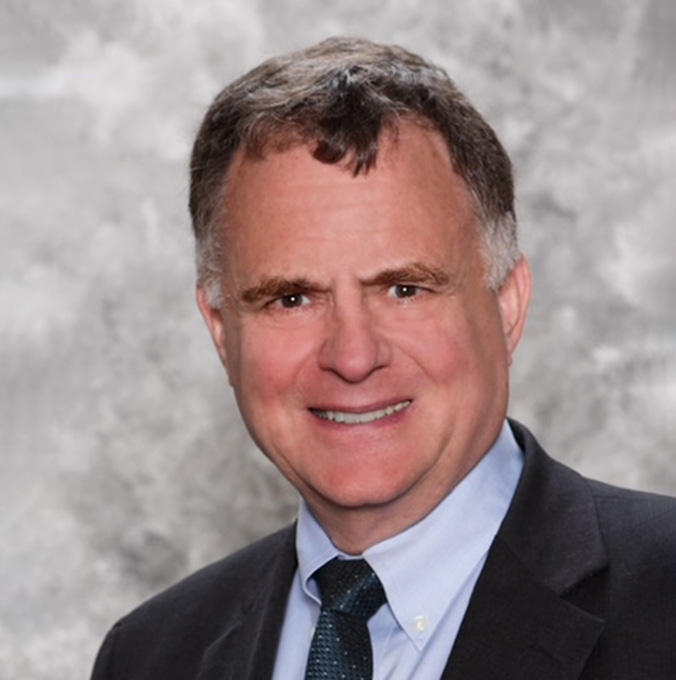
Jordan Ryan
April 20, 2026

Image: Drop of Light / shutterstock.com
This policy brief is written as the four candidates for the next Secretary-General of the United Nations are due to present this week. It suggests eight recommendations for the person who will take up the office at a moment when the foundations of international order are under strain. Major powers increasingly act outside agreed frameworks. The prohibition on the use of force is under pressure. Trust in multilateral institutions has eroded among governments and publics alike. The question is no longer whether the system can be improved. It is whether it can still function as intended under current conditions.
Contents
- The Secretary-General this moment demands
- Acting without consensus
- The AI governance emergency
- Prevention, the global commons, and institutional coherence
- Voice, credibility, and the public role of the office
The Secretary-General this moment demands
As the General Assembly prepares to hear the four announced candidates for Secretary-General on 21 and 22 April, the next occupant of the office will not inherit a system in need of modest reform. The office will pass to someone taking charge at a moment when the foundations of international order are under strain. Major powers increasingly act outside agreed frameworks. The prohibition on the use of force is under pressure.Trust in multilateral institutions has eroded among governments and publics alike. The question is no longer whether the system can be improved. It is whether it can still function as intended under current conditions.
In that environment, the office of Secretary-General cannot be reduced to process management or consensus-building alone. It requires political judgement under pressure. The office was never designed to be powerful in a formal sense. Its authority is limited by the Charter and constrained by the interests of states, especially the P5. Yet the position has always depended on something less tangible and, at critical moments, more important: the capacity to act with credibility, timing, and independence within those limits. Dag Hammarskjöld showed what that space can mean in practice during the Congo crisis in 1960, when his 13 July letter brought the situation before the Security Council in the terms of Article 99. It still exists. But it will matter only if the next Secretary-General is prepared to use it.
Recommendation:
- The next Secretary-General should establish a standing practice of invoking Article 99 and engaging the General Assembly when major powers act outside agreed frameworks and the Security Council is unable to respond. This is not a last resort. It is a core responsibility of the office.
Acting without consensus
The central challenge is straightforward. The next Secretary-General must be able to operate effectively in a world where consensus is often absent and sometimes impossible. The UN system was built on the assumption that major powers would find ways to co-operate, particularly on questions of peace and security. That assumption no longer holds with any consistency. When the Security Council is blocked, the system stalls. The result is paralysis at precisely the moment when the international community most needs initiative and direction.
In such circumstances, the Secretary-General cannot break that paralysis outright. But the office can work within and around it, preserving political space where it still exists. That space depends on credibility and legitimacy. Without legitimacy in the eyes of member states and the broader public, even well-timed interventions will carry limited weight.
The task is to understand where influence remains and how to use it. That means using convening power seriously, not ceremonially. It means practising quiet diplomacy where it can still produce results. It also means recognising the moments when public clarity matters, even when it carries political cost. The Secretary-General must be able to engage major powers without becoming captive to them. Avoiding difficult truths may preserve relationships in the short term, but it weakens both the office and the institution. Over time, it narrows the space in which the Secretary-General can act at all.
Recommendation:
- The next Secretary-General should deploy senior envoys with explicit authority to engage all parties in emerging conflicts and systemic crises, with direct reporting to the Secretary-General on progress. Strategic selectivity matters more than arbitrary numbers. These envoys should embody the Secretary-General’s personal engagement, not an extension of the bureaucracy.
Independence, then, is not a matter of rhetoric. It is a matter of practice. The next Secretary-General will have to judge when to build agreement, when to press behind the scenes, and when silence becomes a form of acquiescence. There is no formula for that balance. But refusing that burden of judgement is itself a choice, and usually the wrong one.
The AI governance emergency
Power is no longer concentrated only in states. Private actors now command strategic technologies, communications systems, financial leverage, and information platforms on a scale that can rival, and sometimes distort, public authority. The next Secretary-General must recognise this shift not as a background condition but as a central operating reality. The challenge is no longer only to mediate among governments, but also to defend the space of accountable public action against its erosion by forces beyond democratic scrutiny.
The challenge posed by artificial intelligence is not adequately described as a co-ordination problem or a gap in existing governance frameworks. It is a governance emergency. The capabilities already being deployed, and those approaching deployment, carry consequences existing institutions were not designed to manage. No adequate multilateral framework yet exists. Political resistance to meaningful regulation is itself a structural feature of the problem, driven in significant part by actors with the greatest commercial and strategic interest in avoiding it.
The next Secretary-General must treat this not as a technical domain, but as a political challenge requiring sustained leadership. This will require pressing member states to move from advisory recommendations to binding norms, accepting that some powerful actors will resist, and making the public case that the absence of governance is not neutral but an active risk to international peace and security.
Recommendation:
- The next Secretary-General should consolidate and elevate existing mechanisms, including the High-level Advisory Body on AI and the UN Group on the Information Society (UNGIS), rather than create parallel structures. The priority should be to translate existing recommendations into actionable UN norms before the next major technological disruption.
Prevention, the global commons, and institutional coherence
The United Nations has long declared prevention a priority, yet too often it acts only after crises have escalated. Nuclear danger has returned to strategic thinking without a comparable increase in sustained political engagement. Arms continue to flow into fragile settings, deepening instability. Tensions are growing in shared domains, including the oceans, outer space, and cyberspace, where governance remains partial and contestation is increasing. Prevention must also extend to the global commons: climate, biodiversity, water, and the polar regions, where the absence of effective governance is itself a source of systemic risk. Prevention is not a technical exercise. It is a political choice. It requires acting earlier, speaking more clearly, and engaging before consensus has formed.
The UN system remains unevenly coherent. Peacebuilding, development, human rights, and humanitarian action are still too often pursued alongside one another rather than as part of an integrated strategy. Where field leaders work in concert with authority and political backing from the centre, integration succeeds regardless of formal structure. Where leadership is absent or contested, no structural reform can compensate.
Recommendations:
- The Secretary-General should establish a standing early-warning briefing mechanism for both the Security Council and the General Assembly on emerging risks. This mechanism should report publicly.
- Building on General Assembly Resolution 72/279, the next Secretary-General should formally designate Resident Co-ordinators as representatives of the entire UN system, with expanded authority over political, human rights, and governance matters at country level, backed by senior appointments and direct reporting to the Secretary-General.
- Upon taking office, the next Secretary-General should accept the pro forma resignations of all Assistant and Under-Secretaries-General and make new appointments exclusively on the basis of merit and Charter compliance, with an explicit refusal of P5 pressure.
- The next Secretary-General should establish a formal reporting requirement on women’s participation in all UN-facilitated peace processes, with public annual accountability for progress under Security Council Resolution 1325 and subsequent resolutions.
Voice, credibility, and the public role of the office
The Secretary-General’s voice is not a support function. It is one of the office’s primary instruments. The UN’s most durable asset is its moral authority, and that authority is exercised, or forfeited, through what the Secretary-General chooses to say and how clearly it is said. A Secretary-General who calibrates every public statement against the preferences of powerful member states does not preserve neutrality. That person surrenders relevance. The prevailing narrative, that force rather than law determines outcomes, will not be countered by results alone. It must be contested directly and consistently across the platforms where public opinion is formed.
Recommendation:
- The next Secretary-General should strengthen UN communications under unified editorial authority, sharpen daily briefing capacity so that it speaks to publics and not only to the accredited press corps, and build a sustained institutional presence across the major platforms where public opinion is formed.
None of this suggests the next Secretary-General can transcend the structural constraints of the system. Those constraints are real. But they are not total. Leadership still matters, especially in how those constraints are navigated. This is not an argument for a more powerful Secretary-General in the abstract. It is an argument for a Secretary-General who uses the authority the Charter already provides, with the judgement, independence, and political courage the moment demands.
The Secretary-General this moment demands is neither simply a facilitator of consensus nor merely an implementer of efficiency reforms, as several member states would prefer. Consensus remains important, but it is no longer sufficient. What this moment requires is a political leader with the judgement to know when to seek agreement, when to act despite its absence, and how to preserve the credibility of the institution in both cases.
That is a demanding standard. It is also the reality the next Secretary-General will inherit, and the standard by which the next Secretary-General will be judged.
This Policy Brief draws on discussions within the Peace Reflection Group (PRG), an informal network of former senior United Nations officials and practitioners with extensive experience in peacebuilding, conflict prevention, and international governance. The PRG brings together decades of leadership across field and headquarters settings and offers independent reflection on the challenges facing the multilateral system.
The Author
Toda Peace Institute
The Toda Peace Institute is an independent, nonpartisan institute committed to advancing a more just and peaceful world through policy-oriented peace research and practice. The Institute commissions evidence-based research, convenes multi-track and multi-disciplinary problem-solving workshops and seminars, and promotes dialogue across ethnic, cultural, religious and political divides. It catalyses practical, policy-oriented conversations between theoretical experts, practitioners, policymakers and civil society leaders in order to discern innovative and creative solutions to the major problems confronting the world in the twenty-first century (see www.toda.org for more information).
Contact Us
Toda Peace Institute
Samon Eleven Bldg. 5thFloor
3-1 Samon-cho, Shinjuku-ku, Tokyo 160-0017, Japan
Email: contact@toda.org