Policy Brief and Reports

November 13, 2018
Digital Blooms: Social Media and Violence in Sri Lanka
The policy brief outlines key snapshots of Sri Lanka’s social media landscape as it stood at the time of writing, in early August 2018, and offers some recommendations aimed at civil society’s use of social…
View more
May 24, 2019
Brazil’s Digital Resistance Against Corruption
From 2008 to 2010, 3.6 million Brazilians took part in the “Ficha Limpa” movement which aimed to impact political corruption by ensuring that anyone who runs for office has a “clean record.” The combination of…
View more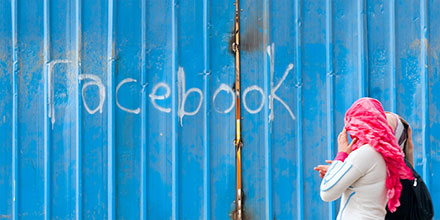
June 25, 2019
Social Media in Egypt: Impacts on Civil Society, Violent Extremism & Government Control
Throughout this policy brief, we vet the use of social media in a major Middle Eastern country - Egypt - where the youth took to the streets to express frustrations that lasted almost a lifetime.…
View more
October 9, 2019
Social Media in Zimbabwe: A Toxic Tool or a Future Bridge to Peace?
The rise of social media in Zimbabwe has brought with it a greater variety of platforms which offer people a means to express themselves. However, the democratisation of information and the increase in digital spaces…
View more
November 20, 2023
The Digital Battlefield: The Taliban’s Case of Co-opting Social Media for Warfare and Governance
This Policy Brief delves into the paramount significance of social media in contemporary warfare, shedding light on the critical need for effective measures to counter online radical narratives and prevent the spread of violent extremism.…
View more
June 5, 2020
The Role of Social Media in Fomenting Violence: Myanmar
While social media opened up Myanmar’s information and communication ecosystem in an unprecedented way, it also came with its share of challenges. Low levels of digital and media literacy, amidst a context of political transition,…
View more
November 30, 2023
Social Media Activism for Civilian Supremacy in Myanmar and Pakistan
This policy brief seeks answers to the question “How are activists using social media to bring political change in Myanmar and Pakistan?” It examines the activism of political and civil society activists on social media…
View more
December 3, 2019
Social Media and Conflict Dynamics on Northern Ireland’s Peace Lines
At interfaces between the Republican and Nationalist Catholic neighbourhoods and predominantly Loyalist and Unionist Protestant neighbourhoods in Northern Ireland, the violence during the ‘Troubles’ (1969-1999) was particularly raw and volatile. As the peace process took…
View more
October 29, 2019
Social Media and Social Change in Jordan: Opportunities and Threats
Over eight million of Jordan’s citizens have access to the internet, and they produce more than half of the digital content available online in the Arabic language. As Jordanians navigate together through an ongoing humanitarian,…
View more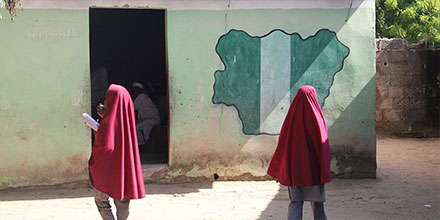
October 1, 2019
Social Media Dynamics in Boko Haram’s Terrorist Insurgence
This policy brief analyses the use of social media by different groups affected by Boko Haram’s terrorist insurgence, including the group itself. The rate, speed, spread and belief which information from social media commands has…
View more
May 11, 2020
Social Media Impacts on Conflict Dynamics: A Synthesis of Ten Case Studies & a Peacebuilding Plan for Tech
In 2019, the Toda Peace Institute’s research programme on “Social Media, Technology and Peacebuilding” published a series of policy briefs exploring the impact of social media technologies on conflict dynamics in ten countries: three in…
View more
October 22, 2019
The False Information Ecosystem in India
Over the past few years, internet access and adoption in India has grown tremendously, giving Indians more access to the online information ecosystem than ever before. Today, India is one of the largest markets for…
View more
November 6, 2019
Social Media Literacy, Ethnicity and Peacebuilding in Kenya
Kenya has experienced a cycle of political violence following a series of controversial elections that have centred on ethnic competition, leading to human rights abuses, deaths, destruction of property and a downward economic spiral. At…
View more
November 7, 2019
The Use of Social Media in Colombian Democratic Spaces: A Double-Edged Sword
The era of social media brings opportunities and challenges to a broad range of stakeholders in Colombia, to harness the power of technological innovation and to foster a more open and transparent democracy in the…
View more
November 8, 2019
Venezuela’s 21st Century Authoritarianism in the Digital Sphere
This policy brief summarises extensive information on digital rights violations and politically motivated information disorders affecting Venezuelans, principally social media users. The brief focuses on the conflict dynamic between an authoritarian government and those fighting…
View more
November 11, 2019
Weaponised Information in Brazil: Digitising Hate
In the last few years, the world information ecosystem has been flooded by the “fake news” phenomena. The fragmentation and scale of the new communication tools help spread old ideologies, that uphold racism, homophobia, and…
View more
March 3, 2020
Conflict and Social Media: Activism of Civil Society for Peace Between India-Pakistan
This policy brief examines the work of civil society activists in India and Pakistan and explains how the social media strategies of civil society activists can ease the risk of war and violence and improve…
View more
November 25, 2022
Kazakhstan’s Bloody January: Digital Repression on the “New Silk Road”
This Policy Brief explores the January 2022 Kazakhstan government shut down of internet access for several days while enacting a violent crackdown on initially peaceful protests which were triggered by hikes in fuel prices. It…
View more
June 10, 2024
Unpacking Affective Polarization in Afghanistan: Ethnic Politics, Elite Competition, and Online Divisive Content
Affective polarization has been a persistent feature of Afghanistan’s society and politics in the past decades. However, with the return of the Taliban, the country has witnessed heightened affective polarization along ethnic and ideological lines,…
View more