When Politicians Shut Out the Press: A Warning from Australia
Leo Shanahan
August 26, 2026
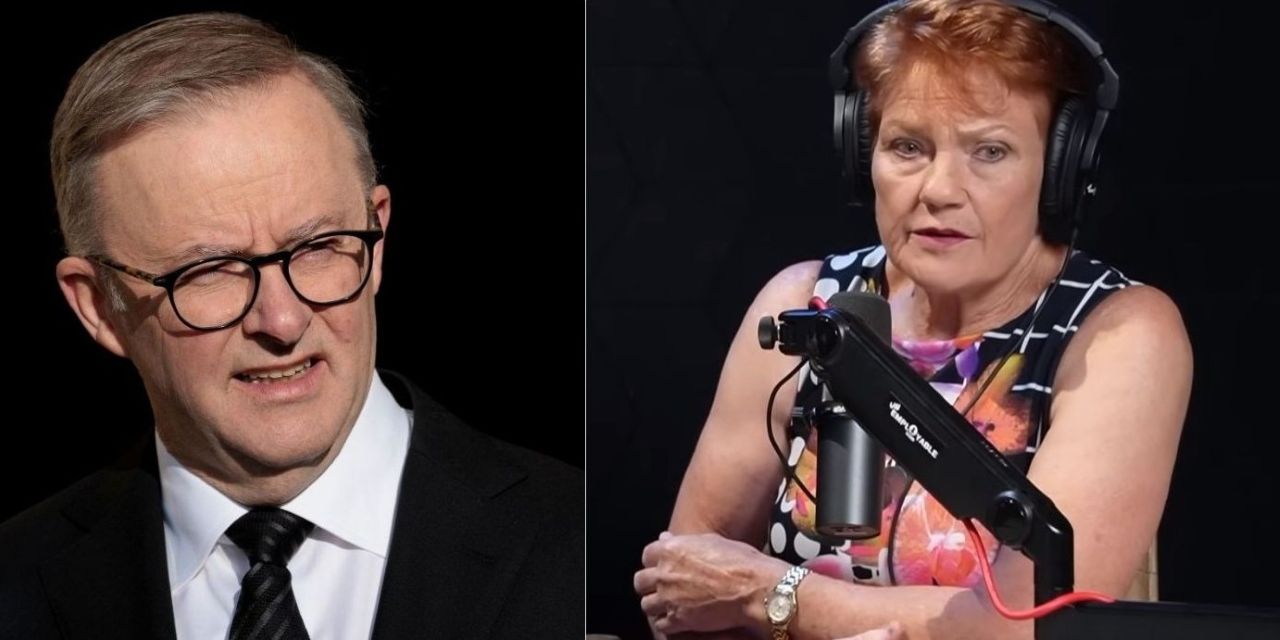
Images: Anthony Albanese: Wirestock Creators / Shutterstock │ Pauline Hanson: Wiki Commons
Australia’s politics has, in recent weeks, been marked by two parallel but vastly different controversies. The first centred on remarks made by Prime Minister Anthony Albanese during a podcast appearance while the second involved a decision from One Nation leader Pauline Hanson to block the national broadcaster, the Australian Broadcasting Corporation (ABC), and other media outlets from her press events.
In a fractured media landscape, politicians are increasingly able to bypass traditional journalism and communicate directly with chosen audiences. Albanese’s podcast appearances and Hanson’s exclusion of ‘unfriendly’ journalists are very different manifestations of this changing environment.
Anthony Albanese has made engaging with ‘new media’ central to his communication strategy. Throughout the 2025 election campaign Albanese appeared on dozens of podcasts and short-form videos that spanned a range of genres including sport, music, and comedy. The long-form, relaxed nature of podcasts provides politicians the opportunity to humanise themselves and reach new audiences, and contrast with the short, often combative nature of traditional media interviews.
However, new media also exposes politicians to controversies that are otherwise avoidable. Recently, Albanese appeared on Bush Deep! a podcast hosted by “Bushie, the wildly inappropriate journalist.” Following the podcast, Albanese apologised for “inappropriate” comments he made when participating in a game of “shag, marry, date.”
The controversy resurfaced again when Japan’s former ambassador to Australia, Shingo Yamagami, published an article in The Australian that labelled Albanese’s comments “insulting,” “ignorant,” and “sexist.” Asked by Bushie about the strangest gift that he had received from a world leader, Albanese had stated that he received “two crown melons” from Japanese Prime Minister Takaichi Sanae. He made this comment while gesturing in front of his chest. For its part, Japan’s government has stated that Albanese’s comments were not ill-intentioned and were “not made in the way that has been reported.”
Despite this, the condemnation was swift. Opposition leader Angus Taylor accused the prime minister of damaging relations with Japan, while several other politicians demanded Albanese personally apologise to Takaichi.
The controversy was amplified by the media. Headlines referring to “Melon Gate” appeared regularly in the tabloids while the story also received attention on nightly news bulletins, in legacy newspapers, and even overseas. This elevated what was a relatively minor political controversy to a story of national significance.
Albanese was rightly criticised for what was, at best, a cringeworthy performance. His decision to appear on a bawdy podcast was ill-informed and at odds with what most young people—his intended audience—desire. Despite claims to the contrary, young people are not disengaged. Affordable housing, cost of living, job opportunities, war, and climate change are legitimate issues that young people are interested in and want debated. Although adopting new media is a much-needed strategy to reach young people, too often politicians get it wrong. Videos of world leaders using “Gen Z slang,” or posting viral dances reinforce a view that mainstream politics does not represent young people.
However, in focusing extensively on “Melon Gate,” politicians and the media have ignored a series of decisions from One Nation leader Pauline Hanson that represent a warning sign for Australia’s democracy.
Hanson established One Nation in 1997 after she was disendorsed by the Liberal Party following racist comments she made about Aboriginal Australians. The party was founded on principles of economic nationalism, social conservatism, and opposition to multiculturalism.
One Nation—historically a minor right-wing party—has experienced a surge in its electoral support in recent months. According to several polls, Pauline Hanson has emerged as preferred prime minister.
One Nation has cultivated its surging support through a simple message that focuses on cost-of-living relief and a reduction in immigration, issues which have contributed to widespread frustration with the major political parties. Its platform, which relies more on populist protest than policy solutions has received little scrutiny in parliament and the media. This is because One Nation holds just six seats in federal parliament and its leader, Pauline Hanson, is increasingly unavailable to media networks deemed ‘unfriendly’ to One Nation.
The party has adopted a media strategy that bypasses traditional journalism while actively attacking and shunning mainstream news outlets. In August, The Guardian, The Age, and the ABC were barred from a press conference in Melbourne announcing One Nation’s candidates for the upcoming Victorian state election.
Media bans have become a tactic increasingly favoured by One Nation. During recent federal and state by-elections, the ABC has been excluded from One Nation press conferences on the grounds of alleged bias. Pauline Hanson has long accused the ABC of political bias and hostile reporting against her party. In 2017, Hanson offered her support for the Liberal Party’s media ownership reforms in exchange for an inquiry into the national broadcaster. The inquiry concluded that the ABC was operating in line with their obligations.
One Nation is no longer a fringe political party and therefore any attempts to bypass legitimate questions from the ABC should be called out. Restricting the national broadcaster’s access is part of a populist playbook that seeks to undermine public trust in the media and delegitimise critical reporting. It represents a threat to democratic accountability and should serve as a warning to media networks everywhere. If a non-partisan, taxpayer-funded national broadcaster can be denied access to political events, it raises a fundamental question: what kind of reporting must a media organisation provide to retain access to politicians?
In a democracy, public figures cannot restrict scrutiny to favourable media organisations. A healthy democracy depends on political candidates being subject to robust and independent scrutiny. The democratic question is: what happens to accountability when politicians increasingly control the conditions under which they encounter the public?
The lack of condemnation—from political leaders and media organisations—for this attack on press freedom is concerning. Anthony Albanese described the decision as “misguided”, while Opposition Leader Angus Taylor offered no comment. Similarly, The Guardian and The Age described their exclusion as “disappointing” and “unorthodox”, respectively, while the ABC declined to comment. The Australian Press Council and the heads of other major media organisations have also remained silent.
Australia frequently ranks among the world’s strongest democracies; however, this does not make it immune to democratic erosion. One Nation’s media bans should therefore be treated as a warning sign for Australian democracy. Australia lacks explicit constitutional protection for press freedom, making it all the more important to scrutinise and resist attempts to normalise the exclusion of media organisations from political events. There is a real possibility that, following the next election, One Nation could emerge as a significant opposition force in parliament. If politicians and media organisations become complacent and fail to condemn these undemocratic practices, Australia could find itself with a major political party that refuses to subject itself to scrutiny from journalists it considers unfriendly.
Although stories like “Melon Gate” sell more newspapers than discussions about media freedom, if media executives are unwilling to defend independent political journalism today, they may find there is less room to sell newspapers tomorrow.
More articles on challenges to democracy:
Democratic Resilience Is a Global Public Good (3-minute read)
Democracy and the Spaces We Can No Longer Shape (3-minute read)
When the Guardrails Come Off (3-minute read)