Taiwan After the Summit
Hugh Miall
October 16, 2026
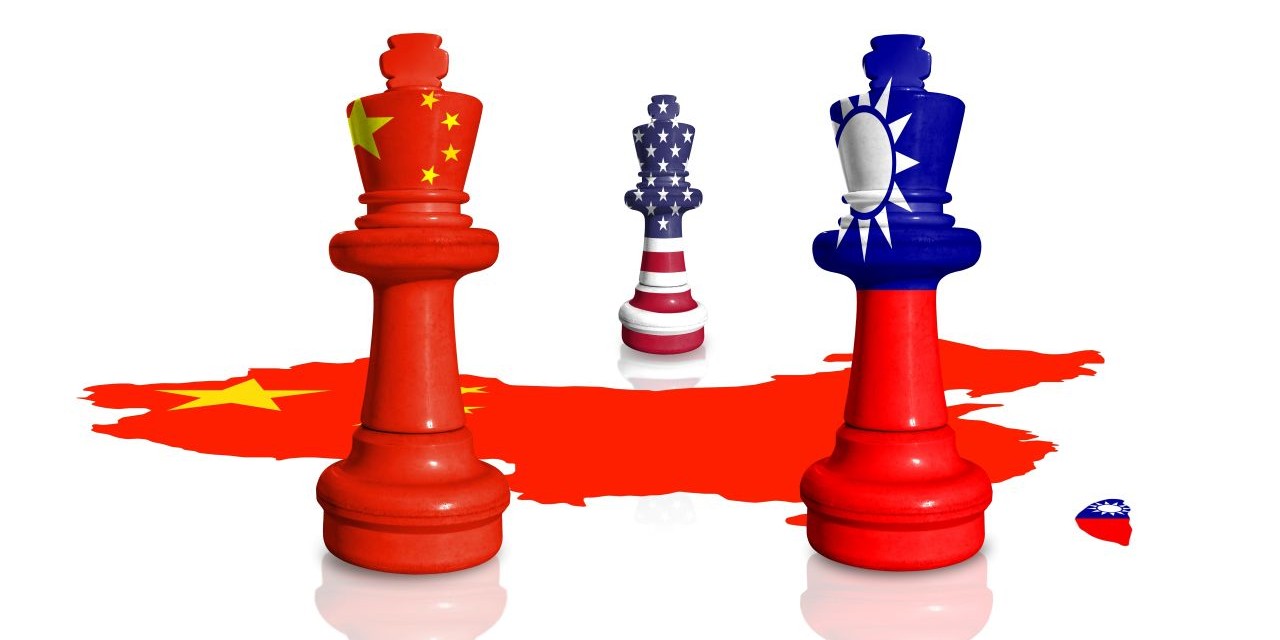
Image: Tomas Ragina / Shutterstock
Can Trump–Xi summitry bring peace in the Taiwan Strait?
When receiving Xi Jinping in Washington DC on 23–25 September 2026, President Trump declared that he and President Xi had “never gotten along better”. Xi must have been pleased that the US President was treating him with the respect, and even deference, that China deserves. The parties agreed to build a “constructive strategic and stable China–US relationship based on respect, fairness, and equality.” On the surface, the summit marked a positive moment between the world’s leading powers and could set a nice precedent for the APEC summit in November and the G20 summit in December.
But the tangible agreements that flowed from the Washington summit were limited. The truce in the trade war was extended and the two sides agreed to hold a dialogue on AI. Two giant pandas would be lent to Atlanta Zoo. Perhaps the most significant measure was that the two militaries “agreed to sign a memorandum of understanding to establish better crisis communication and prevention as soon as possible”—a vital guardrail, if they deliver it. President Xi welcomed the ‘historic juncture’ in US–China relations (by which he presumably meant the shift in the relative balance of power). He reminded President Trump that the two sides need to avoid the Thucydides trap.
On Taiwan, however, the point where the trap is most likely to be sprung, there was no tangible progress. The initial Chinese readout says that President Xi raised the Taiwan issue and hoped the United States would: “adhere to the correct position of opposing ‘Taiwan independence’, and handle the Taiwan question with caution.” The US readout did not mention Taiwan at all.
President Trump’s rhetoric on Taiwan has been very different from his predecessor’s. President Biden went beyond the official position by saying on four occasions that he would defend Taiwan in the event of a Chinese invasion. In contrast, President Trump has said. ”I’m not looking for somebody to go independent. And, you know, we’re supposed to travel 9,500 miles to fight a war. I’m not looking for that.” He has also held up a $40 billion arms deal, seeing it as a useful bargaining chip.
The official position remains ‘strategic ambiguity’—the US does not support independence and does not guarantee to come to Taiwan’s defence, though the Taiwan Relations Act commits the US to supporting Taiwan’s self-defence through arms sales and states that any forceful attempt to change Taiwan’s future would be a matter of grave concern to the United States.
The Trump Administration’s official statements do not diverge from the traditional position, though President Trump himself has made evident his lack of enthusiasm for entanglement in Taiwan. His 2025 National Security Strategy refers to defending the First Island Chain and “reinforcing U.S. and allies’ capacity to deny any attempt to seize Taiwan or achieve a balance of forces so unfavorable to us as to make defending that island impossible.”
What are the prospects for reassurance and deterrence in the light of the summit? Last year the Toda Peace Institute convened several international workshops on the Taiwan issue in conjunction with the Chinese Academy of Social Sciences. Participants explored the possibility that the US, China, and the Taiwan authorities could adopt reassurance measures to supplement deterrence in order to avert a Taiwan contingency.
Taipei is concerned that President Trump may have weakened deterrence through his statements and his ‘America first’ policy. His assertion of US primacy in the Western Hemisphere, his treatment of US allies, and his attack on and blockade of Iran, together with his lacklustre support for Ukraine, suggest precedents that are not reassuring for people in Taiwan. Confidence that the US under a Trump Administration would come to the aid of Taiwan in a conflict has fallen sharply. Not only does President Trump’s inconsistent approach undermine deterrence. It also appears to undermine the possibility of any consistent policy of reassurance.
President Trump has prevented a visit to the United States by the ROC President Lai Ching-te and held up arms supplies. But these actions have not been accompanied by any sustained diplomatic effort to encourage the parties to explore a peaceful settlement of cross-Strait tensions.
Outside the frame of US–China relations, there have been local initiatives in this direction. The Chinese authorities welcomed a paper by the Taiwan-based political scientist Li Ci-ze, who suggested that a ‘one country, two systems’ framework could be cemented into the PRC’s constitution with guarantees for Taiwan’s legislative autonomy, judicial independence and civic freedoms. The current KMT Chair, Cheng Li-wun, has argued for better cross-straits communications and institutionalised relations that give Beijing a credible road-map to a peaceful future, and that support good relations with both Washington and Beijing, based on international recognition of the ‘one country’ status quo and Chinese recognition of Taiwan’s special status. Meanwhile, the PRC has encouraged provincial authorities in Fujian and Guangdong to experiment with cross-strait development initiatives, while also continuing to prepare more coercive interventions and gray-zone tactics.
It used to be thought that 2027 was a possible year for a Taiwan contingency, as this was the time by which President Xi asked the PLA to be ready. Observers now see 2028 as a more likely time, between the Taiwanese national elections in January 2028 and the next US Administration taking office in January 2029.
In the event that President Lai Ching-te wins a new mandate and the DPP wins a majority in the legislative Yuan, President Xi might conclude that peaceful options for unification had been exhausted and there would not be a better opportunity for forceful action. Even then, given the possible consequences for China and the world economy, there would still be a strong case for caution.
If the KMT wins in January 2028, tensions between China and Taiwan would be likely to subside, cross-Strait trade and contacts will increase, and there would be little risk of a Chinese invasion.
Taiwan’s significance as the manufacturer and exporter of 98 percent of the advanced computer chips on which artificial intelligence depends further highlights the lose-lose potential of a conflict, and the win-win possibility of peaceful resolution.
Maintaining the status quo is the preference of Taiwan’s population and the option that many observers advocate. However, since the status quo remains unacceptable to the PRC, there is a continuing risk that, if US–China relations deteriorate again and Taiwan authorities do something to provoke the PRC, confrontation over the Taiwan Strait could trigger a wider conflict. It is in the interests of all parties to use the present opportunity to explore peaceful means to avoid this risk. Pursuing sustained reassurance measures, as previous Toda Peace Institute contributions have suggested, remains a vital means of taking this forward.
Related articles:
Strategic Stability without Illusions: Rethinking Taiwan in an Era of Coercion and Constraint (3-minute read)
Cheng Li-wen’s Mainland Visit: Implications for Cross-Strait Stability (3-minute read)
Reassurance Measures in the Taiwan Strait: Research Cluster Report (10-minute read)