Modi’s ‘Regime Change’ Scare Exposes India’s Foreign Funding Hypocrisy
Debasish Roy Chowdhury
October 30, 2026
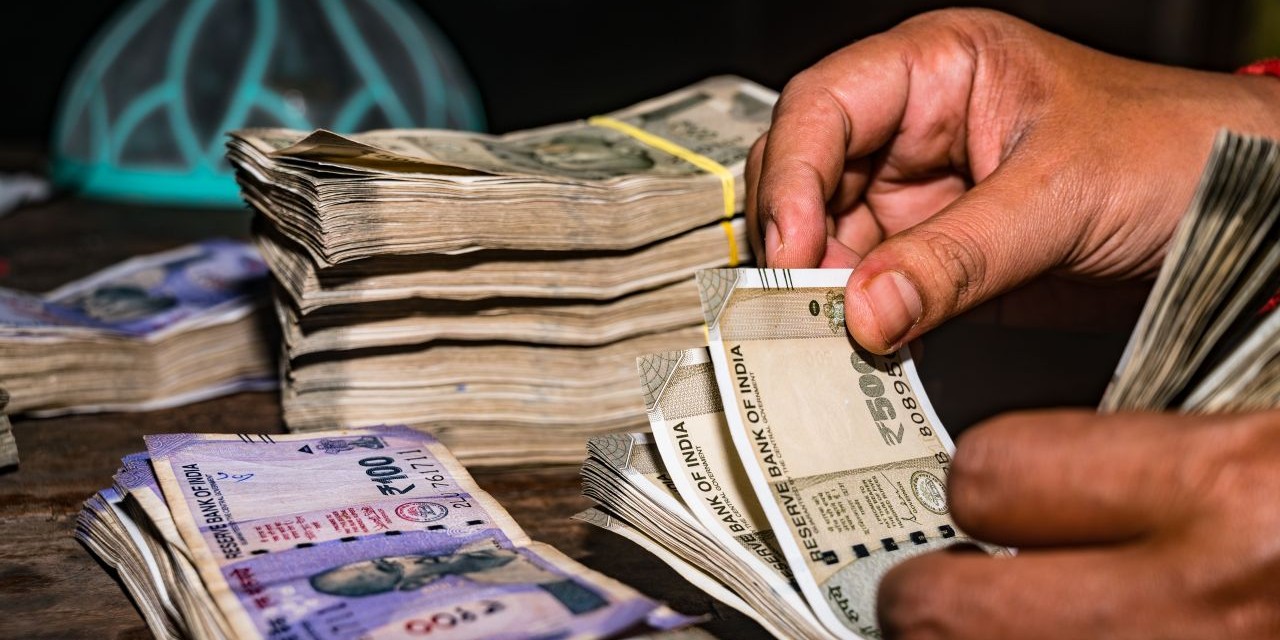
Image: Soumyabrata Roy / Shutterstock
It’s that time of the year again, when well-heeled Delhiites flee the Indian capital for cleaner air, schools close, offices ask employees to work from home, and air purifiers fly off the shelves. Once more, Delhi’s air is thick with the unbreathable—and, this year, with conspiracy too.
Besieged by youth protests against a controversial voter verification process that has disenfranchised 130 million people so far, Prime Minister Narendra Modi’s regime has launched a vicious counter-offensive alleging foreign conspiracies to unseat the government. His ruling Bharatiya Janata Party (BJP) says the opposition Congress party is colluding with a global “red-green ecosystem” of disruptive organisations—which Fox News calls “Chaos Inc.” —engineering social unrest in many countries to cause regime change.
The foreign conspiracy charges are wilder and more creative in India’s notoriously Modi-friendly news channels and social media. In this universe, the protests are being orchestrated by desi “anti-nationals” funded by all sorts of foreign adversaries, real and imagined, from ‘US deep state’, China and Pakistan to George Soros, Greta Thunberg and Elon Musk. Modi himself fans these fantastical claims by his periodical tirades at what he calls “intellectual extremists” as foreign-funded enemies of the state. The spurt of student protests in Europe has only strengthened this argument, with a choreographed chorus of Modi’s devotees demanding to know who is funding the protests to drag India into a similar political turmoil.
The allegations flying thick and fast over foreign funding of protests would suggest Modi’s party has unimpeachable finances. The hypocrisy is stunning, given how his dispensation has cultivated and profited from dark money.
Modi’s government entrenched and legitimised the built-in opaqueness of party finances in India through a new instrument called electoral bonds allowing limitless, anonymous contributions to political parties, including from foreign entities. The BJP made the most from electoral bonds—some years cornering up to 95 percent of the funding bond proceeds through this route—before the Supreme Court ended the practice in 2024. This unaccounted source of limitless cash has helped the party outspend rivals by miles in election after election.
There is very little transparency in party finances in India in any case. Political parties—the BJP as well as others—enjoy exemption on income tax but it is virtually impossible to know their income. The parties are required to maintain and publish their audited accounts, but they choose the auditors themselves and the disclosures are mostly in the form of summaries. Neither the country’s Election Commission nor the public gets to do deep forensic audits.
And, parties are a picture of unity when it comes to protecting this privilege of hiding their balance sheets. In 2013, a year before Modi rose to national power, India’s Central Information Commission declared that the six national parties were to be treated as ‘public authorities’ under the Right to Information (RTI) Act, and ordered them to disclose key data just as any other statutory body. It was a rare opportunity to open up India’s murky party finances to public scrutiny, but all six parties defied the directive. The then ruling Congress party called the order an “adventurist approach” that would “damage democratic institutions”.
Two years later, the same information commission—now under a new government—quietly washed its hands of the matter, feigning inability to force the parties to comply. Governing institutions had begun to fold under Modi. The parties played their part as well. Not only had the six parties refused to comply with the order to respond to RTI queries, they did not even bother to appear before the commission to explain their point of view despite repeated summons.
There’s a pattern to such cross-party cooperation. In 2014, the Delhi High Court found both the BJP and the Congress guilty of flouting India’s Foreign Contribution Regulation Act (FCRA) by receiving donations from an Indian subsidiary of a foreign company. They promptly banded together and engineered an amendment through Parliament that simply changed the law to allow for such contributions.
But the same parties that have so carefully protected themselves from foreign funding rules have ironically used these same rules to turn the screws on civil society organisations. Earlier applied only to political parties to prohibit their use of foreign funding, Modi’s predecessor Congress government expanded FCRA rules to regulate all kinds of nonprofits receiving foreign funds. Modi made it worse after coming to power in 2014.
He tightened the regulations in such a way that the government now not only has the power to decide which NGOs will get foreign funding and which ones won’t, it also decides how the NGOs with access to foreign funds get to spend it. Thousands of NGOs have died as a result while others have been forced to radically scale down their operations, adversely affecting the poorest and the most marginalised who depend on non-profits for survival.
Stunning hypocrisy again, as Modi’s government would not subject the 100-year-old Rashtriya Swayamsevak Sangh (RSS), “the largest far-right network in history”, to the same rules it applies to other nonprofits. This motherboard of all Hindu supremacist organizations, including the BJP —Modi started out as an RSS preacher—is probably the country’s best-resourced nonprofit that draws in millions of dollars through associated groups based abroad. Yet it is not even registered in India, shielding it from relevant funding laws.
Using the bogeyman of foreign influence is standard authoritarian ruse for delegitimising internal dissent. Serbia’s fallen strongman Aleksandar Vučić has been doing pretty much the same after being routed by a student-led group in a snap election this week, blaming unnamed European nations and the “US deep state” for losing his 14-year political dominance. At the end, all of Vučić’s emasculation of governing institutions and media, the rhetoric over national resurgence, propaganda, and cult of personality, came to nothing when faced with organised resistance and popular rage. It is easy to see why a sudden students’ uprising has Modi shaken.
Related articles:
Modi Chooses Violence. Again. (3-minute read)
Why India’s Opposition Parties Should Boycott Elections (3-minute read)
India’s Cockroaches Have a Message for the World (3-minute read)