Can the Quad cope?
Mark Beeson
November 10, 2026
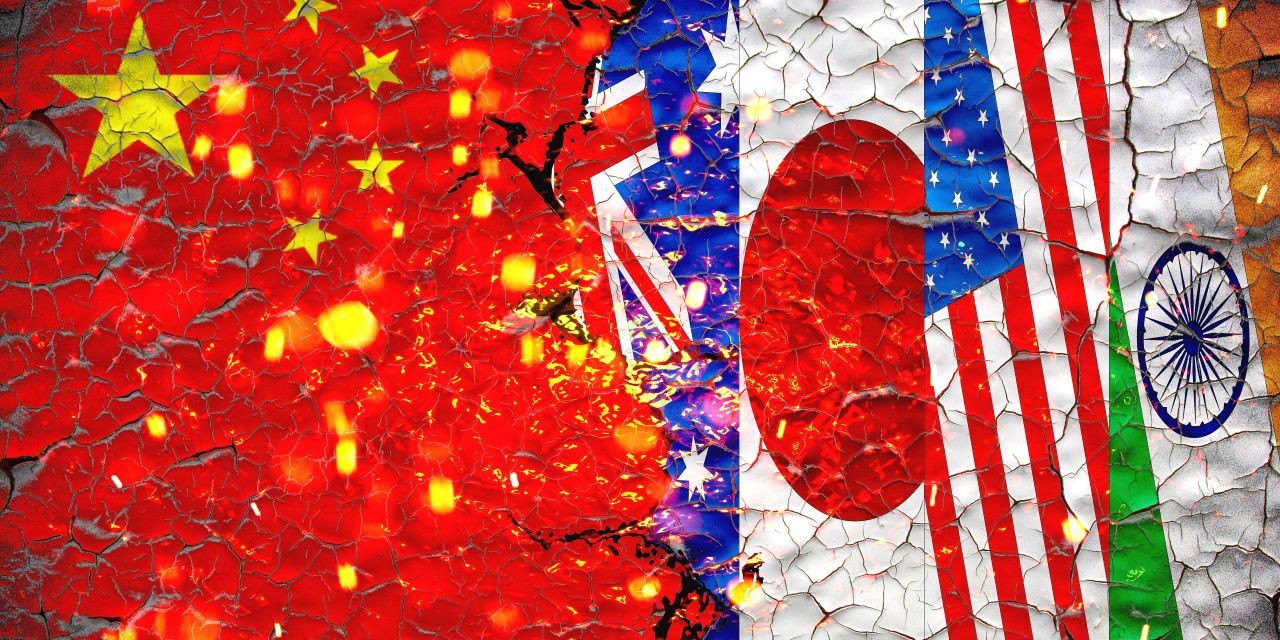
Image: sameer madhukar chogale / Shutterstock
Even the Quad’s (Quadrilateral Security Dialogue) most ardent admirers would have to concede that its track record is rather underwhelming. To be fair, whether it’s called the Indo-Pacific or the Asia–Pacific, the region is not known for effective multilateral organisations and coordinated inter-state action. Consensus based policy and voluntarism have their limitations, and the Quad is no exception.
But the Quad started promisingly when its members—Australia, India, Japan and the United States—came together in the wake of the 2004 Indian Ocean tsunami to provide aid and assistance to the worst affected countries, something Southeast Asia’s premier grouping—the Association of Southeast Asian Nations (ASEAN)—proved incapable of doing.
Significantly, then Japanese prime minister, Shinzo Abe, sought to build on this foundation by giving what would become the Quad in 2007 a more strategic role, something that was given real substance in the Malabar naval co-operation, which started with bilateral US–India exercises in 1992, but which were given greater impetus by Japan’s intervention; not the first time it had taken a leadership role in driving regional cooperation.
But despite the Quad’s Indo-Pacific framing recognising India’s significance as a rising power, the momentum proved hard to sustain. From the outset, Beijing took an understandably dim view of the Quad, as it was rightly seen as a potentially formidable security grouping that was primarily designed to counter China’s growing strategic importance.
But China’s equally pivotal economic role in the region and the wider world meant that being part of what might be seen as an anti-China coalition was an increasingly difficult policy option for Australia in particular, which withdrew from the Quad in 2008, leading to a period of inaction by the group as a whole.
Like the forthcoming Quad meeting, its revival began on the sidelines of another regional gathering, this time the East Asia Summit (EAS) in 2017. But like the EAS, the Quad didn’t make much of an impression despite a series of leaders’ meetings from 2021 to 2024. The on-again, off-again nature of Quad gatherings, especially at the leaders’ level, in combination with Donald Trump’s disdain for any sort of multilateralism, has caused many observers to write it off as yet another example of regional form over substance.
Noted Australian strategic analyst Hugh White, for example, suggests that there is nothing to the Quad but “a series of meetings which gingerly avoid talking about China.” Some more critically-minded scholars see the Quad as an Instrument of American imperialism and grand strategy, and a possible precursor to a frequently mooted but never seen ‘Asian NATO’.
Although the planned meeting in mid-November will be seen by the Quad’s supporters as evidence of its continuing relevance, there are still some potential problems to overcome, most of which revolve around the role of the US. Many American policymakers and commentators hope that the Democrats resounding win in the mid-term elections means that ‘normal’ foreign policy will be resumed, there is no guarantee that this will happen, and not just because Donald Trump will remain president for another two years.
On the contrary, the rise of China, which the Quad was intended to slow, has continued and America’s relative position has declined as a consequence. While this might seem like a good reason to recommit to the Quad, it is not impossible that Trump might make a deal with China as part of his legacy. At the very least, American foreign policy is likely to reflect his disdain for multilateralism and the interests of middle powers. He seems much happier dealing with fellow authoritarian ‘strong men’ like Xi Jinping and even Vladimir Putin directly, than he does having to negotiate with the lesser lights of the international system.
Adding to these problems, India might also feel aggrieved that its willingness to host Quad meetings in 2024 and 2025 was rebuffed by the US, not least because Trump was attempting to reset relations with China and in the context of a possible ‘G2’. In any case, India’s commitment to the Quad has always been lukewarm, and it is reluctant to frame the grouping as an anti-China coalition that might impinge on its prized ‘strategic autonomy’.
All of this will likely come as discouraging news for the other Quad members, Japan and Australia. Japan has recently been beefing up its own defence capabilities, worried that the US under Trump was no longer a reliable ally. This is a sentiment that is shared by many American allies, with the noteworthy exception of Australia, which continues to push for greater strategic integration with US no matter what the cost or impact on national sovereignty.
Whatever doubts Australian policymakers may have about the Trump administration, they are not publicly discussed, which may make the forthcoming Quad talks rather stilted and unproductive. Sceptics won’t be surprised about this outcome as, apart from the post-tsunami assistance that led to its founding, it is difficult to point to any tangible outcomes from previous meetings.
This may not be a fatal shortcoming for Quad supporters, though. Much of international politics has a performative quality, especially when President Trump is involved; if he simply turns up and doesn’t embarrass himself or his Quad partners this is likely to be seen as a triumph.
But even if the meeting goes well, the Quad’s problems are likely to endure, no matter who the next occupant of the White House may be. Containing China is not the most important challenge the world faces at this historical juncture. It is crucial that there is substantial cooperation between China and the US in dealing with existential challenges like climate change, AI and pointless conflicts. Perhaps the Quad members could demonstrate their recognition of this reality by inviting China to join.
Related articles:
Managing Competition: The New Logic of US–China Summitry (3-minute read)
Democratic Resilience Is a Global Public Good (3-minute read)
Can APEC Reinvent Itself? (10-minute read)