Peace and Security in Northeast Asia
Rethinking Multilateralism and the Future of Asian Peace Amid US–China Rivalry
September 26 - 27, 2026
Tokyo, Japan

26–27 September 2026
Tokyo, Japan
For decades, multilateralism has served as a cornerstone of the Asia–Pacific regional order. Today, however, regional multilateralism faces mounting challenges, including the deepening strategic rivalry between the United States and China, the emergence of minilateral groupings such as the Quad and AUKUS, and the resurgence of US–China trade tensions under the Trump 2.0 administration.
The international workshop “Rethinking Multilateralism and the Future of Asian Peace Amid US–China Rivalry” was held in Tokyo on 26–27 September 2026, bringing together approximately twenty leading scholars and policy practitioners to examine a central question for the Asia–Pacific region: How can states employ different institutional strategies to preserve peace and stability amid intensifying US–China rivalry?
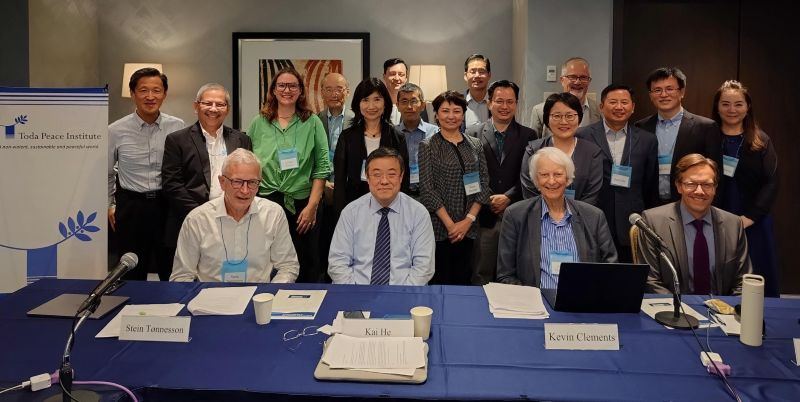
Through rigorous, collaborative, and policy-oriented discussions, the workshop contributed to both academic debates and practical policy dialogue on the institutional foundations of peace and order in the Asia–Pacific. It examined how states across the region employ a range of institutional approaches—including multilateralism, minilateralism, bilateralism, unilateralism, and combinations of these—to manage regional peace and security amid intensifying US–China competition.
The workshop pursued four key objectives:
- Identify the principal institutional strategies adopted by major regional actors, including China, the United States, Japan, South Korea, ASEAN, and Australia, in the context of US–China rivalry;
- Explore the challenges and opportunities facing regional multilateralism;
- Assess how different institutional strategies can contribute to managing regional order amid great-power rivalry; and
- Develop practical recommendations for revitalising and adapting multilateral and other institutional mechanisms to support regional peace, stability, and prosperity.
Although participants welcomed the recent ‘détente’ in US–China relations during Xi Jinping’s state visit to Washington, D.C., in September 2026, they held differing views on the implications of a possible G-2 framework for the Asia–Pacific regional order. While some argued that regional multilateralism can play a vital role in facilitating and managing US–China rivalry, others suggested that a potential G-2 arrangement might generate more anxiety than assurance among US allies and among middle and small powers, potentially reducing the relevance of multilateralism in the region.
How will middle and small powers utilize multilateral and minilateral approaches to shape the regional order transition? Where will regional multilateralism go from here? And how can multilateralism contribute to regional peace and security? These contested questions were at the heart of the workshop’s discussions and debates. The engaging, illuminating exchanges deepened our understanding of multilateralism’s evolving role in a potentially changing regional order. The workshop’s academic and policy outputs will further develop these debates and extend their impact beyond the event itself.