Global Challenges to Democracy Report No.281
On the Erosion of Tunisia’s Once-Promising Democratisation Experiment
Moncef Khaddar
February 24, 2026

This report aims to examine the process of Tunisia’s autocratisation, which continues to reverse the gains from the 2011 Arab Spring. With receding civic freedoms and the rising tide of populist politics, there does not seem to be much room for democratic resilience and defence against democratic backsliding in Tunisia. The report provides a background that outlines key areas where democratic gains from the 2011–2021 period have been reversed since the July 2021 coup, and maps out the political landscape, highlighting the main difficulties facing the protection of civil society and civil and political freedoms. It then offers recommendations designed to limit the impact of autocratisation and revive free civil activism.
Contents
- Executive summary
- 1. Introduction
- 2. Civil society crackdown: Reopening the authoritarian playbook?
- 3. Recommendations
- Conclusion
Executive summary
Autocratisation in Tunisia continues to reverse the gains from the 2011 Arab Spring, including democratic elections and the country’s 2014 democratic constitution. This autocratisation blends control of information—through measures such as laws against ‘fake news’—with coercion of the opposition and limits on the activities of civil society groups and political parties. With receding civic freedoms and the rising tide of populist politics, there does not seem to be much room for democratic resilience and defence against democratic backsliding in Tunisia.
This report aims to examine the process of Tunisia’s autocratisation. Part one provides a background that outlines key areas where democratic gains from the 2011–2021 period have been reversed since the July 2021 coup. Part two will then map out the political landscape, highlighting the main difficulties facing the protection of civil society and civil and political freedoms. Part three offers recommendations designed to limit the impact of autocratisation and revive free civil activism. These include:
- Introduce initiatives to set in motion processes of dialogue between the state and society as a way of decreasing tension between the state and civic bodies.
- Propose measures to protect free and pluralistic civil activism and to safeguard the democratic opposition against fragmentation, so that society can perform the tasks necessary for the resumption of the democratisation process.
- Invest in capacity-building for effective advocacy with the state to support social justice policies that could result in inclusiveness for marginalised regions and citizens, thereby broadening participation and support for democracy.
Taken together, these recommendations would help to reshape state–society relations along lines that revive Tunisia’s opportunity for democratisation.
1. Introduction
This policy paper examines the problematic case of Tunisia’s democratisation trajectory since 2011. After a popular revolution ousted the long-standing dictator Zinealbidine Ben Ali in January 2011, the country saw subsequent democratic elections (2011, 2014, 2019) and a relatively inclusive constitution-drafting process (2014). In 2021, a self-coup by elected President Kais Saied dramatically changed the direction of political change in the country, such that Tunisia is now regarded as a clear case of de-democratisation. The backdrop to this exploration is that the concept of democracy, which remains the centrepiece of the developments analysed in this report, is conceived here differently from the Eurocentric model that often leads elites from the Global South to either blindly mimic or reject out of hand the experiences of other nations.
In a European context, democratic governance took politically, historically, and culturally contingent forms that were then propagated as positive ‘universal’ models for the rest of the world, reflecting the dominance of what Wallerstein calls the ‘rhetoric of power’. [1] Such Eurocentrism complicates expectations and processes of democratisation in Global South countries such as Tunisia. Furthermore, one must keep in mind that neither the monarchical nor the colonial legacy faded away from conceptions and practices of political power in European systems. Aware of these limitations, some scholars of the region set modest objectives for political transformation, centred on establishing a pluralistic political system. [2]
Given this contestation over the meanings and models of democratisation, the question to be asked is why and how democratisation gradually came to a standstill and rapidly reached a democratic breakdown in Tunisia. It is argued that the political landscape has shifted dramatically [3] between 2011 and 2019, and more so since July 2021, when the current President, Kais Saied, first elected in 2019, put in place emergency measures. [4] The current President of Tunisia is a former academic who taught law at the University of Sousse. As an outsider to politics prior to 2019, this background helped him build a reputation as an anti-corruption reformer. Despite having no political party of his own, he convincingly won the presidency in October 2019. His re-election in 2024, however, was marred by a very low voter turnout (officially 11.2 per cent). Kais’s self-coup of July 2021, when he froze Parliament and ruled by presidential decree until he instituted a new constitution in 2022, caused many to boycott the 2024 elections, which were noted for having almost no serious competition. He has, since the 2021 coup, consolidated significant powers by suspending parliament, rewriting the constitution, and cracking down on the political opposition. This directly led to concerns about democratic backsliding despite his initial popular electoral support. Hence, since 2021, Tunisia’s democratic backsliding has entered a phase of reversal, which has included the weakening and dismantling of democratic institutions established by the 2014 constitution. The definition of democratic backsliding by a democratically elected ruler applies to the Tunisian case study. [5]
To understand the unfolding model of governance introduced by Kais Saied over the past four and a half years, one must keep an open eye on the myriad facts and decisions that contradict the Head of State’s discursive strategy on direct democracy. In addition, any observer of the methods of governmental repression of the ‘moderate opposition’ cannot help but conclude that in today’s Tunisia, a new transition is taking place. This time it involves the re-surfacing of a renewed authoritarian regime, ironically in the name of progressing on the ‘revolutionary’ and ‘democratic’ paths. Still, there remains some hope that the present authoritarian drift will correct itself or change course under the cumulative effects of internal and external contradictions.
2. Civil society crackdown: Reopening the authoritarian playbook?
Kais Saied advocates what he repeatedly calls a ‘sovereign state’ run by a ‘strong’ President. The problem at this level is that the combination of a president operating within a hyper-presidentialist regime with quasi-monarchical sovereignty, all the while denouncing ‘foreign interference’, [6] is motivated by his fear of both foreign and internal criticism of his policies.
This present political atmosphere explains the harsh sentences in a mass trial of 40 public figures in April 2025, including the leaders and members of the National Salvation Front, Citizens Against the Coup, and Ennahda (now the Renaissance Islamic Democratic Political Party), established in 1981 as the ‘Movement of Islamic Tendency’ (MIT). Former President Marzouki (2011–2014), voted in by the popularly elected National Constituent Assembly in 2011, was condemned to 22 years in absentia, charged with ‘terrorism’ and ‘treason’ based on a law enacted in 2022 by the President, Decree Law 54, that prohibits ‘spreading false news’.
Many questions need to be asked to better understand the nature of the current Tunisian political system and the evolution of the creeping process of de-democratisation, which is invariably identified as a return of authoritarianism, autocracy, and autocratisation.
How did the process of liberalisation and democratisation, triggered in the post-Ben Ali dictatorial era, become derailed, causing the transition to stall and instigating backsliding and eventual breakdown? Scholars will debate the precise combination of factors that led to this difficult situation for years to come. [7] However, some combination of elite fragmentation and political paralysis, popular dissatisfaction with post-2011 ruling elites amidst deteriorating economic conditions, and a subsequent explosion of ideologised populist fervour offer some clues about what precipitated Saied’s power grab.[8] More precisely, prior to 2021, the stagnation and subsequent regression in the democratic transition may be attributed to both the late President Beji Caid Essebsi (2014–19) and to Kais Saied himself during the beginning of his first mandate (2019–21). [9] The days of the 2014 constitution were numbered after the wrangling between what was called the three Presidents: of the Republic, the Government, and the Parliament.
For Saied, the revolution that began on 17 December 2010, initiated by the people in the marginalised regions, was followed at the beginning of 2011 by what he sees as the ‘counter-revolution’, led by the urban elites.
Thus, Saied’s conception of ‘true’ democracy is forged against the elites and liberal political institutions [10] that were guilty of having excluded the demos after 2011. Statist hostility to liberal democracy and the recurrence of authoritarian populist rhetoric are well ingrained in Tunisian politics. It has been remarked that the current regime is both party-less and anti-party. Saied, who has designed a new political system based on his own views of democracy’s shortcomings, believes that the time of political parties has passed. What his critics consider an authoritarian regime is, for him, a new party-less democracy, different from failing models of Western democracy. Here, some of Saied’s opinions resonated with many people. The ‘disillusionment’ [11] and ‘disengagement’ [12] of those citizens forgotten by the ‘revolution’ was followed by an endless spectacle of a democratic transition that itself fell apart. This disaffection probably contributed to filling the ranks of those who welcomed the President’s declaration of a state of emergency. Thus, the doors were open for him to think, like Habib Bourguiba (Tunisia’s first president, 1956-1987), “I am the system!” If this populist dimension is taken into consideration, then speaking of the end of the democratic transition becomes a plausible hypothesis.
In light of these complex factors that helped abort Tunisia’s democratic experiment, the many recommendations coming from international experts should aim at preventing Tunisia’s free fall and counteracting the trend toward deepening poverty, inequality, social conflict, and rising violence, instead of providing more support to the security sector. [13] Thus, the call to support a Tunisia that is more economically integrated with Europe and the world economic system would be a much better alternative than what exists in Tunisia today: a ‘failed autocracy held together by repression and external aid’. [14]
Indeed, the inconsistencies in Kais Saied’s own actions underscore the problem with focusing on security issues in understanding Tunisia’s many problems today. It is worth reflecting on the President’s U-turn on a matter that bears on one o his own draft laws, which in his new system have priority over parliamentarians’ proposals. In the case of a law which unmistakably intended to ‘criminalise normalising relations’ between Tunisia and Israel, Kais Saied, Commander in Chief of t Army and also Commanding the Security Forces (since July 2021), cornered the Parliament, and the debate on his bill was suspended after he objected to it. [15]
IS THE ‘THIRD REPUBLIC’ USING THE LEGAL SYSTEM FOR A REPRESSIVE CLAMPDOWN?
According to the International Federation for Human Rights (FIDH), the 6 October 2024 re-election of President Kais Saied, with a reported 90.7 per cent of the vote amidst a turnout of only 28.8 per cent, was described by some as a ‘dictatorial score’, reminiscent of Ben Ali’s defunct regime (1987–2010). It is necessary to mention that one of the two rival candidates for the presidency, Ayachi Zammel, was imprisoned, [16] and the second, Zouhair Maghzaoui, was among the President’s supporters. This situation led to a surrealist and virtually hollow campaign under the watch of ‘The Independent High Authority for Elections’ (ISIE) that lost its independence from the moment that its members came under the direct control of the President of the Republic. This was in contrast to the pre-2024 ISIE, whose members were appointed by the Parliament according to the 2014 constitution. In addition, to ensure the incumbent’s victory, ISIE dropped three other candidates from the presidential election list and rejected the request of civil society organisations to serve as observers, in addition to denying accreditation to foreign journalists who wished to cover the election. The 2024 presidential elections were seen by many, including FIDH, as ‘a democratic charade’ that facilitated efforts by Tunisia’s new dictator to consolidate his grip on all powers and institutions. At the same time, dissenting voices were being silenced and repressed, while challengers were jailed and exiled.
In light of these transgressions against civil rights and democracy, questions are raised regarding the hopes that many had about transitional justice with respect to the Ben Ali (1987–2011) and Bourguiba (1956–1987) eras. The project of transitional justice was set up as part of the process of democratic transition initiated institutionally in 2013 with the establishment of the Truth and Dignity Commission (TDC, 2013–2018). Now it seems there are new violations of rights in the post-revolutionary period.
These crackdowns have drawn the attention of various groups. Given the alarming situation of human rights defenders, the FIDH called on the EU to ‘withdraw its support’ for ‘the Kais Saied regime as quickly as possible.’ In addition, it warned against ‘the return to dictatorship’ in a Tunisia whose international partners show much ‘passivity’ at a time when repression was intensifying. On the other hand, the African Union (AU) has already condemned Tunisia regarding human rights violations, specifically concerning the state of emergency declared by the President in July 2021. An AU court, in fact, called for the restoration of ‘constitutional democracy’ as early as September 2022. [17]
The revocation of the citizens’ right to petition the government before the African Court was considered the “latest move in President Kais Saied’s broader campaign to dismantle accountability for his authoritarian rule and grave human rights violations”. [18] Jamali and Uzoma’s article concurs that the 2011 “revolution […] brought significant change to the government’s approach to transitional justice, accountability, and human rights.” Such progress has now been set back significantly.
STIFLING CRITICS AND FREE MEDIA?
The term ‘fake news’ has made its way to Tunisia, where it appears to signify that only official information from government sources is credible. Otherwise, unofficial views are censored and considered offensive. Some in what many refer to as the ‘free media’, active post-2011, dared to raise their voices against Decree-Law No.
2022-54 (commonly called ‘Law 54’), passed on 13 September 2022. This law aims to ‘fight against the offences to the information and communication system’ by criminalising the spread of ‘false information and rumours’ online, with potential penalties of imprisonment and fines. The broad definitions and vague language of the Decree are chilling for free speech, effectively allowing the authorities to silence critical voices and target dissenters. In this regard, both the International Committee of Jurists (ICJ), in July 2023, and Human Rights Watch (HRW), in December 2023, drew attention to the fact that while Decree-Law 54, promulgated without any consultation or public debate, states that its official aim is ‘preventing and prosecuting offenses relating to information and communication systems’, it in fact sets forth provisions that authorise the government to ‘collect electronic evidence’, thus opening the door to harsh sentences. One Tunisian lawyer and political commentator, arrested in May 2024, was unjustly prosecuted for exercising her right to freedom of expression and was sentenced to approximately 18 months in prison for critiquing government policies on African migrants. [19] She was released in late November 2024. [20]
As this example demonstrates, the executive has been using Decree 54 to curtail independent voices. Under the guise of ‘combatting cybercrime’ and ‘fake news’, the authorities—if not the President alone—have given themselves the green light to control the speech of a supposedly sovereign people. In addition, the criminal penalties set out in Presidential Decree 54 violate Tunisia’s legal obligations under international human rights norms (ICJ, July 2023). The UN has expressed concern about the doubtful ‘compatibility’ of the Decree’s provisions with international law on freedom of expression, freedom of the press, peaceful assembly and association, privacy and the independence of lawyers. [21]
Despite many disagreements over Tunisia’s post-2011 transition, there is a broad consensus regarding the breakthrough that allowed the information and media sectors to experience openings and moments of respite, from the downfall of dictator Ben Ali on 14 January 2011, until 25 July 2021, when the current President initiated his coup de force. In retrospect, it is difficult to deny the period from 2011 to 2021 marked a decade of dynamic political life and expanded freedom of the press. This liberalization was also reflected in the multiplication of formally registered new political parties and NGOs, which increased respectively, from eight in 2010 to 80, later registered, and from approximately 15,000 in 2014 to 24,000. Today these civil society groups are themselves at risk of being dissolved, while the creation of new NGOs is in jeopardy. By early 2026, civil society activity and press freedoms have both become reflections of ongoing authoritarian efforts to repress the multiplicity and diversity of presidential candidates. In other words, the electoral campaign exists only in name, as does the right to free expression.
3. Recommendations
- Support democratic governance at the socio-economic, political, and legal levels. This should include capacity-building for grassroots civil society and labour unions, as well as international organisations participating directly in building political institutions that promote individual and collective civic and political engagement. Additionally, advocacy for legal reform is key, so that laws serve to protect the resilience of peaceful, popular democratic protest movements, helping to defend civil activists from governmental harassment.
- Monitor human rights violations, advocate against political repression, and organise popular initiatives to hold the government accountable for breaches of universal democratic norms within Tunisia. To this end, preventing the personality cult of the leader(s) and state-manufactured ideology from clouding political issues, and particularly the rights of the demos as the ultimate holder of sovereign power, is key. Strategies need to be designed and implemented to promote and sustain various democratic values and practices that have been repressed in the name of state security and in defence of a threatened undemocratic, populist regime. In theory and practice, notions of citizens’ dissent and of political opposition must be safeguarded and integrated into the political culture of all types of civil society organisations in such a way that popular mechanisms and a bottom-up institutional framework can be mobilised at will in all cases of repression by security forces.
- Re-institute transparency and accountability of all government bodies and institutions to help de-centralise executive power. That includes the security forces and intelligence services. In tandem, the establishment of a constitutional control body, impeachment procedures, an Ombudsman, a sovereign Parliament, and an independent judiciary are also necessary. It is imperative to end old and new policies that, under different names and justifications, present the dictatorship of the sole executive as a salutary necessity in reference to the superior interest of the nation/people/state.
- Support the cause of political prisoners and defend social and economic rights, empowering ordinary citizens in their struggle for their rights and freedoms. Of course, this broad imperative raises important questions for civil society and policymakers to consider. It will also require coalition-building. How can a variety of socio-economic and political groups strategise effectively to put their weight behind different conceptions of social justice policies? How can local organisations collaborate to strengthen alternative advocacy for marginalised regions that aspire to act independently from the tutelage of state centralisation? In what ways can citizen engagement be transformed to increase demand for banning implicit structural (socio-economic and political) exclusion? What role do grassroots movements play in determining state policies for social justice?
- Establish and strengthen platforms for dialogue between the state and society: the government, political parties, social organisations, and civil society. Such a process can slowly restore faith in the people’s right to sovereignty and self-governance. It is relevant to ask how technology can be leveraged to facilitate more effective dialogue between state and society. Similarly, in what ways can grassroots movements play an essential role in establishing dialogue platforms between political elites (many now in the opposition) and the government? What role do educational institutions play in promoting dialogue within a differentiated social formation between state power and ordinary citizens’ organisations?
- Lobby for policies against digital control and bans on debate and information sharing. Civil society groups must work with multiple actors, including government institutions and legal experts. Regime manipulation of social media, its control through digital surveillance, and sanctions on autonomous social media owned by citizens and civil society organisations all harm political reform. In a poor country such as Tunisia, civil society, IT and digital firms, and educational institutions should collaborate with the government to improve IT technology and make it available to disadvantaged regions and citizens. Investment in this type of training and education will, in the long run, benefit equal consumption of news, information, and increased open participation through social media in political debates. This also prevents youth from being drawn to secret political participation and membership of organisations that go underground to avoid surveillance.
Conclusion
Democracy as an institutional system faces many challenges nowadays. [22] Tunisia is one example of that reality. Tunisia’s democratisation process showcases the contests over the ideas and strategies of how to implement good government. [23] Democratisation in Tunisia must be understood as focused on denouncing and combating any resurgence of domineering tendencies by all categories of national elites; addressing socio-political injustices through up-to-date modern technologies; heavily safeguarding the freedoms of expression, the press, assembly, and association; as well as addressing inequality between individuals, groups, and regions. It must include strategic support for a non-despotic, decentralised system of education, informed by the work of the Truth and Dignity Commission (TDC), and by local political culture and the struggle to internalise collective goals and inspire actions of common goodwill.
Two key problems explain the failure of Tunisia’s once promising democratization experiment.
Firstly, no other factor surpasses the ideological polarization that pitted Islamists (namely Ennahda), secularists (including a historically powerful forces of the left) and the old guard (Destour politicians and ‘deep state’ actors from the police and military apparatuses) against one another. Polarization is driven by fundamental disagreements over national identity, limits on the role of religion in public life, and the source of legal authority. It must be noted that this polarization has in a country like Tunisia been exacerbated by decades of social, political and historical divides that emerged since the early phases of the 1956 post-independence nation and state-building led by Habib Bourguiba. Bourguiba was keen on a Western model of modernisation for the North African country.
Secondly, Tunisia’s democratization failed youth and others who hoped for a more just and humane system after the 2011 revolution. Consecutive governments lacked commitment to social justice. They were unable to address issues of deep-seated inequality and corruption. The needs for equal development by Tunisia’s poor are still ignored today by the populist leadership that came to power after the July 2021 coup.
A consensus needs to be built around developing awareness regarding the vast gap that separates official political life, with its institutions and language, from the reality of human life on the margins of politics and economic development.
We do know one thing, which offers a glimmer of hope: propaganda or coercion used to prevent collective democratic action and the defence of citizens’ rights often backfires in the long run.
Notes
[1]Immanuel Wallerstein, European Universalism: The Rhetoric of Power (New York: The New Press, 2006).
[2]Marwan Muasher, The Second Arab Awakening: And the Battle for Pluralism (New Haven: Yale University Press, 2014).
[3]Oussama Romdhani, "The ‘Arab spring’ belongs to another era," New Arab Weekly, May 1, 2025, https://thearabweekly.com/arab-spring-belongs-another-era
[4]Larbi Sadiki, "The 25th of July: Tunisia’s Revolution, Part 2?" Al Jazeera, July 30, 2021,https://www.aljazeera.com/opinions/2021/7/30/the-25th-of-july-tunisias-revolution-part
[5]Stephan Haggard and Robert Kaufman, Backsliding: Democratic Regress in the Contemporary World (Cambridge: Cambridge University Press, 2021).
[6]"Tunisia is an Independent, Sovereign State, and We Will not Allow any Party to Interfere in our Affairs," Agence Tunis Afrique Presse (TAP), November 28, 2025, https://www.tap.info.tn/en/Portal-Top-News-EN/19527805--tunisia-is-an
[7]Larbi Sadiki and Layla Saleh, "The End of Tunisia's Spring?" Eurozine, June 20, 2023, https://www.eurozine.com/the-end-of-tunisias-spring/
[8]Moncef Khaddar, "Tunisian democratisation: dashed hopes between 2010 and 2022," The Journal of North African Studies 28, no. 6 (2023): 1324–1344, https://doi.org/10.1080/13629387.2023.2203465
[9]Peter Mair, "Ruling the Void," New Left Review 42 (November/December 2006), https://newleftreview.org/issues/ii42/articles/peter-mair-ruling-the-void
[10]Nidhal Jmal, "Lost in Transition: The Traps of Authoritarian Nostalgia in Tunisia," Arab Reform Initiative, June 5, 2025, https://www.arab-reform.net/publication/lost-in-transition-the-traps-of-authoritarian-nostalgia-in-tunisia/
[11]Kevin Koehler, "Breakdown by disengagement: Tunisia’s transition from representative democracy," Political Research Exchange 5, no. 1 (2023), https://doi.org/10.1080/2474736X.2023.2279778
[12]Matt Herbert, "Tunisia: Strengthening of Security Force Unions Blunts Internal Control," Italian Institute for International Political Studies (ISPI), August 2, 2022, https://www.ispionline.it/en/publication/tunisia-strengthening-security -force-unions-blunts-internal-control-35925
[13]Tarek Megerisi, "Border bargains only borrow time: How Europe can stop its Tunisia rot," European Council on Foreign Relations (ECFR), May 28, 2025, https://ecfr.eu/article/border-bargains-only-borrow-time-how-europe-can-stop-its-tunisia-rot/
[14]Monia Ben Hamadi, "Tunisian president makes U-turn on law to criminalize normalizing relations with Israel," Le Monde, November 8, 2023.
[15]"Tunisian Presidential Candidate Zammel Sentenced to Six Months in Prison," Al Jazeera, September 26, 2024, https://www.aljazeera.com/news/2024/9/26/tunisian-presidential-candidate-zammel-sentenced-to-six-months-in-prison
[16]Maram Mahdia, "What Role for the AU Ahead of Tunisia's Elections?" Institute for Security Studies, December 15, 2022, https://issafrica.org/iss-today/what-role-for-the-au-ahead-of-tunisias-elections
[17]B. Jamali and I. Uzoma, "Tunisia Exit-Unpacking Tunisia’s restriction on Citizens’ Access to the African Court," Robert F. Kennedy Human Rights, 2025, https://rfkhumanrights.org/our-voices/tunisiaexit-unpacking-tunisias-restriction-on-citizens-access-to-the-african-court/
[18]"Tunisia: Release Sonia Dahmani and end weaponisation of cybercrime law," Article 19, July 11, 2025, https://www.article19.org/resources/tunisia-release-sonia-dahmani-and-end-weaponisation-of-cybercrime-law/
[19]Tarek Amara, "Tunisia Frees Prominent Lawyer Sonia Dahmani, A Critic of the President," Reuters, November 27, 2025, https://www.reuters.com/world/africa/tunisia-frees-prominent-lawyer-sonia-dahmani-critic-president-2025-11-27/
[20]Larbi Chouikha, "13 Years After the ‘Revolution’: Media and Tunisia’s 2024 Presidential Elections," Arab Reform Initiative, February 2, 2025, https://www.arab-reform.net/publication/13-years-after-the-revolution-media-and-tunisias-2024-presidential-elections/
[21]"Tunisia: Reject Bill Dismantling Civil Society," Human Rights Watch, November 7, 2023, https://www.hrw.org/news/2023/11/07/tunisia-reject-bill-dismantling-civil-society
[22]John Keane, The Shortest History of Democracy (Carlton, Vic: Black Inc, 2022).
[23]Larbi Sadiki, The Search for Arab Democracy: Discourses and Counter-Discourses (New York: Columbia University Press, 2004).
The Author
MONCEF KHADDAR
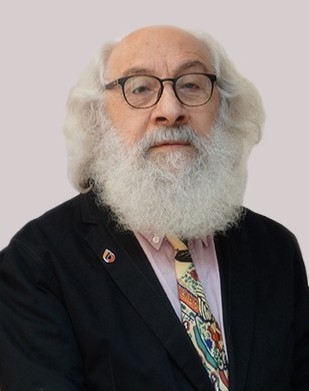
Dr. M. Moncef Khaddar held the position of associate professor in the Department of International Relations at Eastern Mediterranean University and Cyprus International University, respectively, where he taught MA and Ph.D. courses on Politics of the MENA Region and Human Rights. Dr Khaddar was a Fulbright research associate at the Center of Middle Eastern Studies at the University of California, Berkeley. His scholarly research focuses on the foundations of Western-Islamic political thought, human rights, international relations and comparative politics. He has authored publications in both English and French. He is currently affiliated with the Cyprus International University (CIU), Turkish Republic of Northern Cyprus.
Toda Peace Institute
The Toda Peace Institute is an independent, nonpartisan institute committed to advancing a more just and peaceful world through policy-oriented peace research and practice. The Institute commissions evidence-based research, convenes multi-track and multi-disciplinary problem-solving workshops and seminars, and promotes dialogue across ethnic, cultural, religious and political divides. It catalyses practical, policy-oriented conversations between theoretical experts, practitioners, policymakers and civil society leaders in order to discern innovative and creative solutions to the major problems confronting the world in the twenty-first century (see www.toda.org for more information).
Contact Us
Toda Peace Institute
Samon Eleven Bldg. 5thFloor
3-1 Samon-cho, Shinjuku-ku, Tokyo 160-0017, Japan
Email: contact@toda.org