Global Challenges to Democracy Report No.280
Iraq’s Precarious Political System: Consociationalism and Permanent Crisis
Khalil Fadl Osman
February 24, 2026

This report examines Iraq’s post-Saddam Hussein political order, a consociational arrangement known as muhasasah, or the apportionment of power resources among the country’s ethno-sectarian groups. Designed to accommodate societal diversity, muhasasah has become a fundamental flaw in Iraq’s political system. Instead of fostering national consensus, it has hardened ethno-sectarian identity politics, and has become synonymous with dysfunction, corruption, mismanagement, and inefficiency. Bold reforms are needed and radical recalibration beyond identity-based quotas toward functional governance, meritocracy, accountability, and citizenship is imperative.
Contents
- Executive summary
- Introduction
- The roots of muhasasah-based consociationalism in Iraq
- Consociationalism institutionalized
- The perils of muhasasah-based consociationalism in Iraq
- Recommendations: Recalibrating a dysfunctional system
Executive summary
Ever since the toppling of Saddam Hussein in 2003, Iraq has been lurching from one political crisis to another. At the heart of Iraq’s post-Saddam political order lies the consociational arrangement known as muhasasah, or the apportionment of power resources among the country’s ethno-sectarian groups. Designed to accommodate societal diversity, muhasasah has become a fundamental flaw in Iraq’s political system. Instead of fostering national consensus, it has hardened ethno-sectarian identity politics, promoted state capture by powerful elites, and eroded state authority.
All cabinets formed since 2003 have been national unity governments bringing together entities representing key communal and political components. Yet, Iraq remains as mired in division and recurring crises as ever. The system allows parties claiming to represent communal interests to entrench themselves in power, advance their interests, and resist reform. The result is clear: muhasasah-based consociationalism has become synonymous with dysfunction, corruption, mismanagement, and inefficiency.
The roots of muhasasah predate the US-led invasion and lie in opposition politics of the 1980s and 1990s, when parties organized around confessional and ethno-national identities displaced cross-communal ideological movements. Attempts to overcome chronic disunity through quota-based coordination mechanisms institutionalized communal representation, laying the groundwork for post-2003 Iraq’s political order.
Institutionalized after 2003, muhasasah became an unwritten rule apportioning power across state institutions among ethno-sectarian parties. Complementary features of consociationalism—especially, federalism and proportional representation—have exacerbated fragmentation. The asymmetrical federal structure, with only one largely autonomous federal unit, the Kurdistan Region, fuels division. The proportional electoral system reinforces ethno-sectarian voting patterns and prolongs coalition formation. The allocation of top positions based on post-election negotiations intensifies competition and entrenches ethno-sectarian elite control. The constitutional allocation of significant powers to the prime minister increases competition over the post and enables the prime minister to centralize power in his office, thus giving rise to autocratic tendencies.
The system has nurtured corruption, nepotism, and clientelism, turning ministries into party fiefdoms and swelling bureaucracy with underqualified employees. The sense of communal entitlement to power resources has entrenched ethno-sectarian loyalties, shaped voter behaviour, and undermined citizenship. Most ominously, the system is highly resistant to change. Reform initiatives have largely foundered against entrenched interests.
Bold reforms are needed: amending the constitution to reduce the prime minister’s powers and strengthen collective cabinet authority; forming the Federation Council; reforming the electoral law to encourage cross-communal parties; amending the political party law to promote inclusive programmatic parties; and strengthening judicial independence. Radical recalibration beyond identity-based quotas toward functional governance, meritocracy, accountability, and citizenship is imperative. Whether the governing class can summon the political will to implement such an overhaul remains an open question.
Introduction
In a functioning democracy, elections often herald the hope for change. However, there is little hope in Iraq that the November 11 elections would bring the much-desired change to overhaul the country’s dysfunctional political system. A protracted government formation process has followed every election since the toppling of Saddam Hussein’s dictatorship in 2003. This election is no exception. The long-drawn-out cloak-and-dagger dealmaking that takes place to cobble together a cross-party coalition government in Iraq is not a sign of healthy deliberative or discursive democracy. It is rather indicative of the dysfunction besetting the Iraqi political system—a system based on the apportionment of power among the country’s ethno-sectarian communities known as muhasasah. This consociational arrangement was instituted and formalized in the din and clamour to establish a political system that followed the US-led invasion of Iraq in 2003. Since then, Iraq has remained trapped in a vicious cycle of ever-recurring crises, gridlock, and inefficient governance.
All cabinets formed in Iraq under the consociational settlement put in place following the toppling of Saddam have been national unity governments, bringing together entities representing key communal and political components. Yet, the country remains as mired in division and recurring crises as ever. National unity governments in Iraq are never smooth. They are formed in a febrile atmosphere of national crisis. Shorn of grounding in shared cross-communal national interests, they are usually fragile; their operation is beset by serious power struggles. Consociational democracy in Iraq allows political parties claiming to represent communal interests to entrench themselves in power, thus empowering them to advance their interests. Most ominously, the system has proved impervious to reform. The end result is all too clear: muhasasah-based consociationalism in Iraq has become a byword for dysfunction, corruption, mismanagement, and inefficiency.
The roots of muhasasah-based consociationalism in Iraq
Democracy in Iraq stands as a cautionary example for the perils of imposing a model through the barrel of the gun by a foreign power. The US-led, top-down, externally imposed project to transition Iraq from dictatorship to democracy was conceived with minimal, if any, engagement with local power structures and opposition (Mako and Edgar 2021). However, laying the blame for Iraq’s consociational woes at America’s door is both analytically misplaced and historically flawed. The roots of muhasasah predate the 2003 US-led invasion and occupation of Iraq. Muhasasah gained prominence in the political discourse and praxis of the Iraqi opposition in exile in the 1980s and, especially, 1990s.
In tandem with Saddam Hussein’s efforts in the 1980s to institute a brutal cult of personality based on abject fear, religion, sect and ethnicity edged their way to become main rallying and organizing principles of oppositional activism. Parties organized around confessional and ethno-national identities overshadowed and displaced ideological cross-communal parties in the opposition’s landscape. This corresponded with the rise of a tendency in oppositional discourse to privilege Iraq’s ethno-sectarian communitarian heterogeneity. With Saddam Hussein’s hold on power and increasing international isolation in the 1990s, a serious opportunity to overthrow the regime loomed. In a bid to take advantage of this opportunity, the opposition began to devise coordination mechanisms to incorporate the wide array of political parties crowding its fractious and fragmented landscape. In a series of conferences held between 1991 and 2002, the opposition’s elusive quest to overcome its chronic disunity and forge consensus and accord (tawafuq) saw the establishment of coalitions that “tended to represent sectional interests proportionally” (Osman 2015). These coordination frameworks resorted to political and communitarian quota systems “to accommodate the competing demands made by various factions” (Osman 2015, 88-89). However, the degree of harmony achieved by these arrangements was skin deep and not sufficient to turn the opposition into a genuine unifying national political force cutting across identity lines and communitarian interests. Accordingly, these arrangements did not prevent factional conflict. Competition over political spoils fuelled conflict and the oppositional landscape remained prone to crisis. As Osman (2015, 90) notes, “The process was far from a deliberative democracy, It rather involved a complex interplay of authoritarianism and consociationalism.”
Consociationalism institutionalized
In political theory, the notion of consociation was first introduced by Protestant jurist and political thinker Johannes Althusius in the early 17th century. He argued for a system of shared sovereignty and wealth between multiple geographic and social collectivities in post-Reformation Germany, based on a pact of mutual consent and solidarity (Hueglin 1999). Revived by American political scientist David Apter in the early 1960s (Apter 1961), it was later articulated and popularized in the lifelong work of Dutch American political scientist Arendt Lijphart (1968). According to Lijphart (1977; 2004), consociational democracy consists of four main elements: proportionality, whereby political representation and civil service posts are allocated based on the size of each group; grand coalition, whereby government is formed by a broad coalition of representatives from all significant segments of society; segmental autonomy, whereby each group enjoys self-governance in matters concerning its own affairs; and mutual veto, which enables groups to protect their interests. Aziz (2021) explains in detail how the political system established in Iraq following the US-led invasion reflects the demographic ethno-sectarian composition of Iraqi society and implements these four elements of consociationalism.
The superimposed transition from dictatorship to democracy saw the consolidation and institutional embedding of muhasasah-based consociationalism in the Iraqi political system. Outside actors working on setting up a post-Saddam political order, including the US and the UN, saw in the consociational power sharing arrangement a way to include all ethno-sectarian components of Iraqi society. The rationale was that muhasasah provides for an equitable distribution of political power, enabling all discrete constituent sectors of Iraqi society to work together towards building a strong democracy. This was all too clear in the makeup of the Iraqi Governing Council formed in 2003 as an interim authority enjoying limited executive powers and providing advice to the US-led Coalition Provisional Authority, which oversaw the governance of Iraq until the transfer of sovereignty to an interim Iraqi government on June 28, 2004.
Muhasasah is only one aspect of Iraq’s consociational power-sharing system. Another key dimension is federalism, which was also institutionalized following the US-led invasion as a mechanism to decentralize power away from the centre to avert the re-emergence of dictatorship. The role of federalism in exacerbating or alleviating ethnic and social conflict is a hotly debated topic among political and social scientists. [1] However, the case of Iraq provides a telling example of how federalism turns into a factor increasing the incidence of conflict (Roeder 2010).
Furthermore, an electoral framework based on proportional representation has emerged in the post-Saddam political order. Designed to preclude the possibility of a tyranny of the Shi’ite majority and marginalization of other communities, the electoral system has contributed to reinforcing ethno-sectarian divisions. It fostered the tendency of voters to cast ballots to lay communal claims to power rather than to elect representatives based on a national, cross-communal political platform. In addition, as no party is likely to win an outright majority in parliament, the formation of a coalition government after the elections is always a protracted process with intense bargaining.
Perhaps nothing has contributed more to the deepening and institutionalization of muhasasah in Iraq than the introduction of a point score formula following the December 2005 elections to divvy up posts in the cabinet. The formula, variations of which have been used for ministerial appointments since then, assigns points to various cabinet portfolios. Political parties earn points based on the number of seats they win in elections.
They use these points to get or ‘buy’ portfolios in the cabinet (Osman 2015, 154–156; Dodge 2024, 26). An informal arrangement allocates the top positions of President, Prime Minister, and Speaker of Parliament to the Kurds, Shi’ites and Sunni Arabs, respectively. As the constitution allocates significant powers to the office of the prime minister, competition over the post between Shi’ite parties is usually intense, adding a further layer of complexity to post-election coalition-building (Younis 2011, 5). This has also facilitated the increasing centralization of power in the office of the prime minister at the expense of other branches and institutions of government, especially control over the security and armed forces, nurturing autocratic tendencies among prime ministers and contributing to democratic backsliding.
The proportional apportionment of positions does not stop at the top posts in government. A National Balance Committee—formed following the December 2005 election and comprising two Shi’ites, one Sunni Arab, and one Kurd—is tasked with apportioning positions in the higher echelons of the civil service between the winning ethno-sectarian parties (Dodge 2024, 36). Worse still, the logic of muhasasah has spread throughout the state’s machinery and government institutions to the extent that it has been applied to the apportionment of groups from the Sunni and Shi’ite communities to be sent for the hajj pilgrimage (Osman 2015, 159).
The perils of muhasasah-based consociationalism in Iraq
Consociational democracy is fraught with the danger of institutionalizing greed and grievances on all sides of the constituent parts of the elite pact (Roeder 2010). Regime change in Iraq led to raw competition over resources that exacerbated societal and political cleavages, resulting in a classic case where consociationalism produces “a system frequently immobilized with respect to the very questions the agreement was made to settle” (Horowitz 2014, 12). Moreover, the division of power resources based on communal identity led to the hardening of these identities. Brutal mass-casualty terrorist attacks on civilian targets during the insurgency exacerbated the effects of these divisions. They not only deepened mistrust between communities but also aggravated the loss of faith in the Iraqi state, especially among religious minorities (Isakhan and Gourlay 2022).
Consociational democracy in Iraq has “created a highly pluralistic political scene, with multiple centers of power but no agreement on rules to prevent pluralism from degenerating into conflict” (Ottaway and Kaisy 2012, 5-6). Political elites have proven adept at instrumentalizing and bending the institutions, mechanisms, and discourses of democracy to their advantage, namely, to entrench themselves in power. In the process, state institutions have been politicized. Under these conditions, institutions of state are increasingly perceived not as serving all segments of society equally and impartially, but more as advancing the interests of ethno-sectarian communities. As cabinet ministers and senior civil servants owe their positions to their party leaders, they tend to privilege the interests of their political parties.
The system has nurtured corruption, nepotism, and clientelism. Ministries have effectively turned into autonomous satrapies led by ministers whose loyalties lie first and foremost with their party leaders and ethno-sectarian communities rather than the prime minister or the nation. Government bureaucracy has swollen significantly as ministers and senior civil servants tend to create and give party followers and supporters jobs in their ministries and institutions irrespective of administrative or operational needs. This has hobbled government ministries and bureaucracy by hordes of unqualified or underqualified employees.
The notions of communal entitlement that animates muhasasah have both fed and fed on a divisive political discourse. While the logic of ethno-sectarian communal balance has initially been used to justify muhasasah, institutionalizing the system has encouraged political parties to adopt a political rhetoric privileging avowedly narrow communal interests, rather than wider national interests or collective cross-communal ideological or programmatic visions. This has not only contributed to the entrenchment of ethno-sectarian loyalties and attachments, but also shaped voter behaviour, ultimately undermining the universalizing ideal of citizenship. As ethno-sectarianism is used for the purposes of political mobilization, Iraqis are incentivized to vote for an imagined ethno-sectarian community. Voting, then, turns into “a collective identity contest between ethnic and sectarian communities … In such an atmosphere, voting effectively becomes a means to assert communal markers that differentiate voters from each other” (Osman 2015, 159).
Most ominously, the system has proven highly resistant to change. This is not a sign of the system’s resilience, but rather a symptom of its rigidity. The need for radical overhaul of the political system has been recognized by protest movements and elements in the political elite alike. Calls for systemic reform, and even for a wholesale transformation of the political order, have accompanied demands for improved services, better economic conditions, and employment opportunities during the months-long protest waves that engulfed many Iraqi cities, including provincial centres, in February 2011 and October 2019. Moreover, official attempts at reform have done little to address the structural roots of dysfunction. In 2015, Prime Minister Haidar Abadi initiated a series of seven bold proposed measures aimed at reforming the system and improving good governance. These measures included abolishing the positions of deputy prime ministers and vice presidents, downsizing government institutions, and the creation of a committee to fire unqualified government personnel and appoint replacements based on merit. An ambitious White Paper adopted by the cabinet in May 2020 includes a roadmap for achieving financial stability. To this end, it proposes a multi-pronged reform strategy aimed at promoting productive economic sectors, diversifying the economy away from oil, and strengthening governance to address persistent challenges such as corruption, infrastructure decay and provision of services (White Paper 2020). However, little progress has been made on implementing the White Paper due to a host of factors, primarily, political resistance, entrenched corruption, capacity constraints, and lack of concrete action and implementation plan (Husari, 2020; The World Bank, 2022).
Recommendations: Recalibrating a dysfunctional system
The orientalist argument that Iraq is culturally and inherently unsuited for or resistant to democracy is a canard that does not stand up to scrutiny. The impediments preventing a full-fledged democratic polity from taking root in Iraq are systemic and political. The following recommendations are intended to contribute to the debate on how to reform the Iraqi political system to ensure a peaceful transition towards a genuine democracy based on good governance, human dignity, equality, rule of law, accountability, and autonomy from Western and regional powers’ malign influences.
Restructure and empower the Constitutional Review Committee to amend the constitution and clarify vague articles.
The Committee was originally formed in 2006 to review the constitution to enable Sunni representatives, who complained of exclusion in the constitutional drafting process, to propose amendments. Although it submitted its report a year later, listing a catalogue of proposed amendments, the constitutional review process has since stalled. The Committee was revived in 2019 and again in 2023. However, its work has produced no tangible results, mainly because its composition and operation have fallen prey to the logic of muhasasah between political parties pervading state institutions. A main task that the Constitutional Review Committee should take on is to clarify vague provisions in the constitution that have long been bones of contention between Baghdad and the Kurdistan Regional Government, especially Articles 111–115 which deal with oil and gas ownership, revenue distribution, and shared powers.
Amend the constitution and enact legislation to reduce the powers of the prime minister and expand those of the cabinet as a collective body.
Specifically, there is a need to amend Article 78 which stipulates that the prime minister is “the direct executive authority responsible for the general policy of the State and the commander-in-chief of the armed forces” (Constitution of the Republic of Iraq 2005). The amendment should further require the collective approval of the cabinet for key decisions, especially those concerning security, appointments, and major contracts.
Moreover, statutory limitations should be introduced to limit the ability of the prime minister to unilaterally dismiss or appoint officials without cabinet or parliamentary oversight.
Change electoral law to implement a single-member two-round plurality electoral system.
The current electoral system based on proportional representation is not conducive to majoritarian rule. Replacing it with a full first-past-the-post plurality system, where the winner does not need to win 50 per cent or more of the vote, is vulnerable to increasing social and political tensions. In a two-round, single-member-district system, like the one used in France, if no candidate garners a majority or more than 50 per cent of the vote, voters will go to the polls again in a second, runoff round contested by the two top candidates from the first round to elect a representative by simple majority. To win, candidates must appeal not only to their own communities but also to voters from other groups, especially in the runoff election. This would encourage the development of national cross-communal political parties based on ideologies and political programs that transcend narrow communal interests.
Amend existing political party law to encourage the emergence of inclusive national cross-communal ideological parties.
Sweeping amendments to the Iraqi Political Parties Law of 2015 are needed to occasion a shift from ethno-sectarian mobilization toward programmatic, issue-based, cross-communal competition. The proposed amendments need to require that the official registration of political parties be contingent on demonstrating wide national representation such as a minimum threshold of members from at least two-thirds of provinces of Iraq, an inclusive makeup of the upper leadership stratum from different key communities, including
meaningful minority representation, and a political program and/or electoral platform speaking to national rather than parochial communal issues. Regulating the funding of political parties should also be central to the
amendments. Introduce state funding of political parties that is conditioned on measurable indicators of social inclusion such as membership diversity and geographic dispersion.
Strengthen checks and balances by forming the constitutionally mandated Federation Council.
Article 48 of the constitution envisages a bicameral legislative branch consisting of the Council of
Representatives (i.e., parliament) and a Federation Council to include representatives from all provinces and regions of the country. However, two decades since the adoption of the constitution in a national referendum in October 2005, the Federation Council has yet to be formed. A draft law on the Federation Council, prepared by the parliamentary Legal Committee, went through first reading in parliament in January 2012.
However, since then, no progress has been made on finalizing the formation of the Federation Council, mainly because of political elite resistance to a second legislative chamber with substantial powers.
Introduce reforms to strengthen the independence of the judiciary.
There is a need to ensure that the judiciary can act as a check on the executive and legislative powers and perform its functions impartially without political pressure or interference. The administration of the judiciary should be freed from the grip of the executive power, enabling the Supreme Judicial Council to exercise full authority over judicial administration, including appointments, promotions, and disciplinary measures. Legal safeguards should be introduced to ensure that appointments to the judiciary are transparent, meritocratic, and apolitical.
REFERENCES
Anderson, Liam, “Ethnofederalism: The Worst Form of Institutional Arrangement…?” International Security, Vol. 39, No.1 (Summer 2014): 165–204.
Apter, David E., The Political Kingdom in Uganda, A Study in Bureaucratic Nationalism (Princeton, NJ: Princeton University Press, 1961).
Aziz, Ibrahim, Power-Sharing in Iraq after 2003: The Role of the US-led Coalition and Consociationalism (Lanham, MD: Lexington Books, 2021).
Bermeo, Nancy, “A new Look at Federalism: The Import of Institutions,” Journal of Democracy, Vol. 13, No. 2 (April 2002): 96–110.
Constitution of the Republic of Iraq, the official website of the Iraqi Council of Representatives, October 2005, available at: https://iq.parliament.iq/en/the-constitution/, accessed on: October 21, 2025.
Dodge, Toby, “Iraq, Consociationalism and the Incoherence of the State,” Nationalism and Ethnic Politics, Vol. 30, No. 1 (January-March 2024): 28–45.
Horowitz, Donald L, “Ethnic Power-Sharing and Democracy,” Journal of Democracy, Vol. 25, No. 2 (April 2014): 5–20.
Hueglin, Thomas O., Early Modern Concepts for a Late Modern World: Althusius on Community and Federalism (Waterloo, Ontario: Wilfred Laurier University Press, 1999).
Husari, Ruba, “Iraq’s reform program: A white paper with no action plan,” Middle East Institute, November 2, 2020, available at: https://tinyurl.com/2w8a2955, accessed on: October 9, 2025.
Isakhan, Benjamin, and William Gourlay, “State-society relations and inter-communal dynamics in conflict: Non-Muslim minorities in post-IS Iraq,” Nations and Nationalism, Vol. 28, Part 1 (January 2022): 1459–1473.
Lijphart, Arendt, “Constitutional design for divided societies,” Journal of Democracy, Vol. 15, No. 2 (April 2004): 96–109.
Lijphart, Arendt, Democracy in Plural Societies: A Comparative Exploration (New Haven, CT: Yale University Press, 1977).
Lijphart, Arendt, “Typologies of Democratic Systems,” Comparative Political Studies, Vol. 1, No. 1 (April 1968): 3–44.
Mako, Shamiran, and Alistair D. Edgar, “Evaluating the Pitfalls of External Statebuilding in Post-2003 Iraq (2003–2021),” Journal of Intervention and Statebuilding, Vol. 15, No. 4 (2021): 425–440, https://doi.org/10.1080/17502977.2021.1958292, accessed on:
Osman, Khalil F., Sectarianism in Iraq: The Making of State and Nation since 1920 (London and New York: Routledge, 2015).
Ottaway, Marina, and Danial Kaisy, The State of Iraq, The Carnegie Papers, Washington, DC: Carnegie Endowment for International Peace, February 2012.
Roeder, Philip G., “Ethnofederalism and the Mismanagement of Conflicting Nationalisms,” in Jan Erk and Lawrence M. Anderson, eds., The Paradox of Federalism: Does Self-Rule Accommodate or Exacerbate Ethnic Divisions (London: Routledge: 2010): 13–30.
White Paper: Final Report of the Emergency Cell for Financial Reforms, English translation published on the website of the Iraqi Economists Network, available at: https://tinyurl.com/p8fjf5nk, accessed on: October 7, 2025.
The World Bank, Harnessing the Oil Windfall for Sustainable Growth (Washington, DC: International Bank for Reconstruction and Development / The World Bank, Spring 2022), available at: https://tinyurl.com/yz6dcx3s, accessed on: October 9, 2025.
Younis, Nussaibah, “Set Up to Fail - Consociational Political Structures in Post-War Iraq, 2003-2010),” Contemporary Arab Affairs, Vol. 4, No. 1 (January-March 2011): 1–18.
Notes
[1] The literature on this debate is extensive. See Anderson (2014) and Bermeo (2002) for examples of work arguing for the role of federalism in successfully alleviating ethnic conflict. Roeder (2010) provides a contrasting perspective.
The Author
KHALIL FADL OSMAN
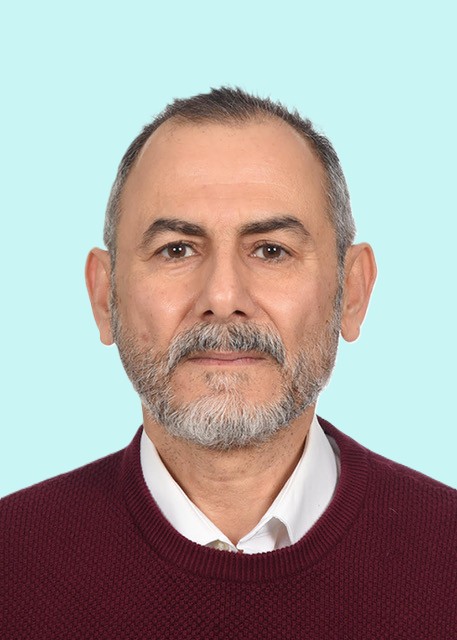
Khalil Fadl Osman is a Non-Resident Fellow at the Center for Conflict and Humanitarian Studies and Fellow at Demos Tunisia. His career spans academia, journalism and diplomacy, including 15 years in different capacities with the UN in Sudan, Iraq, Kosovo, Afghanistan, and Somalia. Dr. Osman has a PhD in Politics from the University of Exeter and taught at Indiana University and the American University of Kurdistan (Iraq). His publications include Sectarianism in Iraq: The Making of State and Nation since 1920, Kirkuk: The Dialectics of Numbers and Narratives (in Arabic), and the forthcoming co-edited book Yemen at the Crossroads: Crisis and Reconstruction.
Toda Peace Institute
The Toda Peace Institute is an independent, nonpartisan institute committed to advancing a more just and peaceful world through policy-oriented peace research and practice. The Institute commissions evidence-based research, convenes multi-track and multi-disciplinary problem-solving workshops and seminars, and promotes dialogue across ethnic, cultural, religious and political divides. It catalyses practical, policy-oriented conversations between theoretical experts, practitioners, policymakers and civil society leaders in order to discern innovative and creative solutions to the major problems confronting the world in the twenty-first century (see www.toda.org for more information).
Contact Us
Toda Peace Institute
Samon Eleven Bldg. 5thFloor
3-1 Samon-cho, Shinjuku-ku, Tokyo 160-0017, Japan
Email: contact@toda.org