Global Challenges to Democracy Report No.276
Arab Women’s Inclusiveness: Navigating Terrains of De-Democratization and Conflict
Layla Saleh
February 17, 2026

This paper surveys the landscape of women’s inclusion in Arab politics since 2011 and to analyze the status of gender relations in Arab authoritarian domestic politics. It identifies three interrelated trends that have variously unfolded across the region: the general retreat in women’s bottom-up mobilization, a separation between women’s political leadership and the democratic question, and the increased insecurity of women in settings besieged by conflict. The paper concludes with some recommendations for local/regional civil society and international allies seeking to enhance Arab women’s substantive political inclusion and participation in zones of de-democratization and violent conflict.
Contents
- Executive summary
- Introduction: An Arab ‘gender backlash’?
- The context
- Women from revolution to de-democratization
- The culture question
- Empowering women, undemocratically
- Gendering insecurity: Occupation and war
- Policy recommendations
Executive summary
Various Arab states seem to be facing increasing autocratization at home and pressure from abroad to align gender policy with international standards. Despite unprecedented reforms in this domain, there are still gaps and challenges for gender inclusiveness in a context of democratic setbacks. This problematic is central to this paper’s undertaking to analyze the status of gender relations in Arab authoritarian domestic politics. Policy recommendations for local and international advocates of women’s political participation include engaging with a wide spectrum of civil society, and anchoring support for women's empowerment in larger democratic and civic initiatives.
Women’s inclusion and political participation is a key element of democratization in any setting, the Arab world included. This paper surveys the landscape of women’s inclusion in Arab politics since 2011. It identifies three interrelated trends that have variously unfolded across the region.
- First is the general, if not total, retreat in women’s bottom-up mobilization from Egypt and Tunisia to Algeria and Yemen, after the major uptick in public activism manifested in the Arab uprisings.
- Second is a separation between women’s political leadership and the democratic question. States including Saudi Arabia, Qatar, Egypt and Morocco have increasingly adopted ‘gender mainstreaming’ not as a democratic, but as a ‘modernized’ authoritarian, practice.
- The third trend is the increased insecurity of women in settings besieged by conflict, from occupied Palestine to Sudan, Syria, and Yemen. Here the right to life and health appear more pressing than access to the ballot box or the legislature.
The paper concludes with some recommendations for local/regional civil society and international allies seeking to enhance Arab women’s substantive political inclusion and participation in zones of de-democratization and violent conflict.
Introduction: An Arab ‘gender backlash’?
It may have become passé to assert that women have been politically present in the many political battlegrounds of the past 15 years. The norm of women’s civic and political inclusion, as a fulfillment of both a (democratic) right and a starting point for meaningful political representation, has gained increasing purchase in Arab politics, democratic or not. ‘Women’s empowerment’ is a cornerstone of Western democracy assistance and the interventions of international organizations from the United Nations to the World Bank. So is considerable Arab doubt about the motivations and metrics of such political ‘progress’ in the region.
The context
Scepticism towards Western meddling is warranted. But it remains important to track and explicate women’s participation and inclusion in Arab public life. This is especially the case given the democratic setbacks, and the grinding violence of occupation and war, that grip several states in the region. However, the regional and country-level specificities of the Arab setting mean that the ‘gender backlash’ that has been tracked across the globe takes particular forms in the Arab world. [1] This is not because there is no regression when it comes to women’s rights and their political participation, but because democratization itself has stumbled considerably. Thus, the suggestion that a gender backlash in the Middle East is less significant because ‘progressive gender norms’ are long absent [2] is a rather incomplete assessment.
For one thing, the Arab region boasts a long history of anti-colonial mobilization from Algeria to Egypt, Palestine to Syria. Moreover, postcolonial “state feminism” a "legal, economic, and ideological strategy to introduce changes to [Arab] societ[ies] and [their] gender relations," has existed in the region for decades. [3] That is, state-building authoritarians from Tunisia’s Habib Bourguiba to Egypt’s Gamal Abdel Nasser, instituted top-down policies, such as public education for women (as well as men), family law reforms, and the right to vote. Such policies eventually came to include even parliamentary quotas for women in several Arab countries by the 2000s, years before the Arab Spring. [4] Hence, given this context, women’s current lags in politics do not take the same form as in Western settings, where headlines focus on the Trump administration’s pushback against ‘Diversity, Equality and Inclusion’, the cancelling of US involvement in the UN’s Women, Peace and Security Agenda, [5] or the sidelining of women’s prominence in the military.
Secondly, the operative hypothesis of this policy paper is that in the Arab world, women’s diminishing political participation is one symptom of widespread de-democratization, resurgent authoritarianism and/or violent conflict. A convincing assessment of the state of women's civic and political rights, and their (dis)empowerment in the Arab region, should consider the gender variable within an overall context of setbacks to democratic struggles and sustainable peace. Isolating women’s struggles from wider movements for emancipation, for subsistence and dignified lives, or from the political participation of the general citizenry, paints a necessarily incomplete picture. Of course, there are some gender-specific manifestations of de-democratization, and of resistance against authoritarianism and occupation, voiced by a variety of women activists and collectivities.
Thirdly, there is no uniform notion of what constitutes women’s advancement, women’s empowerment, or the desirability and viability of ‘feminist’ projects (with whatever adjective one uses: liberal, postcolonial/decolonial, Islamic, radical). This open-ended debate closely mirrors wider political and cultural disputations so prominent in the revolutions and their aftermath, and even in disagreements over modes of resistance to occupation or authoritarianism (e.g. Palestine and Syria). Maria Holt has shown the impossibility of proposing a clear-cut conceptualization of feminism among Arab women activists. “Arab women," she writes, “regardless of whether they adopt the label…enact feminist agency in diverse, contextually grounded ways that deserve scholarly recognition and solidarity.” [6] Identifying regional patterns requires nuanced attention to variation.
Women from revolution to de-democratization
How have the prospects and practices of women’s political participation fared after the initially upbeat democratic outlooks of the early years after 2011? Attention to women’s civic and political activism is important not only as a benchmark of (de)democratization. It also allows for a fuller understanding of the dynamics of political transformation set off in 2011 by the Arab uprisings and revolutions. At this extended moment of sombre democratic setbacks and violence, a focus on women, their mobilization, demands, and insecurities, sheds light on the substance and direction, sometimes the gravity, of those very regressive processes.
The Arab states comprise the worst or second worst performing region according to global metrics of gender equality in labour participation, health, education, and politics. [7] According to the UN, only 10.8 per cent of women in the Arab region participate in politics (compared to an average of 22.5 per cent worldwide). [8] This familiar story, however, requires further investigation that situates apparently troubling patterns within an equally troubling political landscape. Asking “where are the women” in politics, and “what are they doing” within existing power arrangements, expands our view of the current political juncture in all its contradictions. Thus can we spot both the backward steps and the pockets where emancipatory political change may latently reside.
Since the 2011 uprisings and revolutions, the imperatives and risks of citizen participation in politics, of both women and men, has grown much more immediate. Women engaged in digital activism but also visibly participated in street protests and sit-ins against authoritarian governments. However, the costs of women’s public activism in some cases endangered their physical safety. In Egypt, some women organized themselves (teaming up with male allies) to protect themselves against mob violence in the wake of permissive, if not actively complicit, security forces under (initially transitional) military rule. [9] This kind of society-led initiative, para-political as a collective attempt to solve a problem emanating from, yet neglected by, the turbulent governance situation, was forced to disband as Abdelfattah Sissi’s iron grip on power tightened. In 2011, like their counterparts in Bahrain, Egypt, Libya, and Yemen, Syrian women had enthusiastically gone out in protest against the Assad regime, notorious for its repressive security apparatus and wide network of informers planted far and wide in society. If they were not out in the street, they cooked for protesters (and later defecting soldiers and anti-regime militias), made protest signs, and hid those on the run in their homes.
The spiralling of that daring revolution into a multi-sided, internationalized war drove many Syrian women out of the public square, so to speak. Kidnappings and sexual violence in Libya and more recently in Sudan have had a similar effect. Still, women thrived in civil society organizations, as political activists and as journalists, both in Syria’s ‘liberated’ northwest and the Kurdish-dominated northeast. Women from a number of Arab Spring states have been civically active in their diaspora locations in Europe, the US, and even Australia. In the best case for both democracy and for women in politics, Tunisian women not only remained vibrant leaders and members in civil society. Dozens were also elected as MPs to a National Constituent Assembly in 2011 (with an all-time high of one third of 217 members in 2016), then to democratically elected parliaments in 2014 and 2019 where a gender-parity law, later cancelled by Kais Saied, was in effect. Women have led national bodies such as the high-profile Truth and Dignity Commission for transitional justice, at whose helm was lightning rod veteran activist Sihem Ben Sidrine.
The culture question
Cultural controversies still colour debates on women in Arab politics. The controversy over veiling (hijab) lingers, finding new life amidst the fast pace of regional political change. Some political discourse and movements are still fixated on what Nermin Allam calls, in the Egyptian context, “modesty politics”: namely, norms and practices relating to veiling and other social gender roles. [10] Public, politicized attention to (not) veiling may be a specificity of Arabo-Islamic cultures. Another example is Syria under interim President Ahmad Al-Sharaa, formerly of ISIS and Al-Nusra front, where pro-veiling signage and pamphlets emphasizing Islamic forms of female dress have spawned extensive criticism by some sectors of society. [11] However, a quick glance at sartorial choices of women serving in Arab parliaments, ministries, diplomatic missions, political parties, and civil society groups, reflects the diversity of views and practices on the issue. Neither loyalty nor opposition to authoritarian regimes is the exclusive bastion of veiled or unveiled women.
The background of this stubbornly outsized attention to veiling is that for a century or more there has been a persistent if dynamic debate pitting (the Islamic) tradition against (often secular) modernity, and the respective implications for the structures and practices of Arab politics. This same debate carries into differences regarding how women navigate the very much entangled public/private and personal/political, or how women, including those affiliated with Islamist movements and parties, do politics. [12] Still, socio-cultural and political differences about women in politics are certainly not limited to understandings of ‘modesty’. Neither can polarization be reduced to simply secular vs. Islamist ideologies and groups. Islamist groups differ over the ambitious pursuit of some form of democratic governance, and of women’s role in it. At times ideology trumps democracy. Some secular feminist groups willingly participated in constitution-drafting that bolstered a military dictatorship in Egypt; for them, whatever regime type took shape, their feminist input was better than none. [13] Other decidedly secular activists have paid the price for their activism, charged even in absentia with criminal and terrorist activity by coup-staging autocrats, such as Tunisia’s Kais Saied. [14]
Ideology and religiosity matter, but they are not a foolproof predictor of political positions and behavior. Socioeconomic disparities are another factor to consider when it comes to unpacking women’s political engagement. Intersectionality is a trendy word in media and political discourses, but lip service to addressing inequalities shaping women’s basic needs is not enough. Indeed, Arab feminist groups are often tagged with the accusation of Westernized elitism.
In the post-2011 Arab world, regional underdevelopment, [15] refugeehood, [16] occupation and conflict all detract from women’s status as human beings, let alone as (democratic) citizens seeking to participate in political decision making or to pressure policymakers. The feminization of poverty, for instance among rural women, [17] may lower the odds of educational attainment, and in turn blunt the civic awareness and women’s drive to demand specific rights.
Hence Arab women’s participation in politics, or withdrawal from public life, thwarts any attempt to generalize about either ‘what women want’ and what they have done in politics across country cases. If any regional pattern is to emerge, it is that the contraction of ‘civic space’ has affected women just as much as men. Public protest and open criticism of ruling autocrats is risky if not impossible for most women in the region. However, ‘authoritarian learning’ (adaptations by autocratic leaders to co-opt or repress opposition) throughout the region has meant that in countries with a history of popular protest, some public demonstrations are allowed to proceed relatively unhindered. Women’s protests in Morocco have called for another round of reform of the Mudawanna, the set of personal status laws (relating to issues such as marriage, divorce, child custody, and inheritance). Also in Morocco, women donning the traditional white hayek in the Moroccan oasis of Feguig have protested against the privatization of water, albeit by entreating ‘His Highness the King’ to intervene. [18]
Empowering women, undemocratically
Top-down state policies for increasing women’s political visibility are still notable in the Arab world. Programs for women’s empowerment and gender equality have persisted even as Western interest in promoting democracy and democratization have lagged. Authoritarian regimes across the board have taken note that they can score ‘liberalization’ points with Western powers without sacrificing their power through democratic concessions. Since the postcolonial era, ‘state feminism’ has involved co-opting women’s unions and brandishing First Ladies to drum up support (or scare off opposition) ruling regimes. Egypt and Tunisia are probably the best-known examples, although Baathist regimes in Iraq and Syria also emphasized women’s education, as well as their contributions to the labour market and official party activities. Contemporary authoritarians are still wielding First Ladies as they court image-hungry publics. Even Syria’s Ahmed Al Sharaa has been publicly accompanied by his wife Latifa Droubi on several formal occasions, including her M.A. graduation where she gave a short speech that went viral. [19] Her appearance and words have provoked countless commentary by both admirers and critics.
The newer regional development is that ‘state machineries’ (bureaucracies for women’s empowerment) and gender quotas in parliaments are on the rise even in the Gulf states. That Egypt and Morocco boast parliaments with 24.3 per cent and 27.7 per cent women, respectively, is an enhancement of state feminism long in the making. In the tribal and monarchical Gulf states, particularly Saudi Arabia, Qatar, and the UAE, there is a pronounced push for women’s ministerial and diplomatic representation, including in the United Nations. Qatar, a small state whose international image is premised largely on its role in conflict mediation, seeks also to showcase the conspicuous presence of its women nationals in diplomatic posts. The country’s media reports that it was part of the UN move declaring June 24 as the International Day of Women in Diplomacy. [20] Notably, these diplomatic positions are all appointed, not elected, contributing to what is called the nominal or descriptive representation of women. The point is that women are visible in official positions. Ministerial positions are significant here, too, some achieved through haggling by incoming governments pursuant to somewhat dubious elections, as in Lebanon’s sectarian power-sharing system.
Yet women’s appointments are generally not paired with the democratic imperative. In fact, Arab state feminism is a mode of masking authoritarian practices by liberalizing regimes in a very limited way, while placating some constituencies (elite women) eager to arrive at their turn in state appointments. Not only does this descriptive or nominal representation not feed into democratization, but it is doubtful that it qualifies as substantive representation either. Male guardianship laws restricting women’s movements are still an issue in Gulf countries. Saudi Arabia’s Mohammed Ben Salman, lauded as a visionary modernizer, bestowed upon women the ‘gift’ of driving, from which they had been banned, in 2018. But there the vote that was extended to women in 2015 is almost meaningless, as political repression has been on the rise with Ben Salman’s ascendancy. The first woman Prime Minister in Tunisia was appointed by the President. She did not capitalize on her brief tenure (2021-2023) to improve the living standards of Tunisia’s women. Neither did she prevent the political incarceration of women activists and journalists, including Saadia Mosbah, Shaima Issa, and Sonia Dahmani.
One of the main drivers and consequences of de-democratization in Arab Spring countries was to push Islamists out of power. Yet the forced exclusion from power of Ennahda or the Muslim Brotherhood, deemed by many feminist activists as apocalyptic for women’s rights, has not translated into a restoration or advancement of such rights. Some proponents of state feminism may uphold it as engendering a cultural shift, where both men and women become socialized into accepting female powerholders and policymakers. Yet one consistently problematic dimension of the state feminism of Arab authoritarian regimes is its very “selective[ness],” its “oppressive undertone that could directly undermine women’s rights,” for instance through either coercive secularization policies or morality laws that help prop up monarchical rule. [21]
Gendering insecurity: Occupation and war
In some cases, it is rampant conflict more than authoritarian rule per se that limits the scope of women’s involvement in civic and political activism. The genocide in Gaza and mushrooming Israeli violence in the West Bank are the most extreme case in point. If occupation and statelessness is inimical to democracy, the unsteadiness of democratization is compounded by the bloody din of violent conflict, of whatever magnitude. In such situations, including Libya, Sudan, Syria, and Yemen, or in Gaza with its ghastly genocide, women's retreat from public and civic-political life goes hand in hand with a politics that is violent, as opposed to democratic. There are a few outliers here. Even in the midst of Syria's long war, experiments with more or less democratic self-governance were notable in local councils of territories ‘liberated’ from the Assad regime.
Some of these councils were elected at some point, as in Saraqib in 2017, where women voted with men, although none ran for office. [22] In Libya, the appointment of Foreign Minister Najla al-Mangoush was an example of women’s nominal representation, until she was dismissed in 2023 for reportedly meeting secretly with an Israeli official in Rome.
But human insecurity, often gendered, remains paramount, despite the global hubbub over the United Nations’ Women, Peace, and Security (WPS) Agenda that seems not to apply in the Palestinian setting specifically. The most glaring shortcoming of this Agenda involves not the emphasis on protecting women, preventing violence against women, or (most relevant for our purposes here) women's participation in political negotiations, mediations and political transitions. It is rather that UN processes with much greater pedigree than WPS have thus far failed to stanch bloodshed in any of the main conflicts in the region: Yemen's war rages on, Libya's two political governments have not made peace despite the shuttle diplomacy of more than one UN envoy, and Sudan's conflict-genocide has churned on for more than two years.
The longest conflict in the region, Israel's occupation and settler-colonial violence, now genocide, in Palestine, has not been solved or even mitigated by the long litany of UN General Assembly and Security Council Resolutions, peacekeepers, Secretary General statements, and Special Rapporteur reports. There is arguably no reason to expect that women's participation in peacebuilding efforts under the aegis of a UN Agenda will be more effective in protecting women from violence than male-dominated processes have been thus far. In Palestine, women’s leadership gains have not been commensurate with their extensive sacrifices for the liberation struggle. [23] But important advancements are reversed in war. For instance, Jamila Al-Shanti, the first woman in Hamas’s Political Bureau, was killed by an Israeli airstrike in October 2023. Like the inspirational symbolism of women appointed through state feminism, there may be an argument for gender mainstreaming. Women surely acquire public presence, name recognition, skills, and overall political acumen beneficial for further civic and political participation. However, just as gender mainstreaming does not necessarily translate into democratization, it will not necessarily result in more effective conflict resolution given the intransigence of UN and state diplomacy more generally.
Policy recommendations
Enhancing women’s political participation goes hand in hand with democratic resilience and attempts to reverse de-democratization. Women’s political involvement is doubtless vital to sustainable peace in conflict zones that will ideally transition into more democratic governance. Arab civil society actors pursuing democratic change and broader liberation politics, as well as their ally supporters and donors, should:
- Avoid treating Arab women as a single bloc.
Instead, they should pay attention to the political, socio-economic, and historical contexts of each Arab case. Support for women’s empowerment should not be designed on the assumption that all Arab women are after the same thing. Indeed, some Arab women (as in all authoritarian systems) are active participants in upholding dictatorship, military rule, or devastating violence. - Anchor support for women’s empowerment in wider democratic and civic initiatives
Pushing women into positions of political leadership within existing authoritarian structures is not conducive to democratization. Instead, both local/regional civil society and international supporters should insist that women’s political engagement must be enhanced as part of other policies opening up civic and political space. Otherwise, the only ‘winners’ of women’s empowerment are the individual women selected, and their patron authoritarian regimes, as opposed to representing broader citizenry including women. - Take cues from a variety of civil society voices.
The NGO-ization of civil society in the Arab world has particularly affected women’s activism. Many women with higher education levels, family arrangements permissive of travel, and (possibly secular) cultural affinities with women’s empowerment discourses have cultivated close relationships to international donors and media outlets. Other local activists and women’s groups are rendered less visible, globally. Focusing only on already highly professionalized women’s and feminist groups will perpetuate both socio-economic and cultural rifts in Arab societies and among Arab women. - Promote the importance of women’s civic and political engagement in locally resonant terms.
Too often among conservative women across Arab states, ‘women and politics’ implies out-of-touch elitism and excessive Westernization with which feminism is associated. Women’s social and political activism should not be restricted to a secularized, internationalized elite. Those hailing from conservative (including Islamist) circles should maintain their efforts towards women’s political participation. Approaching the matter as part of a broader civic and political responsibility, rather than a response against a blanket ‘patriarchy’, may be one useful approach.
Notes
[1]Brechenmacher, Saskia. 2025, June 5. "The New Global Struggle over Gender, Rights, and Family Values." Carnegie Endowment for International Peace, https://carnegieendowment.org/research/2025/06/the-new-global-struggle-over-gender-rights-and-family-values?lang=en
[2]Ibid.
[3]Hatem, Mervat. 1992. "Economic and Political Liberation in Egypt and the Demise of State Feminism." International Journal of Middle East Politics 24(2): 231-251.
[4]Dahlerup, Drude. 2009. "Women in Arab Parliaments: Can Gender Quotas Contribute to Democratization?"Al-Raida Journal, Issue 126-127: p. 34.
[5]McBrien, Tyler. 2025, April 30. "Secretary Hegseth Ends WPS Program Despite Joint Staff Support." Lawfare, https://www.lawfaremedia.org/article/secretary-hegseth-ends-wps-program-despite-joint-staff-support
[6]Holt, Maria. 2025. "What Does a Feminist Look Like? Arab Women's Activism as a Challenge to Authoritarian Politics." KADEM Journal of Women's Studies 11(1): p. 75.
[7]World Economic Forum. 2023, June 202. "Global Gender Gap Report 2023." https://www.weforum.org/publications/global-gender-gap-report-2023/in-full/benchmarking-gender-gaps-2023/#performance-by-region; United Nations Development Programme. 2024. Regional Gender Equality Strategy for the Arab States 2024-2026: Resilience, Opportunities and Agency.
https://www.undp.org/sites/g/files/zskgke326/files/2025-01/rbasgenderequalitystrategy_final_0.pdf
[8]United Nations Economic and Social Commission for Western Asia. 2025. "Women's Participation in Political Life in the Arab Region: Closing Gaps to Increase Women's Participation in Decision-Making Processes." Policy Brief No. 3.
https://www.unescwa.org/sites/default/files/pubs/pdf/closing-gaps-increase-women-participation-decision-making-processes-english.pdf, p. 1.
[9]El-Rifae, Yasmin. 2022. Radius: A Story of Feminist Revolution. London: Verso.
[10]Allam, Nermin. 2023. "Women's Unveiling in the 2011 Egyptian Uprising: Political Opportunities and Modesty Politics." Politics & Gender, 19(3): 734-755.
[11]Sallal, Safaa. 2025, February 11. "Why Syrian Women's Political Participation is Crucial in Building the New Syria." The New Arab. https://www.newarab.com/features/syrian-women-fight-equal-political-representation-post-assad
[12]See for instance, Sadiki, Larbi. 2004. The Search for Arab Democracy: Discourses and Counter-Discourses. New York: Columbia University Press, Ch. 6: “Arab Women and Democracy: Breaking Out.”
[13]Tadros, Mariz. 2020. "Negotiating Women in Egypt's Post-Mubarak Constitutions (2012-2014)." Politics & Gender 16(1): 145-173.
[14]One example is Tunisian feminist activist, attorney, and former MP Bouchra Belhadj. See Committee for Justice. 2024, May 7. "Tunisia: CJF Demands Halt to Aribtrary Measures Against Lawyer and Women's Rights Activist Bouchra Belhaj Due to Her Activism." https://www.cfjustice.org/tunisia-cfj-demands-halt-to-arbitrary-measures-against-lawyer-and-womens-rights-activist-bouchra-belhaj-due-to-her-activism/
[15]Sadiki, Larbi. 2019. "Regional Development in Tunisia: The Consequences of Multiple Marginalization." Brookings Doha Center, Policy Briefing. https://www.brookings.edu/wp-content/uploads/2019/01/Regional-development-in-Tunisia-the-consequences-of-multiple-marginalization_English-Web.pdf
[16]Altuntas-Çakir, Ravza, Aysegül Gökalp Kutlu, and Fatmanur Delioglu. 2022. "Gendering Security: The Impact of COVID-19 on Refugee Women in Turkey." In COVID-19 and Risk Society Across the MENA Region: Assessing Governance, Democracy, and Inequality, Eds. Larbi Sadiki and Layla Saleh. London: IB Tauris.
[17]Bouhajeb, Ayet. 2024, August 4. "Rural Tunisian Women as Barometers of Political Progress." Demos Tunisia Democratic Sustainability Forum. https://demostunisia.org/rural-tunisian-women-barometers-of-political-progress
[18]Amyai, Abdelmejid. 2024, January 26. "Feguig Women Protesting with the Hayek...Will Authenticity Triumph Over Privatization of Water?" The Voice, https://tinyurl.com/munuezf
[19]Demers, Danielle. October 24, 2025. "Marital Politics in Post-Assad Syria: The Emerging Role of Syria's New First Lady." Aljumhuriya, https://aljumhuriy a.net/en/2025/10/24/marital-politics-in-post-assad-syria/
[20]Qatar News Agency. 2025, June 204. "Qatari Women: Key Partners, Influential Voices on Global Stage." The Peninsula, https://thepeninsulaqatar.com/article/24/06/2025/qatari-women-key-partners-influential-voices-on-global-stage
[21]El-Husseini, Rola, Nermin Allam, and Lihi Ben Shitrit. 2025. "Special Issue Introduction: Feminism(s) and Authoritarinism(s) in the Middle East and North Africa: Contending with the State." International Journal of Feminist Politics 27(5): 977.
[22]Bareesh, Manhal. 2017, 25 August. "Saraqib's Local Elections Show How Democracy Can Break Through in Syria." Kalam, Chatham House. https://kalam.chathamhouse.org/articles/saraqibs-local-elections-show-how-democracy-can-break-through-in-syria/
[23]Ezbidi, Basem and Hanan Ashrawi. 2022. "Dr. Basem Ezbidi of Birzeit University Speaks with Dr. Hanan Ashrawi." Protest 1(2): 363-377.
The Author
LAYLA SALEH
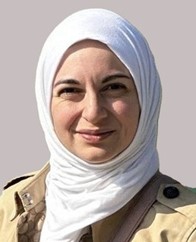
Layla Saleh is Visiting Research Fellow at the Graduate School of Humanities and Studies of Public Affairs at Chiba University (Japan) and Director of Research at Demos Tunisia–Democratic Sustainability Forum. Her publications include US Hard Power in the Arab World: Resistance, the Syrian Uprising and the War on Terror (Routledge, 2017). She is Associate Editor of the journal Protest and co-author, with Larbi Sadiki, of the new book Revolution and Democracy in Tunisia: A Century of Protestscapes (Oxford University Press, 2024).
Toda Peace Institute
The Toda Peace Institute is an independent, nonpartisan institute committed to advancing a more just and peaceful world through policy-oriented peace research and practice. The Institute commissions evidence-based research, convenes multi-track and multi-disciplinary problem-solving workshops and seminars, and promotes dialogue across ethnic, cultural, religious and political divides. It catalyses practical, policy-oriented conversations between theoretical experts, practitioners, policymakers and civil society leaders in order to discern innovative and creative solutions to the major problems confronting the world in the twenty-first century (see www.toda.org for more information).
Contact Us
Toda Peace Institute
Samon Eleven Bldg. 5thFloor
3-1 Samon-cho, Shinjuku-ku, Tokyo 160-0017, Japan
Email: contact@toda.org