Cooperative Security, Arms Control and Disarmament Report No.271
The Case for Collective Security in Europe After the War in Ukraine
Tom Sauer
February 04, 2026

This report asks how the European security order could be imagined once the fighting in Ukraine has stopped and aims to show that there are alternative and more inclusive scenarios. The end of the Ukraine–Russian war could be a historical turning point. Such moments in history open up the possibility to try to do things better than before. The first part of this paper describes the differences between two fundamentally different types of security constellation: balance of power and collective security. The second part asks, what would a peace agreement between Ukraine and Russia look like? The third part addresses the questions, what would the post-war security constellation in Europe be? What role is left for NATO, the Collective Security Treaty Organization (CSTO), the Organization for Security and Cooperation in Europe (OSCE), and the EU? Where would Ukraine fit in? And what about Russia?
Contents
- Introduction
- Balance of power versus collective security
- A peace agreement between Ukraine and Russia
- The role of NATO, the CSTO, the OSCE and the EU in the post-war European security order
- Conclusion
Introduction
The war between Russia and Ukraine still rages on after four years. More than one and a half million soldiers have died or been wounded. There are nearly daily attacks on Ukrainian cities. Millions of people have migrated, especially from and within Ukraine. The economies in both countries, but also in Europe and beyond have suffered substantially. The West has spent $300 billion on economic and military support for Ukraine.
Other major threats, such as global warming, have disappeared from the priority list.
Just like the war that began in 1914 and ended four years later and also the Second World War that ended in five years, the Russia–Ukraine war will also end at some point, hopefully in the not-too-distant future. Since 2025 there have been diplomatic efforts to stop the war, with the United States as mediator. But little thought seems to be going in to the post-war period. This paper tries to fill this gap by asking how the European security order could be imagined once the fighting has stopped.
More particularly, it might be asked which (regional) international organisations could and should play a role in filling the void after the war. International organisations give rise to order and stability as they require cooperation on a daily basis. Another advantage of institutions (and international regimes in general) is that they do not immediately fall apart once a problem arises. Due to long-term cooperation, there is a certain level of respect and trust between the member states that can act as guardrails in times of conflict.
Although directly involved, European governments have not yet raised the issue of the future European security order. They tend to be busy supporting Ukraine and at the same time building up their own defences, within the framework of both NATO and the EU. There seems to be a general fear that Russia may attack NATO and EU members, once the war in Ukraine comes to a standstill (or even before). The default position in European and Russian thinking about the future is that Europe will be split into two major blocs: a Western bloc (including Central and Eastern Europe) versus Russia and some of its neighbours (including Belarus). [1] Similar to the Cold War, the two blocs may be separated by an ‘Iron Curtain’, this time stretching from the Arctic to the Caucasus, living apart from each other. In the same vein, it is believed that we may enter an era of protracted confrontation with Russia. Some observers even recommend a new containment policy for Europe vis-à-vis Russia. [2]
The aim of this paper [3] is to show that there are alternative, more inclusive scenarios. The end of the Ukraine–Russian war could be a historical turning point. Such moments in history open up the possibility to try to do things better than before. That will at least be the aspiration of many people on both sides of the ceasefire line. Under those circumstances, governments sometimes do manage to shift to a more stable security constellation (examples are the periods after 1815 and 1945); sometimes, they fail (as in 1918 and 1989). Remarkably, in the successful cases, the loser of the war was included in the security order. Mutatis mutandis, when the loser was not included, it yielded a new period of instability and war.
The first part of this paper describes the differences between two fundamentally different types of security constellation: balance of power and collective security. The second part asks, what would a peace agreement between Ukraine and Russia look like? The third part addresses the questions, what would the post-war security constellation in Europe be? What role is left for NATO, the Collective Security Treaty Organization (CSTO), the Organization for Security and Cooperation in Europe (OSCE), and the EU? Where would Ukraine fit in? And what about Russia?
Balance of power versus collective security
States do not decide whether the world is unipolar, bipolar or multipolar. But they do have a choice of whether to cooperate (in a bilateral or multilateral way) or not (unilateralism). Different levels of cooperation are possible. In this paper, I will limit myself to a medium level type of cooperation, namely collective security, which is less intrusive than, for instance, cooperation in the form of a security community, [4] but more ambitious than cooperating temporarily in the form of an alliance. In the absence of collective security, states tend to fall back to the ‘natural’ state of affairs in international politics, which is survival of the fittest and, in the best case, a balance of power (without war). States or groups of states try to balance each other in order to prevent other states from becoming the hegemon, which could endanger their survival. States can balance by trying to become more powerful (both economically and militarily), by cooperating (temporarily) in the form of an alliance (by definition against an external enemy), and/or by creating buffer states and spheres of influence.
The choice between a system based on balance of power and collective security depends on states’ level of ambition. If states do not believe in cooperative behaviour, they tend to fall back on a balance of power system. If states are more ambitious, they may try to set up a collective security order (maybe in the form of an organisation) that supersedes the existing balance of power, at least to a certain extent as power differences will always remain. In other words, establishing a collective security system demands more political will and creative diplomacy.
...without a collective security arrangement there is permanent pressure for states to become more powerful. This leads to arms races,... making all parties less secure. That is the so-called security dilemma.
Why would states opt for the more ambitious scheme of collective security? Because such a constellation tends to be more stable than a balance of power. Of course, both types of constellation are, by definition, temporary. The difference, however, is that if a balance of power system fails, states end up in war rather easily, as in 1914. If a collective security system fails, it may first fall back on a balance of power constellation before sliding into war or trying to resurrect the collective security order. In other words, a collective security scheme has more safety nets in times of conflict.
It is not that a balance of power cannot be stable. The Cold War is a good example. But without a collective security arrangement there is permanent pressure for states to become more powerful. This leads to arms races (as in the Cold War), making all parties less secure. That is the so-called security dilemma. In the worst case this may lead to war. A balance of power constellation is characterised by a confrontational and unstable environment that is constantly fed by assertive or even aggressive behaviour by (the major) states.
While buffer states and spheres of influence may help major powers to feel more secure, it is usually to the detriment of smaller states. Ukraine and Belarus are current examples. And while alliances may be useful, especially for smaller states, especially in times of insecurity, alliances also come with costs: high defence expenditure and an arms race. In times of peace, alliances are supposed to be disbanded as the old enemy is no more; if not, new enemies have to be determined artificially to legitimise the alliance’s existence, which is perverse from the point of view of stability, security, disarmament, and peace. Nevertheless, that is exactly what happened with NATO in the 1990s. [5]
In its turn, the objective of a collective security system is that its member states, whether regionally or globally, collaborate actively to enhance their security by agreeing on basic norms and values, rules and procedures, which may include a collective defence mechanism, whether only for and against its members (in contrast to alliances that are set up against an external enemy). In short, a “community of power replaces balance of power”, as Richard Betts put it. [6] Collective security implies inclusion, while a balance of power (including alliances) entails exclusion. Collective security corresponds to the principle of indivisibility of security, a principle enshrined for instance in the 1990 Charter of Paris and the 1994 OSCE Code of Conduct. It means that the security of one state depends on the security of others. If one state feels insecure, its neighbours will automatically feel the negative consequences. Concretely, as long as Russia or Ukraine feel insecure after a ceasefire and peace agreement, there will be no sustainable peace. The best way to make them feel secure is to integrate both of them in a collective security order.
Ideally, this kind of cooperation may lead to the establishment of a collective security organisation. One should emphasize that most collective security organizations (except the EU) are not supranational organizations.
Member states remain sovereign and decide by consensus. Examples of existing collective security organisations are the United Nations (UN) at the global level and the Organisation of Security and Cooperation in Europe (OSCE) at regional level. A collective security organisation may or may not include a collective defence mechanism (= the principle that if one state is attacked, the others promise to help), but it certainly does not remain limited to that (in contrast to an alliance, which is another name for a collective defence organisation). A collective security organisation tries to improve security relations among its members, so that the chances that the collective defence mechanism has to be used become (much) smaller. States can do this by broadening the scope of their national interests, for instance by looking beyond their short-term concerns. Collective security also implies that great powers restrain themselves and leave short-term gains to others in favour of long-term advantages. According to John Ikenberry (2001, xvi), “it is interesting that for a powerful state, offering restrictions on its power can be a source of power […] Exercising power through restraint leaves fewer scars – that is, evokes less of the anger and resentment that tends to follow from the direct use of coercive power.” [7] Defensive (instead of offensive) strategies and transparency are other instruments that can be used in this regard. Enhanced trust may be the result.
These collective security arrangements act like an additional ‘safety net’ in times of conflict—the term is also used by Robert Jervis [8] —and on top of national defence instruments. Collective security arrangements also provide more mechanisms and more time to come to a peaceful solution in the event of a non-violent conflict. Collective security is also better suited to preventing non-violent conflicts from breaking out in the first place because the rules and arrangements (including transparency) create trust. Furthermore, misperceptions and miscommunication (which may lead to conflicts) tend to be less prevalent in a collective security arrangement than in a balance of power constellation as a result of their transparency and openness. Also, specific collective defence rules and arrangements agreed in advance (including a sanctions mechanism) act as an additional deterrent against potential wrong-doers who may otherwise think of using violence against another member state.
One more critical question is how mandatory it is for the other member states to help a state that comes under attack. A high level of automaticity may have a stronger deterrent effect. On the other hand, the fear of entrapment increases in this case, which will make it more difficult to convince states to become members in the first place. Mutatis mutandis, if there is no automatic mechanism, it may be easier to convince states to join a collective security organisation, but the latter may have a smaller deterrent effect. One could also imagine in- between types such as quasi-automaticity.
Because of the higher levels of transparency, potential cheaters can be more easily detected. “States thus have a bit more confidence that they will be able to determine relatively quickly whether others are defecting, which gives them more time to react,” as Robert Jervis puts it. [9] Finally, collective security arrangements mean that there will be less need to acquire a large quantity of weapons. Consequently, the security dilemma will be less of an issue as well.
In short, the threshold for starting wars becomes higher. Charles Kupchan and Cliff Kupchan therefore conclude that “[t]he case for collective security rests on the claim that regulated, institutionalised balancing predicated on the notion of all against one provides more stability than unregulated, self-help balancing predicated on the notion of each for his own. Under collective security, states agree to abide by certain norms and rules to maintain stability and, when necessary, band together to stop aggression. Stability—the absence of major war—is the product of cooperation.” [10]
One will be less inclined to believe that cooperation is possible if one believes that Russia attacked Ukraine for expansionist reasons rather than reacting to an expansionist NATO.
Consequently, there is in principle no, or less, need for alliances, spheres of influence or buffer states in a collective security order, and balancing and arms racing can be limited. This is not only advantageous from a budgetary point of view, especially for smaller states. Smaller states are not (or to a lesser extent) forced to be a buffer state and do not need to belong (usually against their wishes) to the sphere of influence of a bigger state. The role of nuclear weapons will automatically become less important within a collective security organisation, ideally comparable to the role of the French nuclear weapons in the EU. [11] Games related to the balance of power cannot be completely erased in a collective security system, but their impact is at least softened.
What conditions are needed to establish an effective collective security organisation? The conditions mentioned in the literature include the following: all major states should regard war as too costly, and therefore fall in with the status quo, read the absence of revisionist states; in other words, international disputes are subject to peaceful settlement; all of the member states should be willing to cooperate; all have to believe that the others will abide by the rules; there should be a minimum of trust (that may become stronger by cooperating); all should be vulnerable to sanctions (in case of cheating); the political elite creates a kind of community; and the collective security system should be built quickly as there is a window of opportunity that will close after a while. [12]
Whether these conditions could be fulfilled by Ukraine and Russia is the thirty-thousand-dollar question. Moreover, it is unclear whether the current generation of political leaders in the EU (including France, Germany, and most Eastern European states) are able and willing to start cooperating again with the current leaders in the Kremlin (including President Vladimir Putin). Whether one believes that cooperation is possible with President Putin also depends on the analysis of the causes of the current war. One will be less inclined to believe that cooperation is possible if one believes that Russia attacked Ukraine for expansionist reasons rather than reacting to an expansionist NATO.
Notice that a collective security order does not require member states to be democracies or share the same values with respect to human rights. Also, the 19th century ‘Concert Européen’ successfully included both democracies and non-democracies.
In addition to the informal ‘Concert Européen’ after the Napoleonic wars, the historical examples of collective security organisations include the League of Nations after the First World War, the UN, the EU, the CSCE/OSCE, and the African Union (AU). The first and the last three are regional examples; the League of Nations and UN are global. The Concert, in contrast to the others, lacked a specific organisation. The most successful examples are the European Concert and the EU, which not by chance are regional. Both yielded (and for the EU still yield) security and stability for decades.
Another critical question is: what about actors that remain outside a regional collective security organisation? In principle, they should not be afraid as it is not meant against an external enemy. On the contrary, they should welcome its existence as it will yield stability, security, and peace. This logic applies for instance to China in the case of a new regional collective security organisation in Europe.
It should be remarked that the Atlantic Alliance (NATO) is not a collective security organisation, but a collective defence organisation, despite the fact that NATO regards itself as both a collective defence and a collective security organisation. In NATO’s jargon, which is very confusing, collective security refers to tasks not related to collective defence (Art. 5), for instance out-of-area military interventions (for example, in Afghanistan, Libya and so on). In the academic jargon (as used in this article), by contrast, NATO is a classic example of an alliance against an external enemy, which does not correspond to our definition of collective security.
A peace agreement between Ukraine and Russia
As both Ukraine and Russia have an interest in stopping the war, there is a good chance that the bilateral negotiations by the US with respectively Ukraine and Russia (that started in the beginning of the Trump II administration in February 2025) may succeed in the foreseeable future, possibly leading to direct bilateral negotiations between Ukraine and Russia. Different plans have been circulated starting with the US–Russian 28- point peace plan in November 2025, followed by a 20-point peace plan by Ukraine in December 2025, and trilateral negotiations between Ukraine, Russia, and the US (as a mediator) in Abu Dhabi in January 2026. The biggest obstacles that remain seem to be twofold: the nature of the Western security guarantees for Ukraine, and territorial issues, particularly in the region of Donetsk.
As in all negotiations, both Ukraine and Russia will have to give as well as take. Both Ukraine and Russia are setting the bar high, which is not abnormal in the pre-negotiation stage. Some of these positions, however, will have to be abandoned to reach a compromise. But both parties have to be able to ‘sell’ the agreement afterwards to their populations without losing too much face. That is why some positions are and will remain red lines. Russia’s red lines seem to be the following: no Ukrainian membership of NATO (neutrality) and de facto (but not de jure) recognition of the annexed regions for which a durable solution can be worked out in 10–20 years’ time. Russia demands the complete control of the Donetsk oblast, of which it now occupies more or less 80 per cent, in exchange for (smaller) territory in other oblasts. Whether Ukraine will concede, remains to be seen.
Ukraine’s red lines seem to be: to remain a sovereign country (except for the ‘temporarily’ annexed regions); to be able to determine its own political system (democracy) and decide who will govern in Kiev; to be part of the Western sphere of influence and maybe join the EU in the longer term; to be sufficiently armed (possibly regulated by a regional arms control agreement, that ideally also includes Russia); and to receive security guarantees, especially by the West (probably in the form that already exists today, namely weapons deliveries in case of a new attack by Russia). In addition, European troops—maybe backed up by the US with respect to intelligence and logistics—could be stationed in the Western neighbouring countries of Ukraine. But the best security guarantee for Ukraine would be the establishment of a European security order based on collective security instead of balance of power, let alone containment, because in such a collective security order Russia will also feel secure, or at least more secure than in a 2.0 Cold War setting.
That means that Russia will have to give in on sovereignty, the principle of democracy, spheres of influence (including EU membership), and levels of armament. Ukraine will have to give in on NATO membership, territory, and levels of armament. In addition, Ukraine has to be rebuilt by the international community, especially Europe, and the sanctions on Russia would have to be gradually lifted (possibly with a snapback clause as in the case of Iran). The refugees from both states have to be able to return. Minority (including language) rights in both countries have to be respected.
As Russia, who is winning on the terrain, does not agree to a ceasefire without a framework agreement on peace, the odds are that a ceasefire will follow a peace agreement, and not the other way around. A ceasefire agreement requires, at a minimum, the following: an obligation not to attack each other; clear delineation of the borders, buffer zones and limitation zones for heavy weapons; the establishment of a peacekeeping force; a joint military coordination commission (note that a similar non-military commission already exists to monitor implementation of the Black Sea Grain Deal, hosted in Istanbul); demining; and humanitarian corridors. [13] A peace agreement goes further (see before).
Neutral and multilateral peacekeeping or monitoring and verification troops under UN (or OSCE) supervision have to be stationed along the 2,000 km land border between Ukraine and Russia after a ceasefire, complimented by new technologies (for instance surveillance drones). As Russia does not want troops from NATO member states to be involved, these troops will probably have to come from Global South countries. For the same reason, the French–UK initiative to station Western troops of a coalition of the willing in the Western part of Ukraine is a no go. If not, the odds are that Russia will keep fighting.
A HELSINKI 2.0 CONFERENCE
After the conclusion of a peace agreement both parties together with Europe and possibly the US should set up talks about the future European security order, at least if it has not been covered in the peace agreement. It could be in the form of a ‘Helsinki conference 2.0’ ideally in the framework of the OSCE (but not in Helsinki as Finland is now part of NATO; other candidates are Geneva or Vienna) hopefully leading to a ‘Helsinki Act 2.0’. It may contain the same or similar baskets as the Conference on Security and Cooperation in Europe (CSCE) in the 1970s; arms control will definitely be part of it. Like the Mutual Balanced Force Reduction (MBFR) negotiations in the 1970s that were launched as part of CSCE, arms control negotiations could be started up in the foreseeable future, both on conventional and nuclear weapons. These negotiations may lead to arms control agreements (like CFE in the past), or at least to confidence and security building measures (like the Vienna Document of 1986). Verification must be part of those arms control regimes.
Ideally, a Helsinki Act 2.0 comes up with a concrete plan to re-establish order and stability in Europe, this time in the form of a collective security organisation in which there is no place for alliances (but that may include a collective defence mechanism), ideally also with a collective defence mechanism vis-à-vis the other member states. It would include the whole of Europe, including Ukraine and Russia, and possibly the US, comparable to the idea of Gorbachev’s European Home.
The unfeasibility of its realisation is not because today neither Europe nor Russia (in which part of the elite seems to look more to the East than the West) seem to be interested in such a constellation. Remember what happened with archrivals France and Germany after 1945. Of course, that episode is different from today. Unlike Germany that was totally defeated, neither Ukraine nor Russia will be totally defeated. The latter, however, does not mean that reconciliation is not possible.
The role of NATO, the CSTO, the OSCE and the EU in the post-war European security order
As the text above makes clear, the most stable security constellation is collective security. According to this logic, alliances such as NATO and the Collective Security Treaty Organisation (CSTO) should be disbanded after the war in Ukraine. They have to be replaced by one overarching regional collective security organisation, possibly in the form of an upgraded OSCE (or a fundamentally transformed NATO) or a similar organisation named differently. Whether the US (and Canada) will be members, is up to them to decide. Such an organisation does not exclude more defence integration between EU member states.
NATO
The North Atlantic Treaty Organization (NATO) is a collective defence organisation (= alliance) that dates back to the beginning of the Cold War. In 1991, the USSR and the Warsaw Pact imploded. The Western bloc regarded itself as the winner of the decades-long contest. At that time, NATO should have been disbanded, just like the alliances of the First and Second World War in 1918 and 1945. Curiously, NATO remained in existence, mainly because the US—the number one in NATO—regarded it to be in its interest to keep it as an instrument to remain the world’s number one power; the latter corresponds to a strategy of primacy. The advantage for the European member states was that they could spend less on defence.
The perverse effect of the continued existence of NATO after the Cold War was that the alliance had to find a new external enemy (as alliances by definition need an external enemy): Milosevic in the Balkans, terrorism, and finally Russia (again). As a result, NATO took up new missions on top of the defence of its territory, more particularly military interventions, also out-of-area. Most of these military interventions—like those in Afghanistan and Libya—were unsuccessful.
In contrast to Russia’s wishes, NATO not only survived but also started to enlarge in the direction of Russia. Arguably the decision to include Ukraine (and Georgia) in the Western sphere of influence (first by NATO in 2008 and in 2013 by the EU) led to the Russian decision to provoke Georgia into war in 2008, to invade the Crimea and to make trouble in the Eastern part of Ukraine in 2014 and to launch a full scale war against Ukraine in 2022. [14] Since then, NATO has a new major common enemy —Russia—for which it can fall back on its initial mission, namely collective defence.
There are currently also more tensions between the US and the other NATO member states than ever before. The US has maintained for a long time that the Europeans have to spend more on defence, so that the US could spend less (= burden sharing). President Donald Trump succeeded in convincing the other NATO member states to start spending substantially more. At the NATO Summit in The Hague in 2025, it was decided to raise the defence expenditures and set the goal at 5% defence expenditures as part of GDP, while NATO members spent already 1,450 billion USD on defence in 2024, ten times more than Russia, and more than the rest of the world combined. At the same time, the US expects to remain the dominant player in NATO, sometimes pushing through decisions that are not in the interest of the others, e.g. NATO expansion in 2008, and including the demand that the non-US members keep buying weapons in the US. However, President Trump is known to be no fan of NATO and openly looks down on the EU. President Trump also imposed 15 percent tariffs on trade with the EU member states in 2025. In addition, President Trump threatened in the beginning of 2026 to occupy Greenland, which is in a union (riksfellesskap) with Denmark and under its sovereignty. Denmark, is both an EU and NATO member state. The Danish Prime Minister has stated that if the US takes Greenland with military means, this will mean the end of NATO. Even before the conflict over Greenland became acute, many Europeans wondered if the US is still an ally. Many observers (such as Rob De Wijk in The Netherlands, Nathalie Tocci in Italy and former European Commissioner Karel De Gucht in Belgium) now regard NATO as an empty shell. This is a surprisingly fortunate coincidence: NATO’s de facto demise may happen at the same time as the need arises to create a new European security order once the war in Ukraine is over.
In short, there is no good reason to keep NATO alive after the war in Ukraine, especially if there is a decent peace agreement. More fundamentally, what is needed is a collective security constellation instead of a collective defence organisation (like NATO).
CSTO
For the same reason, the CSTO—that includes Russia, Belarus, Kazakhstan, Kyrgyzstan, and Tajikistan —needs to be disbanded. That will probably be less difficult politically since it is a younger and less institutionalised than NATO.
OSCE
As the main recommendation of this policy paper is to replace a balance of power (including alliances) system with a collective security constellation after a peace agreement between Russia and Ukraine, the organisation that comes first to mind is the OSCE. The OSCE is a regional collective security organisation that was established right after the Cold War, be it without a collective defence mechanism. It has the advantage of including all major actors in the Euro-Atlantic area: Europe, Ukraine, Russia, and the US. As a result, it is currently the only regional organisation in which all major actors sit around the table to talk about (indivisible) security. That said, the OSCE has been weakened as a result of the war in Ukraine. More fundamentally, the OSCE always had to live in the shadow of NATO. Mutatis mutandis, if NATO is disbanded after the war in Ukraine, the odds are that the OSCE will become stronger.
The OSCE’s origins date back to 1973 when the Conference on Security and Cooperation in Europe (CSCE)— better known as the Helsinki process—was set up in order to bring détente. Two years later, the Helsinki Act was adopted. It contained three baskets: politico-military; economic cooperation; human rights. The first basket —politico-military—included the recognition of the existing borders and the existing spheres of influences, something the USSR had demanded. It also led to arms control negotiations and agreements, such as the Conventional Forces in Europe (CFE) treaty in 1990. The West had pushed to include the third basket—human rights—in the hope of strengthening human rights in the Eastern European societies. The third basket had a long-term impact as it provided more freedom to organisations such as Solidarnosz in Poland and Charta 77 in Czechoslovakia, which played a major role in bringing the Cold War to an end.
In short, the CSCE successfully established a diplomatic forum to improve the political relations between the two main blocs. In 1994, the CSCE became the OSCE. It has an Office for Democratic Institutions and Human Rights (situated in Warsaw), a High Commissioner on National Minorities, and a Court of Conciliation and Arbitration (in Geneva).
Ideally, the OSCE nowadays starts up concrete initiatives with respect to confidence and security building measures to mitigate the conflict between Russia and the West. These initiatives could be launched by individual OSCE member states, the Chair (which is Finland in 2025 and will be Switzerland in 2026), or the OSCE Secretary-General. These may involve so-called Structured Dialogues amongst non-governmental experts in Track II or Track 1.5 formats. More ambitious would be a formal Security Dialogue in the OSCE Forum for Security Cooperation, for instance on incident prevention and/or better military-to-military communication. [15] In the longer term, an upgraded OSCE (that includes a collective defence mechanism vis- à-vis the member states) could replace NATO.
EU
The EU was in the first place an economic project, be it with the overall goal of maintaining peace and security amongst its members, more like between France and Germany. That said, the EU has also been setting steps in the direction of more foreign and defence cooperation, especially since the Treaty of Maastricht (1991): by establishing a Military Committee, Military Staff, European Defence Agency (EDA), European Peace Facility, and European Defence Fund (EDF). The Lisbon Treaty also contains a collective defence clause, but for its implementation it refers to and relies on NATO. The war in Ukraine and the arrival of the Trump II administration have stimulated the EU member states and the EU institutions to step up work on defence collaboration in the sense of joint acquisition of military equipment, and financial support for the defence industry. The EU can both be regarded as a collective defence and a collective security organisation.
The EU has also been enlarged over time. In the future, it may incorporate Ukraine; it is very unlikely though that it will include Russia.
As long as there is no European Political Union (= a federal Europe) and as long as Common Foreign and Security Policy (CFSP) is intergovernmental, the onus will be on the member states to collaborate with states like Ukraine and Russia (and maybe the US) in a larger collective security framework such as an upgraded OSCE.
Conclusion
To conclude, after the end of the war in Ukraine, the European security order will either fall back into a new Cold War with two opposing blocs and alliances (such as NATO and the CSTO) leading to an arms race and possibly new wars, or a serious effort is made to establish a new collective security organisation (preferably an upgraded OCSE) that replaces the existing alliances. This will not be easy, especially in time of renewed populism and nationalism. It will require political leadership.
Notes
[1]Ilya Budraitskis and Greg Yudin (2024): Overcoming the rivalry between military blocs in Europe, in: IGRec Policy Papers, 2024.
[2]Max Bergmann (and others) (2025): A Long-term Russia Strategy for Europe. Back to Containment?, in: CSIS report, July.
[3]This is a slightly updated version of: Tom Sauer (2025): ‘A post-war Europe based on collective security that includes both Ukraine and Russia’, in: IGRec Policy Papers, Berlin, December 2025.
[4]A security community is a community of states that do not fear each other.
[5]Tom Sauer (2017): The origins of the Ukraine crisis and the need for collective security between Russia and the West, in: Global Policy, 8 (1): 82–91.
[6]Richard Betts (1992): Systems for peace or causes of war? Collective security, arms control, and the new Europe, in: International Security, 17 (1) (Summer): 9.
[7]John Ikenberry (2001): After victory: institutions, strategic restraint and the rebuilding of order after major wars (Princeton: Princeton University Press), p. xvi.
[8]Robert Jervis (1985): From balance to concert. A study of international security competition, in: World Politics, 38 (1), p. 69.
[9]Ibid., p. 76.
[10]Charles Kupchan and Cliff Kupchan (1995): The promise of collective security, in: International Security, 20 (1), p. 52.
[11]Ideally, nuclear weapons will become completely delegitimised and globally eliminated, as required by the NPT (and the TPNW).
[12]Robert Jervis (1982): Security regimes, in: International Organization, 36 (2): 357–368; Charles Kupchan and C. Kupchan (1991): Concerts, collective security, and the future of Europe, in: International Security, 16 (1), p. 124
[13]Walter Kemp (2025): Drawing a line: a »Swiss army knife« of options for achieving a sustainable ceasefire in Ukraine, in: GCSP Paper, February; Edward Ifft (2025): Blessed are the peacemakers: making a ceasefire agreement in Ukraine stick, ELN Policy Brief, March.
[14]To be clear, I am trying to describe, not legitimise the Russian aggression.
[15]Alexander Graef, ‘From crisis to strategy: the OSCE and arms control in a divided Europe’, in: ELN Policy Brief, March 2025; Ian Davis, ‘The Helsinki Final Act at 50. The impact of NATO-Russia relations and future possibilities’, in: NATO Watch. Rethink Europe Discussion Papers, no.1, August 2025.
The Author
TOM SAUER
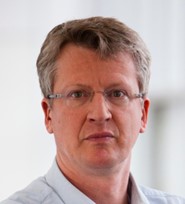
Tom Sauer (Belgian) is a Professor in International Politics and spokesperson of the Research Group International Politics at the Department of Politics at the Universiteit Antwerpen, Belgium. He has been an International Security Fellow at the Kennedy School of Government at Harvard University (US). Tom Sauer is a member of the Advisory Board of the International Institute for Peace in Vienna (Austria) and an active member of the Pugwash Conferences on Science and World Affairs. He also received the Rotary International Alumni Global Service Award.
Toda Peace Institute
The Toda Peace Institute is an independent, nonpartisan institute committed to advancing a more just and peaceful world through policy-oriented peace research and practice. The Institute commissions evidence-based research, convenes multi-track and multi-disciplinary problem-solving workshops and seminars, and promotes dialogue across ethnic, cultural, religious and political divides. It catalyses practical, policy-oriented conversations between theoretical experts, practitioners, policymakers and civil society leaders in order to discern innovative and creative solutions to the major problems confronting the world in the twenty-first century (see www.toda.org for more information).
Contact Us
Toda Peace Institute
Samon Eleven Bldg. 5thFloor
3-1 Samon-cho, Shinjuku-ku, Tokyo 160-0017, Japan
Email: contact@toda.org