Cooperative Security, Arms Control and Disarmament Report No.265
Venezuela: A Loud Cheer, an Amber Light and a Soft Jeer
Ramesh Thakur
January 16, 2026

This report discusses the US’ audacious actions in Venezuela on 3 January 2026 which could be considered a full-frontal challenge to the Westphalian world. The author explains why the US action deserves one, but only one of the traditional three cheers; an amber warning light instead of the second cheer; and possibly even a jeer as the final reaction. Based on the three-part argument, the report concludes by raising the possibility that the US coup in Venezuela might have driven the final nail in the coffin of the liberal international order.
Contents
- Venezuela: A Loud Cheer, an Amber Light and a Soft Jeer
- One cheer for the fall of a tinpot dictator
- An amber warning light: Hope is not a strategy
- A jeer for a world of ‘might is right, law is for losers’
- Russia in Europe
- China in Asia
- Greenland in the Arctic
- RIP the liberal international order?
Venezuela: A Loud Cheer, an Amber Light and a Soft Jeer
This has been a sobering start to the new year. ‘Out with the old, in with the new’ embraced not just the change in the year but also the government in Venezuela and a full-frontal challenge to the Westphalian world. On the night of 3 January, the United States acted audaciously, decisively and to stunning effect to seize President Nicolás Maduro and his wife Cilia Flores from the presidential palace in Caracas and spirit them away to New York. A great power used its armed forces with extreme speed and violence to kidnap the president of a sovereign state and put him on trial under its own criminal justice system. It does not appear that allies were given advance notice of the operation.
Public and official reactions around the world fall into three categories. Those who are reflexively anti-American or detest President Donald Trump have criticised the strikes and the kidnapping of a head of state. Their counterparts who habitually back the US or Trump have applauded and celebrated a corrupt dictator’s defenestration. Both groups are immune to evidence and reason. The critical third group of people, who are prepared to support or condemn actions depending on the nature of the act and not the identity of the actor, seem to be in a small and reducing minority. This does rather beg the question: what is the point of an analysis dissecting an event in light of the evidence, laws, principles and moral frameworks?
In this report, I explain why the US action deserves one, but only one of the traditional three cheers; an amber warning light instead of the second cheer; and possibly even a jeer as the final reaction. Maduro, like his predecessor Hugo Chávez, was a tinpot dictator from central casting, an authoritarian and corrupt thug whose tendrils reached into every institution and bankrupted and destabilised his country. No tears for him. But perhaps a tear or two for the naked reassertion of great-power imperialism and neocolonialism, and the resulting demise of state sovereignty? Based on the three-part argument, I conclude by raising the possibility that the US coup in Venezuela might have driven the final nail in the coffin of the liberal international order.
One cheer for the fall of a tinpot dictator
The abduction of Maduro from his presidential palace to a New York courthouse is unquestionably a violation of international law that proscribes “the threat or use of force against the territorial integrity and political independence of any state” (Article 2.4 of the UN Charter). This is the most powerful normative shield for every minor and middle power in the world against the natural predator instincts of every major power. The only exceptions are UN Security Council authorisation or self-defence against actual or imminent armed attack. Neither exception applied in this case, which is why the US action drew sharp criticisms at the United Nations from friends and foes alike. Unfortunately for Maduro, however, US courts have long recognised that even if a defendant has been abducted and brought to the US forcibly, that is not sufficient to toss out the case.
Much of the rest of the world is uncomfortable and unsettled by the notion that any state can domestically legalise clear violations of foundational norms of the international order. If I was to say that Taiwan is an independent country, but this statement is criminalised under China’s domestic law, then if China succeeds in exfiltrating me from Australia and puts me on trial in Beijing, well tough: might is right and provides the necessary legal fig leaf for me to be convicted and executed? Is that really the primitive law of the jungle we wish to return the world to? Or should we be a bit more careful about what we wish for?
The history of US interaction with Latin America is replete with frequent interventions on a spectrum of diplomatic, economic, military and clandestine coercive measures. Surprisingly, however, this is the first ever US military attack on the mainland of South America. Previous military actions have occurred in Mexico, Central America and the Caribbean, for example Grenada (1983) and Panama (1989). Official US justifications
have used the shifting language of law enforcement, strategic objectives and control over Venezuela’s energy sector and economic future. Maduro, his wife and son are charged with conspiracy to traffic cocaine and colluding with cartels designated as terrorist groups. Evidence for any of this is yet to be presented. Maduro described himself as the ‘kidnapped president’ of a sovereign country and a ‘prisoner of war’ and dismissed the trumped-up charges as imperial designs to seize rich oil reserves. Was Maduro so compromised as a narco-president that he constituted a clear and present danger to the United States grave enough to justify armed attack?
Venezuela was under heavy pressure of US gunboat diplomacy for months. A virtual Armada had been deployed off the coast since August, including the aircraft carrier USS Gerald R. Ford. Dozens of strikes were carried out on small boats in international waters off the coast of Colombia and Venezuela in the Caribbean, killing more than 110 people. They were alleged to be engaged in drug-trafficking but no credible evidence has been produced for independent verification. The Justice department has already dropped the charge that Maduro was the head of a drug cartel. Drugs are more a demand problem in the US than a supply problem from further south. It’s hard to stomach the US invading foreign countries because it cannot control drug addiction and the resulting trade in trafficked goods within its own borders. Juan Orlando Hernández, the former president of Honduras and a convicted drug smuggler, was serving a 45-year sentence in a US federal prison. He got a presidential pardon from Trump. Jorge Heine, a former Chilean cabinet minister and ambassador to South Africa, India and South Africa, points out that the US narcotics epidemic is driven by fentanyl, little of which originates in Venezuela. The two regional drug-producing countries are Mexico and Colombia. The latter’s traffickers use Venezuela as a transshipment point for cocaine bound mainly for Europe, not the US. Heine recalls and draws parallels with the allegations of mythical weapons of mass destruction against Saddam Hussein to justify the 2003 Iraq war.
The US has acted as judge, jury and executioner. State sovereignty is a foundational principle of the post-1945 world order and is not contingent on the nature of the state or regime. The Maduro regime lacked democratic legitimacy but Trump intends to keep the regime in power regardless, so long as they work with him, if not for him. But Maduro was president of a sovereign state. Unless the US is going to hunt every bad guy in the world, that is insufficient to justify the coup in Caracas. The US faced no credible threat to its sovereignty from Venezuela. To claim otherwise is pure fiction, like the WMD charge against Iraq in 2003. There is not a scintilla of evidence to suggest that the US was under threat of an imminent or even long-term attack from Venezuela, so the action cannot be justified under the law of self-defence. It is remarkable how many people seem willing to concede the right to the US president of the day to unilaterally determine which leader in which country will be allowed to stay in power and who will be toppled by force of US arms.
An amber warning light: Hope is not a strategy
‘Attack and hope for the best’ is not a strategy. As in previous instances of a decisive use of force by Trump, there is little evidence that the devastatingly effective strikes are part of a coherent long-term plan for what comes on the morning after. His instincts seem to have led him to discover his own third way in foreign policy. He has brought lethal violence to bear on foreign targets in one-off operations, bombing seven countries (Iran, Iraq, Syria, Yemen, Somalia, Nigeria, Venezuela) in the year since inauguration. Yet, he has resisted inserting ground forces to engage in physical occupation of a country through boots on the ground that turn into forever wars, and open-ended nation-building missions with only a patchy record of success.
The capture and abduction of a head of state is a dramatic escalatory departure from Trump’s previous instances of strikes on foreign targets. There is no question about the brilliance of the strikes and capture of the president as a military operation. Contrary to President Jimmy Carter’s ill-fated operation in April 1980 to rescue 52 US embassy staff being held hostage in Tehran, in Venezuela everything that could go right, did. In a perfectly coordinated operation that lasted only a few hours and involved air, sea and special forces, backed by electronic and human intelligence using cyber and space assets, all mission objectives were achieved with no loss of American life. In contrast to the well-oiled efficiency of the strikes, the day-after statements have
been bumbling and confusing. And that has turned the initial elation and celebration of Maduro’s ouster into anxiety-tinged uncertainty about what comes next. The history of previous US destabilisations of Latin American countries—Chile, Haiti, Nicaragua, Dominican Republic, Guatemala—does not inspire confidence that the outcome will be a flowering of freedoms and stable, well-run democracies.
As the late Secretary of State Colin Powell so succinctly put it, you break it, you own it
To the contrary, an enduring lesson of the liberal internationalists’ and neoconservatives’ history of projecting US power overseas is that there is no humanitarian crisis so grave that an outside intervention cannot make it worse. The US has been good at winning wars then losing the peace. State tyranny can collapse into state failure. Venezuela, mired in corruption and riven by factions, has been brutalised by decades of dictatorial misrule by Chávez followed by Maduro. The Chavista apparatus is deeply entrenched in all the country’s principal institutions. The International Crisis Group, a Brussels-based respected conflict analysis think tank, warned in a report in October that the downfall of Maduro would likely be followed by violence and instability. The country offers hospitable terrain for protracted insurgency, terrorism and serially repeating firefights between rival armed militias, paramilitary forces, and warlords running their own fiefdoms.
Decapitating the existing leader is not the surest path to stable governance. It could trigger a protracted power struggle and violent fragmentation, as several broken countries in the arc of crisis from Afghanistan through the Middle East to North Africa can attest. As the late Secretary of State Colin Powell so succinctly put it, you break it, you own it. And indeed Trump said initially that a US team would ‘run’ Venezuela, including Secretaries of State and Defense Marco Rubio and Pete Hegseth. Although the administration has walked back that objective since then, it cannot shed the responsibility for assembling a transitional (to what?) governing structure and ensuring law, order and stability for a vast country (twice the size of California) of 28 million people.
With the decision to manage Venezuela rather than liberate it, stability has been prioritised over democracy. There is a change of leadership but no regime change. The ruling regime still controls all the relevant institutions. A classified CIA assessment projected Vice President Delcy Rodríguez as the safest post-Maduro bet. Suspicions will linger as to whether she might have collaborated with Trump to oust Maduro. Yet, she is as hardcore a socialist as the toppled Maduro. She’s been busy alternating between fiery denunciations of US aggression against Venezuela and appeasing Trump with conciliatory concessions to forestall further action. When combined with the US controlling the oil, it will be hard for Rodríguez to garner post-intervention domestic, regional and international acceptance, legitimacy and stability if she continues to rule as a de facto US imperial viceroy.
Her continuance with Trump’s blessing also removes yet another fig leaf of US justification, which might have accrued in time if power had been transferred to the opposition party whose candidate Edmundo González is widely believed by Venezuelans and outsiders to have won last year’s presidential election in a landslide. The best symbol of that of course is the Nobel Laureate María Corina Machado. Her sidelining proves that concern about democracy and human rights does not rank high in Trumpworld.
Will Venezuela become an American resource colony? US oil addiction may well be a worse affliction than drug addiction. Trump has been remarkably candid in declaring his goal of monopolising Venezuelan oil for American benefit, saying that companies would deal exclusively with Washington and not Caracas in tapping into the world’s largest oil reserves. His team is reported to be working on an ambitious plan to control Venezuela’s oil ‘for years to come’. However, an abundance of oil reserves does not give a magical solution to the economic, logistical and other risks of exploiting energy resources in an unstable and hostile environment. On 6 January, Trump said that US oil firms could be ‘up and running’ with increased operations in Venezuela within 18 months. However, Trump’s post-coup sales pitch to two dozen American oil executives received only a lukewarm response, with Exxon CEO Darren Woods saying Venezuela is currently ‘uninvestable’.
A jeer for a world of ‘might is right, law is for losers’
The National Security Strategy 2025 (NSS 2025), reflecting on the balance of power, stated: “The outsized influence of larger, richer, and stronger nations is a timeless truth of international relations” (p. 10). “We will deny non-Hemispheric competitors the ability to position forces or other threatening capabilities, or to own or control strategically vital assets, in our Hemisphere” as “a common-sense and potent restoration of American power and priorities” (p. 15), the 33-page document added.
One of the persistent puzzles of international politics is the belief that appeasement doesn’t work, but only in relation to dictators. On the contrary, history shows it doesn’t work against any great power with aggressive expansionist ambitions and the US and Trump are no exception. In the immediate aftermath of Venezuela, Trump and senior aides have mentioned Colombia, Cuba, Mexico and even Greenland in Europe as additional places of interest to them. In effect, Trump’s message to all of them is: Pay us the respect due to us as a country and to me as its GREATEST LEADER EVER, or else I will make you pay for your disrespect. Thus in an interview with The Atlantic on 4 January, Trump warned that if Rodríguez “doesn’t do what’s right, she is going to pay a very big price, probably bigger than Maduro.” Can she rise to the challenge of meeting Trump’s expectations while her rule rests on the ideological foundations of Chavismo?
To be sure, the requirement of non-interference in the internal affairs of states by outside powers has been frequently violated. What is new under Trump is the abandonment of any pretence in favour of a naked declaration that the US intends to act as it sees fit, even against friends and allies, and global norms and institutions can go take a hike. Maybe Trump has abandoned his quest for the Nobel Peace Prize and turned to force instead. By now he has a track record of talking loudly and using a big stick. Tomahawk missiles struck Iranian nuclear installations in June. Nigerian Islamic State targets were bombed last month, allegedly for retaliation against attacks on Christians. Markets have opened betting on the next target to be struck by the US military: Colombia, Cuba, Canada, Iran, Somalia, or Greenland? Emboldened by his Venezuela success (at least in the short term), Trump has escalated his belligerent rhetoric and threats against some of these additional potential targets.
Russia in Europe
When US special forces pay a surprise call on you in your palace at midnight and US law enforcement officers cuff you, the limits of Chinese and Russian solidarity become clear. Many countries could begin quietly recalculating the benefits of closer relations with China and Russia against the risks of incurring American wrath. The same could happen vis-à-vis NATO in the case of Greenland. The original Monroe Doctrine (1823) had warned off European powers against meddling in Latin America as the US backyard. The 2026 Trump Corollary has drawn the hemispheric red line against Iran, Russia and China. The worrying question is: Will Trump restrict himself to acting as the backyard bully but a centre-stage coward against China and Russia as the other big powers? Or will the spectacular military strikes embolden him to morph into a forever warrior president and the global bully?
Venezuela has been the South American beachhead for Russia and China to expand their influence in the continent through the oil trade, security and intelligence ties and infrastructure investment. Maduro’s fall and the blunt assertion and enforcement of US dominance and the Trump Corollary deprive Russia of substantial revenue from lucrative arms sales to Venezuela and likely elsewhere too. Considering that, Moscow’s reactions to US intervention have been muted. Perhaps there was grudging admiration among sections of the Russian elite and people for the speed, efficiency and results of America’s special military operations in Venezuela compared to the mess of Russia’s in Ukraine. And if there is a transfer of power to a new leader without a change of regime, not all access and influence will be lost.
At a press conference after the overnight raid on Venezuela, Trump said that “American dominance in the Western Hemisphere will never be questioned again.” The goal of the NSS is to “protect commerce, territory and resources that are core to our national security,” especially in America’s “home region.” Has Russia’s President Vladimir Putin not used the exact same justification vis-à-vis Ukraine? A world in which the US accepts a delimitation of spheres of influence with Russia and China is inherently palatable to Putin and China’s President Xi Jinping. There are reports that Putin has been pushing for a grand bargain whereby the US would trade Ukraine for Venezuela. Coming after the recent National Security Strategy, this is becoming increasingly more plausible.
China in Asia
Unlike Russia’s limited market exchanges with Europe, however, China will feel the effects of more constricted market access to the West that has been important for its economic success story. China is Venezuela’s and South America’s largest trading partner. Venezuela exports oil and imports consumer goods, electronics and machinery. China’s footprint in the country extends to investments in strategic minerals, energy and port infrastructure. However, Venezuelan crude makes up only around five percent of China’s oil imports. But China has invested significantly in developing markets and supply chains in South America for its growing appetite for natural resources and outlets for its various goods.
The US coup in Venezuela and the resulting erosion of the normative restraint on the unilateral use of force by a great power and of US moral authority are likely to cause greater alarm in Taiwan than in China. It removes all legal and moral props for the US and any country that failed to oppose its actions in Venezuela to protest any Chinese military action against Taiwan. Cindy Yu argued in The Times of London on 5 January that China will view Trump’s coup in Venezuela as vindication and its leadership will be more invested in learning from and emulating the intelligence and military capabilities demonstrated by the US in the operation.
The precedent and template of a naval blockade followed by precision strikes and a lightning operation to decapitate the leadership is readymade for use by China against Taiwan
The principle of using military force unilaterally for strategic purposes may have been validated. Beijing also already has its own legal and doctrinal justifications for any future use of force against Taiwan, which it considers a renegade province of one united China. Because the vast majority other countries have gone along with this polite fiction for decades, ironically to avoid provoking China into military action, any diplomatic fallout from China using force to effect unification will be limited. That is, the cost would be lower than invading a country recognised by the community of states as an independent sovereign state. The precedent and template of a naval blockade followed by precision strikes and a lightning operation to decapitate the leadership is readymade for use by China against Taiwan. The US will have zero moral authority to oppose it.
The only remaining credible deterrent is the calculation of US advantages and superior intelligence, material, technical and battlefield capabilities compared to China’s ability to use force with extreme speed and violence in Taiwan. For the boast that only America could have done Venezuela is not an idle one. Much like Iran last year, Venezuela also demonstrated the disparity in technological and operational capabilities and continued unrivalled US ability to project its power to deadly effect. Combined with Trump’s mercurial and combative personality, this will give pause to China hawks contemplating any action replay of their own in Taiwan. The relative weakness of China vis-à-vis the US also means that it would like to protect its trade and diplomatic relations with Washington, preserve maximum flexibility and engage in exploratory probes for US weakness rather than provoke an avoidable military conflict. In addition, China’s political gains globally from the militarisation of Trump’s foreign policy could well exceed the costs to it of exclusion from the Western Hemisphere. From Beijing’s point of view, South America has lower strategic salience than Asia, Europe and Africa.
Greenland in the Arctic
Iran has been mired in protests that appear to be broader, deeper and more intense than most of the periodic eruptions of the Persian street. Although the distant echoes of US bombs from Venezuela might well have galvanised the intensity of the Iranian street protests, the most critical next piece of real estate of interest to property developer Trump could be Greenland. If this simmering crisis comes to a head, it could mark the point of final rupture between the North Atlantic allies and break NATO that has managed to stay afloat despite repeated allegations of freeloading and scepticism of the alliance’s value added for the US. In that sense, just as one cannot have one’s cake and eat it, Trump may have to choose between Greenland and NATO, for he is unlikely to be able to have both. Consider the irony. Top European leaders were talking to the Trump administration to safeguard the sovereignty of one European country against the territorial aggression of Russia as an outside force, immediately after US forces attacked a sovereign state, abducted its president and his wife, said it intends to run that country, all the while actively threatening the sovereignty of another European nation that is a member of the NATO alliance.
Like the absence of hard evidence for drugs and in particular the deadly fentanyl being smuggled into the US from Venezuela, Trump’s accusation that Greenland is “surrounded by Russian and Chinese ships” too appears to be a flight of fancy
A poll conducted for a research project by the European Council on Foreign Relations and Oxford University, just published as a Policy Brief on 15 January, contains some sobering portents of changing European perceptions of US influence. Only 16 per cent of EU citizens now think of the US as an ally, against 20 per cent who view it as a rival or an enemy. In individual European countries, the rival-or-enemy perception ranges from 30 per cent in France, Germany and Spain to an astonishing 39 per cent in Switzerland.
Greenland is the world’s largest non-continent island. It is strategically located in the Arctic which provides the shortest air, sea and ballistic-missile routes between the three continents of Asia, Europe and North America. It is an autonomous Danish dependent territory with internal self-government and its own parliament but foreign and security affairs managed by Copenhagen. It hosts a US military base with more than 100 Americans stationed there permanently, but Washington could presumably upgrade its presence to the several thousand troops that used to be stationed there during the Cold War. Trump has mused about buying or taking it by force because of its geostrategic importance for US security: ‘We need Greenland for national security’. Like the absence of hard evidence for drugs and in particular the deadly fentanyl being smuggled into the US from Venezuela, Trump’s accusation that Greenland is “surrounded by Russian and Chinese ships” too appears to be a flight of fancy. Carl Bildt, a former prime minister of Sweden (1991–94), remarks that “there is, in fact, nothing of the sort.”
White House deputy chief of staff Stephen Miller boasts that “Nobody’s going to fight the United States militarily over the future of Greenland.” Unlike Miller’s blunt assessment, Europeans responded with either implicit or, if explicit, only mildly supportive statements on Trump’s intervention in Venezuela. Their reward was to be met with an explicit threat to one of their own. On 6 January, a ‘coalition of the willing’ group of European leaders met in Paris with Trump’s special envoy Steve Witkoff and son-in-law Jared Kushner to discuss peace for Ukraine. The reaction from those European leaders to the prospect of a Trump takeover of Greenland was muted and anything but united, with everyone afraid of antagonising the unpredictable and glass-jawed president. Even more strikingly, there’s been silence from the EU’s institutional leaders. After the Paris meeting, Trump’s press secretary Karoline Leavitt repeated that “acquiring Greenland is a national security priority,” the administration was “discussing a range of options to pursue this goal” and “utilising the US military is always an option” for the president.
This is a threat that has to be taken seriously. Conceivably, instead of outright ownership acquired either through force, purchase from Denmark or bribery of Greenlanders with $100,000 per person, Trump could do another art-of-the-deal negotiation to enter into a ‘free association agreement’ a la Micronesia, Palau and the Marshall Islands. This would vest formal sovereignty in Greenland but hand over foreign policy and defence responsibility to the United States and perhaps gain US financial assistance for the island.
Musings on acquiring Greenland during Trump’s first term sounded quixotic. I was at a roundtable in Hiroshima when this was first reported and, after the eyerolls had done a Mexican wave around the table, we all had a good chuckle. Yet, those early thoughts from Trump echoed a longer history of US interest in the island since the American Civil War and after the Second World War. The Venezuela operation and a series of comments from the president and some senior officials (and one spouse) shift the Overton window on this from abstract speculation to a genuine objective. Although Greenland has closer historical, cultural and political links with Europe (especially Norway and Denmark since the ninth century), geographically it is part of North America. It may thus be argued that it does fall into the Trump Corollary to the Monroe Doctrine of US dominance of the Americas. Reality seems to be settling in Europeans’ consciousness that Trump’s interest in getting his hands on Greenland is serious. Even if he ends up buying it or succeeds in bribing its inhabitants to cast their vote with the US and exit from Danish sovereignty, the stain of coercive diplomacy will not be easily washed.
A successful Greenland grab would expose Europe’s ultimate weakness. Its relative share of world GDP has suffered a steep decline, from 29 percent in 1992 to 17 percent in 2026. Its military spending and defence industrial production capacity have not kept pace with growing security threats. It has shackled both its defence and industrial potential with net zero that has made little practical difference to global emissions, deindustrialised its own economy, contributed to energy dependence on Russia, made China richer and more powerful, overseen the rise of the regulatory state and over the last few years has lost much confidence in its own civilisational heritage and contributions to human welfare.
Europe has spent three decades outsourcing its security to the United States while pretending this arrangement came without consequences. Greenland would be the moment when that pretence finally collapses. Its initial posturing would be loud and legalistic but not likely to include military action, other than an exercise in futility by Denmark in the opening hours of an operation. NATO as an alliance could not survive this and would crumble completely.
RIP the liberal international order?
What of British and French territorial outposts in the Western Hemisphere like the Azores, Falkland Islands and Virgin Islands—might they be next on Trump’s menu? And Canada—will the world’s longest non-militarised border become a historical curiosity, a general knowledge question for TV quiz shows in the future? These are in addition to the most worrying downstream consequence of all, namely nuclear proliferation unbound, including by the likes of Brazil and Canada, as the Hobbesian world is globalised.
Within days of attacking Venezuela and ousting Maduro, on 7 January Trump informed the heads of executive departments and agencies that the US was withdrawing from a total of 66 multilateral organisations, of which 31 are part of the UN system (including my former institution the UN University), as the president had “determined that it is contrary to the interests of the United States to remain a member of, participate in, or otherwise provide support” to these organisations. The most prominent of the listed organisations are those that address climate change, including the UN Framework Convention on Climate Change (UNFCCC), the foundational treaty on climate change, and the Intergovernmental Panel on Climate Change (IPCC), probably the most high-profile of the climate change institutions. In other words, as far as Trump is concerned, he is institutionalising the US retreat from multilateralism and thereby raising the political cost to a successor administration that should seek to re-engage with global governance.
Any international action to check the US aggression against Venezuela is impossible to visualise being authorised by the United Nations. It would also in practice be impossible to enforce. This will further weaken the UN Security Council and deepen its own crisis of legitimacy, perhaps comparable to the fatal damage inflicted on the League of Nations after Italy and Japan failed to be checked in their wars of aggression on Abyssinia and Manchuria in the 1930s.
Meddling in other countries’ affairs with the occasional intervention thrown in for good measure is as American as apple pie. Under liberal internationalists and neoconservatives alike, the geographical restraint of the Monroe Doctrine was jettisoned as America assumed the burden of remaking the whole world in its image of a market democracy. That illusion came crashing down in Vietnam, Somalia (Black Hawk Down), Afghanistan, Iraq and Libya, to the serially repeating tune of ‘No more….’. If anything, therefore, Trump is returning America to the geographical restraint of a primary focus on the Western Hemisphere without turning a completely blind eye to other regions. It skips back over the last century to return America to the organising principles governing relations among great powers in the nineteenth century.
This also means that the vindication of Putin and Xi Jinping is more significant and consequential than any loss of face and influence. A headline in the UK Telegraph on 5 January read: “Trump is forcing us to confront the world as it really is. That’s a good thing.” I would amend this to: “Trump, Putin and Xi Jinping are forcing us to confront the world as it really is. That’s a good thing.” An opinion article in the New York Times on 4 January by the Russian-American writer M. Gessen argued that “Maduro’s Ouster Plays Right Into Putin’s Hands.” To his mind, the differences between Maduro and Volodymyr Zelensky are less consequential than the similarity between Trump and Putin as fellow aggressors. This is a validation of the Xi–Putin thesis that the world is an international jungle, that the rules-based international order was a self-serving myth propagated by the US-led West to disguise and institutionalise its hegemony, and that henceforth relations between the major powers will be conducted on the principle of unrestrained power politics and spheres of influence. As for others, they might want to brush up on the Thucydides dictum that notions of right and justice govern relations only among equals. For others, ‘the strong do what they can and the weak suffer what they must’. A matching Russian proverb holds that rules are for servants, not masters.
Other allies ... will have to recalibrate their foreign policy and national security settings to a world in which interests and values have unmoored from America’s, are fundamentally incompatible with Russia’s and China’s, and world order is no longer anchored by the United Nations
The danger for the US and the West is that instead of delaying the tectonic shifts in global order, openly exposing the façade behind the liberal international order—for all that it was never entirely liberal, international or orderly—will accelerate the transition to the post-Western world as disillusioned countries actively seek alternatives to a bloc that no longer commands their confidence. That is, Trump’s blunt approach to world order is incentivising others to diversify their national security, trading and currency reserve architectures. Perhaps the most sobering thought of all is that in depriving Beijing of control over the world’s strategic assets, Trump is preparing the ground for an actual armed conflict with China.
Post-Venezuela, foreign ministries and national security communities will have hunkered down to scrutinise the NSS far more closely than in their first, more casual reading. Neither Vice President JD Vance’s speech at the Munich Security Conference on 14 February 2025, nor NSS 2025, were mere thought bubbles. Operation Absolute Resolve is the Trump Corollary operationalised just one month after the NSS was published, a kinetic action that gives form and substance to the worldview of a new global order in which treaties are transactional statements, power rules, and ‘universal’ values count for little. This is not a worldview that Europeans recognise or will find comfortable. Zooming out still further, other allies too will have to recalibrate their foreign policy and national security settings to a world in which interests and values have unmoored from America’s, are fundamentally incompatible with Russia’s and China’s, and world order is no longer anchored by the United Nations. America’s allies that depend on the US security umbrella, including Australia, Japan, South Korea and Taiwan in the Pacific, had better hope that China never gains strategic ascendancy over the US. As already noted, however, hope is not a strategy.
The Author
RAMESH THAKUR
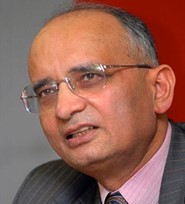
Ramesh Thakur, a former UN assistant secretary-general, is emeritus professor at the Australian National University and Fellow of the Australian Institute of International Affairs. He is a former Senior Research Fellow at the Toda Peace Institute and editor of ‘The nuclear ban treaty : a transformational reframing of the global nuclear order.’
Toda Peace Institute
The Toda Peace Institute is an independent, nonpartisan institute committed to advancing a more just and peaceful world through policy-oriented peace research and practice. The Institute commissions evidence-based research, convenes multi-track and multi-disciplinary problem-solving workshops and seminars, and promotes dialogue across ethnic, cultural, religious and political divides. It catalyses practical, policy-oriented conversations between theoretical experts, practitioners, policymakers and civil society leaders in order to discern innovative and creative solutions to the major problems confronting the world in the twenty-first century (see www.toda.org for more information).
Contact Us
Toda Peace Institute
Samon Eleven Bldg. 5thFloor
3-1 Samon-cho, Shinjuku-ku, Tokyo 160-0017, Japan
Email: contact@toda.org