The International Court of Justice’s Advisory Opinion on Climate Change: A New Mandate for Climate Security
Emma Whitaker and Atieh Khatibi
January 09, 2026
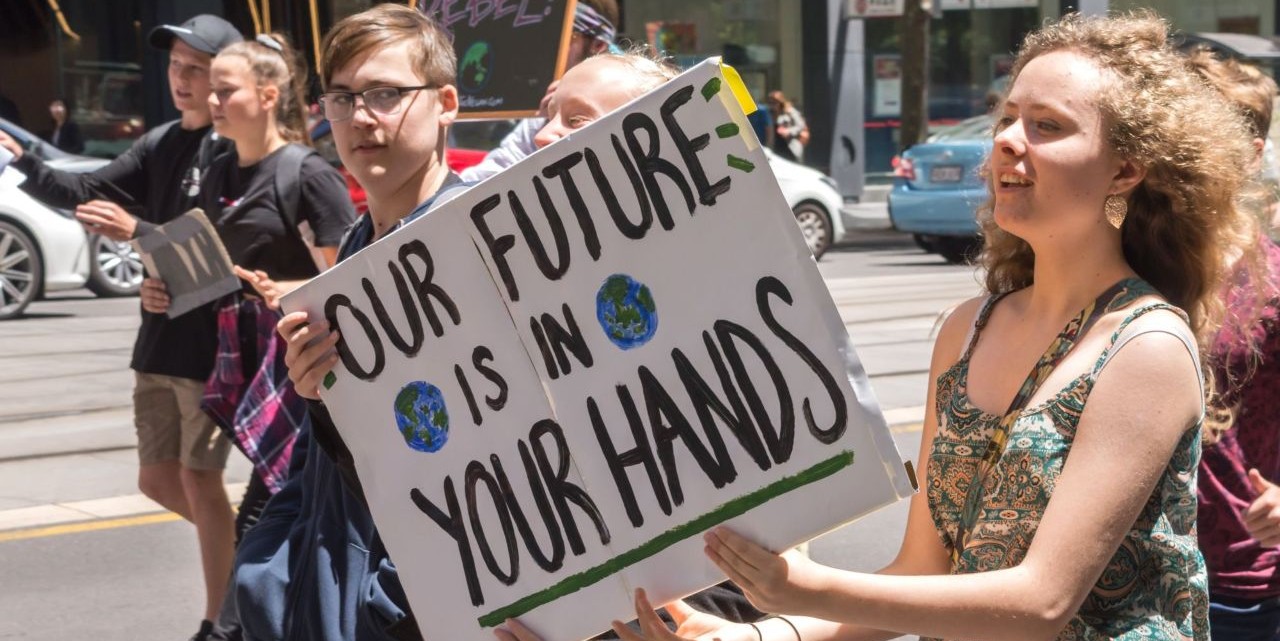
Image: Greyboots40 / shutterstock.com
This report examines the historic advisory opinion delivered by the International Court of Justice (ICJ) on July 23, 2025. The opinion reframes climate change as not just an environmental challenge, but a defining issue for human rights and global security. Sparked by the voices of Pacific youth and the lived realities of vulnerable nations, the ICJ’s opinion sends a clear message: climate action is now a legal obligation, not a policy preference. The advisory opinion is a watershed moment. It lays a powerful legal foundation for climate action rooted in justice, cooperation, and human security. But legal clarity is just the beginning. Real progress means weaving these principles into policy, practice, and everyday decisions—especially for those most at risk. The ICJ ruling offers a vision of climate protection as the bedrock of sustainable peace and security for generations to come.
Contents
- Executive summary
- Introduction
- I. The ICJ’s climate duty: Essentials for states
- II: From the courtroom to climate action
- III. From opinion to response: Implications for key players
- IV. Conclusions
Executive summary
On July 23, 2025, the International Court of Justice (ICJ) delivered a historic advisory opinion. The opinion reframes climate change as not just an environmental challenge, but a defining issue for human rights and global security. Sparked by the voices of Pacific youth and the lived realities of vulnerable nations, the ICJ’s opinion sends a clear message: climate action is now a legal obligation, not a policy preference.
- What’s changed? The ICJ’s opinion is a game-changer. It clarified that climate duties—prevention, due diligence, cooperation, and protection of the right to a healthy environment— are at the core of international law. It finds that states are required to act, not only to cut emissions but to safeguard lives, health, food, water, and housing from climate impacts. These responsibilities apply to all countries, regardless of treaty membership, and extend to regulating private actors whose activities fuel climate harm.
- Why does it matter? Climate change is not just about melting glaciers or rising seas—it’s about protecting people, communities, and the very fabric of society. The ICJ links climate action directly to human dignity and security, making clear that failing to act is a breach of international responsibility. Crucially, the Court highlights that cooperation, through sharing resources, technology, and finance—is not optional. It’s a legal duty, especially for supporting the most vulnerable.
- A new mandate for climate security: While the ICJ stops short of labelling these risks as ‘climate security’, its opinion frames climate change as a multidimensional risk to peace and stability. It raises the bar for prevention and accountability. States are urged to address displacement, resource scarcity, ecosystem collapse, and public health threats with rights-based, risk-informed solutions. The message is simple: climate protection is inseparable from human security.
- What are the limits? The ICJ’s opinion is not binding and does not create new enforcement mechanisms. It clarifies what states must do but leaves room for interpretation on what constitutes a breach—which may complicate litigation. The Court also requires countries to consent to its jurisdiction for contentious cases, meaning creative legal strategies will be needed to hold major emitters accountable. Despite these constraints, the opinion significantly raises legal and reputational risks for decisions that expand fossil fuel extraction or delay climate action, providing powerful leverage for advocates and vulnerable nations.
- Turning law into action: The ICJ’s guidance is more than words—it’s a call to action. From Tuvalu’s fight against rising seas to Pakistan’s flood response, country submissions show how legal duties can be translated into real-world solutions. Integrated water management, resilient infrastructure and nature-based solutions are no longer just best practices—they’re legal imperatives.
Actions for 2026
- Vulnerable States: Use the ICJ’s authority to demand stronger adaptation, finance, and justice. Embed climate security and human rights in national plans and push for fair international outcomes.
- High-Emitting States: Treat the ICJ opinion as a wake-up call. Strengthen climate targets, phase out fossil fuel subsidies, and align domestic laws with global obligations.
- International Organizations: Help bridge climate, human rights, and security agendas. Support countries in translating the ruling into action, especially in fragile contexts.
- Civil Society: Harness the ICJ opinion for advocacy, litigation, and public mobilization. Ensure communities have a voice in shaping climate solutions.
Charting the Path Forward
The advisory opinion is a watershed moment. It lays a powerful legal foundation for climate action rooted in justice, cooperation, and human security. But legal clarity is just the beginning. Real progress means weaving these principles into policy, practice, and everyday decisions—especially for those most at risk. The ICJ ruling offers a vision of climate protection as the bedrock of sustainable peace and security for generations to come.
Introduction
On 23 July 2025, the International Court of Justice (ICJ) issued a landmark advisory opinion on “the Obligations of States in respect of Climate Change.” Sparked by a campaign from 27 law students at the University of the South Pacific, the existential climate risks faced by the Pacific were elevated to the highest level, demanding clarity and accountability. In its advisory opinion, the Court described climate change as an “urgent and existential” threat (para. 73), placing human dignity, justice, and security at the centre of the necessary response.
The opinion situates the climate crisis within human rights and human security. Environmental degradation and climate-related impacts—such as water and food stress, livelihood loss, and human mobility—threaten basic human rights. These risks can drive instability. The ICJ opinion implicitly frames climate change as a multidimensional security risk. Meeting climate obligations is not only about reducing emissions. It is also a legal and ethical duty to protect human rights, maintain peace, and prevent insecurity, especially for vulnerable communities.
This policy brief builds on that mandate. It distils what the ICJ opinion says (and does not say), clarifying the legal duties that now shape climate action: prevention, due diligence, precaution, cooperation, and protection of the right to a clean, healthy, and sustainable environment (hereinafter “the right to a healthy environment”). Next, it links those duties to prevailing climate security risks—displacement, resource scarcity, ecosystem degradation, and public health impacts—and shows how rights‑based, risk‑informed measures can translate law into practice. Finally, it outlines practical steps for national implementation, from legislative updates and accountability standards to inclusive adaptation that reaches those most at risk.
WHY THIS MATTERS FOR CLIMATE SECURITY PRACTITIONERS
What changed: Climate-related security risks are no longer just a policy concern—they’re now tied to binding legal obligations. Prevention, due diligence, and human rights duties mean states must anticipate and address displacement, resource scarcity, ecosystem collapse, and instability before they escalate.
Why it matters: For years, climate security practitioners have struggled to move from analysis to action, often facing the question: “Why should we prioritise this?” The ICJ provides the answer: because international law requires it. Failing to manage foreseeable climate risks can now constitute a breach of international responsibility. These risks include water stress driving migration, food insecurity fuelling unrest, and disasters displacing communities.
- Stronger mandates: Policy makers can use the opinion to justify climate security integration in peace operations, development planning, and conflict prevention strategies.
- Better financing: Affected states can frame climate security investments as legal obligations, not discretionary spending—particularly for adaptation, early warning, and anticipatory action in fragile contexts.
- Sharper accountability: Use the opinion to hold states and institutions to account when climate risks are ignored in security planning, humanitarian response, or peacebuilding.
The bottom line: The ICJ transforms climate security from a niche concern into a legal imperative. For practitioners, this means new leverage in negotiations, stronger justification for resources, and clearer pathways from risk analysis to rights-based action. The challenge now is translating legal authority into operational change—before the next crisis hits.
I. The ICJ’s climate duty: Essentials for states
The ICJ’s advisory opinion is a turning point: it confirms that acting on climate change isn’t just good policy—it’s a legal obligation tied to human rights and environmental protection. Governments must do their part to prevent harm, cut emissions, and adapt to impacts. These duties go beyond climate treaties and form part of broader international law.
The Court also made clear that countries can be held responsible not just for what they do (e.g., emit greenhouse gases) but also for what they fail to do to protect the environment. This closes major accountability gaps. Even where emissions are cumulative, shared globally, or linked to private actors, this accountability raises legal and reputational risks for major emitters. By stressing fairness between countries (Common But Differentiated Responsibility and Respective Capabilities – CBDR-RC) and the importance of a healthy environment, the ICJ moves climate action from being optional, to being required, with real consequences for those who fall short.
THE KEY POINTS IN PLAIN TERMS
- Climate duties go beyond climate treaties: The Court broadens the legal foundation for duties beyond UN climate agreements, confirming that human rights and environmental law apply to climate change. Core duties of prevention of transboundary environmental harm (paras. 138-139), acting with due diligence (paras. 136-137) and taking precaution (para.158) extend to protecting the climate system. When states fail to meet these duties, it can be a breach of international legal responsibility that undermines human rights and increases risks to human security. Importantly, the Court highlights that climate treaties help define the standards of due diligence expected from states, but these standards are also informed by customary international law. As a result, even countries not party to climate agreements remain bound by these obligations, meaning that key climate responsibilities persist regardless of treaty membership—even for major emitters.
- Cooperation is a legal obligation: States must act with good-faith cooperation, including sharing information, technology, and finance so countries can cut emissions and adapt (paras. 301-308), especially the most vulnerable. Cooperation is therefore a legal requirement, not just a diplomatic ideal, and a pillar of peace, stability, and human security. The Court makes clear that climate finance—including support for loss and damage—is not optional. Countries must cooperate and provide support at a level sufficient for vulnerable nations to meet climate objectives and protect basic rights such as health, food, water, and housing. This frames climate finance as a legal obligation grounded in human rights and international law, not charity.
- Climate and human rights are inseparable: Drawing on evidence from the Intergovernmental Panel on Climate Change (IPCC), the Court affirms that a healthy environment underpins human rights. Climate impacts threaten dignity and core human rights, making climate action part of safeguarding people as well as nature (para. 373).
Rights most exposed to climate harm include:
- Life: Climate change endangers life and can force people to seek safety across borders. The Court links this to the principle of non-refoulement (para. 378), meaning countries must protect people displaced by climate impacts. This is especially important because, without recognition under the Refugee Convention, climate displaced people may lack the same legal protections as traditional refugees, leaving them vulnerable to statelessness, exploitation, and human rights abuses. By referencing non-refoulement and Article 6 of the International Covenant on Civil and Political Rights (ICCPR), the Court underscores that states have a duty to protect the rights of people displaced by environmental degradation and climate change.
- Health: Heat, air pollution, unsafe water, and food insecurity harm public health. Strong adaptation and mitigation measures are essential to uphold the right to health and stabilise communities (para. 379).
- Adequate standard of living: Climate impacts undermine food, water, and housing and can affect privacy, family, and home (paras. 380-381), especially when adaptation is neglected. This calls for anticipatory adaptation policies that protect livelihoods, resources, and a sense of place, including fair relocation and housing measures.
- Vulnerable groups: Impacts fall unevenly (para. 382). Women, children, Indigenous Peoples, migrants, persons with disabilities, and other marginalised groups face distinct risks.Responses must therefore be inclusive, non-discriminatory, and facilitate access to justice.
- The right to a healthy environment is central: The Court recognises the right to a healthy environment as essential to the enjoyment of many human rights. States cannot fulfil their human rights obligations without protecting the environment. The right to a healthy environment therefore places rights-based environmental protection at the heart of climate governance.
- Accountability has consequences: When states fail to meet their climate obligations, they must take action to stop the harm, prevent it from happening again, and make things right. This includes restoring ecosystems or compensating affected communities. Importantly, states also have a duty to regulate private actors, like multinational corporations, to limit emissions. If a country does not put proper rules in place or enforce them, it can still be held responsible for the climate harm caused by companies under its jurisdiction, even if those companies operate abroad. While some states may seek to challenge or limit these responsibilities, the Court’s opinion reinforces that accountability for climate harm applies broadly, including to private-sector activities, which provides practical signals for future litigation.
- Law and science need to be aligned: The Court highlights that climate law must keep pace with the latest science, using IPCC findings and the Paris Agreement as benchmarks. The 1.5°C temperature limit is now a legal objective, and countries must prepare their nationally determined contributions (NDCs) to collectively meet this goal (paras 250-254). Evidence-based policy is now a legal standard—states are expected to take all reasonable steps to cut emissions in line with science, and if they fall short, especially when harm is foreseeable and preventable, they could face legal consequences. This supports evidence-based policy making and future-proof governance that can keep pace with climate risks.
LIMITATIONS AND IMPLICATIONS
The opinion does not use the label ‘climate security’, or set out new rules for enforcement. Instead, it clarifies what countries must do to prevent harm and what falling short looks like. It thereby places prevention‑first, risk‑based measures on firmer legal ground. The Court’s approach suggests that certain climate and human rights protections may be considered obligations owed to the international community (erga omnes) reinforcing that all states have a stake in compliance, whether or not they are parties to specific treaties.It makes clear that protecting the environment is part of States’ existing human rights duties.
The Court outlines obligations more than specific breaches, identifying clear categories of conduct—such as failure to prevent significant harm, inadequate due diligence, or violations of human rights—that would amount to internationally wrongful acts. This may leave room for divergent interpretations and complicate litigation for vulnerable communities. Another practical challenge is that the ICJ can hear cases only if the countries involved agree to its authority. This means that those seeking justice for climate harm must find a court or forum—national, regional, or international—that has the power to hear their case. As a result, creative legal strategies are needed, such as using national laws, regional agreements, or alternative dispute resolution, to ensure climate harms can be effectively addressed.
By raising the standard of due diligence and making prevention more central, however, the opinion increases legal and reputational risk for decisions that expand fossil fuel extraction or subsidise new oil, gas, or coal.
The Court recognises intergenerational equity as an interpretive principle of international law. This affirms that climate obligations are erga omnes, owed to the international community—including future generations—thereby strengthening long-term resilience. Yet the Court does not explicitly address intragenerational equity or the gap between developed and developing countries. Even with these limits, the opinion sets a strong legal baseline for rights‑based, prevention‑focused climate action. Against this backdrop, prevention, due diligence and the right to a healthy environment come to the fore in how countries can manage rising climate security risks.
These risks—water scarcity, displacement, ecosystem degradation, food insecurity, and threats to public health and stability—are not hypothetical. They are present realities that demand immediate, targeted responses grounded in the legal duties the ICJ has now clarified. The framework is established. The imperative is implementation.
II: From the courtroom to climate action
With the legal framework now clarified, the question shifts from what states must do to how they can do it. The opinion creates a reinforced mandate for climate security: managing foreseeable risks through prevention and due diligence, delivering adaptation that protects rights and builds resilience, and ensuring equity consistent with CBDR-RC. The pathways below translate these principles into targeted responses to displacement, resource scarcity, ecosystem collapse, and public health threats—drawing on country submissions that informed the ICJ advisory opinion.
PATHWAYS
Water scarcity and flooding
Erratic rainfall, droughts, flooding, and rising seas are destabilising communities and eroding the foundations of public health, development, and social trust. In Tuvalu and Belize, the advance of rising seas threatens not only national survival but the very existence of communities.[1] In Portugal, desertification and water scarcity undermine social cohesion and economic security.[2] Recent catastrophic floods in Pakistan displaced millions, with women and landless farmers suffering the greatest losses.[3] In the DRC, flash floods and landslides have repeatedly devastated poor and rural communities, compounding poverty and vulnerability.[4] Kuwait’s reliance on energy-intensive desalination shows that even wealthy nations are not immune to the destabilising effects of water stress.[5]
Under the ICJ’s guidance, states should support responses that are both locally grounded and equity focused. This includes integrated water management, resilient infrastructure, nature-based solutions, and accessible early warning systems combined with robust social protection. These measures not only meet adaptation duties but also uphold environmental rights and fulfil prevention and due diligence duties by reducing foreseeable climate-related security risks and protecting vulnerable groups.
Climate-related air pollution and increasing wildfires
Rising temperatures and prolonged droughts are intensifying wildfires and degrading air quality. These impacts disproportionately affect children, older people, rural and Indigenous communities, and urban residents in small island developing states (SIDS) and low‑income countries. In Colombia, intensifying air pollution and wildfires are harming children’s health and future opportunities,[6] and in Belize, wildfire risk threatens both Indigenous communities and biodiversity.[7]
The ICJ’s emphasis on prevention means proportionate measures are needed to manage known climate-driven air and fire risks. National responses such as the Philippines’ polluter pays approach,[8] and Kuwait’s investment in restoring biodiversity and reducing pollution,[9] illustrate accountability and prevention. Portugal’s response to escalating forest and rural fires—particularly in the Azores and Madeira—has brought children’s rights and well-being to the centre of policy debates.[10] Enforcing air quality standards, prioritising wildfire prevention for at‑risk communities, expanding natural reserves, and strengthening regional cooperation are necessary to meet due diligence and environmental obligations. These efforts also safeguard human rights to health and life, while stabilising social cohesion and resilience.
Climate-driven food insecurity
Climate impacts undermine crops, fisheries and livelihoods, fuelling hunger, malnutrition, price shocks and instability. Tuvalu’s struggle with saltwater intrusion is threatening staple food crops and local diets,[11] while the Philippines faces rising child malnutrition linked to climate impacts,[12] and Colombia’s Indigenous communities are seeing growing food insecurity as traditional livelihoods are disrupted.[13]
The ICJ’s opinion makes it clear that protecting the environment and the climate system for food production, is interconnected with states’ legal duties. States should advance climate-smart agriculture, diversify livelihoods, invest in resilient infrastructure, and provide targeted social protection and early warning systems to buffer shocks and build long-term resilience. Sierra Leone’s adoption of climate-smart farming is a proactive effort to adapt to changing rainfall and crop failures.[14] These actions align with CBDR‑RC and protect environmental rights, and the rights to food and health, while fulfilling prevention duties.
Ecosystem degradation
Land, forest, and marine degradation erode biodiversity and resilience, disproportionately impacting Indigenous Peoples, local communities, in particular women and children, and SIDS. Ecosystem loss not only undermines the right to a healthy environment but also disrupts livelihoods, increases vulnerability to conflict, and threatens the peace and stability of entire regions.
Protecting ecosystems is a binding legal duty arising from customary international law obligations as well as from human rights obligations, according to the ICJ’s findings. Initiatives like Sierra Leone’s reforestation programmes,[15] Belize’s blue economy strategies,[16] Pakistan’s Living Indus project,[17] Colombia’s legal recognition of ecosystem rights,[18] and Tuvalu’s habitat restoration[19] show how ecosystem integrity underpins community security. Scaling nature-based solutions, strengthening legal frameworks, and mobilising targeted international finance—especially for fragile and conflict-affected regions—are essential steps. Together, they honour the right to a healthy environment, prevention, equity, and CBDR-RC principles.
Unsafe housing and displacement
Sea-level rise, floods, and storms are destroying homes and infrastructure, driving displacement in SIDS’ coastal zones, informal settlements, and among marginalised groups who often lack the resources to recover or relocate. Examples from Sierra Leone,[20] the DRC,[21] the Philippines,[22] and Colombia[23] highlight rising housing precarity, gendered impacts and urgent relocation needs.
Prevention and good faith cooperation duties are relevant where climate impacts force relocation or increase housing precarity. These duties are further linked to the human rights to life and to adequate living conditions, reinforcing legal responsibility in the face of climate-induced displacement. States should deliver climate-resilient housing and infrastructure, fair and participatory relocation, legal protections for displaced people, and robust social safety nets. International cooperation, including mechanisms like the Warsaw International Mechanism and the Cancun Adaptation Framework, or bilateral cooperation such as the recent Australia–Tuvalu Falepili Union Treaty, support due diligence and CBDR‑RC by managing cross‑border risks, transforming legal obligations into national rights-based preventive measures.
Climate instability
Climate risks are now central to political, economic, and social stability, particularly in fragile states and debt-burdened regions. The experiences of Sierra Leone,[24] the DRC,[25] the Philippines,[26] and Portugal[27] show that climate risks are now central to the agenda for peace, rights, and development.
The ICJ identifies cooperation and prevention as core duties—both are central to maintaining stability under climate stress. The Court implicitly provides a legal rationale for integrating climate risk into peacebuilding, conflict prevention, and development planning. Targeted adaptation, disaster risk reduction, and economic diversification are key mechanisms for doing so. These approaches meet prevention duties and obligations to protect the right to a healthy environment and other human rights—ultimately sustaining peace. Regional and international cooperation is essential for managing transboundary risks and supporting just, peaceful solutions.
III. From opinion to response: Implications for key players
These pathways reveal how climate-related security challenges test the full spectrum of human rights. Yet solutions depend equally on procedural rights, including participation, access to information, equality, and non‑discrimination. When states design climate policies that are rights‑based, conflict sensitive and inclusive, they align with the ICJ’s normative guidance, strengthen legitimacy and trust, unlock local knowledge, and help adaptation reach those who need it most. Upholding both substantive and procedural rights is fundamental to meeting international obligations, advancing climate justice, and building resilient, peaceful societies.
By drawing on the ICJ’s persuasive authority when drafting or updating laws and policies, states can turn this non‑binding guidance into enforceable standards and better regulation aligned with international responsibility, while helping to shape emerging customary international law on climate and human rights.
Most vulnerable states should:
- Use the ICJ’s persuasive authority in negotiations and submissions (NDC updates, National Adaptation Plans, Global Goal on Adaptation, Global Stocktake) to justify higher adaptation, loss and damage and risk finance targets.
- Engage actively in the operationalisation and governance of the Fund for Responding to Loss and Damage, ensuring fair and timely access for those most at risk.
- Embed human rights, the right to a healthy environment and climate security risk mapping in national strategies, with explicit triggers for anticipatory action (e.g., early relocation, social protection scale-ups).
- Pursue collective diplomacy to demand ambitious outcomes on loss and damage, migration, and adaptation to seize emerging international opportunities.
- Strengthen legal preparedness by adopting due diligence standards for public agencies and requiring climate security analysis for major public investments.
High-emitting states should:
- Treat the ICJ ruling as an authoritative guidance to strengthen NDCs and set binding timelines to phase out fossil fuel subsidies.
- Ring-fence public climate finance for fragile contexts and fast-track tech transfer and capacity-building consistent with CBDR‑RC.
- Align domestic approvals with risk, integrating climate-human rights tests into permitting, procurement, and export credit.
- Recognise the reputational and legal risks of inaction or insufficient action and take proactive steps to align national policies, legislative and regulatory measures with international obligations.
- Publish legal and reputational risk assessments for new oil, gas, or coal projects, demonstrating compliance with the ICJ’s due diligence and prevention standards and transparency principles.
Regional and international organizations should:
- Support member states in translating the ICJ ruling into regional frameworks, strategies, and action plans—bridging climate, human rights, and security agendas.
- Build pooled technical assistance for NAP/NDC revisions, anticipatory action and early warning, and climate security analysis in fragile and conflict-affected settings.
- Coordinate cross-border responses to address transboundary climate risks, such as migration, water scarcity, and disaster management.
- Integrate climate security into peace and security mandates, including UNSC deliberations, and embed human rights, the right to a healthy environment, and due diligence in mission planning and reporting.
- Monitor and report on state compliance with the ICJ ruling to strengthen accountability and transparency at the international level.
Civil society should:
- Use the ICJ opinion in strategic advocacy, litigation, and public awareness, holding governments and corporations accountable for climate-related harms and human rights violations.
- Mobilise communities to participate in climate decision-making, ensuring the protection of both procedural and substantive rights.
- Build coalitions across sectors (environment, human rights, peacebuilding) to push for integrated, rights-based climate security solutions.
- Document and share local impacts, best practices, and justice claims to inform national and international policymaking.
IV. Conclusions
Increasing climate devastation across the globe makes clear that climate risks are real and growing, and their implications for peace and security are coming into sharper focus. At the same time, changes in the global political landscape—reflected in new alliances, evolving priorities, and complex geopolitical realities—are influencing the pace and direction of collective action. These developments underscore both the fragility of progress and the urgent need to sustain momentum in addressing the interconnected challenges of climate, peace, and security.
The ICJ ruling provides a much-needed legal foundation and renewed impetus for coordinated action. Climate protection duties are now extended beyond mitigation and adaptation to fulfil obligations under customary legal principles and human rights frameworks. Addressing climate risks is therefore inseparable from efforts to safeguard human rights and maintain stability. Furthermore, as the ICJ’s opinion recognises the right to a healthy environment as a prerequisite for the enjoyment of a wide range of human rights, states need to integrate human security and conflict sensitivity into developing and revising rights-based and inclusive NDCs, national adaptation strategies, cooperation strategies, and other climate measures.
The ICJ makes clear that countries are expected to uphold all relevant international laws—including decisions reached at global climate conferences like the COP. This creates new opportunities for countries to work together and strengthen collective action on climate solutions. Upcoming and future COPs should build upon this foundation by establishing the link between climate action, human rights, and human security. By aligning the ICJ’s normative guidance with ongoing COP decisions and other international fora, states can transform climate policy into a framework for prevention, cooperation, and stability.
Legal clarity, however, is only the first step. Meaningful progress depends on integrating this guidance into policy and practice—bridging environmental, rights-based, and security approaches, and ensuring that the needs of the most vulnerable are prioritised. This calls for practical cooperation, adaptive policies, and sustained attention to implementation.
Ultimately, the ICJ’s advisory opinion offers not only a framework for legal accountability, but also a vision of shared responsibility. By building trust, fostering inclusion, and linking climate action with the protection of human security, human rights, and peace, states can make climate protection a cornerstone of sustainable security for generations to come.
BIBLIOGRAPHY
Written Statement of Sierra Leone, Obligations of States in respect of Climate Change, Request for Advisory Opinion (ICJ, 15 March 2024). Retrieved 29 October 2024 from https://www.icj-cij.org/sites/default/files/case-related/187/187-20240315-wri-02-00-en.pdf.
Written statement of the Democratic Republic of the Congo, Obligations of States in respect of Climate Change, Request for Advisory Opinion (ICJ, 4 March 2024). Retrieved 29 October 2024 from https://www.icj-cij.org/sites/default/files/case-related/187/187-20240304-wri-01-00-en.pdf.
Written Statement of the Republic of Korea, Obligations of States in respect of Climate Change, Request for Advisory Opinion (ICJ, 22 March 2024). Retrieved 29 October 2024 from https://www.icj-cij.org/sites/default/files/case-related/187/187-20240322-wri-20-00-en.pdf,
Written Statement of the Republic of the Philippines, Obligations of States in respect of Climate Change, Request for Advisory Opinion (ICJ, 21 March 2024). Retrieved 29 October 2024 from https://www.icj-cij.org/sites/default/files/case-related/187/187-20240321-wri-10-00-en.pdf.
Written Statement of The State of Kuwait, Obligations of States in respect of Climate Change, Request for Advisory Opinion (ICJ, 22 March 2024). Retrieved 29 October 2024 from https://www.icj-cij.org/sites/default/files/case-related/187/187-20240322-wri-14-00-en.pdf.
Written Statement ofthe Islamic Republic of Pakistan, Obligations of States in respect of Climate Change, Request for Advisory Opinion (ICJ, 22 March 2024). Retrieved 29 October 2024 from https://www.icj-cij.org/sites/default/files/case-related/187/187-20240322-wri-38-00-en.pdf.
Written Statement of Portuguese Republic, Obligations of States in respect of Climate Change, Request for Advisory Opinion (ICJ, 7 March 2024). Retrieved 29 October 2024 from https://www.icj-cij.org/sites/default/files/case-related/187/187-20240307-wri-01-00-en.pdf.
Written Statement of United Kingdom of Great Britain and Northern Ireland, Obligations of States in respect of Climate Change, Request for Advisory Opinion (ICJ, 18 March 2024). Retrieved 29 October 2024 from https://www.icj-cij.org/sites/default/files/case-related/187/187-20240318-wri-01-00-en.pdf.
Written Statement of United States of America, Obligations of States in respect of Climate Change, Request for Advisory Opinion (ICJ, 22 March 2024). Retrieved 29 October 2024 from https://www.icj-cij.org/sites/default/files/case-related/187/187-20240322-wri-06-00-en.pdf.
Written Statement of Belize, Obligations of States in respect of Climate Change, Request for Advisory Opinion (ICJ, 21 March 2024). Retrieved 29 October 2024 from https://www.icj-cij.org/sites/default/files/case-related/187/187-20240321-wri-09-00-en.pdf.
Written Statement of New Zealand, Obligations of States in respect of Climate Change, Request for Advisory Opinion (ICJ, 22 March 2024). Retrieved 29 October 2024 from https://www.icj-cij.org/sites/default/files/case-related/187/187-20240322-wri-37-00-en.pdf.
Written Statement of Tuvalu, Obligations of States in respect of Climate Change, Request for Advisory Opinion (ICJ, 22 March 2024). Retrieved 29 October 2024 from https://www.icj-cij.org/sites/default/files/case-related/187/187-20240322-wri-05-00-en.pdf.
Written Statement of the Republic of Colombia, Obligations of States in respect of Climate Change, Request for Advisory Opinion (ICJ, 11 March 2024). Retrieved 29 October 2024 from https://www.icj-cij.org/sites/default/files/case-related/187/187-20240311-wri-01-00-en.pdf.
Written Statement of the Republic of Chile, Obligations of States in respect of Climate Change, Request for Advisory Opinion (ICJ, 22 March 2024). Retrieved 29 October 2024 from https://www.icj-cij.org/sites/default/files/case-related/187/187-20240322-wri-18-00-en.pdf.
Notes
[1]Written Statement of Tuvalu, Obligations of States in respect of Climate Change, Request for Advisory Opinion (ICJ, 22 March 2024). Retrieved 29 October 2024 from https://www.icj-cij.org/sites/default/files/case-related/187/187-20240322-wri-05-00-en.pdf; Written Statement of Belize, Obligations of States in respect of Climate Change, Request for Advisory
Opinion (ICJ, 21 March 2024). Retrieved 29 October 2024 from https://www.icj-cij.org/sites/default/files/case-related/187/187-20240321-wri-09-00-en.pdf
[2]Written Statement of Portuguese Republic, Obligations of States in respect of Climate Change, Request for Advisory Opinion (ICJ, 7 March 2024). Retrieved 29 October 2024 from https://www.icj-cij.org/sites/default/files/case-related/187/187-20240307-wri-01-00-en.pdf
[3]Written Statement of the Islamic Republic of Pakistan, Obligations of States in respect of Climate Change, Request for Advisory Opinion (ICJ, 22 March 2024). Retrieved 29 October 2024 from https://www.icj-cij.org/sites/default/files/case-related/187/187-20240322-wri-38-00-en.pdf
[4]Written statement of the Democratic Republic of the Congo, Obligations of States in respect of Climate Change, Request for Advisory Opinion (ICJ, 4 March 2024). Retrieved 29 October 2024 from https://www.icj-cij.org/sites/default/files/case-related/187/187-20240304-wri-01-00-en.pdf
[5]Written Statement of The State of Kuwait, Obligations of States in respect of Climate Change, Request for Advisory Opinion (ICJ, 22 March 2024). Retrieved 29 October 2024 from https://www.icj-cij.org/sites/default/files/case-related/187/187-20240322-wri-14-00-en.pdf
[6]Written Statement of the Republic of Colombia, Obligations of States in respect of Climate Change, Request for Advisory Opinion (ICJ, 11 March 2024). Retrieved 29 October 2024 from https://www.icj-cij.org/sites/default/files/case-related/187/187-20240311-wri-01-00-en.pdf.
[7]Belize Written Statement (ICJ 21 March 2024)
[8]Written Statement of the Republic of the Philippines, Obligations of States in respect of Climate Change, Request for Advisory Opinion (ICJ, 21 March 2024). Retrieved 29 October 2024 from https://www.icj-cij.org/sites/default/files/case-related/187/187-20240321-wri-10-00-en.pdf.
[9]Kuwait Written Statement (ICJ 22 March 2024)
[10]Portugal Written Statement (ICJ 7 March 2024)
[11]Tuvalu Written Statement (ICJ 22 March 2024)
[12]Philippines Written Statement (ICJ 21 March 2024)
[13]Colombia Written Statement (ICJ 11 March 2024)
[14]Written Statement of Sierra Leone, Obligations of States in respect of Climate Change, Request for Advisory Opinion (ICJ, 15 March 2024). Retrieved 29 October 2024 from https://www.icj-cij.org/sites/default/files/case-related/187/187-20240315-wri-02-00-en.pdf.
[15]Sierra Leone Written Statement (ICJ 15 March 2024)
[16]Belize Written Statement (ICJ 21 March 2024)
[17]Pakistan Written Statement (ICJ 22March 2024)
[18]Colombia Written Statement (ICJ 11 March 2024)
[19]Tuvalu Written Statement (ICJ 22 March 2024)
[20]Sierra Leone Written Statement (ICJ 15 March 2024)
[21]Sierra Leone Written Statement (ICJ 4 March 2024)
[22]Philippines Written Statement (ICJ 21 March 2024)
[23]Colombia Written Statement (ICJ 11 March 2024)
[24]Sierra Leone Written Statement, (15 March 2024).
[25]DRC Written Statement (ICJ 4 March 2024)
[26]Philippines Written Statement (ICJ 21 March 2024)
[27]Portugal Written Statement (ICJ 7 March 2024)

The Author

Emma Whitaker
Emma Whitaker is a Senior Advisor at adelphi’s Climate Diplomacy and Security programme.

Atieh Khatibi
Atieh Khatibi is a legal scholar and PhD candidate at the University of Graz, specialising in climate change law, environmental policy, and human rights. She holds degrees in Natural Resources Engineering and Environmental Law, and has worked on international projects with UNDP Iran and adelphi Berlin. A trained mediator and 2021 Climate Ambassador, she brings expertise in environmental decision-making, international law, and peacebuilding.
Toda Peace Institute
The Toda Peace Institute is an independent, nonpartisan institute committed to advancing a more just and peaceful world through policy-oriented peace research and practice. The Institute commissions evidence-based research, convenes multi-track and multi-disciplinary problem-solving workshops and seminars, and promotes dialogue across ethnic, cultural, religious and political divides. It catalyses practical, policy-oriented conversations between theoretical experts, practitioners, policymakers and civil society leaders in order to discern innovative and creative solutions to the major problems confronting the world in the twenty-first century (see www.toda.org for more information).
Contact Us
Toda Peace Institute
Samon Eleven Bldg. 5thFloor
3-1 Samon-cho, Shinjuku-ku, Tokyo 160-0017, Japan
Email: contact@toda.org