Peace and Security in Northeast Asia Policy Brief No.261
Building Mutual Reassurance on the Korean Peninsula: Coordinating Japan, ROK, and US Approaches to North Korea's Nuclear Challenge
Nishino Junya
December 01, 2025

This report addresses the denuclearization of North Korea which remains an indispensable objective not only for Japan but for the entire international community. Complete denuclearization has become a long-term goal rather than an immediately achievable outcome. The international community must simultaneously prevent North Korea from further expanding its nuclear arsenal and ensure that these weapons are never used. This dual approach—pursuing denuclearization while managing immediate nuclear risks—requires careful coordination among Japan, the Republic of Korea (ROK), and the United States.
Contents
- Introduction
- North Korea's escalatory nuclear posture
- The Yoon Suk Yeol Administration's deterrence-focussed approach
- The Lee Jae-myung Administration's reassurance initiative
- Ensuring sustainable policy through trilateral coordination
- The critical importance of Japan–ROK coordination and cooperation
- Conclusion
Introduction
The denuclearization of North Korea remains an indispensable objective not only for Japan but for the entire international community. However, given Pyongyang's demonstrated unwillingness to abandon its nuclear weapons program and its continued advancement of nuclear and missile capabilities, complete denuclearization has become, in practical terms, a long-term goal rather than an immediately achievable outcome. While maintaining denuclearization as our ultimate objective, the international community must simultaneously prevent North Korea from further expanding its nuclear arsenal and ensure that these weapons are never used. This dual approach—pursuing denuclearization while managing immediate nuclear risks—requires careful coordination among Japan, the Republic of Korea (ROK), and the United States.
From Japan's perspective, the North Korean nuclear threat presents existential security concerns. North Korea's ballistic missiles can reach Japanese territory within minutes, and Pyongyang has explicitly threatened Japan in its propaganda. The security environment on the Korean Peninsula directly impacts Japan's national security, making Tokyo's engagement in peninsula affairs not merely desirable but essential. Any reassurance measures toward North Korea must therefore be developed through close trilateral coordination that addresses Japanese security concerns alongside those of South Korea and the United States.
North Korea's escalatory nuclear posture
Recent developments have made the North Korean nuclear issue increasingly urgent and complex. Pyongyang has adopted an alarmingly aggressive nuclear posture, including announcing policies that suggest the possibility of preemptive nuclear use and tactical nuclear strikes against South Korea. The codification of North Korea's nuclear doctrine in September 2022, which explicitly authorizes first use under certain circumstances, represents a dangerous escalation that threatens the entire region.
Furthermore, North Korea has fundamentally redefined inter-Korean relations, with Chairman Kim Jong Un declaring in speeches at the end of 2023 and January 2024 that ties between the two Koreas have become "fixed into the relations between two states hostile to each other" rather than compatriots seeking eventual reunification. In his address to the Supreme People's Assembly on January 15, 2024, Chairman Kim called for constitutional revisions to define South Korea as the "principal enemy" and "the most hostile state". This represents a dramatic reversal of the 1991 Basic Agreement, which defined inter-Korean relations as "a special interim relationship stemming from the process towards unification". That agreement had provided the foundation for decades of engagement policy, establishing that despite their division, the two Koreas shared a common national identity and goal of eventual reunification.
Chairman Kim's abandonment of this framework eliminates the conceptual basis that had allowed for dialogue and cooperation even during periods of tension. By redefining South Korea from a partner in an unfinished reunification process to a permanent foreign enemy state, North Korea has torn up the implicit compact that undergirded all previous inter-Korean agreements. This makes President Lee Jae-myung's task far more challenging. The Lee administration must now work not merely to restore inter-Korean dialogue, but to fundamentally transform the relationship from one of ‘hostile states’ back to one of peaceful coexistence. President Lee's emphasis on respecting North Korea's system, rejecting absorption unification, and refraining from hostile acts can be understood as an effort to create the conditions for this transformation—to demonstrate that coexistence is possible even if unification remains a distant goal.
North Korea's international alignment has also shifted significantly. The Comprehensive Strategic Partnership Treaty with Russia, signed in June 2024, includes mutual defense provisions and has been accompanied by North Korean troop deployments to support Russia's war in Ukraine. This deepening Russia–North Korea axis provides Pyongyang with diplomatic cover and potential military–technical support.
Meanwhile, Chairman Kim's attendance at the 80th anniversary commemoration of victory in the Anti-Japanese War at Tiananmen Square in September 2025 signals efforts to improve previously strained China–North Korea relations. These developments create a more challenging environment for international pressure on North Korea's nuclear program.
The Yoon Suk Yeol Administration's deterrence-focussed approach
The previous ROK administration under President Yoon Suk Yeol prioritized strengthening deterrence against North Korean military provocations. Seoul and Washington established the Nuclear Consultative Group (NCG) to enhance extended deterrence arrangements under the ROK–US alliance, providing South Korea with greater insight into US nuclear planning and demonstrating American commitment to defending its ally.
Trilateral cooperation among Japan, the ROK, and the United States also reached unprecedented levels during this period. The landmark Camp David Summit in August 2023 institutionalized trilateral cooperation through a joint commitment to consult on regional security challenges.[1] Three concrete achievements regarding deterrence measures against North Korea deserve particular mention: First, real-time sharing of North Korean missile warning data became operational in late 2023, significantly enhancing collective situational awareness. Second, the ‘Freedom Edge’ joint military exercises were conducted in June and November 2024, demonstrating integrated trilateral defense capabilities. Third, working-level consultations among the three countries' diplomatic authorities on North Korean cyber threats have been held four times since 2024, addressing an increasingly serious security challenge. These initiatives demonstrated the potential for coordinated deterrence approaches among the three democracies.
The Lee Jae-myung Administration's reassurance initiative
The Lee Jae-myung administration has introduced a thoughtful and potentially transformative approach since taking office in June 2025, demonstrating political courage in prioritizing the restoration of inter-Korean relations to reduce military tensions. This shift represents not an abandonment of security concerns but rather a sophisticated understanding that reassurance and deterrence can and must coexist in addressing North Korea's nuclear challenge.
Immediately after inauguration, President Lee implemented measures such as halting anti-North leaflet campaigns and suspending loudspeaker broadcasts to signal Seoul's interest in improving relations. These steps reflect an understanding that the security dilemma on the peninsula has intensified and requires de-escalation measures.
In his Liberation Day address on August 15, President Lee articulated three key principles: respect for North Korea's current political system, rejection of any form of absorption unification, and commitment to refraining from all hostile acts toward the North.[2] These declarations aim to address Pyongyang's fundamental security concerns and might create space for restoring communication channels between North and South Korea.
Significantly, President Lee expressed willingness to preemptively and gradually restore the September 19 Military Agreement, which agreed by North and South Korea in 2018, to prevent accidental clashes and build military confidence between the two Koreas. At the ROK–US summit on August 25, he proposed that South Korea serve as a "pacemaker" for US–DPRK dialogue, positioning Seoul as a facilitator rather than an obstacle to direct engagement between Washington and Pyongyang.
In an interview with the Yomiuri Shimbun (August 21), President Lee acknowledged the "objective reality" of North Korea's advancing nuclear capabilities while reaffirming that "the goal is denuclearization of the entire Korean Peninsula."[3] He outlined a phased approach: first, freezing nuclear and missile development; second, reduction; and third, complete denuclearization. This phased approach maintains complete denuclearization as the ultimate goal while recognizing that patience and persistence will be required to achieve this objective. While the denuclearization of North Korea cannot be abandoned as a goal, this represents a carefully balanced approach to address the reality that North Korea continues to advance its nuclear capabilities. It represents an effort to reconcile unwavering commitment to denuclearization with realistic acknowledgment of North Korea's continued nuclear advances.
At the UN General Assembly in September, President Lee introduced the ‘END Initiative’, using the acronym to stand for ‘Exchange’, ‘Normalization’, and ‘Denuclearization’.[4] The initiative proposes ending "the era of hostility and confrontation on the Korean Peninsula" and ushering in "a new era of peaceful coexistence and shared growth" through comprehensive dialogue centred on these three pillars. President Lee emphasized that "exchanges and cooperation are a shortcut to peace" as demonstrated by the history of inter-Korean relations, and pledged to "gradually expand inter-Korean exchanges and cooperation" to pave the way for sustainable peace. On denuclearization, President Lee acknowledged it as "undoubtedly a grave task" but called for "realistic and rational solutions based on a cool-headed perception that denuclearization cannot be achieved in the short term.
The Lee administration's North Korea policy thus far has remained largely abstract and principles-based rather than detailed and specific. This appears to be a deliberate choice designed to avoid being bound by concrete policy commitments that might limit future options. With considerable uncertainty about North Korea's future diplomatic stance and whether US–North Korea dialogue will materialize, maintaining this level of abstraction allows Seoul to preserve the policy flexibility needed to respond effectively as circumstances evolve.
Ensuring sustainable policy through trilateral coordination
For President Lee's reassurance approach to be sustainable, two conditions must be met: First, Seoul's policies must be perceived as credible by Pyongyang. Second, these initiatives must not undermine—but rather enhance—the security environment for Japan, South Korea, and the United States. Several considerations are essential:
ESTABLISHING RELIABLE INTER-KOREAN DIALOGUE CHANNELS
Tension reduction requires restored communication channels and concrete inter-Korean agreements with verification mechanisms. Without regular dialogue, mutual reassurance cannot be sustained, and misunderstandings can quickly escalate into crises. A particularly critical step would be establishing the South–North Joint Military Committee, which was first called for in the 1991 Basic Agreement, to discuss and implement military confidence-building measures. This committee was supposed to be reactivated under the September 19 Comprehensive Military Agreement in 2018. However, despite being promised in multiple agreements over more than three decades—in 1991, again in 2018, and in subsequent declarations—this Joint Military Committee has never been properly established or made operational. The repeated failure to operationalize this mechanism represents a fundamental gap in inter-Korean crisis management infrastructure. Without such a standing body to address military tensions, manage buffer zones, coordinate de-escalation measures, and provide a channel for rapid communication during crises, even well-intentioned policies can quickly unravel when incidents occur. For President Lee's tension-reduction approach to be sustainable, establishing and actually operating this long-promised Joint Military Committee must be a priority, along with restoring other communication channels such as the inter-Korean liaison office and military hotlines that have been severed in recent years.
BUILDING DOMESTIC CONSENSUS
South Korea's polarized political environment has historically produced dramatic policy swings with each administration change, undermining the credibility and sustainability of any long-term approach to North Korea. The setback of the 2018–2019 peace process was partly attributable to insufficient domestic support. The conservative camp in South Korea fundamentally opposed the progressive administration's efforts to improve relations with North Korea, while within the progressive camp, there was frustration that prioritizing the US alliance was causing delays in inter-Korean rapprochement. These cross-cutting divisions created a fragile domestic foundation for sustained policy. President Lee's Democratic Party currently holds a legislative majority, providing a stronger institutional foundation than previous progressive administrations enjoyed. However, developing broader consensus across the political spectrum on basic engagement principles would reduce policy volatility and enhance credibility.
ENHANCING ALLIANCE COORDINATION
Close policy coordination with Washington remains essential, particularly in light of lessons learned from the 2018–2019 engagement process. During that period, President Trump's frequent shifts in position made it difficult to maintain a consistent approach to North Korea grounded in trilateral solidarity among Japan, ROK, and the United States. The effort required to sustain coordination amid such unpredictability highlighted the fragility of approaches that depend on individual leaders' impulses rather than institutionalized policy frameworks. For President Lee's engagement approach to succeed, sustained US commitment to resuming dialogue with North Korea and support for restoring inter-Korean dialogue are essential. What must be pursued is not improvised pursuit of dialogue, but rather deliberation, coordination, and implementation of North Korea policy from a long-term perspective
Meanwhile, for the US–Japan alliance, the peace and stability of the Taiwan Strait has emerged as a significant concern in addition to addressing the North Korean threat. Japanese and US security experts have begun discussing the potential linkage between the Korean Peninsula situation and Taiwan Strait tensions, exploring scenarios in which crises in one theatre could affect or trigger developments in the other. However, from South Korea's perspective, it is desirable to manage these issues in a way that prevents such a linkage—ensuring that developments regarding North Korea do not become entangled with Taiwan Strait contingencies, and vice versa. To prevent discrepancies in regional threat perceptions and responses between the ROK–US alliance and Japan–US alliance, it is essential to further deepen trilateral coordination among Japan, ROK, and the United States. Only through such enhanced coordination can all three countries align their approaches to the distinct but interconnected security challenges facing Northeast Asia, ensuring that alliance commitments reinforce rather than complicate each other's strategic objectives.
Moreover, Japan maintains the most resolute position on achieving North Korea's denuclearization while simultaneously seeking early resolution of the abduction issue, a bilateral concern of paramount importance to Tokyo. The Lee administration should respect Japan's stance on these matters and work jointly with Japan to exercise leadership in reducing military tensions in the region. By demonstrating that Seoul's tension-reduction initiatives are developed in close consultation with Tokyo and take Japanese concerns seriously, President Lee can build the trilateral foundation necessary for sustainable progress.
The critical importance of Japan–ROK coordination and cooperation
The success of any approach to North Korea fundamentally depends on close coordination between Japan and South Korea, two democracies sharing profound security concerns about North Korean threats. The geographic proximity, shared values, and complementary capabilities of Tokyo and Seoul make their cooperation not merely beneficial but essential for effective policy implementation.
From Japan's perspective, security developments on the Korean Peninsula directly affect Japanese national security. North Korean missiles overfly Japanese territory, and any military conflict on the peninsula would immediately involve Japan, where US forces critical to Korean defence are based. Therefore, Japan cannot be indifferent to South Korea's North Korea policy.
The joint press release issued following the Japan–`ROK summit in Tokyo on August 23, 2025—the first such joint document in seventeen years—represented an important step forward.[5] Both leaders agreed on the necessity of strengthening strategic communication and committed to enhanced dialogue at all levels. Maintaining this momentum after Japan's recent change of government will be crucial, particularly regarding North Korea policy. Regular strategic dialogues between Japanese and South Korean officials, from summit levels to working groups, create habits of cooperation that enhance policy effectiveness while building mutual trust.
For Japan, several specific concerns must be addressed in any reassurance approach toward North Korea:
CLARIFYING ‘FREEZE’ PROPOSALS
President Lee's reference to freezing North Korea's nuclear and missile development as a first step requires detailed elaboration. What specifically would be frozen? All nuclear facilities? Missile testing? Fissile material production? How would such a freeze be verified? The experience of past agreements demonstrates that verification is not merely a technical detail but the crucial determinant of success or failure. Japan and South Korea, together with the US, must closely coordinate on what constitutes an acceptable and verifiable freeze.
COORDINATED MESSAGING
From North Korea's perspective, policies emerging from genuine Japan–ROK coordination carry substantially greater credibility than unilateral initiatives. When Tokyo and Seoul speak with one voice, Pyongyang cannot exploit divisions or play one country against another. This unity of purpose significantly enhances the effectiveness of both reassurance initiatives and deterrence measures. Conversely, if Pyongyang perceives discord between Tokyo and Seoul, it will inevitably attempt to drive wedges between them. The 2018–2019 peace process suffered partly because North Korea could play different parties against each other when coordination was insufficient. This underscores that coordinated massaging requires not just coordination in principle, but active efforts to bridge policy differences between Tokyo and Seoul before and during any engagement process. Japan and South Korea must invest significant diplomatic effort in understanding each other's core concerns—Seoul's focus on reducing immediate military tensions on the Korean peninsula, and Tokyo's insistence on ensuring the process toward North Korea’s denuclearization.
ENCOURAGING A STRATEGIC AND CONSISTENT US APPROACH
Both Japan and South Korea must work together to encourage the United States to adopt a strategic and consistent approach to the North Korea issue. The unpredictability that characterized previous US engagement efforts, particularly during the Trump administration, proved detrimental not only to alliance coordination but also to building the trust necessary for sustained dialogue with Pyongyang. President Trump's abrupt walkout from the February 2019 Hanoi summit with Chairman Kim, while intended to demonstrate resolve, instead heightened Chairman Kim's anxiety and deepened North Korean mistrust of US intentions. Such unpredictability undermines reassurance efforts by signalling that agreements might be suddenly abandoned or that diplomatic approaches could shift dramatically without warning. Moving forward, Japan and South Korea should coordinate in urging the US to pursue North Korea policy grounded in consistent messaging and reliable follow-through on commitments. A predictable, principled US approach would better serve the interests of both Japan and South Korea while also contributing to the reassurance framework necessary for North Korea to take reciprocal steps toward denuclearization.
Conclusion
Building mutual reassurance on the Korean Peninsula while maintaining pressure toward denuclearization represents an exceptionally difficult challenge. President Lee's reassurance approach might offer potential pathways to reduce immediate tensions and create space for restoring communication channels between Seoul and Pyongyang. However, for this approach to succeed without compromising the security of Japan, ROK, and the United States, extraordinarily close trilateral coordination is essential.
Japan's security concerns must be fully integrated into any reassurance framework. This means detailed coordination on what ‘freezing’ North Korea's programs means, how it would be verified, and how progress would be sequenced. And it means ensuring that reduced tensions on the peninsula do not come at the cost of weakened deterrence or reduced alliance readiness.
The denuclearization of the Korean Peninsula remains the indispensable long-term goal. While pursuing this objective, Japan, ROK, and the United States must work together to prevent further nuclear expansion, reduce the risk of nuclear use, and manage the security dilemma that threatens to spiral into conflict. Only through sustained, closely coordinated diplomacy that addresses the legitimate security concerns of all parties—including North Korea—while maintaining firm commitment to denuclearization can mutual reassurance contribute to lasting peace and stability on the Korean Peninsula and throughout Northeast Asia.
The path forward requires patience, realism, and above all, unwavering coordination among allies and partners who share the goal of a peaceful, denuclearized peninsula. From Japan's perspective, this coordination is not optional but essential—the foundation upon which any sustainable progress must be built.
Notes
[1]“The Spirit of Camp David: Joint Statement of Japan, the Republic of Korea, and the United States,” August 18, 2023. https://bidenwhitehouse.archives.gov/briefing-room/statements-releases/2023/08/18/the-spirit-of-camp-david-joint-statement-of-japan-the-republic-of-korea-and-the-united-states/
[2]“Address by President Lee Jae Myung on Korea’s 80th Liberation Day,” Embassy of the Republic of Korea in the USA, August 15, 2025, https://www.mofa.go.kr/us-en/brd/m_4497/view.do?seq=761899.
[3]Yomiuri Shimbun, August 21, 2025.
[4]“Address by His Excellency Lee Jae Myung President of the Republic of Korea General Debate 80th Session of the UN General Assembly,” September 23, 2025, United Nations website(https://gadebate.un.org/sites/default/files/gastatements/80/kr_en.pdf).
[5]“Japan-ROK Summit Meeting,” Ministry of Foreign Affairs (Japan), August 23, 2025, https://www.mofa.go.jp/a_o/na/kr/pageite_000001_01221.html ; “Prime Minister Ishiba’s Remarks at the Joint Press Occasion with President Lee of the Republic of Korea,” Prime Minister’s Office of Japan, August 23, 2025, https://japan.kantei.go.jp/103/statement/202508/23kyoudou_happyou.html.
The Author
NISHINO JUNYA
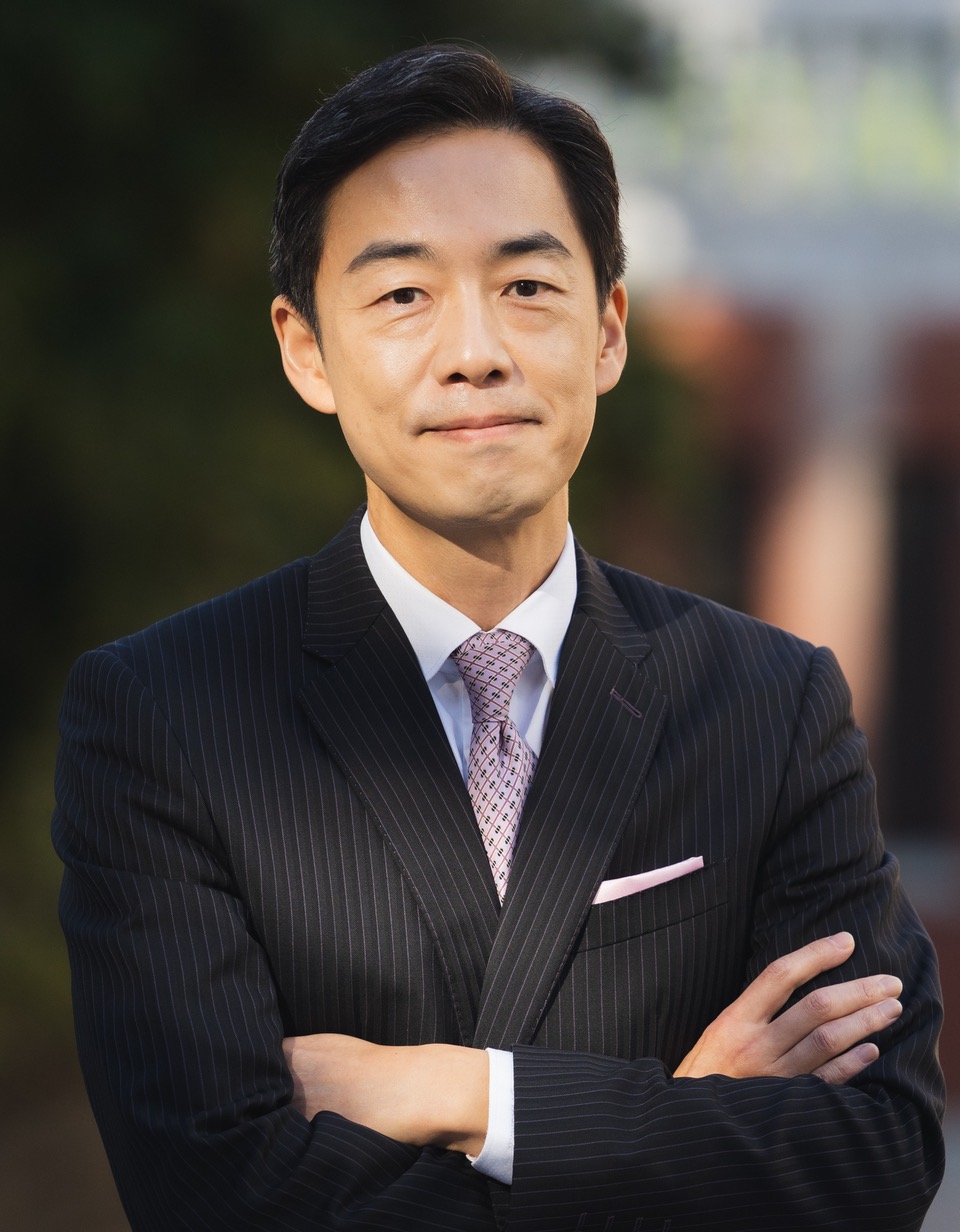
Dr. NISHINO Junya is a Professor, Department of Political Science, Faculty of Law, Keio University in Tokyo, Japan. He also serves as Director of the Institute of East Asian Studies and the Center for Contemporary Korean Studies at Keio University. His research focuses on contemporary Korean politics, international relations in East Asia and Japan-ROK, Japan-US-ROK relations.
Dr. Nishino was a Japan Scholar at the Woodrow Wilson International Center for Scholars and a Visiting Scholar at the Sigur Center for Asian Studies, George Washington University in 2012-2013. He was also an Exchange Scholar at the Harvard-Yenching Institute in 2011-2012. Previously he served as a Special Analyst on Korean Affairs in the Intelligence and Analysis Service of the Japanese Ministry of Foreign Affairs in 2006-2007, and was a Special Assistant on Korean Politics at the Japanese Embassy in Seoul in 2002-2004.
Dr. Nishino received his B.A. and M.A. from Keio University, and Ph.D. in Political Science from Yonsei University in South Korea.
Toda Peace Institute
The Toda Peace Institute is an independent, nonpartisan institute committed to advancing a more just and peaceful world through policy-oriented peace research and practice. The Institute commissions evidence-based research, convenes multi-track and multi-disciplinary problem-solving workshops and seminars, and promotes dialogue across ethnic, cultural, religious and political divides. It catalyses practical, policy-oriented conversations between theoretical experts, practitioners, policymakers and civil society leaders in order to discern innovative and creative solutions to the major problems confronting the world in the twenty-first century (see www.toda.org for more information).
Contact Us
Toda Peace Institute
Samon Eleven Bldg. 5thFloor
3-1 Samon-cho, Shinjuku-ku, Tokyo 160-0017, Japan
Email: contact@toda.org