Venezuela and the UN’s Proxy War Moment
Jordan Ryan
January 5, 2026
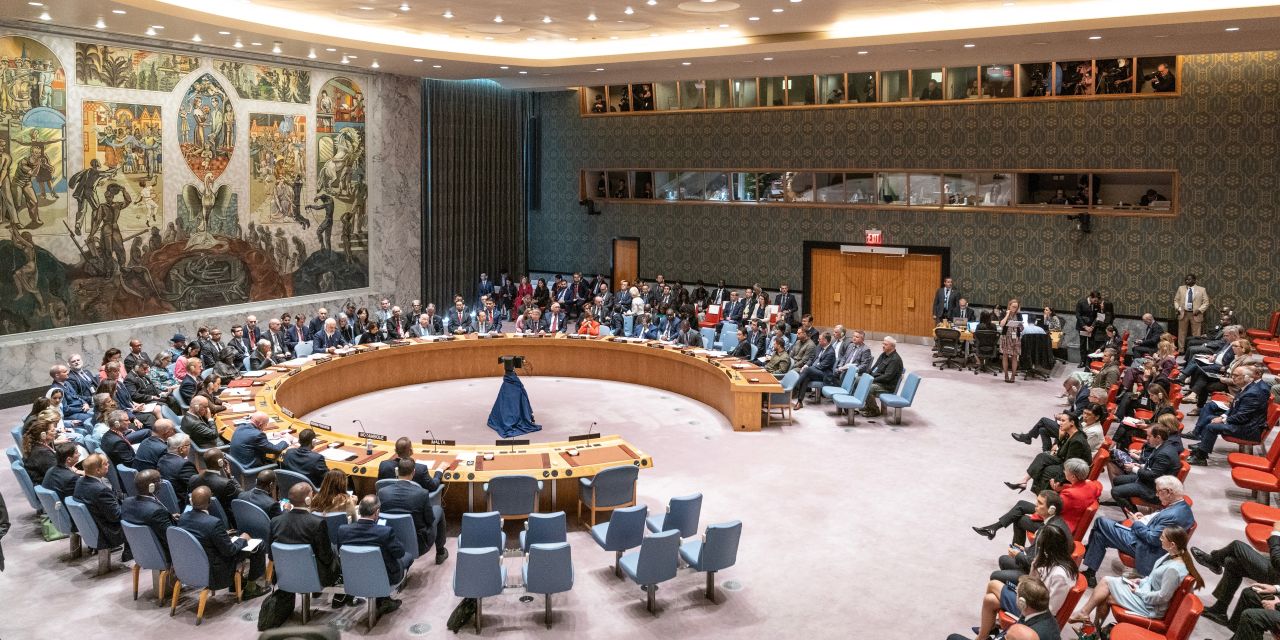
Image: Lev Radin / shutterstock.com
The United States military intervention in Venezuela, culminating in the capture of Nicolás Maduro on 3 January 2026, has been framed in starkly different ways. One interpretation, advanced by seasoned observers of the United Nations, views the operation as a problematic but understandable attempt to enforce international accountability against a regime that has systematically dismantled democratic institutions over the past decade, most notably following the contested 2018 election and the disputed 2024 vote. Another, increasingly influential, dismisses the stated justifications as political theatre, arguing instead that the intervention was primarily intended to dislodge Chinese, Iranian, and Russian influence from the Western Hemisphere.
For the United Nations, the question now before the Security Council—scheduled to convene on 5 January at the request of Colombia, Russia, and China—extends well beyond the legality of a single action. Venezuela has become a test case for how the international system confronts a new form of great power competition, one waged less through formal war than through economic leverage, technological control, and proxy military presence. How the UN responds will shape not only Venezuela’s future but the organisation’s relevance in an era where the boundaries between peace, conflict, and strategic competition have grown increasingly blurred.
Those defending the intervention as an act of international law enforcement point to a compelling moral record. Venezuela remains under investigation by the International Criminal Court for crimes against humanity, following a determination that there is a reasonable basis to believe such crimes were committed, particularly in the context of detention. While no arrest warrant has been issued against Maduro personally, the investigation was authorised to resume in 2023 after Venezuela’s appeal was rejected. In parallel, the UN’s Independent International Fact-Finding Mission has documented systematic patterns of extrajudicial killings, arbitrary detention, enforced disappearances, torture, and sexual and gender-based violence. From this perspective, the central challenge is the international community’s persistent inability to protect populations when state authorities themselves become the primary agents of repression.
Yet the unilateral nature of the intervention remains its central flaw. Military action undertaken without Security Council authorisation—regardless of its stated intent—risks corroding the very rules-based order it claims to defend. It sets a precedent in which powerful states act as judge, jury, and enforcer, directly contradicting the UN Charter’s core principles of sovereign equality and collective security. In his response to the strikes, the Secretary-General stated that he was “deeply alarmed” by the use of force and warned that it constituted “a dangerous precedent,” expressing deep concern that “the rules of international law have not been respected.” When enforcement is divorced from legality, the authority of law itself is weakened.
This tension has been echoed across the UN system. The Secretary-General and senior UN officials have reiterated that the Charter is not an optional instrument and that Article 2’s prohibition on the threat or use of force applies to all Member States without exception. At the same time, UN human rights mechanisms have stressed that the illegality of an intervention does not erase responsibility for long-standing crimes committed by Venezuelan authorities. The challenge, then, is not to choose between accountability and legality, but to uphold both without allowing one to hollow out the other.
A more unsettling interpretation of events has gained prominence in the immediate aftermath of the operation. Analyses published by institutions such as the Atlantic Council and Chatham House, alongside assessments circulating among defence and security analysts, point to Venezuela’s evolution into a convergence point for multiple United States adversaries. Chinese involvement in critical mineral extraction, Iranian military-industrial cooperation, and Russian advisory deployments have increasingly been viewed as part of a coordinated strategic challenge rather than isolated engagements. From this vantage point, the intervention reflects a shifting risk calculus rather than a sudden response to human rights abuses that had persisted for years.
This interpretation highlights the Security Council’s growing predicament. Condemning the intervention on purely legal grounds, without addressing the underlying security competition that drove it, risks appearing irrelevant to the strategic calculus of major powers. Yet remaining silent would signal acceptance of a model of unilateral action that others could readily replicate. In this sense, Venezuela is not merely a national crisis but a proxy theatre in which larger geopolitical rivalries are being tested against the limits of the Charter system.
The Council now finds itself grappling with a problem the Charter was never designed to address directly. The post-1945 system sought to regulate armed conflict between states. Today’s strategic environment is defined by economic coercion, proxy forces, private military actors, and hybrid forms of warfare that blur legal and political categories while remaining largely outside existing enforcement mechanisms. Venezuela is less an anomaly than a symptom of this transformation.
International reactions have reflected these tensions. China, Russia—notwithstanding its own recent military interventions—and Iran have condemned the operation as a violation of sovereignty, while several right-leaning governments in Latin America, including Argentina and El Salvador, have welcomed it as an opportunity for democratic transition. European responses have been notably cautious, seeking to balance support for democratic norms with reaffirmation of the primacy of international law. The fragmentation of these responses underscores the absence of a shared framework for addressing crises that sit at the intersection of security competition and international legality.
If the United Nations is to remain relevant, adaptation is unavoidable. The Venezuela crisis should prompt a serious and sustained conversation about how the Charter is interpreted and applied in a multipolar world. As the organisation approaches its 80th anniversary, the gap between the Charter’s constitutional ambitions and contemporary political realities has become increasingly difficult to ignore. The Charter was conceived not as a static text, but as a living framework for collective security.
That evolution must now be taken seriously. Above all, the Security Council must find ways to restrain unilateral action without ignoring genuine security concerns that, if left unaddressed, will continue to bypass multilateral institutions altogether. It requires tools to address economic coercion, including the strategic manipulation of critical supply chains. And it needs clearer mechanisms to assess and respond to proxy military activity and hybrid threats that fall short of traditional armed conflict.
The immediate priority remains de-escalation and a negotiated political path that respects the rights and sovereignty of the Venezuelan people. Yet the broader challenge is institutional. The UN must demonstrate that the Charter can still function as a constitutional anchor in an era of strategic rivalry. Multilateralism cannot depend on the restraint or temperament of individual governments. It depends on a Security Council capable of constraining power, commanding broad legitimacy, and grounding collective action in law.
The Charter’s framers understood that peace required self-restraint as much as resolve. That insight remains as relevant today as it was in 1945. The task now is not to defend the Charter rhetorically, but to ensure that it continues to function as a living foundation for international order.
Related articles:
The US National Security Strategy Returns to the World of Power Politics (3-minute read)
The ‘Donroe Doctrine’ (3-minute read)
Trump’s Attacks on BRICS Could Strengthen Its Cohesion (3-minute read)
Exclusive Geopolitics and Its Costs In Terms of Peace Policy (3-minute read)