Middle Powers After Davos
Jordan Ryan
January 23, 2026
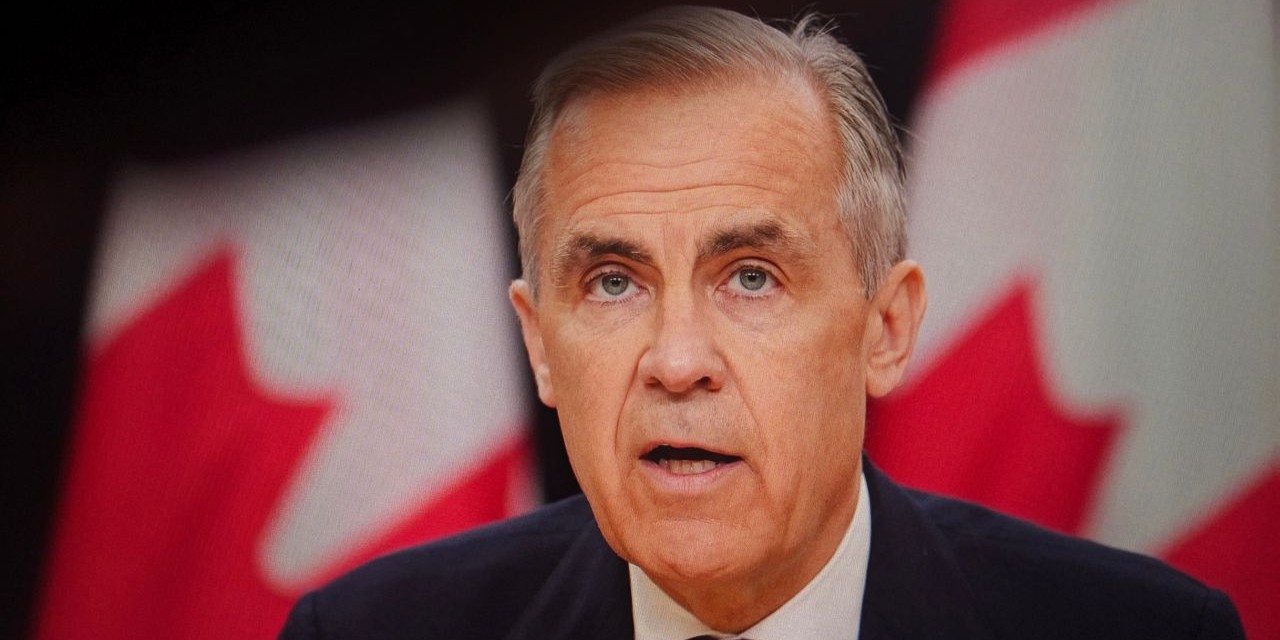
Image: FotoField / shutterstock.com
At the World Economic Forum in Davos this week, Canada’s Prime Minister Mark Carney delivered a speech that cut against the prevailing diplomatic instinct to soften uncomfortable truths. Speaking at a gathering long associated with affirming confidence in the global economic order, Carney argued that the “rules-based international order” no longer operates as advertised, and that the world is experiencing a rupture rather than a gradual transition. Coming from the leader of a Group of Seven (G7) country with a strong multilateral tradition, the intervention was notable not for its provocation, but for its candour. It reflected a wider reassessment among middle powers about how to navigate a world defined by great-power rivalry, weaponised interdependence, and weakened global institutions.
Carney’s argument rests on a consequential observation: economic integration, once treated as a source of mutual benefit and mutual constraint, has become a vector of coercion. Trade rules, financial infrastructure, supply chains, and technological dependencies are now routinely weaponised. In this environment, the institutions that middle powers once relied upon to mitigate asymmetry, including the United Nations, the World Trade Organization, and the Paris climate framework, have seen their authority erode. Their continued existence is not in question; their capacity to shape outcomes increasingly is.
Rather than calling for a return to an earlier era, Carney rejects nostalgia as a strategy. Drawing on Václav Havel’s warning about “living within a lie,” he suggests that repeating the language of a rules-based order that no longer constrains the powerful risks hollowing out the very values it claims to uphold. The challenge is to stop performing rituals disconnected from reality and to build arrangements capable of functioning under contemporary conditions.
The alternative Carney advances is “values-based realism,” a formulation borrowed from Finland’s President Alexander Stubb. Middle powers should remain principled in their commitment to sovereignty, territorial integrity, human rights, and the prohibition on the use of force, while being pragmatic about interests, divergent norms, and the limits of persuasion. Cooperation will increasingly take the form of variable geometry, with different coalitions formed for different problems, built on overlapping values and interests rather than universal consensus. Canada, with a population of forty-one million, has itself moved rapidly in this direction, signing twelve trade and security agreements across four continents in six months while joining European defence procurement arrangements.
Carney’s speech reflects a broader recalibration rather than an isolated provocation. In his address to the UN General Assembly, President Stubb acknowledged that the post–Cold War order has ended while insisting that values must still underpin state behaviour. Secretary-General António Guterres, in his New Year address, warned of a world “brimming with conflict, impunity, inequality, and unpredictability,” even as he reaffirmed the UN Charter as the non-negotiable basis for cooperation.
What emerges is a wider strategic shift. Across regions, states without hegemonic leverage are seeking greater strategic autonomy in energy, food, defence, finance, and critical minerals. They are deepening networks of trade agreements, security partnerships, and issue-specific coalitions to reduce vulnerability and diversify risk. Sovereignty is no longer grounded primarily in rules, but in resilience, defined as the capacity to withstand pressure without capitulation. Collective investments in resilience, Carney argues, offer a preferable alternative to a world of national fortresses, but they depend on coordination among states willing to act together.
For multilateral institutions, and for the United Nations in particular, this shift poses a serious test. Variable-geometry coalitions and plurilateral arrangements can deliver results more quickly than universal bodies constrained by consensus and vetoes. If middle powers increasingly pursue cooperation outside the UN framework, the organisation risks marginalisation, not because it lacks normative relevance, but because it is perceived as insufficiently responsive to contemporary strategic realities.
Carney’s intervention also points to a potential constituency for UN renewal. Middle powers have the most to lose from a fragmented world of coercion and rivalry, and the least capacity to shape outcomes alone. Their turn toward values-based realism reflects frustration with existing multilateral arrangements, not indifference to collective governance. This creates an opening, provided the UN can demonstrate that it can contribute meaningfully to resilience rather than merely preserving procedure.
Havel’s framework has particular resonance here. Applied to multilateralism, “living in truth” means acknowledging openly where norms are eroding, where enforcement is selective, and where institutional authority has weakened. For the United Nations, this does not imply abandoning foundational values. It requires applying them more consistently and translating them into capabilities suited to a harsher environment. A resilient UN must be able to operate credibly amid weaponised interdependence, contested norms, and shifting coalitions.
These considerations bear directly on current reform efforts, including the Secretary-General’s UN80 initiative ahead of the organisation’s eightieth anniversary. Managerial improvements and efficiency gains are necessary, but insufficient, if the UN is perceived as disconnected from the realities Carney describes. Resilience cannot be reduced to organisational streamlining alone. It requires the capacity to support prevention, govern technological power, reduce exposure to coercion, and provide platforms through which middle powers can act collectively without defaulting to exclusive blocs.
Carney’s emphasis on consistency is particularly telling. Applying different standards to allies and rivals undermines legitimacy and weakens norms. For the United Nations, this underscores the importance of protecting human rights mechanisms, maintaining principled approaches to sovereignty and territorial integrity, and resisting selective enforcement.
The central question raised by Carney’s speech is whether middle powers will use their growing emphasis on resilience to reinforce universal institutions or to construct parallel arrangements that bypass them. The United Nations remains indispensable, but it is no longer self-sustaining. Its future relevance will depend on whether it can adapt to the world as it is, while preserving the values that justify its existence.
Davos has long served as a venue for affirming confidence in the global order. Carney’s intervention was striking precisely because it refused reassurance. The old order is not coming back, and pretending otherwise only delays necessary action. For the United Nations, the challenge is not to restore an idealised past, but to demonstrate that collective governance remains possible, and necessary, in a world defined by rivalry and risk. Whether middle powers choose to invest in that endeavour, or move decisively beyond it, will shape the future of multilateralism far more than any single reform initiative.
Related articles by this author:
The UN’s Withering Vine: A US Retreat from Global Governance (3-minute read)
Venezuela and the UN’s Proxy War Moment (3-minute read)
The Danger of a Transactional Worldview (3-minute read)
The Choice Is Still Clear: Renewing the UN Charter at 80 (3-minute read)