Is China’s “Great Power Status” a Plus or Minus?
Daiju Wada
December 24, 2025
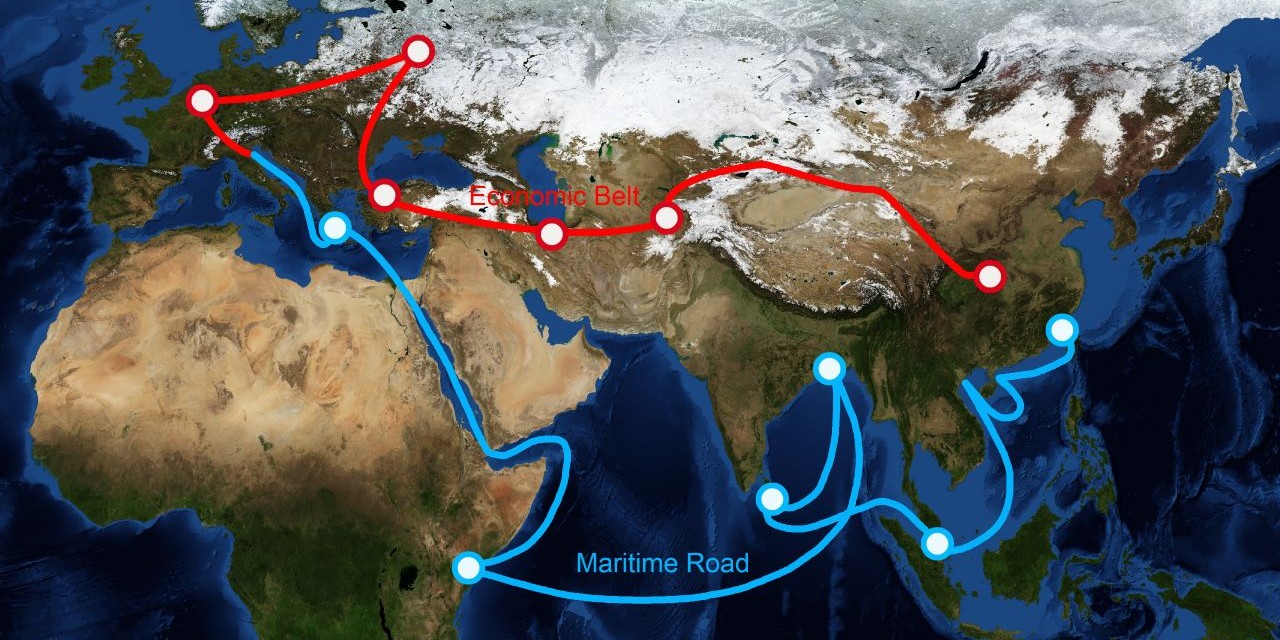
Image:YIUCHEUNG/ shutterstock.com
It is a well-known fact that Japan, Taiwan, and Western nations are increasingly concerned about the rapid political, economic, and military rise of China—its attainment of ‘great power status’—which heightens security risks, particularly the prospect of a Taiwan contingency. China’s ascent is causing significant structural shifts in the existing international order, and its pattern of behaviour is under global scrutiny. The continuous escalation of pressure on Taiwan in particular, is undeniably a primary factor threatening regional stability.
However, the phenomenon of a rising China contains a paradoxical aspect: while it is a factor allowing the Xi Jinping regime to intensify pressure on Taiwan, it can simultaneously serve as a deterrent in the context of a potential Taiwan contingency. Attaining great power status does not simply signify an increase in power; it generates a strategic dilemma by bringing with it international responsibilities constraining freedom of action.
The Xi Jinping regime is strategically leveraging China’s great power status to strengthen its position in the international community. Central to this strategy is the proactive expansion of the Belt and Road Initiative—a massive economic infrastructure concept—into the Global South and European nations. This includes a deliberate image strategy of positioning itself as a guardian of free trade.
Since the advent of the Trump administration, the United States has exhibited a marked tendency toward protectionist policies and inward focus, leading to a visible decline in its influence in the world economy. China views this political vacuum as a prime opportunity to exploit. As the US, once the engine of the global economy and the champion of free trade, retreats from its global strategic role, China promotes itself globally as the standard-bearer for free trade. By advancing infrastructure investment and economic cooperation with the Global South and Europe, China is seeking to establish itself as an indispensable partner for these nations’ economic growth.
By establishing this international standing, China puts itself in a position where it is able to broaden the perception that it is not merely a nation seeking hegemony, but one that contributes to international order and economic stability. This banner of the ‘guardian of free trade’ is a critical diplomatic asset for securing international support and understanding that would be undermined if China were to contemplate military action, especially one that fundamentally alters the existing order. Building status as a great power and fostering international trust are indispensable elements for achieving the ‘great rejuvenation of the Chinese nation’ that the country seeks. Maintaining this trust is paramount, as its loss could potentially destabilize China’s entire global diplomatic strategy. Viewed in this light, China is in a situation where it cannot afford to apply excessive pressure in its recent relations with Japan. This is solely due to a self-restraint mechanism working within China to maintain its image as a great power and preserve international trust.
For instance, during recent periods of heightened tension between Japan and China, such as the radar illumination incident involving Chinese vessels, the Chinese side focused on asserting that the activation of search radar by aircraft carrier-based planes during flight training is a routine practice for all countries, striving to convey that the act was not intentional military intimidation. This stance is not mere diplomatic rhetoric; it is based on a larger strategic calculation. If China were to adopt an excessively harsh or intimidating posture toward Japan—such as clear military threats or actions that deviate from international law—Japan could strongly voice its concerns to many nations in Asia, Africa, Latin America and Europe. Japan has a long-standing track record of trading with and providing economic and technical assistance to developing countries, which has built strong trust. If Japan were to claim that “China is disregarding international norms and engaging in unilateral intimidation,” it is highly probable that caution or even reticence toward China would spread among the Global South and European countries.
This is the scenario China most wants to avoid. The Global South and Europe are the central elements of China’s Belt and Road strategy and crucial partners for the success of its ‘guardian of free trade’ image strategy. Losing their trust would critically impede the expansion of China’s global influence. By virtue of acting as a great power, China is now in an environment where it must calculate the international impact of its actions more cautiously than before.
Thus, the reality of a rising China paradoxically exerts pressure—in the form of self-restraint—on the Xi Jinping regime. This pressure is likely to act as a mitigating force, particularly in the context of a Taiwan contingency. If China were to initiate the use of force against Taiwan, it would risk fundamentally undermining the image it has cultivated internationally as a contributor to economic stability and a guardian of free trade. Not only would the US and others impose severe economic sanctions, but there is also a possibility that defection from China would spread among the Global South and European countries that the Xi regime values.
These risks now weigh heavily on China to avoid the use of outright force against other nations. The more China solidifies its great power status and elevates its standing as a stakeholder in the international community, the more cautious it becomes toward rash military action, especially a Taiwan contingency that would fundamentally shake the existing international order. Attaining great power status is not merely a domestic success story; it is a destiny accompanied by international responsibilities and constraints. The Xi Jinping regime is compelled to implement smart non-frightening diplomatic policies to maintain its global influence and achieve its international goals. While China’s rise increases tensions in the East Asian region, its newly won great power status imposes constraint on the actions of the Xi Jinping regime. Herein lies the significant paradox and dilemma for China today.
The international community, not least Japan, must calmly analyse the reality that the success of China’s great power status ironically functions as a powerful self-deterrent. To prevent unintended military confrontations in Northeast Asia and their expansion into broader conflicts, global actors must proactively assert that China’s elevated status necessitates a corresponding commitment to international responsibility.
There is room for debate as to whether the attainment of great power status fosters restraint and a sense of responsibility in foreign policy, or whether it reinforces a nation’s belief that it can rectify perceived historical injustices through coercion or the outright use of force. While President Vladimir Putin of Russia appears to have opted for the latter to rectify national decline, it does not follow that President Xi Jinping will make a similar choice in a situation of growing power. The international influence and the global economic integration of contemporary China are not comparable to those of Russia; as such, China likely faces a far more profound dilemma as a result of its ascent. Consequently, it is highly significant for the international community, including Japan, to persistently demand that China fulfil its responsibilities as a major stakeholder in the global order.
Related articles:
Policy Brief No.226: Trust but Talk: How to Manage China–US Strategic Competition (10-minute read)
Policy Brief No. 224: Toward A ‘Reassurance Spiral’ in US-China Relations (10-minute read)