Trust, Governance, and Climate Disasters in the Indo-Pacific
Sohail Akhtar
May 01, 2026
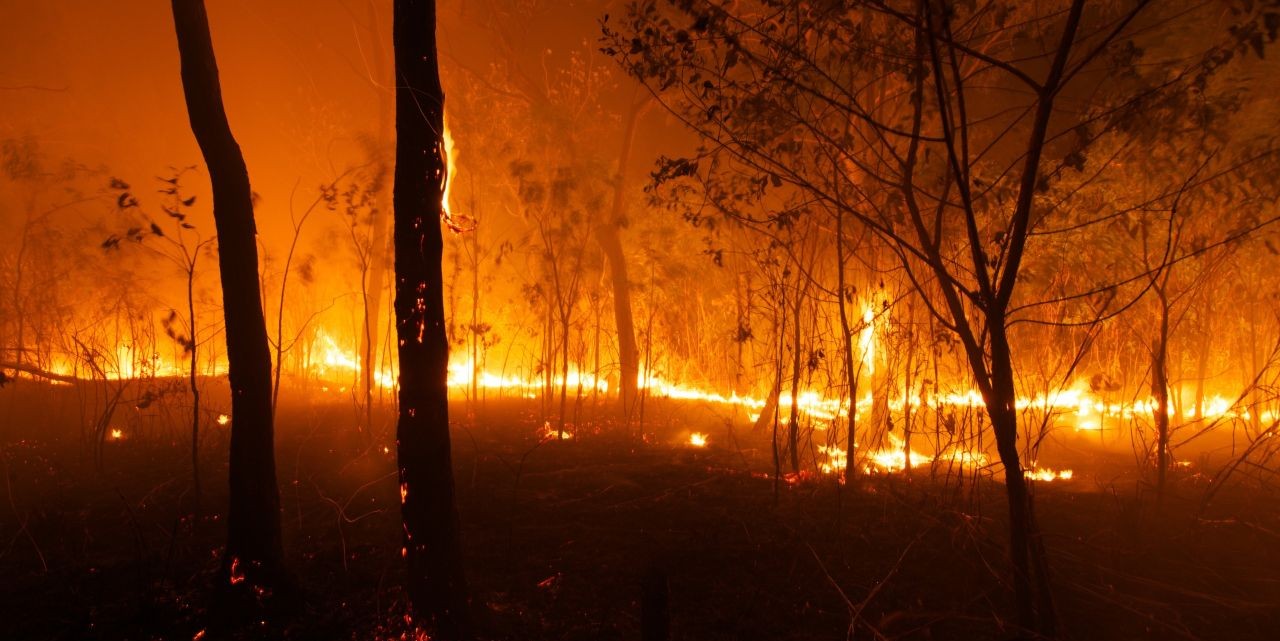
Image: Sebastian Riebolge / shutterstock.com
This report argues that climate emergencies generate epistemic stress: situations in which uncertainty and competing narratives disrupt shared understandings of risk and appropriate response. Drawing on recent bushfire events and subsequent reviews of disaster governance in Australia, the report shows how disagreements over climate attribution, institutional readiness, and political accountability can complicate emergency coordination and weaken public trust even where operational capacity remains strong. The report concludes with policy recommendations for Indo-Pacific governments, regional organisations, and international partners aimed at strengthening crisis communication, institutional credibility, and the capacity of democratic systems to manage contested knowledge during climate emergencies.
Contents
- Abstract
- Key messages
- 1. Climate emergencies as democratic stress tests
- 2. Institutional trust as a source of epistemic stress
- 3. Normalisation and denial as epistemic stress multipliers
- 4. Governing epistemic stress in climate crises
- 5. Policy implications and recommendations
- Conclusion
Abstract
Climate emergencies increasingly challenge not only disaster preparedness but also the functioning of democratic governance. Recent events across the Indo-Pacific, including severe flooding in New Zealand, bushfires in Australia and recurring typhoon disasters and flooding in Philippines have triggered public disputes over climate risk, preparedness, and institutional responsibility. This report argues that such crises generate epistemic stress: situations in which uncertainty and competing narratives disrupt shared understandings of risk and appropriate response.
Drawing on recent bushfire events and subsequent reviews of disaster governance in Australia, the brief shows how disagreements over climate attribution, institutional readiness, and political accountability can complicate emergency coordination and weaken public trust even where operational capacity remains strong. In politically polarized environments, these disputes may also intensify social tensions and complicate efforts at crisis coordination and conflict prevention.
The report concludes with policy recommendations for Indo-Pacific governments, regional organisations, and international partners aimed at strengthening crisis communication, institutional credibility, and the capacity of democratic systems to manage contested knowledge during climate emergencies.
Key messages
- Climate emergencies increasingly generate disputes over the interpretation of risk, responsibility, and scientific evidence. This report describes these dynamics as epistemic stress.
- Recent climate disasters in the Indo-Pacific, including the 2026 floods in New Zealand and bushfires in Victoria during January–February illustrate how contested narratives can complicate emergency response and recovery.
- Where trust in institutions is weakened, climate crises can intensify political polarization and governance tensions, with implications for conflict prevention and democratic resilience.
- Strengthening climate resilience therefore requires not only operational preparedness but also clearer crisis communication, stronger institutional safeguards, and greater regional cooperation.
1. Climate emergencies as democratic stress tests
Across the Indo-Pacific, extreme climate events are occurring with increasing frequency and political visibility. In early 2026, severe storms and widespread flooding in New Zealand displaced communities and caused extensive damage across parts of the North Island, prompting renewed debate over climate preparedness and government response.[1] During January and February 2026 alone, bushfires in Victoria affected more than four hundred thousand hectares of land and placed significant pressure on emergency services,[2] while also generating public controversy over institutional readiness, resource allocation, and climate attribution. Political disagreements over the resourcing of the Country Fire Authority (CFA), including competing claims from government and opposition figures, unfolded during the bushfire crisis itself, illustrating how climate emergencies can become arenas of political contestation that disrupt shared understandings of risk and responsibility at precisely the moment coordinated response is most needed.[3] These episodes illustrate how climate emergencies increasingly generate disputes not only over response but also over the interpretation of risk, responsibility, and scientific evidence. In Victoria, for example, recent bushfires have been accompanied by political disputes over the resourcing of the Country Fire Authority (CFA) and the adequacy of government preparedness,[4] illustrating how climate disasters can quickly become arenas of political contestation. Similar governance tensions have emerged elsewhere in the region. In the Philippines, for example, recurring typhoon disasters and flooding have repeatedly triggered public debate over disaster preparedness, urban planning, and the adequacy of government response.[5] These episodes illustrate how climate emergencies increasingly generate disputes not only over response but also over the interpretation of risk, responsibility, and scientific evidence.
In highly polarised political environments, such disputes can escalate beyond technical disagreement, contributing to social polarisation and governance tensions that complicate efforts at crisis coordination and conflict prevention.[6] The 2019–2020 Black Summer bushfires remain an important reference point for understanding these dynamics. Although the fires occurred more than six years ago, they continue to shape public debate, policy reform, and scholarly discussion on disaster governance in Australia. The scale and duration of the crisis prompted extensive institutional reflection, including the Royal Commission into National Natural Disaster Arrangements as well as subsequent parliamentary inquiries, policy reviews, and academic analyses. As a result, Black Summer remains a critical case for examining how climate emergencies can generate sustained disputes over preparedness, responsibility, and institutional credibility.
While bushfires have long been a recurring feature of the Australian landscape, the scale, duration, and compounding impacts of the Black Summer fires placed significant pressure on existing systems of preparedness, response, and recovery. The Black Summer bushfires unfolded over a prolonged ‘campaign season’ under extreme climatic conditions. They were followed closely by other hazards, including floods and the COVID-19 pandemic, highlighting the challenges facing governance frameworks designed primarily for episodic emergencies in the context of increasingly frequent and severe climate-driven disasters.[7] The fires burned over eighteen million hectares nationwide and produced social, economic, ecological, and health impacts that extended well beyond the immediate emergency period.[8] Yet the crisis cannot be understood simply as a failure of capacity or preparedness. Australia entered the 2019–2020 bushfire season with extensive disaster risk management arrangements, highly professional emergency services, and strong community-level social capital, particularly through volunteer firefighting networks.[9] What emerged instead was sustained public contestation over climate attribution, institutional readiness, and the distribution of responsibility across levels of government. These dynamics illustrate what this report describes as epistemic stress: a condition in which uncertainty, competing narratives, and politicized interpretations disrupt shared understandings of risk, responsibility, and authority during crises, making it harder for institutions and communities to agree on how to respond. Under such conditions, institutions may retain operational capacity but struggle to sustain broadly accepted interpretations of events and appropriate responses. These disputes intensified under conditions of uncertainty and persisted in the recovery phase, shaping public perceptions of institutional credibility and legitimacy long after the fires were extinguished.[10]
Climate emergencies place distinctive pressures on democratic governance because they combine urgency, uncertainty, and disruption with the need for rapid collective compliance. Effective response therefore depends not only on operational capacity but on the ability of public institutions to sustain broadly accepted interpretations of risk, responsibility, and authority. During the Black Summer bushfires, competing claims concerning climate change, land management practices, funding levels, and volunteer capacity circulated across political, media, and digital arenas, complicating efforts to establish a shared frame of reference for action.[11] The persistence of these disputes, irrespective of their factual grounding, weakened the conditions under which coordinated response and post-crisis consensus could be sustained.
Viewed in this way, climate emergencies function as governance stress tests: moments in which the resilience of institutional legitimacy and public trust is tested under conditions of epistemic strain. Subsequent fire seasons and heatwave events suggest that these dynamics are no longer exceptional but increasingly characteristic of climate governance in Australia.[12] Shifting analytical attention from physical hazard alone to the democratic conditions of response and recovery highlights the importance of trust, shared meaning, and institutional credibility as central components of climate resilience.
2. Institutional trust as a source of epistemic stress
Institutional trust plays a crucial role in shaping how societies respond to large-scale emergencies. In climate-related crises, emergency services, public agencies, and political authorities are not only operational actors but also epistemic ones: they provide authoritative interpretations of risk, set priorities for action, and mediate uncertainty on behalf of the public. When confidence in these institutions is strained,[13] disagreement over facts, responsibilities, and appropriate responses can quickly intensify and complicate coordinated action during and after emergencies.
In politically polarized environments, such institutional distrust can also heighten social tensions, as competing narratives about responsibility and preparedness become sources of political confrontation and community division. Recent climate emergencies across the Indo-Pacific including bushfires in Australia and severe flooding in New Zealand illustrate how such tensions can emerge during periods of crisis.[14] Despite the presence of well-established emergency management institutions and experienced personnel, public debate increasingly focused on the adequacy of preparedness, funding levels, and volunteer capacity. Questions concerning the resourcing of firefighting agencies, the balance between professional and volunteer forces, and the division of responsibility between state and federal governments became prominent features of political and media discourse.[15] These debates did not emerge solely after the fires had subsided but unfolded during the emergency itself, intersecting with real-time decision-making and response efforts.
Importantly, such contestation did not necessarily reflect a collapse of institutional capability. Reviews and inquiries conducted after Black Summer emphasized that many aspects of operational response were effective under extreme conditions, while also identifying areas requiring reform and better coordination.[16] However, the coexistence of institutional competence with visible disagreement over authority and accountability proved consequential. As competing claims circulated, public confidence in official assessments of risk and readiness became uneven, particularly in highly affected communities.[17] This unevenness created conditions in which authoritative guidance competed with alternative interpretations, weakening the stabilizing role that trusted institutions typically play during crises.[18]
These dynamics illustrate how institutional trust can itself become a source of epistemic stress. When emergency institutions are drawn into partisan or politicized debates, their capacity to function as neutral arbiters of risk could be diminished. Disputes over funding trajectories, staffing levels, or responsibility allocation may be legitimate subjects of democratic scrutiny, but when they intensify during active or unfolding emergencies, they can blur lines between evaluation and accusation. In such contexts, uncertainty is not only a product of complex environmental conditions but also of contested institutional narratives.
In Australia, recent fire seasons and the heatwave events in 2026 suggest that this pattern has persisted beyond Black Summer.[19] Public controversies surrounding emergency service resourcing, government preparedness, and climate attribution continue to surface during periods of heightened risk, often amplified through digital media.[20] These episodes indicate that epistemic stress is not confined to singular catastrophic events but may be becoming a recurrent feature of climate governance, with potential implications for social cohesion and political stability during periods of heightened environmental risk.[21]
3. Normalisation and denial as epistemic stress multipliers
Public interpretations of climate emergencies play a critical role in shaping collective response. Alongside debates over institutional performance, climate crises are increasingly accompanied by narratives that frame extreme events as routine, inevitable, or unrelated to climate change.[22] In the Australian context, bushfires and floods have largely been framed [23] as a natural and endemic feature of the landscape, denying their connection to climate change.[24] Although major emergencies can prompt temporary shifts in public perception, these changes have not consistently translated into sustained re-evaluations of risk or causation.[25] While historically accurate in a limited sense, this framing can take on a political function during periods of heightened risk, normalising exceptional events and blunting perceptions of urgency.[26]
During the 2019–2020 bushfire season, political and media commentary frequently invoked the idea that Australia has ‘always had bushfires’, framing extreme fire events as ordinary climatic variability rather than as indicators of escalating climate risk.[27] Such narratives do not necessarily deny the occurrence of fires but contest their interpretation, particularly the role of climate change in shaping their frequency, intensity, and duration. By shifting attention away from systemic drivers and toward geographical inevitability, these framings can weaken the perceived necessity for institutional reform, long-term adaptation, or mitigation measures.
Climate denial in this context often operates less as outright rejection of scientific evidence and more as a shift in how climate emergencies are interpreted and discussed. Rather than disputing data directly, denial narratives often recast climate emergencies as exaggerated or politicized, framing them as instruments of contested policy agendas rather than as governance challenges requiring collective response. This reframing creates ambiguity around responsibility and response, particularly during active crises when clarity is most needed,[28] potentially delaying decision-making, weakening public compliance with emergency directives, complicating coordination between agencies, and increasing the risk that precautionary measures are contested or ignored.
In polarized political environments, such disputes can deepen divisions between political actors, communities, and institutions, transforming climate disasters from shared emergencies into arenas of political confrontation. [29] The interaction between normalization and denial intensifies epistemic stress by fragmenting shared understandings of risk. When a significant portion of public discourse treats climate-driven emergencies as routine or unavoidable, institutional warnings and precautionary measures may be perceived as overreach rather than protection. This complicates crisis communication, as authorities must address immediate operational demands while also contesting narratives that erode the legitimacy of preventative action.
Importantly, these dynamics do not preclude institutional response or accountability. Public inquiries and royal commissions often arise precisely because shared understandings have broken down, functioning as attempts to restore authoritative narratives and institutional trust. Yet when their findings become entangled in ongoing contestation, epistemic stress extends beyond emergency response into recovery and preparedness phases, affecting the long-term democratic capacity to adapt to climate risk. Understanding these narratives as governance challenges rather than simply as problems of misinformation highlights the need to integrate public meaning-making into climate resilience strategies, particularly in contexts where contested interpretations of climate risk may intersect with broader political tensions.
4. Governing epistemic stress in climate crises
Climate emergencies place democratic institutions under a distinct form of pressure that extends beyond material capacity and operational performance. This pressure can be understood as epistemic stress: a condition in which uncertainty, contested narratives, and politicized interpretation undermine the shared understandings required for coordinated collective action.[30] Epistemic stress emerges when democratic institutions such as emergency services, public health agencies, disaster management authorities, and political leadership, under a distinct form of pressure that extends beyond material capacity and operational performance, struggle to maintain credibility as authoritative interpreters of risk, responsibility, and appropriate response under conditions of heightened disruption.
Epistemic stress differs from ordinary political disagreement. Democratic systems are designed to accommodate contestation and plural perspectives. However, during climate emergencies, disagreement over basic facts, causal attribution, or institutional roles can interfere with time-sensitive decision-making and public compliance. When authoritative knowledge is fragmented or persistently challenged, uncertainty becomes socially amplified, weakening the capacity of institutions to mobilize collective action even when formal authority and technical expertise remain intact.
Managing these knowledge-related disputes therefore becomes a central challenge of challenge of climate governance.[31] It requires attention not only to what institutions do, but to how they communicate uncertainty, justify precautionary measures, and sustain public trust across crisis phases. The Royal Commission into National Natural Disaster Arrangements highlighted the importance of consistent, timely, and authoritative information flows linking all levels of government to communities.[32] These findings underscore that epistemic capacity, the ability to generate, coordinate, and communicate credible knowledge is as critical as operational capacity in managing climate emergencies.
The challenge of epistemic stress is not confined to Australia. Across the Indo-Pacific, democracies and hybrid political systems are confronting increasingly frequent climate shocks alongside fragmented media environments, politicized climate discourse, and declining institutional trust.[33] In such contexts, climate emergencies risk becoming catalysts for deeper governance instability, particularly where emergency powers, resource allocation, or security interventions intersect with contested legitimacy. In parts of the Indo-Pacific where social tensions, environmental pressures, or political rivalries are already present, disputes over climate risk and responsibility can further intensify political polarization and complicate efforts at conflict prevention.[34]
Understanding epistemic stress as a governance problem shifts the focus of climate resilience from technical adaptation alone toward the democratic conditions that enable effective response. It highlights the need for institutions capable of sustaining shared meaning under pressure, managing uncertainty transparently, and insulating emergency governance from destabilizing political escalation. Addressing epistemic stress does not require suppressing dissent but rather strengthening the institutional and communicative foundations through which democratic contestation can coexist with coordinated action during crises.
5. Policy implications and recommendations
Climate resilience is often framed primarily in terms of operational capacity: the availability of emergency services, infrastructure resilience, and the logistical coordination required to respond to disasters. The analysis presented in this report suggests that such capacities, while essential, are not sufficient on their own. Climate emergencies also generate epistemic pressures that can weaken the credibility of institutions and complicate coordinated responses even when operational systems remain intact.
The experience of the Black Summer and recent bushfires in Victoria and subsequent public debates demonstrates that disagreement over risk interpretation, institutional responsibility, and climate attribution can persist throughout crisis and recovery phases. These dynamics indicate that disaster governance must address not only physical hazards but also the social and informational conditions under which collective action becomes possible. Strengthening democratic resilience to climate emergencies, therefore, requires greater attention to how institutions communicate uncertainty, sustain trust, and maintain credible authority during periods of heightened disruption.[35]
The following recommendations are directed toward Indo-Pacific governments, regional organisations, and international development partners seeking to strengthen institutional capacity to manage epistemic stress during climate-related emergencies.
5.1 STRENGTHEN COORDINATED CLIMATE RISK COMMUNICATION ACROSS GOVERNMENT LEVELS
Governments across the Indo-Pacific should establish integrated communication frameworks that coordinate national, provincial, and local messaging on climate-related hazards. Regional organisations such as the Association of Southeast Asian Nations (ASEAN) and the Pacific Islands Forum (PIF) could support the development of shared early-warning information platforms and regional communication protocols. Such frameworks should ensure that scientific assessments, operational updates, and precautionary guidance are communicated clearly and consistently across agencies, reducing opportunities for fragmented or contradictory interpretations of risk.[36]
5.2 PROTECT EMERGENCY INSTITUTIONS FROM POLITICIZED CONTESTATION DURING CRISES
Emergency services and disaster management agencies function not only as operational actors but also as authoritative interpreters of risk. National governments and parliamentary oversight bodies should develop cross-party norms and crisis communication protocols that minimize partisan contestation over operational decisions during active emergencies.[37] Safeguarding the perceived neutrality of emergency services, civil defence organizations, and disaster management agencies is essential for maintaining public trust and compliance during high-risk events.
5.3 INSTITUTIONALIZE POST-DISASTER LEARNING AND KNOWLEDGE TRANSLATION
National governments, together with regional disaster management bodies such as the ASEAN Coordinating Centre for Humanitarian Assistance on Disaster Management (AHA Centre) and the Pacific Islands Forum, should strengthen mechanisms that translate disaster inquiry findings into sustained institutional reform.Transparent monitoring of recommendation implementation can help ensure that lessons learned are systematically integrated into preparedness and adaptation strategies.
5.4 INVEST IN LONG-TERM CLIMATE RISK LITERACY AND PUBLIC ENGAGEMENT
Improving public understanding of climate-related hazards can reduce the influence of narratives that normalize or misinterpret extreme events. Governments, education ministries, and regional scientific institutions should expand public education initiatives, community engagement programs, and partnerships with universities, meteorological agencies, and civil society organizations to build long-term climate risk literacy. International development partners and bilateral donors can support these efforts through capacity-building programs and regional knowledge-sharing initiatives.
5.5 INTEGRATE EPISTEMIC RESILIENCE INTO DISASTER GOVERNANCE FRAMEWORKS
Indo-Pacific governments and regional bodies such as ASEAN, the Pacific Islands Forum, and the United Nations Office for Disaster Risk Reduction (UNDRR) should integrate epistemic resilience, defined here as the capacity of governing institutions to generate, communicate, and sustain trusted knowledge during periods of crisis into disaster risk reduction frameworks and climate adaptation strategies, into disaster risk reduction frameworks and climate adaptation strategies. Recognising the role of knowledge credibility, trust, and communication in shaping crisis outcomes can help governing institutions anticipate and manage the social and political dynamics that accompany climate emergencies.
Conclusion
As climate hazards intensify across Australia and the Indo-Pacific, disaster governance will increasingly depend not only on operational capacity but also on the ability of institutions to maintain credibility and public trust in the knowledge they provide under conditions of crisis. The experience of the Black Summer and recent bushfires in Victoria demonstrates that crises can strain democratic systems not only through physical disruption but also through contested interpretations of risk, responsibility, and authority. When shared understandings fragment, institutional credibility and coordinated response can become more difficult to sustain.
Strengthening epistemic resilience, the capacity of institutions to generate, communicate, and maintain trusted knowledge during crises should therefore become a central priority of climate governance. Addressing this challenge requires not only improved emergency management systems but also stronger communication frameworks, sustained public engagement, and institutional safeguards that protect emergency governance from destabilizing political contestation. In politically polarized environments, failures to manage these knowledge disputes can deepen social divisions and complicate efforts at crisis coordination and conflict prevention.
As climate shocks become more frequent across the Indo-Pacific, strengthening the ability of democratic institutions to sustain shared understandings of risk will be essential not only for effective disaster response but also for maintaining social cohesion and regional stability.
Notes
[1] “Weather Tracker: New Zealand Hit by Storms and Widespread Floods,” Environment, The Guardian, February 16, 2026, https://www.theguardian.com/environment/2026/feb/16/weather-tracker-new-zealand-hit-by -storms-and-widespread-floods
[2] Benita Kolovos and Benita Kolovos Victorian state correspondent, “More than 500 Structures Destroyed in Victoria’s Bushfires as 12 Major Blazes Continue to Burn,” Australia News, The Guardian, January 13, 2026, https://www.theguardian.com/australia-news/2026/jan/13/victorian-bushfire-threat-eases-structures-destroyed
[3] Benita Kolovos and Benita Kolovos Victorian state correspondent, “A Heated Dispute Is Playing out in Victoria over the CFA’s Funding. What’s Really Going on?,” Australia News, The Guardian, January 20, 2026, https://www.theguardian.com/australia-news/2026/jan/20/victoria-cfa-country -fire-authority -bushfire-funding-dispute
[4] “A Heated Dispute Is Playing out in Victoria over the CFA’s Funding. What’s Really Going on? | Victoria Bushfires 2026” The Guardian, accessed March 15, 2026, https://www.theguardian.com/australia-news/2026/jan/20/victoria-cfa-country – fire-authority -bushfire-funding-dispute
[5] Benjamin Franta et al., Climate Disasters in the Philippines, 2016. https://www.belfercenter.org/publication/climate-disasters-philippines
[6] Brian O’Neill et al., “Key Risks across Sectors and Regions,” in Climate Change 2022: Impacts, Adaptation and Vulnerability. Contribution of Working Group II to the Sixth Assessment Report of the Intergovernmental Panel on Climate Change, ed. Hans-Otto Pörtner et al. (Cambridge University Press, 2022).
[7] Royal Commission into National Natural Disaster Arrangements, “Report | Royal Commissions,” Royal Commissions, October 30, 2020, https://www.royalcommission.gov.au/natural-disasters/report
[8] Ten Impacts of the Australian Bushfires,” UN Environment Programme, January 22, 2020, https://www.unep.org/news-and-stories/story /ten-impacts-australian-bushfires
[9] Iftekhar Ahmed and Kylie Ledger, “Lessons from the 2019/2020 ‘Black Summer Bushfires’ in Australia,” International Journal of Disaster Risk Reduction 96 (October 2023): 103947, https://doi.org/10.1016/j.ijdrr.2023.103947
[10] Gabi Mocatta and Erin Hawley, “Uncovering a Climate Catastrophe? Media Coverage of Australia’s Black Summer Bushfires and the Revelatory Extent of the Climate Blame Frame,” M/C Journal 23, no. 4 (2020), https://doi.org/10.5204/mcj.1666
[11] Joshua Ettinger et al., “Social Media Messaging by Climate Action NGOs: A Case Study of the 2019–2020 Australian Black Summer Bushfires,” Oxford Open Climate Change, 3, no. 1 (n.d.), accessed February 24, 2026, https://dx.doi.org/10.1093/oxfclm/kgad011
[12] Kolovos and correspondent, “A Heated Dispute Is Playing out in Victoria over the CFA’s Funding. What’s Really Going on?”
[13] Australian Human Rights Commission, “Pandemic Probe: Statistics Can’t Capture the Loss of Trust and Confidence | Australian Human Rights Commission,” Australian Human Rights Commission, Australian Human Rights Commission, November 6, 2024, https://humanrights.gov.au/about-us/media-centre/opinion-pieces/opinion-pieces/pandemic-probe-statistics-cant-capture-loss-trust-and-confidence
[14] O’Neill et al., “Key Risks across Sectors and Regions.”
[15] Kerstin K. Zander et al., “Trends in Bushfire Related Tweets during the Australian ‘Black Summer’ of 2019/20,” Forest Ecology and Management 545, no. 2023 (2023): 121274, https://doi.org/10.1016/j.foreco.2023.121274
[16] Peter Christoff, “Black Summer Showed We’re Good in an Emergency but Bad in a Crisis,” Pursuit, University of Melbourne, accessed February 26, 2026, https://pursuit.unimelb.edu.au/articles/black-summer-showed-we-re-good-in-an-emergency -but-bad-in-a-crisis
[17] Jacqui Ewart and Margaret Cook, “Mind the Gap, Exploring the Expectation Gap in Political Leadership in Disasters: An Australian Case Study,” Risk, Hazards & Crisis in Public Policy 16, no. 1 (2025): e12300, https://doi.org/10.1002/rhc3.12300
[18] Anne Davies, “Australian Bushfires: How the Morrison Government Failed to Heed Warnings of Catastrophe,” Australia News, The Guardian, June 2, 2020, https://www.theguardian.com/australia-news/2020/jun/03/australian-bushfires-fois-shed-new-light-on-why -morrison-government-was-ill-prepared
[19] “Victoria’s CFA Funding Reaches Five-Year High, despite Cut Claims,” ABC News, January 19, 2026, https://www.abc.net.au/news/2026-01-20/victoria-cfa-funding-report-bushfires/106247456
[20] “Labor Accused of Cutting CFA Budget after Finally Releasing Missing Annual Report,” January 19, 2026, https://www.skynews.com.au/australia-news/politics/victorian-labor-government-accused-of-cutting-cfa-budget-by -55m-in-real-terms-after-finally -releasing-missing-202425-annual-report/news-story /04fa0bdffa01e720729c6779e228526f
[21] “AJEM October 2024 – Analysing Institutional Responses towards Disaster Risk Reduction: Challenges and Antecedents | Australian Disaster Resilience Knowledge Hub,” Australian Government National Emergency Management Agency, accessed March 2, 2026, https://knowledge.aidr.org.au/resources/ajem-october-2024-analy sing-institutional-responses-towards-disaster-risk-reduction-challenges-and-antecedents/
[22] Professor Wendy Bacon, Sceptical Climate Part 2: Climate Science in Australian Newspapers, October 13, 2013.
[23] Ketan Joshi, “Something Else Is out of Control in Australia: Climate Disaster Denialism,” Opinion, The Guardian, January 8, 2020, https://www.theguardian.com/commentisfree/2020/jan/08/australia-climate-disaster-denial-bushfires-online-rightwing-press-politicians
[24] Lenore Taylor, “Australia Wasted Decades in Climate Denial – and Must Break Free of the Mire of Misinformation,” Environment, The Guardian, October 16, 2019, https://www.theguardian.com/environment/2019/oct/16/australia-wasted-decades-in-climate-denial-and-must-break-free-of-the-mire-of-misinformation
[25] Christopher Crellin and Robert MacNeil, “Bushfires Focus Public Attention on Climate Change for Months, but It’s Different for Storms and Floods,” The Conversation, August 24, 2023, https://doi.org/10.64628/AA.34wktgphk.
[26] Jiaying Zhao et al., “Climate Explained: Why Are Climate Change Skeptics Often Right-Wing Conservatives?” The Conversation, September 18, 2019, https://doi.org/10.64628/AAM.e36ks97wt
[27] Adam Morton, “Yes, Australia Has Always Had Bushfires: But 2019 Is like Nothing We’ve Seen Before,” Australia News, The Guardian, December 24, 2019, https://www.theguardian.com/australia-news/2019/dec/25/factcheck-why -australias-monster-2019-bushfires-are-unprecedented
[28] “Victoria Bushfires: Opposition Vows to Overhaul State’s ‘Flawed’ Bushfire Defences,” accessed March 2, 2026, https://www.theage.com.au/politics/victoria/opposition-vows-to-overhaul-state-s-flawed-bushfire-defences-20260118-p5nuub.html
[29] Anthony Leiserowitz et al., Climate Change in the American Mind: Politics & Policy, Spring 2025 (2025), https://climatecommunication.yale.edu/publications/climate-change-in-the-american-mind-politics-policy-spring-2025/.
[30] Harri Jalonen, “Epistemic Governance in the Context of Crisis: A Complexity-Informed Approach,” Administration & Society 57, no. 2 (2025): 218–53, https://doi.org/10.1177/00953997241303935
[31] Thomas C. Hilde, “Uncertainty and the Epistemic Dimension of Democratic Deliberation in Climate Change Adaptation,” Democratization 19, no. 5 (2012): 889–911, https://doi.org/10.1080/13510347.2012.709687
[32] Royal Commission into National Natural Disaster Arrangements, “Report | Royal Commissions.”
[33] Peter Tangney et al., “Climate Security in the Indo-Pacific: A Systematic Review of Governance Challenges for Enhancing Regional Climate Resilience,” Climatic Change 167, no. 3 (2021): 40, https://doi.org/10.1007/s10584-021-03197-8
[34] Hans-Otto Pörtner et al., eds., “Summary for Policymakers,” in Climate Change 2022: Impacts, Adaptation and Vulnerability. Contribution of Working Group II to the Sixth Assessment Report of the Intergovernmental Panel on Climate Change (Cambridge University Press, 2022).
[35] Lucia Scodanibbio et al., “Effective Climate Knowledge Brokering in a World of Urgent Transitions,” Development in Practice 33, no. 7 (2023): 755–61, https://doi.org/10.1080/09614524.2022.2159932
[36] Royal Commission into National Natural Disaster Arrangements, “Report | Royal Commissions.”
[37] “AJEM October 2024 – Analysing Institutional Responses towards Disaster Risk Reduction: Challenges and Antecedents | Australian Disaster Resilience Knowledge Hub,” accessed March 6, 2026, https://knowledge.aidr.org.au/resources/ajem-october-2024-analy sing-institutional-responses-towards-disaster-risk-reduction-challenges-and-antecedents/

The Author

Toda Peace Institute
The Toda Peace Institute is an independent, nonpartisan institute committed to advancing a more just and peaceful world through policy-oriented peace research and practice. The Institute commissions evidence-based research, convenes multi-track and multi-disciplinary problem-solving workshops and seminars, and promotes dialogue across ethnic, cultural, religious and political divides. It catalyses practical, policy-oriented conversations between theoretical experts, practitioners, policymakers and civil society leaders in order to discern innovative and creative solutions to the major problems confronting the world in the twenty-first century (see www.toda.org for more information).
Contact Us
Toda Peace Institute
Samon Eleven Bldg. 5thFloor
3-1 Samon-cho, Shinjuku-ku, Tokyo 160-0017, Japan
Email: contact@toda.org