Empowering the Polity: Governance, Conflict and Deliberative Dialogue
Catherine Barnes
April 27, 2026
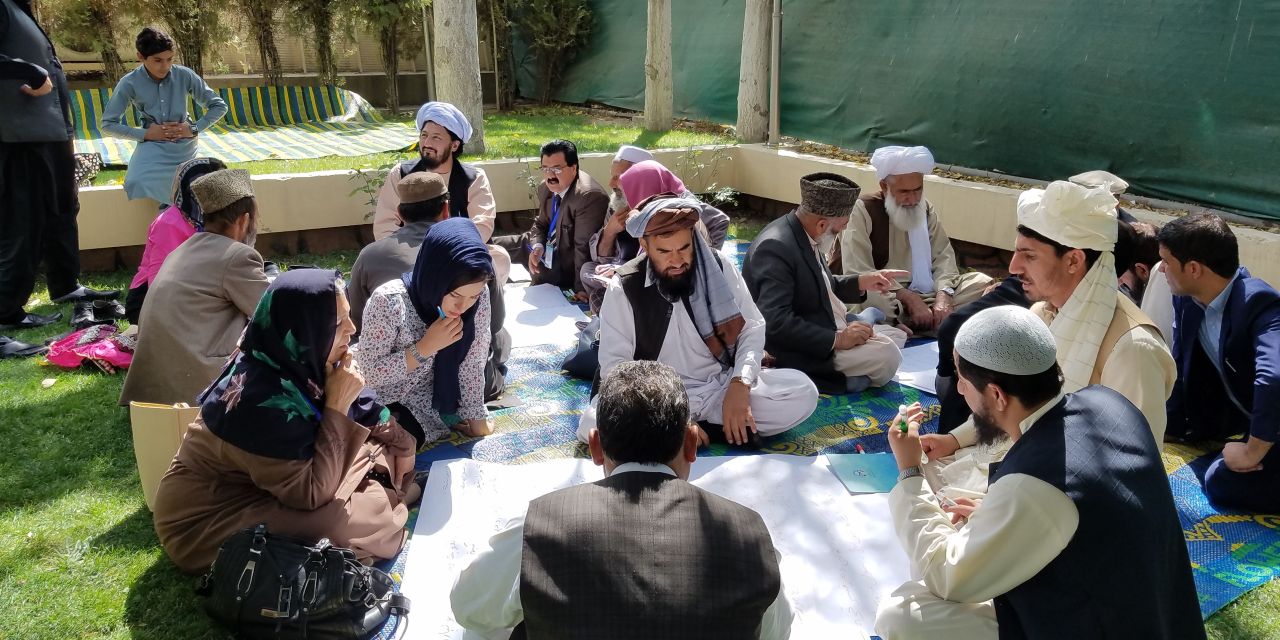
Image: Supplied by the author
This paper examines the relationship between conflict, governance, and deliberative dialogue, arguing that dialogical processes are central to societies’ ability to manage difference through political rather than coercive means. Conflict is an intrinsic feature of social life, and governance systems ideally provide institutional mechanisms to mediate competing interests, identities, and values. When governance becomes unresponsive, polarized, or coercive, these mechanisms break down, increasing the risk of destructive conflict. The paper develops a framework for understanding how deliberative dialogue can strengthen governance across three contexts: stable democracies seeking more inclusive policymaking, polarized societies requiring renewed social cohesion, and conflict-affected systems renegotiating their political settlements. It also highlights the risks of poorly designed processes and emphasizes the need for conflict-sensitive, trauma-informed approaches that address power asymmetries.
Contents
- Abstract
- Introduction
- Governance as a system to manage conflict through political processes
- Stable democracies
- Polarization and democratic erosion
- Systemic violence and deep-rooted conflict
- Do No Harm: Designing trauma-informed processes capable of empowering just peace
- Recommendations for policymakers and practitioners
Abstract
This paper examines the relationship between conflict, governance, and deliberative dialogue, arguing that dialogical processes are central to societies’ ability to manage difference through political rather than coercive means. Conflict is an intrinsic feature of social life, and governance systems ideally provide institutional mechanisms to mediate competing interests, identities, and values. When governance becomes unresponsive, polarized, or coercive, these mechanisms break down, increasing the risk of destructive conflict. The paper develops a framework for understanding how deliberative dialogue can strengthen governance across three contexts: stable democracies seeking more inclusive policymaking, polarized societies requiring renewed social cohesion, and conflict-affected systems renegotiating their political settlements. It also highlights the risks of poorly designed processes and emphasizes the need for conflict-sensitive, trauma-informed approaches that address power asymmetries.
Introduction
Here we are, flung into the second half of the 20th century, bereft of authorities to lay down rules for us, and in the shadow of death–camps and H–bombs. No one can give us a logical demonstration that we all have human rights, but the camps and the bomb between them show us what can happen if we do not agree to share the earth with others. We have compelling reasons for trying to live together in peace, and our plurality and capacity for political action show us how this can be done. We do not need to be saints to achieve this; we need not wait for a moral revolution… All that is necessary is that we should be committed to political solutions to political problems: that we should be willing to make and keep agreements with one another, to establish lasting institutions to guard the rights we guarantee one another, and to devote ourselves as citizens to maintaining and improving the public world that lies between us.”
– Hannah Arendt [1]
At the heart of democracy are people who work together through dialogue and action to build and guard the political structures that safeguard our lives, in all our human plurality. Together, people compose a polity for their self-governance. By acting as a polity, they can designate a government responsible to the polity in all its diversity. While the government is not the only institution of the polity, optimally it is accountable to the people for ensuring conditions that can cultivate the space in which all can develop.Fulfilment of this purpose generates the legitimacy of the institutional apparatus of government.
Yet the nature of the human condition is that everyone cannot have everything they want, on their own terms, all the time. Conflict is an intrinsic force in human social life. The way we respond to conflict makes the difference between whether it becomes a source of destruction or a catalyst for constructive change. We can use the energy conflict catalyses to address underlying challenges and strengthen relationships—or we can try to achieve our own goals unilaterally at the cost of blocking others. Dialogue and deliberation offer a key to the constructive pathway for working with conflict, involving all in a cooperative process to collaboratively discover ways to address incompatibilities and grievances, and satisfy basic human needs and core interests.
Conflict within the polity arises when individuals and groups perceive their goals as incompatible with those of others and seek to mobilize power to influence decisions in their favour. Governance has the potential to be both the primary system for managing conflict and the primary arena in which conflict is contested. Ideally, our system of governance creates processes for managing conflict constructively, allowing us to develop, in Arendt’s words, “political solutions to political problems.” Where governance fails to perform this function, conflict is more likely to become destructive.
At its destructive zenith, conflict subsumes the polity. Conflict becomes the defining state of the system. Instead of creating the means to work together in developing political solutions, the government apparatus is used to repress our “plurality and capacity for political action.”[2] When a regime intent on unilateral control captures the system, the quest for domination reorganizes governance and society through coercion. This domination may even destroy the polity, as has happened in totalitarian regimes.
Yet despite repression and systemic violence, there is always resistance to domination. Politics is pursued through other means—including both nonviolent and violent conflict strategies. Even here, dialogue and deliberation are the means to effective collective action. It can both strengthen democratic resistance movements and also be a part of peacemaking aimed at resolving conflict and transitioning out of political crisis. Ultimately, this dialogical mode of engagement offers the way to, as Arendt puts it, “make and keep agreements with one another, to establish lasting institutions to guard the rights we guarantee one another, and to devote ourselves as citizens to maintaining and improving the public world that lies between us.”
This paper explores the nexus between conflict, governance, and deliberative processes. It makes an argument for how peaceful dialogue and deliberation offer a powerful antidote to coercive repression by strengthening the capacity of the polity to constructively manage difference. Deliberative dialogue creates processes for people to understand and address their diverse needs, values and interests in ways that can enable responsive governance.
Yet context matters. Approaches that enhance participation and policy responsiveness in relatively stable democracies may fail in polarized, repressive, or war-affected contexts. Processes designed to address policy challenges where there is an accountable and capable government differ fundamentally from those needed to transform conflict-habituated systems or renegotiate political settlements. This paper sets out a framework exploring how deliberative dialogue can offer various pathways towards strengthening governance in ways that help resolve or even transform conflict and, in so doing, can develop more responsive, legitimate, and inclusive democracies for the 21st century.
It begins by surveying fundamental qualities of good governance. It then outlines how public participation in deliberative processes can be mainstreamed into democratic systems to enhance good governance, especially through ‘scaling up’ participation with deliberative technologies. It then outlines special considerations when polities have become deeply polarized, highlighting the value of dialogue to bridge differences. It then turns to contexts mired in systemic violence and deep-rooted conflict. It describes the ways deliberative dialogue can underpin the development of democratic movements to challenge repressive governments, as well as its crucial role in processes aimed at ending war and renegotiating the basis for the state.
Not all processes are helpful; some may even cause or exacerbate harm. The paper then turns to caution, highlighting the need to ‘do no harm’ and to design trauma-informed processes with power in mind. It concludes with key points for policymakers and practitioners. Deliberative dialogue is most effective when treated not as a standalone method, but as an integrated strategy within broader efforts to transform conflict, renegotiate political settlements, and strengthen democratic governance.
Governance as a system to manage conflict through political processes
Governance is not just about the state. Governance refers to the overall system for regulating the operations of all organizational life, whether explicitly or implicitly, formally or informally. It involves the values, policies, rules, procedures, processes and roles through which any group—whether an organization, a multinational company, a municipality or a country—is directed and controlled, as well as the specific role functions of individuals responsible for those processes.
Governments are the organizations governing the political community of a defined territory. Political governance is the system for regulating the structure(s) of the state and managing resources and relations between stakeholders. It shapes how a society makes choices about the ways people live together, how competing interests are mediated and how available resources are allocated.
Governments operate within broader political systems comprising formal and informal institutions, rules, and power relations. Decision-making within governance systems is inherently political, reflecting the realities that people hold competing interests, values, and identities, and that scarcity prevents everyone from getting everything they want.
Political systems vary significantly in their capacity to manage conflict. Authoritarian regimes tend to suppress dissent—through violence, coercion, or control of information—and are shaped by fears of both popular unrest and elite competition.[3] Strongly institutionalized democracies, on the other hand, typically provide peaceful channels for managing conflict and maintain public confidence in change through legitimate electoral and legal processes. This incentivizes people to pursue their interests through political rather than violent means.
In practice, governance is shaped by the country’s prevailing political settlement: the deep, sometimes unarticulated, understandings about how the division of power will work and the operating framework for administering political power.[4] It is revealed in formal laws, implicit understandings, specific mechanisms and ways political power is exercised. The default norms and implicit ‘game rules’ create incentives that shape outcomes—determining both what the system delivers and who benefits. These are the underlying system rules that are manifest in the political economy and the political processes of inter-elite and state-society negotiation.[5]
Unresponsive states and exclusionary political settlements characterize the context of deep-rooted conflict and systemic violence. At the same time, conflict serves as a driver of change. When the balance of power between different forces is fluid, it creates a moment of flux when it may be more possible to make fundamental changes to the state, as will be discussed further below.
GOOD GOVERNANCE AS CAPABLE, ACCOUNTABLE AND RESPONSIVE
Good governance stems from the degree to which it is capable, accountable and responsive. These qualities can be reinforcing. Alternately, a weakness in one may constrain the others: limited capacity reduces responsiveness and where capacity has long been low, citizens may expect little and demand less accountability. By contrast, effective accountability encourages leaders to respond to public needs and invest in capacity. Transparency and institutional checks strengthen accountability, while meaningful citizen engagement enhances responsiveness. Responsiveness depends not only on leaders’ sense of duty to serve constituents but also on the existence of mechanisms that enable them to understand public needs and interests.
Systematizing deliberative dialogue within governance—particularly in policy development—can play a crucial role in enabling both accountability and responsiveness. It enables the polity to articulate needs, interests and values into issues that can be addressed through policy and programs. When incompatible goals arise, effective governance systems channel such conflict into institutionalized processes that mediate competing interests and produce decisions that are broadly responsive and widely considered legitimate.
HOW DELIBERATIVE PROCESSES WORK WITH CONFLICT TO SUPPORT INCLUSIVE GOVERNANCE
Processes that mediate competing interests and support policies addressing shared human needs are essential for sustaining positive peace. This involves reinforcing institutions that channel grievances into processes capable of producing integrative outcomes and strengthening social cohesion.
Deliberative dialogue contributes by creating structured opportunities for engagement across divisions, collective sense-making, and negotiation of shared norms that underpin legitimacy. At their best, these processes create conditions in which those who are differently positioned in the polity can come together to imagine a new and more adaptive basis for their shared world.
Dialogue cultivates empathy, fosters connection, and shifts narratives. Deliberation enables joint analysis, a shared understanding of challenges, and innovation towards integrative outcomes. Collaborative decision–making translates insight into action through inclusive agreements. The design of such processes must be tailored to fulfil its specific purpose, which in turn must be responsive to the diverse—and often divergent—needs, fears, interests, identities, and aspirations of those within the system. Such processes do not eliminate differences. They instead create pathways for people with divergent perspectives to think together, decide together, and act together in ways that address core needs and aspirations.
The experience of engaging in these dialogical processes can reshape both how people relate to one another and how they think together. When participants from across a system engage in sustained, well-designed dialogue, they influence one another’s understanding of their shared situation and possible futures. New alignments may emerge, enabling experimentation with more cooperative forms of interaction. Negotiated agreements may follow. When such deliberations are incorporated into regular governance processes, it not only helps to ensure policies are responsive to the needs of the polity, it can also strengthen trust in governance institutions. Over time, this can shift the patterns that generate destructive conflict by institutionalizing channels for conflict resolution.
Dialogue and deliberation are traditionally conducted through in-person gatherings, which have intrinsic limits in scale and scope. New digital deliberative technologies now offer the opportunity to engage the polity as a whole in deliberations. These technologies are a class of civic tools designed to facilitate large-scale, iterative online processes that enable citizens to collectively weigh evidence, share diverse perspectives, and identify common ground for policy decisions. Unlike traditional polls that merely aggregate existing opinions, these technologies allow participants to evolve their understanding through structured interaction, potentially helping to bridge polarized publics and generate collective intelligence.[6]
Stable democracies
In the context of stable democracies, deliberative processes can reinvigorate the polity by expanding democratic participation in policymaking. Robust and inclusive democratic governance systems are often well designed to manage conflict and channel collective decision-making. Democratic political systems rest on four core pillars: representation, rights, rule of law, and participation. At their foundation lies the principle that the right to govern resides with the people, who exercise authority either directly or through their elected representatives.
Strongly institutionalized and inclusive democracies typically have channels for managing conflict peacefully, along with public confidence that the government of the day can be removed through legitimate electoral and legal processes. This incentivizes people to manage conflict through political processes.
Historically, most deliberation has been limited to representatives of the polity. This is especially true in constitutional democracies organized around elected representatives. While norms of public participation have sought to enable input into policymaking, citizens are primarily able to express their views through the act of elections, advocacy, and popular movements. Yet there are governance models based on direct democracy and on deliberative democracy that institutionalize public participation:
- Direct democracy occurs when everyone directly participates in the decision-making process and is comparatively rare. Decisions are made directly by the polity, rather than by their representatives. On a national scale, democratic countries sometimes have public referendums (votes) on important issues. Countries like Switzerland use this procedure for most key policy matters. In conflict contexts where divisions are along minority-majority divisions, additional process safeguards are needed to ensure that direct democracy does not result simply in majoritarian wins. Historically, deliberation as a part of direct democracy has been challenged by scale. Deliberative technologies could create mechanisms that enable this scaling up to go far beyond simple voting to incorporate public deliberations in developing policy proposals.
- Deliberative democracy reflects a form of participation embedded within representative systems. Instead of a single person or clique making unilateral decisions, deliberation ideally draws on the combined wisdom of representatives to transform the plurality of interests around policy issues into workable agreements. Ideally, they seek the views of constituents and stakeholders in advance of formal or legal decision-making so they can ‘re-present’ them in deliberation. Yet this function is undermined when representatives are beholden to their financial and / or political backers or when legislatures turn into winner-take-all party rule.
To enable the plurality of the public to have a voice in governance, structured public participation in policy making processes is key. This can go beyond consultation or periodic votes to engagement in deliberation of issues. Civic forums are a key modality for intentional deliberation of complex and contentious issues.[7] Such processes tend to be created to address specifically defined policy challenges. They are predicated on the assumption that government officials will be responsive to incorporating outcomes in policy decision-making.
When designed well, widespread and consistent public engagement in deliberative processes can significantly enhance the quality of decision-making by broadening perspectives, surfacing plural needs, and deepening understanding of trade-offs. Individuals participate not merely as interest holders, but as members of a polity working toward shared public interests.
These processes help break through political gridlock by generating new options that reflect a wide public consensus, which can then be credited and reflected in official policy decisions. When policy decisions reflect deliberative input, it can also strengthen people’s sense of ownership over outcomes, increase trust in their government system, and reinvigorate civic engagement
There is a growing body of experiences where public participation is being complemented with the use of deliberative technologies. Some examples: In Taiwan, the government has used Pol.is for vTaiwan, a process that maps public opinion to help the policymakers reach consensus, especially on digital-related regulations.[8] In Austria, Finland and the United Kingdom, deliberative technologies have been used to gather public input for citizen assemblies, referendums, and constitutional reforms.[9] In Seattle, the city has used these technologies to allow the public to weigh in on specific local issues like public housing and city parks.[10]
Deliberative technologies, skilfully integrated into governance processes, have the potential to both routinize public participation in policy deliberations and bring such deliberations to scale. Integrating deliberative technologies as a normal part of decision making contributes to redistributing power back to ‘the people’. It can also scale across institutional settings—from local municipalities to regulatory bodies, to legislative forums
—to ensure more decisions involve citizen input. They can also increase accessibility, as people do not need to participate in in-person gatherings to have a voice.[11]
Ultimately, the use of deliberative technologies has the potential to reinvigorate democratic governance for the 21st century—at least when the political settlement functions in ways that the state is responsive and accountable to the plurality of its polity. While technology provides tools, they do not work on their own. As Schirch observes, strengthening democratic governance requires combining these digital tools with robust civic infrastructure: the relational, social, and institutional work needed to ensure that tech-enhanced deliberation leads to real-world impact. This includes training facilitators, securing political buy-in across partisan lines, and establishing legal frameworks to protect participant privacy and data sovereignty.[12] Furthermore, unless carefully designed to be responsive to the needs of all the diverse elements in the polity, there is also the potential to do harm. This will be explored further below.
Polarization and democratic erosion
Processes for dialogue and deliberation can support a fractured polity to bridge differences and generate common ground for governance in the public interest. Efforts to channel conflict through governance processes become increasingly difficult when previously integrated societies reorganize around polarized ‘us/them’ binaries and politics shifts towards a winner-take-all logic. In such contexts, issue-based policy deliberation alone is often insufficient—particularly when governments lack the willingness or incentives to respond meaningfully to public input.
Polarization arises from two interconnected and mutually reinforcing processes operating in the social and political spheres of society. Socially, polarization manifests as fragmentation into increasingly binary groups, often ‘sorted’ into distinct cultural, social, aesthetic, and sometimes geographical communities. While these divisions may align with ascriptive identities such as ethnicity, contemporary polarization is more commonly driven by clusters of beliefs, values, and lifestyles that crystallize into ideological divides, with antagonism toward those who think or live differently.[13] Divides become embedded in conflict narratives and even into deeper worldviews. Polarization is sustained through binary discourses laden with symbolic ‘hot button’ language that signals belonging and exclusion, as well as (our) virtue versus (their) vice. It is increasingly the filter through which the world and actions within it are interpreted, taking on the quality of ‘truth’. Much of this is fuelled and reinforced through algorithmic design on social media,[14] which has become the site of much of our public discourse in the contemporary era.
Division seeps into every aspect of society, fracturing shared spaces as people increasingly perceive politics and each other in terms of ‘us’ versus ‘them’. The normal plurality of differences in interests, lifestyles, political orientations, and identities tend to collapse in importance, as the most salient divisions are aligned along a single axis. While there may be specific sets of contested issues and incompatible goals, the dynamic is no longer about a conflict that can be resolved by reaching agreement on ways to satisfy goals and grievances. Instead, the characteristic of severe polarization is that “distance between groups moves beyond principled issue-based differences to a social identity.”[15]
Societal polarization is enmeshed with the political sphere. Political elites and their backers have strong incentives for exacerbating polarization, as it helps to expand their political base. Political discourse aligns with the social divisions, which are increasingly politicized. Across the world’s democracies, polarization is increasing as social and political identities align and are amplified by distrust or even hatred of political opponents, who are seen as threats to the community or nation. Social cohesion and trust collapse.
When societies become divided into mutually distrustful political camps, incentives for depolarization diminish. Compromise is perceived as weakness, and political actors are rewarded for reinforcing division rather than bridging it. As each camp comes to view the other as an existential threat, adversaries are recast as enemies. Public confidence in institutions erodes, and normative support for democratic systems may decline. In many cases, this has enabled single party capture of the state and governance institutions, marking a transition to authoritarian regime.
Research suggests that breaking this equilibrium may require external shocks, major sociopolitical shifts, or collective action and intentional political strategies.[16] Deliberative dialogue can help support sociopolitical shifts and generate strategies for renewed social cohesion. Dialogue processes create spaces to rehumanize perceptions, identify shared values, and generate the will needed to effect change. Deliberative processes can translate these insights into the ‘common ground’ priorities needed to develop a shared agenda for change.
Direct dialogue between those identified across divides can be powerfully transformative. Yet it again presents the scaling challenges. Deliberative technologies are specifically designed to counteract the polarizing effects of traditional social media ‘echo chambers’ and algorithms that are designed to fuel outrage. When carefully designed, they can help large number of citizens engage around especially contentious issues and help citizens to test their assumptions about what ‘the other side’ believes, often finding more shared values than they initially realized. They can also help to counter disinformation, as they incentivize accuracy and critical thinking, helping to stem the tide of democratic backsliding caused by the collapse of truth in the digital sphere.
Whether in-person or in the digital sphere, deliberative dialogue processes in the midst of polarization need to be carefully designed to help close the ‘perspectives gap’ marked by emotionally charged, divergent interpretations of culture, policy, and political leadership. Process designers need to be attuned to the nuance of terms and meanings to identify ways of incorporating all parties’ perspectives into the framing of the overall process, of guiding questions, and of their own discourse to demonstrate they are treating all parties with parity of esteem.[17] When successful, respect and empathy can be reignited, creating the basis for civility needed to live together and “maintain the public world that lies between us.”[18] And if politicians begin to champion these values and views in policymaking, it might begin to reset a level of confidence in government.
Systemic violence and deep-rooted conflict
A third set of conditions is when the state itself becomes the instrument of oppression of either a subset or most of the population, allowing those who have captured it to maintain their dominance. In such conflict habituated systems, coercion is the primary modality shaping interactions as part of governance.[19] Political, social, and economic processes are organized to maximize coercive power rather than to mediate differences. Trust erodes, cohesion collapses, and the pursuit of dominance replaces the search for shared solutions to policy challenges.
Such conflict habituated systems tend to stifle cooperation and undermine the trust needed for dynamic and resilient social development and well-being. The more reliant a government is upon violence and coercion to enforce its rule, the less legitimate it is and—often—the more fragile and incapable it ultimately may become.
In contexts of long-term deep-rooted conflict,[20] where cultural and structural violence [21] are intrinsic to maintaining the status quo and are internalized by both those who are privileged by the system and those who
are excluded and / or systemically oppressed, there is a gulf in knowledge and empathy for how those on the ‘other side’ of the structural divides are experiencing their shared society.
Inevitably, people will mobilize for change. The challenge to repression may take the form of armed resistance. This is when armed conflict and ongoing civil war may develop. This can lead to the fracturing of the polity, split between different ‘sides’ across conflict divide(s).
When a country is profoundly shaped by conflict and violence—to the point where it has become a conflict habituated system—it can be exceedingly difficult to transform the underlying conditions and systemic patterns that gave rise to it. Deliberative dialogue and collaborative decision-making processes offer pathways to creating a vision for a more inclusive future, developing the basis for more democratic and pluralistic opposition movements, and for inclusive re-negotiation of the political settlement. The following subsections elaborate these roles further.
EMPOWERING MOVEMENTS AND TRANSFORMING RELATIONSHIPS
Even in contexts where deep rooted conflict has been heavily suppressed, there is scope for dialogue both within and between groups. Such dialogue is not initially aimed at strategic deliberations to resolve conflict. Instead, it helps to create a space in which people can connect deeply around their lived experience and begin to make common meaning that can slowly emerge in shared purpose for change. A premature rush to comprehensive agreement may backfire if it is not grounded in shifts in conflict relationships and acknowledgement of each other’s needs, as well as accountability for harms that have been committed. It is important to understand the developmental arc of what is likely to be needed to create the conditions in which transformative change may unfold.
Before bringing people together from across divides, it may be necessary to create empowering spaces for dialogue within groups. Such dialogue can help participants give voice to private experience in ways that reveal deeper patterns of shared experience. This cultivates a sense of greater agency for making change. Paulo Friere termed this conscientization, the critical consciousness essential for authentic liberatory change, which emerges out of dialogic education.[22] Human and civil rights movements around the world have created voice and shared agency through these processes.
Additionally, if undertaken with special care, deep dialogue across conflict divides and/or between those identified with the dominant group and those in groups experiencing oppression can begin to develop the
basis of understanding needed to shift the conflict system. This insight can be channelled into meaningful solidarity and may even become the basis for significant transformation as conditions ripen.
In Northern Ireland, for example, women across communal divides engaged in dialogue for years, forging a basis for a new feminist perspective that included both the plurality of distinct identities and orientations and shared values to underpin a new politics for the territory. When a peace process based on all-party talks began in 1996, they took the leap to form a political party and gained a seat at the negotiating table. They significantly influenced the political culture of the process, stayed connected with constituencies from all the communal groups, and enabled movement towards peace and reconciliation.[23]
Given the profound asymmetry of power, access and voice that exists in deep-rooted conflict, popular social-political movements may be essential to create the conditions for change, including through the overt conflict of nonviolent resistance. Such movements need strong coherence and ability to draw in a variety of different civil society forces across geographies and organizations, often including coalitions among different identity and interest groups.
Since the 2021 coup in Myanmar, for example, there have been sustained efforts to work across multiple divides among anti-coup forces to create the basis for an inclusive federal democracy. There are both sustained platforms through the National Unity Consultative Council at the country level, as well as consultative councils at regional levels. They are complemented by a web of other dialogue initiatives and deliberative processes. Taken together, they are working—with great difficulty—towards a new basis for cooperating and creating the basis for living together with dignity in a shared country and finally ending the longest running war in the world.
Creating and sustaining democratic-oriented opposition movements is hard and they often risk fragmentation. Yet if they are in disarray, it is almost impossible to create meaningful change towards inclusive democracy at the moment of opportunity when a repressive regime weakens or collapses.
Deliberative dialogue can support the emergence of shared vision for change, help identify a common agenda of priorities, and facilitate mechanisms to generate consensus around a shared framework for action, roles and responsibilities. Ongoing platforms for deliberative dialogue among movement members can support healthy communication channels and adaptive responses to emerging conditions. They can create a space for relationships that can endure the pressures inherent in the context. Furthermore, the more movements cultivate the values and practices of democratic deliberation while in opposition, the greater the likelihood that leaders will bring deliberative norms into politics and governance, as and when the current regime changes.
RENEGOTIATING THE POLITICAL SETTLEMENT: PEACE AGREEMENTS AND NATIONAL DIALOGUE PROCESSES
The political settlement is usually a result of longer-term historical developments, as described above. Yet settlements occasionally undergo a step-change, often following on from a period of intense political conflict, which may have developed into armed confrontation and warfare. How such conflicts are resolved can have profound implications for the settlement and for the quality of governance, including the legitimacy of state institutions that emerge from the transition. This typically involves a complex interplay of inter-elite bargaining and elite-society engagement.
In cases where armed conflict or political crisis are addressed through renegotiation of the political settlement (e.g. through a peace process or other types of state reform negotiations), new political forces may emerge, and long-suppressed issues may surface as legitimate concerns to be addressed. The process itself is therefore vital to what issues are addressed and whose concerns get to shape outcomes.
The United Nations has begun integrating digital technologies into its peacemaking and mediation efforts, including holding real-time consultations with thousands of citizens in preparation for political negotiations.[24] For example, in 2018 in Libya, its online platform elicited responses from more than half a million Libyans to contribute to the preparatory phase of the Libyan National Conference and then in 2020 large-scale digital dialogue specifically targeting a thousand Libyan youth to discuss the security and political situation. In Yemen, Office of the Special Envoy gathered anonymous perspectives on ceasefires and humanitarian concerns from hundreds of civil society representatives.[25]
A key challenge is developing processes that combine to address the whole conflict system. Who participates and what issues are negotiated will shape the bargain that emerges and influence whether it creates the basis for a more inclusive and equitable society supported through more capable, accountable, and responsive governance.
After the conflict has been waged to the point where the conflict parties begin to recognize that they will need to engage directly with each other, deliberative dialogue can enable peacemaking. Informal and discreet ‘Track II’ dialogue can help open communication channels, jointly analyse the issues and opportunities, build working trust, develop a negotiation agenda, and generate formulas to help to satisfy core interests and needs.
Yet there are also opportunity costs if the peacemaking process is envisioned only as a bargaining between key protagonists. Sustainability may be enhanced if the transition emerges through more inclusive, bottom-up and ‘middle out’ processes that are integrated with top-level negotiations.[26] Developing modalities for public participation in peacemaking can be essential for enabling a diverse range of social, political and economic actors to engage in a participatory process to develop a common long-term national vision.[27]
National dialogue processes offer an important pathway for these negotiations and agreeing a framework for conflict transformation.[28] Deliberative technology can help to scale up public participation and enable the societal engagement needed to generate leverage in creating a more responsive and inclusive political settlement. If large numbers of people are mobilized through the process, they may demand change in ways that make it difficult for politicians to ignore. It may also create a climate of public opinion where leaders feel compelled to adapt their responses to be more conciliatory. Undertaken with care, it can also enable people marginalized due to gender, ethnicity, religion, or age—among other characteristics—to have a voice in shaping decisions that affect them. When the negotiation agenda and peace agreements reflect an inclusive and positive vision that has wide public acceptance in the public sphere, there is greater likelihood that it may be sustained despite ongoing political contestation.
Do No Harm: Designing trauma-informed processes capable of empowering just peace
Deliberative dialogue, per se, is not always going to be an effective or beneficial strategy for cultivating justice with positive peace. Undertaken without awareness of power dynamics and the context, there is a risk of doing harm. The process itself may exacerbate mistrust or even trauma; agreements might contain provisions that continue oppressive conditions; or even if the process is simply ineffective, there are opportunity costs if participants walk away disappointed and unwilling to engage in any future dialogue, assuming it is unable to deliver meaningful change. While there are risks in most complex human endeavours, many of the risks inherent to dialogue and deliberation can be mitigated through careful process design and facilitation to ensure it develops on a strong foundation.
Some of the key political and structural risks include cases where the process design is biased in ways that, in effect, uphold the status quo.[29]
- Sometimes authorities convene a process as a tactic towards their own political goals, rather than as a sincere effort to develop a consensual path forward. A process may be used as a tactic to delay real change and/or to divert energy away from demanding change so that it is a resource draining and time-consuming substitute for substantive action. Dialogue can serve as a ‘fig leaf of legitimacy’ for oppressive actors, shoring up their position without requiring meaningful reform. Dialogue may create the appearance of progress while allowing harm to continue unchecked. For those who have endured violence or exclusion, such outcomes can deepen cynicism and erode faith in deliberative dialogue processes altogether.
- Sometimes the process does not create the opportunity to address root grievances; instead, it is conceived as a means to reduce visible aggression, while leaving structural causes of injustice unchallenged. This may have the effect of reinforcing the status quo. To address this risk, the processes need to be framed and structured in ways that equitably incorporate the range of issues and perspectives so they can be addressed through the process.
- Dialogue can also be misused as a tool of control, when participation becomes a marker of legitimacy. Dialogue processes may give preferential treatment to those who are willing or able to participate, while delegitimizing non-participants as ‘spoilers’, ’extremists’, or ‘problematic’. This dynamic can exclude individuals or communities who are too fearful, angry, or constrained to engage. It also excludes those who have principled reasons for conditioning their engagement in processes. Participants may feel compelled to present a unified, moderate stance to be taken seriously, while dissenting voices are marginalized. This can effectively silence voices that may hold critical insights about injustice or risk. Over time, it may create an insider–outsider dynamic in which dialogue becomes a gatekeeping mechanism rather than a bridge. It may even fragment movements, deepen mistrust within and between groups, and potentially turn into a divide-and-rule strategy.
- Harm can further occur when dialogue is not designed with a whole-of-system perspective. Agreements reached by a small group of representatives may fail if broader constituencies are not prepared to shift alongside them. Without mechanisms to communicate, contextualize, and build understanding across the wider system, dialogue outcomes may provoke backlash or rejection. Especially in trauma-affected systems, sudden shifts that are little understood can trigger fear and resistance, undermining fragile progress.
- There is a risk that a deliberative process working towards an agreement creates pressures to settle for outcomes that lower existing standards or involve participants ‘trading away’ fundamental rights. Dialogue can cause harm when it results in agreements that lower standards of justice or accountability.
Relational and psychological harms within the process
- Trauma shapes how individuals and groups perceive risk, interpret language, and engage with differences. In societies marked by violence, repression, or long-standing injustice, people may carry collective and intergenerational trauma that affects their capacity to trust and participate openly. Dialogue that assumes psychological safety without actively cultivating it can retraumatize participants, reinforce silence, or privilege those least affected by harm. Rather than healing divisions, poorly designed dialogue can deepen them by asking people to ‘move on’ before their experiences have been acknowledged or addressed.
- Dialogue can cause harm when it assumes symmetry between participants who do not have equal power, voice, or vulnerability. If process design and facilitation ignore the ways participants’ social identities position them differently in the wider context of systems and structures of power, the process can reinforce oppression. When dialogue emphasizes civility without addressing underlying power imbalances, it risks becoming a mechanism for stabilizing unjust arrangements rather than transforming them.
- Treating all perspectives as equally situated may appear fair on the surface, but it can erase asymmetries of violence, privilege, or historical responsibility. This false equivalence often places disproportionate burdens on people from marginalized groups, asking them to compromise or empathize without comparable accountability from those who benefit from existing systems. Such assumptions can invalidate lived experience and reinforce inequality under the guise of neutrality.
- One common harm occurs when dialogue prioritizes harmony over honesty, encouraging participants to ignore conflict, injustice, or difference in the name of ‘getting along’. This approach often pressures those who have experienced harm to soften their claims or suppress anger to maintain a polite tone. Rather than reducing polarization, such dialogue can harden it by reinforcing existing mistrust.
To prevent these various risks, it is necessary to recognize that these processes are far from neutral. Whether the process is intended to increase public participation in routine policymaking or to address more fragile conflict contexts, the goal is to foster genuine deliberation that reflects the perspectives of all stakeholders—not just to create the appearance of inclusion while those with existing power continue to act in ways that primarily benefit themselves. Organizers must therefore strive to be fair and inclusive in how processes are created and facilitated. Addressing power asymmetries in deliberative dialogue processes requires intentional design choices and continuous attention to inclusion and equity, both within the overall process design as well as through facilitation methods.
Furthermore, if the process is intended to work with polarized or conflict habituated systems, additional sensitivity to conflict dynamics must shape the process. Careful and inclusive conflict analysis, creating a convening group from across conflict divides, and an inclusive (and possibly iterative) consultative assessment process can help to mitigate risks. This approach to co-design and co-ownership of the deliberative dialogue process allows those from different positionalities in the system to co-create the path towards addressing their shared challenges, with awareness of the realities of the context and sensitivity to its pain points.[30]
Trauma-informed practice involves understanding the impact of trauma and creating an environment that is sensitive to its effects, which is essential for fostering meaningful dialogue. Yet creating deliberative dialogue processes grounded in trauma-informed practice may be beneficial for all participants, as it can create conditions that alleviate the anxiety, stress, and reactive responses anyone can experience—especially in contexts of polarization or conflict.
Responding to the realities of trauma in dialogue does not mean avoiding difficult conversations; it means recognizing that how people engage is shaped by what they have lived through. Trauma-informed dialogue acknowledges pain, addresses power, and sequences engagement in ways that do not demand premature reconciliation or silence. Without this care, dialogue risks becoming not a pathway to positive peace, but another site of harm. When working with those who have experienced trauma, it is essential to support an environment in which participants experience empowered voice and choice, where people know what to expect and what is expected of them, and processes are in place to both support healing and prevent re-traumatization.
Recommendations for policymakers and practitioners
Deliberative dialogue can strengthen governance systems by enabling societies to manage conflict through inclusive political processes rather than coercion or exclusion. To realize this potential, policymakers and practitioners should focus on integrating deliberative approaches into governance, addressing polarization, supporting democratic movements, and ensuring that dialogue processes are designed ethically and effectively.
Match process to context. Different conditions have different needs and require different approaches. Approaches that enhance participation and policy responsiveness in relatively stable democracies may fail in polarized, repressive, or war-affected contexts. Processes designed for accountable and capable governments differ fundamentally from those needed to transform conflict-habituated systems or renegotiate political settlements. Any deliberative initiative must be grounded in a serious assessment of the broader political and social system, including power dynamics, dominant narratives, risks to participants, and existing channels of influence. In polarized or conflict-habituated contexts, dialogic processes should not assume shared trust, safety, or institutional legitimacy. In more stable democratic settings, a conflict assessment should focus on sources of exclusion, declining trust, or policy complexity that existing institutions are struggling to manage.
Institutionalize deliberative participation in governance. Governments should embed structured citizen participation into policymaking processes rather than relying solely on elections or ad hoc consultations. Citizens’ assemblies, civic forums, and participatory policy consultations can help surface diverse needs, enable collective problem-solving, and strengthen the responsiveness and legitimacy of public institutions. Public input should be linked clearly to formal decision-making so that participation leads to meaningful policy influence.
Use deliberative technologies to scale participation. Digital platforms designed for structured dialogue can enable large numbers of people to engage in deliberation around complex policy issues. When integrated with offline engagement and supported by appropriate safeguards for privacy and accessibility, such technologies can broaden participation and help generate collective intelligence for policymaking.
Prioritize dialogue initiatives that bridge polarization. In societies marked by deep political divisions, dialogue initiatives should focus on rebuilding relationships, humanizing opposing perspectives, and identifying shared values before attempting policy compromise. Carefully facilitated dialogue can help reduce distrust and create the civic foundations necessary for constructive governance
Support deliberative processes within civil society and democratic movements. Recognize that social and political movements are often essential drivers of reform in conflict-habituated systems—and there are opportunity costs if opposition is fragmented at the point when oppressive regimes weaken or collapse.
Deliberative dialogue can help movements build shared vision, coherence, and adaptive capacity, while cultivating democratic norms and practices. Dialogue can strengthen democratic movements and civil society coalitions by helping participants develop shared visions, coordinate strategies, and maintain democratic norms in their own decision-making processes. Inclusive deliberation across social and identity divides can enhance cohesion and resilience within movements advocating political change.
Integrate public participation into peace processes and political transitions. When political settlements are renegotiated through peace negotiations or national dialogues, broad public engagement can enhance legitimacy and sustainability. Participatory processes should enable diverse societal actors to contribute to shaping constitutional reforms, peace agreements, and long-term visions for governance.
Apply ‘do no harm’ principles in dialogue design. Deliberative processes must be designed with careful attention to power asymmetries, trauma, and political context. Practitioners should conduct conflict analysis, ensure inclusive representation, and avoid processes that reinforce unjust status quos or create the appearance of participation without meaningful change. Dialogue should support pathways toward accountability, justice, and inclusive governance rather than substitute for structural reform. Incorporating trauma-informed design and facilitation practices that create psychological safety and prevent further harm.
Invest in the capacity for deliberative dialogue as part of long–term governance resilience and peaceful cohesion. Deliberative dialogue processes are not one-off intervention but are a capability that societies need to manage conflict over time. This includes investing in skills, institutional memory, learning across cases, funding to support initiatives, and the ability to create adaptive approaches that respond to changing conditions. In polarized and conflict-habituated systems, sustained deliberative capacity can help shift destructive feedback loops. In stable systems, it can enhance democratic responsiveness and legitimacy. They contribute to positive peace by strengthening the ability of governance systems to absorb disagreement without resorting to coercion or exclusion.
Policymakers and practitioners should treat deliberative dialogue not as a standalone intervention but as a strategic component of governance reform, conflict transformation, and democratic renewal. When embedded in institutions, aligned with broader political change processes, and designed with attention to power and trauma, deliberative dialogue can strengthen the polity’s ability to manage conflict constructively and build more legitimate and inclusive systems of governance.
This work was supported by a grant from the Ford Foundation.
BIBLIOGRAPHY
Banim, Guy. Very Large Online Platforms—How Big Is Your Polarization Footprint? Toward a Metric to Give EU Citizens Transparency around an Online Systemic Risk Driving Conflict in Our Societies. Build Up, 2025.
Barnes, Catherine. Process design: pathways toward deliberative dialogue to transform conflict. Toda Peace Institute, 2026. (Report in preparation.)
Barnes, Catherine. Framing Questions for Dialogue and Deliberation. Toda Peace Institute, 2026. (Report in preparation.) Barnes, Catherine. Renegotiating the Political Settlement in War–to–Peace Transitions. Conciliation Resources, 2009.
Barnes, Catherine, ed. “Owning the Process: Public Participation in Peacemaking.” Accord 13. Conciliation Resources, 2002.
Barry, Liz. “vTaiwan: Public Participation Methods on the Cyberpunk Frontier of Democracy.” Civic Hall, 2016. Berghof Foundation. National Dialogue Handbook: A Guide for Practitioners. Berghof Foundation, 2017.
Brown, Stephen, and Jörn Grävingholt. Framing Paper on Political Settlements in Peacebuilding and State Building. OECD
Development Assistance Committee, 2009.
Burton, John. Resolving Deep Rooted Conflict: A Handbook. University Press of America, 1987.
Canovan, Margaret. Hannah Arendt: A Reinterpretation of Her Political Thought. Cambridge University Press, 1992.
Diamond, Louise. “Training in Conflict-Habituated Systems: Lessons from Cyprus.” International Negotiation 2 (1997): 353–372.
Di John, Jonathan, and James Putzel. Political Settlements: Issues Paper. Governance and Social Development Resource Centre, University of Birmingham, 2009.
Dukes, Frank, and Karen Firehock. Collaboration: A Guide for Environmental Advocates. Institute for Environmental Negotiation, The Wilderness Society, and National Audubon Society, 2001.
Freire, Paulo. Pedagogy of the Oppressed. Penguin Classics, 2017.
Galtung, Johan. “Cultural Violence.” Journal of Peace Research 27, no. 3 (1990): 291–305.
Kelman, Herbert C. Resolving Deep–Rooted Conflict: Essays on the Theory and Practice of Interactive Problem–Solving. Routledge, 2017.
Kuttab, Jonathan, and Edy Kaufman. “An Exchange on Dialogue.” Journal of Palestine Studies 17, no. 2 (1988): 84–108.
Lederach, John Paul. Building Peace: Sustainable Reconciliation in Divided Societies. United States Institute of Peace Press, 1997.
McCoy, Jennifer, Tahmina Rahman, and Murat Somer. “Polarization and the Global Crisis of Democracy: Common Patterns, Dynamics, and Pernicious Consequences for Democratic Polities.” American Behavioral Scientist 62, no. 1 (2018): 16–42.
McCoy, Jennifer, Benjamin Press, Murat Somer, and Özlem Tuncel. Reducing Pernicious Polarization: A Comparative Historical Analysis of Depolarization. Carnegie Endowment for International Peace, 2022.
McKinney, Sammy, and Claudia Chwalisz. Five Dimensions of Scaling Democratic Deliberation: With and Beyond AI. DemocracyNext, 2025.
OECD. OECD Guidelines for Citizen Participation Processes. OECD Public Governance Reviews. OECD Publishing, 2022.
Puig Larrauri, Helena, Megan Grazier, and Rita Costa Cots. Addressing Digital Harms in Conflict: A Review of Best Practices. Build Up, 2025.
Schirch, Lisa. Policy Brief: Defending Democracy with Deliberative Technology. University of Notre Dame, 2024.
Schirch, Lisa. Blueprint on Prosocial Tech Design Governance. Council on Technology and Social Cohesion, University of Notre Dame, and Toda Peace Institute, 2025.
Svolik, Milan W. The Politics of Authoritarian Rule. Cambridge University Press, 2012.
United Nations Department of Political and Peacebuilding Affairs, and Centre for Humanitarian Dialogue. Digital Technologies and Mediation in Armed Conflict. United Nations, 2019.
Wählisch, Martin, and Felix Kufus. “Leveraging AI in Peace Processes: A Framework for Digital Dialogues.” Data & Policy 7 (2025): e65.
Yu, Hsiao, Shu-Yang Lin, Audrey Tang, Darshana Narayanan, and Claudina Sarahe. “vTaiwan: An Empirical Study of Open Consultation Processes in Taiwan.” SocArXiv, 2018.
Notes
[1] Source: Within Four Walls: The Correspondence between Hannah Arendt and Heinrich Blücher, 1936–1968, ed. Lotte Kohler, Harcourt, 2000 quoted in Margaret Canovan, Hannah Arendt: A Reinterpretation of Her Political Thought, Cambridge University Press, 1992:199–200.
[2] Arendt, op cit.
[3] Milan Svolik, The Politics of Authoritarian Rule, Cambridge University Press, 2012.
[4] The discussion of the political settlement and possibilities for its renegotiation throughout this paper is based on Catherine Barnes. 2009. Renegotiating the political settlement in war-to-peace transitions. London: Conciliation Resources. https://www.c-r.org/resource/renegotiating-political-settlement-war-peace-transitions. See also: OECD DAC,
“Framing Paper on Political Settlements in Peacebuilding and State Building.” Prepared by Stephen Brown and Jorn Gravingholt, Room Document 3, October 2009; Di John, Jonathan and James Putzel, “Political Settlements: Issues Paper,” Governance and Social Development Resource Centre, University of Birmingham, June 2009.
[5] These dynamics can best be understood through a careful political economy analysis to understand the interaction of political and economic processes in a society, including the distribution of power and wealth between different groups and individuals, as well as the processes that create, sustain, and transform these relationships over time. See for example: UK Department for International Development. Political Economy Analysis: How To Note. DFID Practice Paper. July 2009.
https://media.odi.org/documents/5866.pdf
[6] See for example: Sammy McKinney and Claudia Chwalisz, Five dimensions of scaling democratic deliberation: With and beyond AI, DemocracyNext, 2025; Lisa Schirch, Policy Brief: Defending Democracy with Deliberative Technology. University of Notre Dame, March 2024; Lisa Schirch, Blueprint on Prosocial Tech Design Governance, Toda Peace Institute. May 2025.
[7] OECD, OECD Guidelines for Citizen Participation Processes, OECD Public Governance Reviews, OECD Publishing, 2022.https://doi.org/10.1787/f765caf6-en.
[8] Taiwan has been experimenting with systemically incorporating deliberative technology enabled processes into its policymaking system. See, for example, Liz Barry, vTaiwan: Public Participation Methods on the Cyberpunk Frontier of Democracy. Civic Hall (Aug. 11, 2016) ; Yu Hsiao, Shu-Yang Lin, Audrey Tang, Darshana Narayanan, and Claudina Sarahe. vTaiwan: An Empirical Study of Open Consultation Process in Taiwan. SocArXiv (July 4, 2018)
[9] See Schirch, Defending Democracy with Deliberative Technology, op. cit.
[10] Considerit, “City of Seattle transforms controversial topic into productive discussion” Consider.it (ND) Accessed on March 6, 2026. https://consider.it/examples/public_engagement
[11] See Sammy McKinney and Claudia Chwalisz, op. cit.; Schirch, op. cit.
[12] Schirch, op.cit.
[13] Scholars sometimes make a distinction between affective polarization focused on how identity salience within groups can exacerbate out-group animosity and ideological polarization focused on political divergence between adversaries.
[14] See, for example, Helena Puig Larrauri, Megan Grazier, Rita Costa Cots, Addressing Digital Harms in Conflict: A Review of Best Practices, Build Up, 2025; Guy Banim, “Very Large Online Platforms—How big is your Polarization Footprint?” Towards a metric to give EU citizens transparency around an online systemic risk driving conflict in our societies. Build Up, 2025.
[15] Jennifer McCoy, Tahmina Rahman, and Murat Somer, “Polarization and the Global Crisis of Democracy: Common Patterns, Dynamics, and Pernicious Consequences for Democratic Polities,” American Behavioral Scientist 62, no. 1 (2018): 19.
[16] Jennifer McCoy, Benjamin Press, Murat Somer, Ozlem Tuncel. Reducing Pernicious Polarization: A Comparative Historical Analysis of Depolarization. Carnegie Endowment for International Peace. 2022.
[17] Catherine Barnes, Process design: pathways toward deliberative dialogue to transform conflict. Toda Peace Institute, 2026 and Catherine Barnes, Framing Questions for Dialogue and Deliberation. Toda Peace Institute, 2026.
[18] Arendt, op cit.
[19] ‘Conflict habituated systems’ is a concept first articulated by Louise Diamond to describe the ways “…the system which grows up around the conflict, and within which it thrives, has shaped itself to both reflect and perpetuate the dynamics and effects of the conflict relationship.” She did not explicitly address its reliance on coercion as the default system rule. Louise Diamond, “Training in Conflict-Habituated Systems: Lessons from Cyprus”, International Negotiation 2, 1997: 353.
[20] John Burton, Resolving Deep Rooted Conflict: A Handbook. University Press of America, 1987; Herbert Kelman, Resolving Deep-Rooted Conflict: Essays on the Theory and Practice of Interactive Problem-Solving. Routledge, 2017.
[21] In the tradition of Johan Galtung, systemic violence manifests in three mutually reinforcing dimensions. Direct violence is visible physical or psychological force exercised to cause harm or to exert coercion – the behaviors we normally understand as violence. Structural violence can be equally harmful and coercive, as it denies oppressed people access to the goods, services and opportunities needed to fulfil their basic human needs. (People can die from lack of food, shelter, healthcare as much as from a bullet…) Structural violence can be given a legal mandate or more subtly embedded in law and institutional arrangements. Cultural violence exists in the prevailing social norms, attitudes and prejudices that make direct and structural violence seem to be the normal and ‘right’ way of organizing society. Johan Galtung, “Cultural Violence” in Journal of Peace Research, Vol. 27, No. 3. (Aug., 1990), pp. 291–305.
[22] Paulo Freire, Pedagogy of the Oppressed, Penguin Classics, 2017.
[23] Kate Fearon, “Northern Ireland’s Women’s Coalition: Institutionalising a political voice and ensuring representation” in Catherine Barnes, Ed, Owning the Process: Public Participation in Peacemaking. Accord 13. Conciliation Resources, 2002.
[24] United Nations Department of Political and Peacebuilding Affairs and Centre for Humanitarian Dialogue, Digital Technologies and Mediation in Armed Conflict, March 2019, peacemaker.un.org/digitaltoolkit.
[25] Martin Wählisch and Felix Kufus, “Leveraging AI in peace processes: A framework for digital dialogues” Data & Policy 7, 2025: e65. https://doi.org/10.1017/dap.2025.10031.
[26] John Paul Lederach, Building Peace: Sustainable Reconciliation in Divided Societies. United States Institute of Peace Press, 1997.
[27] Catherine Barnes, Ed, Owning the Process: Public Participation in Peacemaking, Accord 13, Conciliation Resources, 2002. https://www.c-r.org/accord/public-participation
[28] National dialogues are “nationally owned political processes aimed at generating consensus among a broad range of national stakeholders in times of deep political crisis, in post-war situations or during far-reaching political transitions.” Berghof Foundation. National Dialogue Handbook: A Guide for Practitioners. May 2017. p21 www.berghof-foundation.org/publications/national-dialogue-handbook
[29] For more discussion of the points outlined in this section, see:Jonathan Kuttab and Edy Kaufman. “An Exchange on Dialogue.” Journal of Palestine Studies 17, no. 2 (1988): 84–108; Frank Dukes and Karen Firehock. Collaboration: A Guide for Environmental Advocates. Institute for Environmental Negotiation, The Wilderness Society, National Audubon Society. June 2001.
[30] See: Barnes, Process Design and Barnes, Framing Guiding Questions.

The Author

Toda Peace Institute
The Toda Peace Institute is an independent, nonpartisan institute committed to advancing a more just and peaceful world through policy-oriented peace research and practice. The Institute commissions evidence-based research, convenes multi-track and multi-disciplinary problem-solving workshops and seminars, and promotes dialogue across ethnic, cultural, religious and political divides. It catalyses practical, policy-oriented conversations between theoretical experts, practitioners, policymakers and civil society leaders in order to discern innovative and creative solutions to the major problems confronting the world in the twenty-first century (see www.toda.org for more information).
Contact Us
Toda Peace Institute
Samon Eleven Bldg. 5thFloor
3-1 Samon-cho, Shinjuku-ku, Tokyo 160-0017, Japan
Email: contact@toda.org