The Role of Middle Powers in the Global Disorder
Herbert Wulf
April 03, 2026
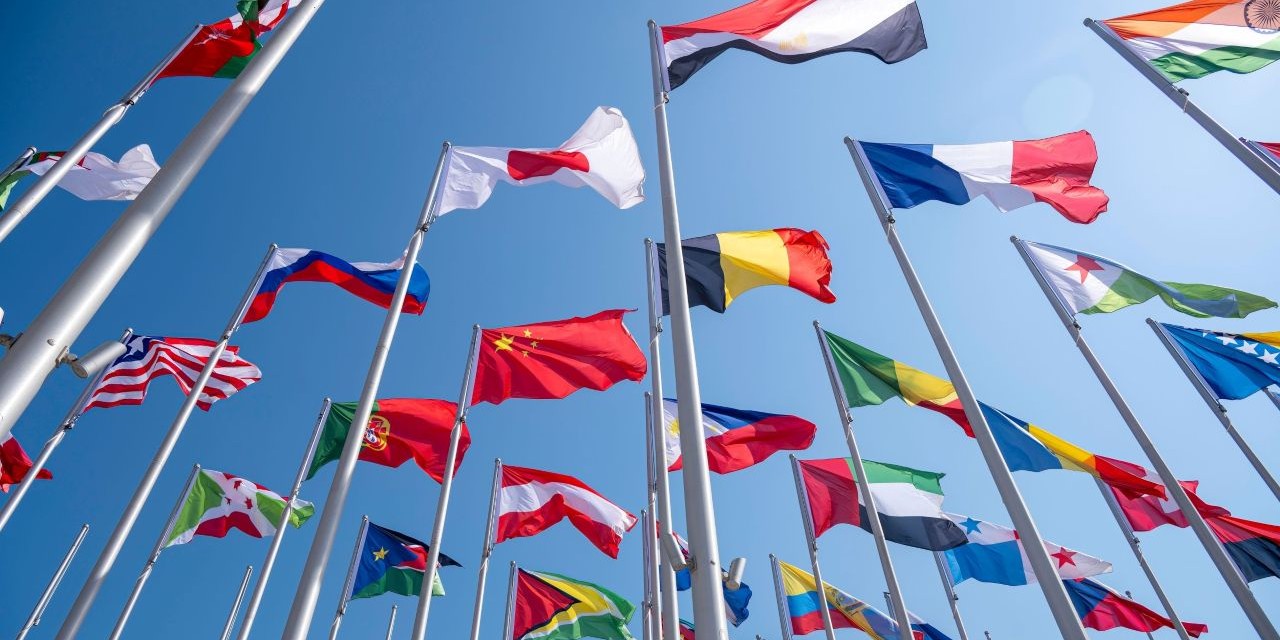
Image: Photo Drive / shutterstock.com
This report discusses the requirements for new forms of cooperation on an unprecedented scale if governments in most countries of the world do not want to submit to the dictates of the major powers. A key to a rebalanced relationship among nations could be middle powers since they possess economic strength and political clout. The paper assesses the viability of different formats for such cooperation, from formal alliances to strategic partnerships or informal club models, drawing on the experiences of India, the EU and BRICS+ and ask what broader lessons middle powers could draw from these practices.
Middle powers must act together because if you are not at the table, you are on the menu.
Mark Carney, Prime Minister of Canada [1]
We live in a world, in the real world that is governed by strength, that is
governed by force, that is governed by power.
Stephen Millier, White House Deputy Chief of Staff [2]
Contents
- Abstract
- I. Rebalancing relationships
- II. Economic and soft power as the choice foreign policy tool of middle powers
- III. Role models for middle powers? India, European Union, and BRICS
- IV. Middle powers’ modus operandi
Abstract
The end of a global order requires new forms of cooperation if governments in most countries of the world do not want to submit to the dictates of the major powers. A key to a rebalanced relationship among nations could be middle powers since they possess economic strength and political clout. They could counter the destructive fury of the Trump administration, China’s claim to great-power ambition, and the general trend to geopolitics. This requires cooperation on an unprecedented scale. In this paper I assess the viability of different formats for such cooperation, reaching from formal alliances to strategic partnerships or informal club models. I will draw on the experiences of India with its decades-long practice of non-alliance and multiplealliance policies and its insistence not to join any bloc. I will look at the experiences of both the EU and BRICS+ and ask what broader lessons middle powers could draw from these practices. Given the fact that middle powers differ in their values and norms, their international approach and their domestic structure, there are certainly limits to their cooperation.
I. Rebalancing relationships
The liberal world order, based on the rule of law and developed after the end of World War II, no longer exists. The war that the US and Israel launched at the end of February against Iran has added additional uncertainty about the future of the global structure. The long-term consequences of this war are still completely unclear at the time of writing (mid-March 2026). The economic effects are visible: trade routes are disrupted, oil and gas prices are rising, travel patterns are reshaping, and Iran’s attacks on its neighbours in the Gulf region are jeopardizing their political and business model that relied on security and stability. The Gulf states feel betrayed, not only by Iran, but also by the USA and Israel, because they had relied on diplomacy until the very end. It is uncertain how the rapprochement between Israel and some Arab countries, which has been developing in recent years, will now unfold. The governments of Israel and the US have cast this war, that has cost thousands of lifes in Iran, as a necessary fight between good and evil. This war is a clear breach of international law since neither the US nor Israel have produced any evidence of an imminent threat to either of them and since they have not brought the conflict to the UN Security Council.
The breach of international law might be one of the lasting implications since the attacks are challenges to the established territorial state order and Iran’s sovereignty. This self-empowerment to bomb another country and decapitate its government because of its brutal and repressive nature may have long-term negative consequences. What happens to international law when every government decides for itself what is good and what is evil?
The pillars of the global order (liberal values, multilateral institutions, democracy, free trade and the rule of law) have been degenerating for some time. Although the global order is much less liberal than before, it persists as an order based on bordered sovereign states—not empires—and this leaves room for middle powers.
Multilateral cooperation has been replaced in many areas by great-power competition. Fight for spheres of influence and geopolitics has once again taken centre stage on the agenda of the major powers. The Trump administration is attempting to implement its imperialistic ‘America First’ policy by unabashedly using its economic and military potential. It pays no heed to international outcry and encounters little resistance. Trumps’s policy can be called “Zerstörungslust—a lust for destruction” (Ryan 2026), practiced in the belief that gradual reform cannot deliver meaningful change. China has taken up the gauntlet. It is working with client states and is trying to strengthen its position as a major power by emphasizing its economic capabilities, not only vis-à-vis the US but globally.
Many middle powers feel politically and economically insecure, marginalized, threatened, and endangered by the Trump administration’s policies, with its military campaign, its imposition of tariffs, and threats against behaviour deemed non-compliant with US policy
The invasion of Ukraine by Russia has not only had dire consequences for Ukraine, but it has also destroyed the European security architecture, that was already shaky long before Russia’s full invasion. In this situation, Trump’s policies call NATO as an alliance into question. But uncertainty is not limited to Europe. Many middle powers feel politically and economically insecure, marginalized, threatened, and endangered by the Trump administration’s policies, with its military campaign, its imposition of tariffs, and threats against behaviour deemed non-compliant with US policy. These middle powers that now realize their vulnerability include not only European countries but also Canada, Australia, South Korea, Japan, and numerous countries of the Global South, including Argentina, Brazil, India, Indonesia, Mexico, Nigeria, Saudi Arabia, South Africa, Vietnam, Turkey, and United Arab Emirates.
There is no uniform set of countries or generally accepted definition of the term ‘middle powers’, and different countries are listed as such. In a broad-based research project, Harvard’s Belfer Center states that “these countries are challenging the idea of a unipolar or bipolar international system. By leveraging their willingness and ability to work with multiple partners simultaneously, these powers are crafting unique strategies to advance their national interests, to influence global issues, and ultimately to shape today’s evolving international order.”[3] Middle powers occupy a position somewhere between the major powers of the US and China and smaller nations due to their economic size and technological capacity, and often also their military strength. They are states that do not dominate the international system but can play a crucial role as stabilizing forces, as mediators and bridge-builders.
A global hedge is underway now. The reconfiguration of global relationships takes the form of what is sometimes called “multialignment” (de Hoop Scheffer, 2023, 2). Middle powers are forced to reorient themselves now. Possibly the term ‘multiplex’ is more appropriate than ‘multipolar’ to describe the present international situation. This term was coined by Acharya (2017) to indicate that there is no single global order “but a complex of crosscutting, if not competing, international orders and globalisms.” He compares it to a multiplex cinema: “one that gives its audience a choice of various movies, actors, directors, and plots all under the same roof.”
While the US still dominates, other actors can play a decisive role. The options of middle powers to rebalance their relations range from aligning with or subordinating to US foreign policy (bandwagoning with the hegemon); turning to the other major power, China; shifting between the two great powers (swing states),pragmatically and flexibly forming partnerships or coalitions (hedging); or attempting to find strategic autonomy (as India has tried since many decades and as suggested by Canadian Prime Minister Mark Carney at the Davos conference in January 2026).
Drawing on the experiences of India, the EU and BRICS+ and comparing those practices to the possibilities for middle powers requires underlining some caveats. It should be mentioned that neither India nor the European Union have considered themselves in their self-assessment as middle powers, although, using economic, military and political indicators, there is a considerable gap between them and the two superpowers. Both India and the EU have attempted in the past to seek a great-power role and to play a central role at the high table of international politics. However, the now intensified great-power policies has clearly revealed dependencies and thus demonstrated that strategic autonomy is not a given in either the case of India or the EU. The additional caveat is that BRICS+ is largely dominated politically and economically by China. Also, Russia, with the world’s second largest nuclear arsenal, is a member of BRICS+.
Thus, the examples of India, EU and BRICS+ cannot be directly applied to middle powers. They can, however, illustrate the prospects and obstacles on the path to strategic autonomy and the relevance of the concept of middle powers. To strengthen the middle powers’ position vis-à-vis the great powers they can continue to base their cooperation on classical multilateralism, intensify their bilateralism with other middle powers and in their neighbourhood, and can try to open up to new forms of cooperation in formal and informal coalitions. The question arises: is the concept of middle powers with coalitions, partnerships or alliances viable? Can these countries create a newly balanced world order or will the law of the strongest prevail?
II. Economic and soft power as the choice foreign policy tool of middle powers
1. THE RETURN TO GEOPOLITICS
Power projection and intervention capabilities are the call of the day. A race to invest in modern military technologies is underway, particularly in the US, China, and Russia, but also in Europe, in India, in the Middle East, and many other countries. All measures, including war, are explored. This is illustrated by Russia’s invasion of Ukraine, but also by US bombing of ships in the Caribbean and Iran’s nuclear sites, decapitating the Iranian and kidnapping the Venezuelan leadership, as well as by China’s threats against Taiwan and their activities in the South China Sea. These trends are accompanied by the resurgence of geopolitics, the competition over territory and influence, the fight for control of space: geographically, digital and in outer space. Geopolitics considers territory as a main determinant of states’ development.
The belief of geopolitics was, and many policy statements today seem to concur , that there are vacuums that need to be filled. It is the same attitude that the colonial powers practiced when they divided up the world. The borders defined by the colonial powers in the age of imperialism still exist, now as borders between territorial states. Geopolitical notions constitute an almost deterministic Darwinism, a zero-sum-game. If we don’t move, others will take advantage. With geopolitics, the multilateral world with international cooperation is far away. Various middle powers joined this trend for geopolitics. But they have also now begun to explore new avenues for intensified mutually beneficial cooperation among themselves.
Middle powers fear that they will be marginalised in the US–China bipolarisation. Even before the “rupture in the world order”, as Canada’s Prime Minister Mark Carney called it in his Davos speech, pushed the political leadership in India as well as in the EU to claim what they perceived as their “rightful place” at the high table in the big power game, India’s Prime Minister Narendra Modi criticised unfair global power relations and asked in 2023: How can the UN Security Council claim to speak for the world when its most populous country, and its largest democracy, is not a permanent member?[4]
Ursula von der Leyen emphasised at the beginning of her first term as President of the EU Commission in 2019 that the EU would invest in alliances and coalitions to advance European values. She declared: “This is the geopolitical Commission that I have in mind, and that Europe urgently needs.”[5] These ambitions are less militaristically formulated than the 2025 US National Security Strategy that states that the Indo-Pacific region will be “among next century’s key economic and geopolitical battlegrounds.”[6]
Nevertheless, strands for geopolitical aspirations can also be found within the EU. The recent debate about a French nuclear umbrella for Europe points in that direction. It is fuelled by increasing doubts about the reliability of the United States. But it is entirely in the French tradition of calling for strategic autonomy. There is a tension between the concept of collaboration of larger EU countries (especially France and Germany, but possibly also Italy, Spain, and Poland) with other middle powers on the one side and a joint EU approach on the other. The former is potentially calling into question the EU as a model. The tension exists between sovereign middle powers and a coherent EU vision. Proponents of different EU speeds have found a formula for this concept: Multi-speed Europe or two-speed Europe. It is the idea that different parts of the EU should integrate at different levels and different paces.
The next few years will reveal whether this trend toward geopolitics and spheres of interest and influence—primarily focused on strengthening one’s own position, especially at the expense of others—will prevail
This is particularly important because—as I argue below—the EU’s structure often hinders its decision-making, and compromises are usually only reached after lengthy negotiations, with which hardly any of the member states is satisfied. Governments that want to get things done (e.g. sanctions against Russia or reductions of dependence on the US) are slowed down by the EU’s complicated bureaucratic structure and its unanimity rules.
When considering the ugly history of geopolitics, it is somewhat surprising to see this renaissance, particularly in Germany. At the end of the nineteenth century the school of geopolitics convinced the German leadership of the need for expansive territorial desires in the East. At the dawn of World War II, the Nazis used the geopolitical term Lebensraum (space for living) to convince an entire nation to accept their horrendous ideology.
The next few years will reveal whether this trend toward geopolitics and spheres of interest and influence— primarily focused on strengthening one’s own position, especially at the expense of others—will prevail. Or will other well-proven foreign policy instruments gain the upper hand? The decisive factor will be whether the middle powers prove capable of maintaining their sovereignty and asserting themselves against the major powers. This is probably only possible with a concerted approach. But a union like the EU is not the appropriate format for cooperation between middle powers, since they do not want to relinquish part of their national sovereignty, but rather pursue common interests.
Foreign policy, according to Stubb (2026), is mostly oriented towards values, interests, and power, and these coordinates are key for executing a country’s foreign and security policy. Great powers might be tempted to go it alone, based on their economic and military power. At present, the US is by far the world’s most powerful military force with some 750 military bases in all regions of the world.[7] It is in the “pole position” that allows it, with its capabilities, to shape the international system (Mohan, 2026). The USA spends approximately 37 per cent of global military expenditure; the other great power, China, approximately 12 per cent. Thus, the two superpowers account for about half of what is spent worldwide on armed forces.[8]
2. ECONOMIC INDUCEMENTS AND SOFT POWER CONTINUE TO MATTER
In his seminal work Nye (2004, 31) differentiates three different types of power: military power (coercion, threats), economic power (inducement), and soft power (attraction). Military and economic power is often used by bigger players. Middle powers are usually forced to rely mostly on their economic and soft power. The opportunity for middle powers lies in convincing through economic inducements (carrots) and soft power. But they might also be tempted to use economic dissuasion (sticks).
Soft power, according to Nye (2004, X) “is the ability to get what you want through attraction rather than coercion or payment.” Soft power, although difficult to measure and underpin with solid statistical facts (in contrast to military or economic power), is the ability of a government to co-opt other states without using hard power (such as for example military means or trade restrictions). Hard power has become more crucial again in recent years as the foreign policy tool of choice. But great powers run the risk of relying too heavily on using their economic and military power to force other nations to submit to their will, and they pay too little attention to convince through soft power. If they rely too heavily on hard power, even force, they risk provoking a backlash.
It is not easy to calculate the outcome of soft power. But even in the hard power climate of today, soft power elements will come to matter. According to Nye (2004, 11), it is based on three resources of a country: its culture, its political values and its foreign policies. Values and norms matter in global governance, not only the economic or military power. Even the most militarily and economically powerful nations need to consider international norms as well as public opinion about their foreign policy behaviour, although international law and norms have been blatantly violated in recent years, as Russia’s war against Ukraine illustrates.
It seems the powerful no longer feel constrained by the rule of law, as illustrated by the repeated US government claims to integrate Canada into the USA, to annex Greenland, and their military actions. These are challenges to the territorial state order, not just to a liberal order.
Middle powers are neither powerless small states nor global superpowers. They possess sufficient political clout and economic resources, especially when they act in a coordinated and cooperative manner, to shape regional and global policy. The big ‘if’ is whether these middle powers find enough common ground in their values and norms, their international approach and domestic structure, to intensify their political and economic cooperation. A minimum is to agree to defend national sovereignty and the principle of nonintervention. India and China are perhaps the best candidates to defend these principles and they have often upheld this principle in controversial debates within the United Nations. But to cooperate in the defence of this norm they must resolve or demilitarize their own border disputes, which they have failed to do since their war in 1962 (Maxwell 1970).
III. Role models for middle powers? India, European Union, and BRICS
1. FROM NON-ALIGNMENT TO MULTIPLE ALLIANCES: EIGHT DECADES OF INDIAN FOREIGN POLICY
A good example of the use of soft power is India. Its culture, its functioning democracy and political pluralism, its free press, religious diversity, its values and cultural heritage, made it an attractive partner in the past. Even such diverse aspects as Gandhian non-violence and non-cooperation, India’s cuisine, its Bollywood films, music, literature and science, ayurveda and yoga are considered to contribute to India’s soft power (Blarel 2012). It is the moral and cultural capital of the country. An open society can be a more attractive basis for a long-term partnership than an authoritarian regime that might get things done more quickly. But the positive image can be damaged by lax handling of the rule of law and the increase of nepotism, embezzlement and other corrupt practices. Some of the positive traits are now being questioned as India’s government policy under Prime Minister Narendra Modi became increasingly authoritarian.
Since its independence in 1947, India has experienced several distinct periods of foreign policy. This concept underwent substantial changes, but one constant adhered to, although not consequently practiced throughout, was non-alignment, or as it is now called multi-alignment, stressing autonomy and independence. India’s first Prime Minister Jawaharlal Nehru emphasised his distaste for the great power blocs (Nehru 1961, 36). He wanted to keep at a distance from the big powers and shape international relations by emphasising India’s uniqueness: “India is too big a country herself to be bound down to any country, however big it may be” (Nehru 1961, 47). Non-alignment became a distinguishing mark of India’s foreign policy. Economically this foreign policy was supported by the concept of Swaraj, autonomy to the greatest degree possible.
But Nehru’s internationalist foreign policy and India’s friendship with China, a cornerstone of Indian foreign policy during the 1950s, experienced a crisis as it “left India utterly unprepared to cope with a serious security threat from China and culminated in a disastrous border war in 1962” (Haokip 2011, 230). Following this disastrous war, India’s foreign policy still focussed on distancing from the great-power blocs but saw the increasing willingness to secure autonomy through military strength and power politics—not just through idealistic non-violence.
The Bangladesh War in 1971 opened a new chapter in India’s foreign policy. This war worsened the relations between India and the United States (Malone 2011, 160-161). As a reaction to, and as a result of, the US military assistance to Pakistan, the governments of India and the Soviet Union signed the Indo-Soviet Treaty of Peace, Friendship and Cooperation. This treaty, just short of a formal military alliance, was a clear departure from the non-alignment that had guided Indian foreign policy. But the period of Indira Gandhi’s government (1966–1977 and 1980–1984) was still “characterized by lip service to anti-imperialism, Third World solidarity, and nonalignment abroad” (Malone 2011, 50–51), but with priority towards power politics.
The end of the Cold War required another turn-around of foreign policy. It gave India the freedom “to reinvent its foreign policy” (Mohan 2006, 19). The collapse of the Soviet Union “forced New Delhi to start rebuilding its great-power relations from scratch” (Mohan 2012, 29). The so-called ‘Look East’ policy, initiated in 1992, was a strategic shift in the government’s perspective on the world. It focused foreign policy after the demise of the Soviet Union on the neighbourhood in Asia (Malone 2011, 202–223; Gaur 2011). The intention was to strengthen the political, economic and military ties in the wider region. “This was an attempt to avoid vulnerabilities in a unilaterally dominated world on one hand and to counteract the feared expansion of China in South and South-East Asia on the other” (Wulf and Debiel, 2015, 38).
This shift in priorities came with the focus on neo-liberal economic policies, introduced in the early 1990s. India updated some of the political Nehruvian internationalist ideas (rather than the moral prestige) and gave up its anti-West outlook. The ‘nuclear deal’ of 2005, as it came to be called, agreed between the USA and Indiaended a three-decade nuclear trade moratorium, giving India access to non-military nuclear technology and resulting in unprecedented progress of US–Indian foreign relations (Bajoria and Plan 2010). This Indo-US rapprochement was possible since the US viewed India as a rising power that could help shaping the balance of power in Asia. However, it did not alter the friendly relations between Russia and India.
Despite the ruling Bharatia Janata Party’s (BJP) Hindu nationalist ideology, the US government did not signal any retraction from the cordial bilateral relations after Narendra Modi and his BJP formed the government.
India’s foreign policy has varied in its values, its substance and its implementation. Today’s government enters into what it calls “multiple alliances” and seeks partnerships that correspond to its own interests. Samir Saran, President of the major Indian think tank Observer Research Foundation, which also advises the government, argues that today’s geopolitics is characterized by the perception of self-interest. He speaks of “limited liability partnerships among nations”.[9] India’s behaviour towards Ukraine and its increased energy imports from Russia can both be explained by these balancing politics. The Indian concept of strategic autonomy paradigmatically favours the flexible formation of temporary coalitions, which are specific to certain political fields and countries. It is within the tradition of Indian non-alignment, although with some refocussing. With a few lone exceptions (Khilnani et al., 2012), the foreign policy elite clearly wants to distance itself from the concept of non-alliance, as this approach maintained a distance from blocs. Instead, India wants to align on specific issues without formal alliances.
In 2024, before Trump’s policies negatively impacted US–India relations, a comprehensive study of the Washington–New Delhi relationship described it as “aligned but autonomous”. This reflects India’s prevailing foreign policy conception. The study states: “Informal, ad-hoc coalitions will have to be built to ensure that convergences can be exploited and divergences are managed” (Pant and Lall, 2024, 8). Close partnerships are intended to help achieve strategic autonomy.
India has experienced a phenomenal economic growth since the early 1990s and its economy ranks now as the fifth largest in the world. But according to other indicators, the country is in crisis. Free press came under attack with Modi’s inauguration in 2014. According to Reporters without Borders, highly concentrated media ownership, harassment of journalists that criticise government policy and violence against journalists put press freedom into crisis so that India ranks in their press ranking only 151st out of 180 countries in 2025, a drop from 140 in 2014.[10] The open and secular society is threatened. The Modi government pursues the ideology of “Hindutva” (Hindu-ness) essentially to create a homogenous Hindu society that marginalizes the 200 million Muslims and ethnic minorities.
While India with its large and growing market has become an attractive global partner, Nye’s (2004, 11) warning that “narrow values and parochial cultures are less likely to produce soft power” has become a reality in India today.
According to assessments in India, “New Delhi’s pursuit of multiple partnerships helped India maximize its autonomy amid the superpower politics of the Cold War and has continued to do so in the U.S.-led order that has dominated since the collapse of the Soviet Union” (Madan, 2026). Could the Indian concept of strategic autonomy be a viable concept for middle powers?
2. EU: INFLUENCE BEYOND FORCE
Europe’s soft power is rooted in its history, institutions, culture, and values. The European Union is a unique supranational entity that promotes cooperation among its member states. In contrast to traditional great powers, the EU has tried in the past to project influence not through military strength. Instead, it emphasises economic cooperation and diplomacy, democracy, human rights and the rule of law. Particularly through its enlargement policy, the EU has contributed to solving conflicts and promoting peace in Europe. The attraction to join the EU has encouraged accession candidates to strengthen democracy, minority rights and the rule of law. As a result, the EU shaped reforms beyond its borders without resorting to the use of force. On the “grounds that the organisation had advanced peace, reconciliation, democracy and human rights in Europe”, the EU was awarded the 2012 Nobel Peace Prize.[11]
Europe’s cultural heritage, its history, art, literature, music, cuisine etc. are admired globally and its political commitments to multilateralism contribute to its soft power. In economic terms, the EU ranks as one of the world’s top three markets, ranking behind the US and almost on par with China. It represents about one-sixth of the global economy in terms of GDP.[12] As one of the world’s top providers of development assistance, through its ambitious environment agendas and its standards in data protection, the EU tries to set rules that others like to follow voluntarily.
However, these priorities have been questioned both through disagreements and tensions within the EU and the breakdown of a European security architecture. Internal divisions among its member states on such issues as migration, support for Ukraine, energy security and particularly the rise of popular right-wing movements have undermined the EU’s role as a promoter of its declared values. The EU is an organization that announces many desirable programs, but due to its structure, it does not implement nearly all of them. The EU has economic clout, but politically it is far from being an undivided union.
Because of the new security landscape as well as due to pressure from the Trump administration, all EU and European NATO member states have intensified their military efforts to an unprecedented degree
The invasion of Ukraine by Russia was a shock to many in Europe. Russia’s aggression and the increasing great-power competition have led to a growing debate within the EU about its role in geopolitics. The EU’s High Representative Josep Borrell (2020) declared that Europe should develop a “geostrategic identity” and “learn the language of power and geopolitics”.
Has the return of war to Europe revealed the limits of economic and soft power? Critics pronounce that the “EU’s soft power utterly failed to prevent the biggest conflagration in Europe since World War II. Its campaign of sweet reason to persuade Vladimir Putin’s regime to change its approach, and to negotiate rather than the fight was equally unsuccessful” (Moskalenko, 2023). EU economic sanctions after Russia’s annexation of Crimea were mainly decorative.
Because of the new security landscape as well as due to pressure from the Trump administration, all EU and European NATO member states have intensified their military efforts to an unprecedented degree. This arms buildup has been initiated without bringing Europe any closer to a position of strategic autonomy; the present efforts are primarily directed at substantially increasing investments into military technology while the structural deficiencies have not been remedied. Parochial decision-making along nation states’ lines rather than a coordinated EU approach is still the characteristic of EU security and defence policy. Europe strives for strategic autonomy. That’s the theory. Repeated dissent about sanctions against Russia teaches us that reality is different. Until today, the EU has not been able to stop all energy imports from Russia. The EU thus contributes to filling Russia’s war chest (Wulf 2026).
Europe, with its many long-time US allies, felt comfortable under the US security umbrella. All of Europe is now struggling to grapple with a new situation and frustrating global conundrums. The disruption of the trans-Atlantic relationship has thrown long-established commitments into doubt. The EU’s political elite, which in an act of hubris often saw itself in the past as the third major global player,[13] had to recognize with sobering awareness how extensive its dependencies on US tech giants and US security guarantees are. Europe, both the European Union and the European NATO member states, has been unsettled by the epochal shift of US-foreign, security and economic policy.
In Germany, as in other EU countries, the current government has abandoned the “value-based femininist foreign policy” of the previous government and is now trying to come to terms with previously scorned autocrats—be they energy suppliers, arms buyers or China. Beijing has for many years been considered as an unreliable trading partner.
3. MIXED EXPERIENCES: BRICS+
The idea behind the four member BRIC group (Brazil, Russia, India, China) at its founding in 2009 was that its original member countries, poised to become global economic powerhouses, would come together for more intensive cooperation. In addition to the current eleven members (including Egypt, Ethiopia, Iran, Saudi Arabia, South Africa, the United Arab Emirates, and Indonesia), around 40 other countries have expressed interest, including several that can be described as middle powers. BRICS+ is a loose association of states dissatisfied with the liberal world order. This concern was voiced long before Trump’s second term, during which he fundamentally challenged the rules-based order. The BRICS+ member countries criticize, with varying degrees of vehemence, both the liberal narrative of democracy and human rights, often presented in a condescending manner by Western liberal governments, and the largely Western-dominated multilateral institutions. So far, BRICS+ is a “coalition of negation” that primarily shares a consensus on what it rejects (Wulf 2024). Yet most BRICS+ member states support, more than just rhetorically, the basic principle of national sovereignty for internationally recognized states and the principle of non-intervention.
Comparisons between BRICS+ and a potentially emerging middle power bloc are inherently flawed for several reasons. There are parallels, particularly the shared goal of developing alternatives to great-power competition and its power politics. However, there are also differences. BRICS+ includes a major power, China, and another nuclear power, Russia (or, as Obama quipped in 2014, a “regional power” showing weakness over Ukraine).[14] Furthermore, as mentioned at the beginning, numerous countries traditionally considered Western are classified as middle powers, but they are not part of BRICS+. Nevertheless, the experience of BRICS and BRICS+ in the second decade of the group’s existence can shed light on the opportunities and obstacles to cooperation among these middle powers.
The influence of BRICS+ has grown steadily. In 2024, the current member states represented more than 48 per cent of the world’s population and generated around 39 per cent of global economic output.[15] They have boosted trade among themselves and aim to move away from the US dollar as the world’s reserve currency
The middle powers also possess enormous potential when their economic strength is combined. However, this highlights their dependence on the international financial system, which is entirely tailored to the US and is used by the US as coercion. BRICS initially planned to ‘de-dollarize’ world trade by creating their own currency to reduce US influence in global commerce. These plans failed, however, because there was no sound economic basis for a BRICS currency. BRICS+ is now focusing on establishing bilateral cross-border payment systems, conducting trade by using the respective bilateral currencies. These difficulties within BRICS do not mean that a concerted effort to push back US influence cannot succeed.
BRICS was already characterized by heterogeneity when it had just five members. The inclusion of new members was intended to strengthen its global influence. However, this also means even greater heterogeneity within the BRICS+ group (Maihold, Müller and Schmitz 2024). The interests of the individual countries are too diverse to transform this loose grouping into a powerful organization. The fact that the BRICS expansion is not proceeding smoothly is demonstrated by the rejection of the invitation to join by Argentina’s government under President Milei. Saudi Arabia, also invited in 2024, was for a long time hesitant to join.
Some of the potential new members are struggling with economic crises or are even at war with neighbouring countries.
Even before the admission of the new members, BRICS was a heterogenous group: democratic and authoritarian governments cooperate within this arrangement. The expansion of the group with new members has two different, opposing consequences (a similar experience is the EU expansion): On the one hand, political and economic weight will continue to grow, and BRICS+ will likely continue to include the main engines of the global economy. On the other hand, heterogeneity will increase further, thus making cooperation more difficult.
An unintended consequence of the sanctions against Russia has been serious disruption of international trade
Unexpectedly, Russia’s war against Ukraine has strengthened the BRICS+ group. An unintended consequence of the sanctions against Russia has been serious disruption of international trade. Russia’s four BRICS partner countries did not openly support Russia’s war, but they are concerned because the comprehensive sanctions against Russia are also having negative repercussions for the other BRICS+ members and countries beyond BRICS+.
BRICS+ is not a well-structured union of states with executive and legislative branches, like the EU. It doesn’t even have a central secretariat. Within BRICS+, economic power is distributed extremely uneven. China generates more than 70 percent of the original BRICS group’s gross domestic product. Per capita income in Russia is five times higher than in India. Two members (China and Russia) pay only lip service to the ambitions of Brazil, India, and South Africa to become permanent members of the UN Security Council.
Competition and conflict between China and India restrain bold global initiatives in many arenas and repeatedly lead to military border disputes in the Himalayas. African and Latin American countries welcome China’s extraordinary investments on these continents—but with suspicion. There exists also a long-standing and persistent dispute between the newer members Ethiopia and Egypt, for example, over the use of Nile water. And with Iran, BRICS+ has brought a hotspot into its fold. The list could go on.
As soon as middle powers want to move beyond bilaterally agreed-upon intensified relations and free themselves from dependence on the major powers, a middle power alliance will face similar problems to those BRICS+ faces today. However, a major difference exists between the current situation of the middle powers and the time of the BRICS’ founding: While the BRICS states rightly disapproved of the Western-dominated world order, that order has been destroyed. Consequently, the pressure to find alternatives is even greater now.
IV. Middle powers’ modus operandi
Middle powers look for areas of common interest and consensus without deciding along majority rules. Their common ground now is to pursue an anti-hegemonial policy if they don’t want to subordinate to the major powers’ dictate. Middle powers are well advised to strive for strategic autonomy. The current crisis has not only temporary but also structural causes. Neither Trump’s ‘America First’ policy nor the marginalization of the United Nations is easily reversible. The most promising approach for middle powers is to reduce their dependence on great powers through cooperation, instead of fighting against coercion alone.
1. FORMATS OF COOPERATION
Middle powers have a choice of different formats to find their best modus operandi for cooperation in this time of rupture. There is no one-size-fits-all format, rather a menu of options. Different formats can be used for different issues based on common interests and values.
- Union: It’s unlikely and not intended by middle powers to aspire for a fully-fledged union (like the EU), which would mean giving up parts of national sovereignty.
- Alliance: But they can cooperate in an alliance (like NATO). Such an alliance does not have to focus exclusively on defence and security. But a formal alliance requires a normative foundation for the area of its purpose. This is undoubtedly not the primary choice format when it comes to areas of potential middle powers’ cooperation.
- Associations: Such an arrangement (like many of the regional organizations) offers opportunities for cooperation including the creation of a customs union or an internal market. Even though close relationships already exist in many regional associations, the great-power politics of the USA and particularly the damaging tariff policies of the Trump administration will probably give new impetus within and between regional organizations, such as the conclusion of the trade agreement between the EU and the Mercosur countries. Their symbolic and geopolitical consequences might outweigh their economic benefits since they strengthen the participating nations’ standing vis-à-vis the great powers. Many other associations exist and it is likely that the present situation will encourage them to intensify cooperation.
- Partnerships are one of the most attractive avenues for middle powers to cooperate as they allow the choosing of strategic partners who correspond with one’s own interest in certain areas (like climate change, energy security, rare earth, public health, development cooperation, data protection, etc.). They are “partnerships of convenience” (Spektor, 2023) or “limited liability partnerships among nations”, to use the Indian concept mentioned above, since they are issue-based and thus offer opportunities to cooperate in selected fields, but also for comprehensive trade agreements (as just concluded between India and the EU). These agreements underline the attraction to go beyond bilateral cooperation between two countries.
- Coalitions of the Willing are usually temporary partnerships directed at a specific case (like the support for Ukraine).
- Clubs: The Club model (like G20, G7 or BRICS+) has been used primarily as a consultation body, but it can go beyond consultations in trying to pursue a common policy (like BRICS+) with both its ambition to change established international rules and promote trade and science among members.
- Bilateral Agreements are, of course, a most common practice of middle powers to build bonds between two middle powers on a broad range of issues, from general trade agreements to specific treaties like the trade in a certain raw materials, tourism, etc. (like Canada is promoting now as a countermeasure to the US threats with the EU, India, Australia and Japan).
The format of partnerships and the club model in addition to bilateral agreements are probably the arrangements that middle powers, located in different parts of the world, can most easily implement. The idea is to seek a stable, predictable arrangement with agreed rules and norms, based on mutual respect and recognition of divergent political systems. However, the mode to implement such a new system is likely laborious and long. The recently agreed trade deals between India and the EU as well as between Mercosur and EU underline the urgency to react now. But it took a long time to negotiate those agreements, 20 years in the case of India-EU and over two and half decades in the Mercosur case.
2. POSSIBILITIES AND LIMITATIONS
Usually, the governments of middle powers are self-confident and give priority to domestic issues over solidarity in a partnership or a club. They orient their foreign policy on perceived national interests. This is what the Finnish President Alexander Stubb (2026) called “values-based realism”. He stressed that cooperation must be possible between states that do not necessarily share all their values. He pointed out that a “policymaker has to make daily choices that involve both values and interests. Will you buy weapons from a country that is violating international law? Will you fund a dictatorship that is fighting terrorism? Will you give aid to a country that considers homosexuality a crime? Do you trade with a country that allows the death penalty?” This list can easily be extended: Will you want to depend on energy supplies from ruling clans in former Soviet republics or royal princes with dubious human rights records? Will you support an ally that violates international law? Stubb also stressed that some values are non-negotiable like fundamental human rights, protecting minorities, preserving democracy, and respecting the rule of law. To find the right approach here will be a formidable task.
The cement that binds middle powers together is their realization that jointly they have more influence than each of them alone. Middle powers have more agency now than ever (Kupchan 2023). Many countries “are now trying to craft foreign policies that allow them to hedge without fencing themselves in” (Madan 2026). But the differences among them make it difficult to form a united front. The aim is a new global balance, a change of norms and practices. The middle powers could become the new shapers and makers of global norms. But their economic strength has its limits, as the example of India shows. Under enormous pressure from the US, and contrary to repeated announcements, India has reduced its imports of Russian oil.
Cooperation among middle powers requires joint action and they must be prepared to accept the cost of the ambition to put great powers into their place. But there are also limits to the intensity and closeness of their cooperation since their political systems and foreign policies are very diverse. Furthermore, some of these now celebrated trade agreements meet with serious criticism. For example, the Brazilian economist Paulo Nogueira Batista Jr., a former vice president of the BRICS New Development Bank and former executive director at the International Monetary Fund, said that the Mercosur–EU trade agreement “is neoliberal, or even neocolonial. It helps entrench a pattern in which Brazil exports primary commodities to the European Union and imports industrial goods. It is anti-industrial for Brazil.”[16] It remains to be proven whether cooperation between middle powers will reduce vulnerabilities vis-à-vis the great powers.
To strengthen the concept of middle powers and their influence, a combined trilateral approach would be advisable: (1) emphasis on an institutionalised, classic multilateralism on a global level, (2) practising of marked bilateralism and multilateralism with regional neighbours and selected strategic partners and (3) finally increasing participation in informal clubs or in selective coalitions of the willing. These foreign policy approaches are no contradictions but can be mutually reinforcing.
REFERENCES
Acharya, Amitav (2017), After Liberal Hegemony. The Advent of a Multiplex World Order, in: Ethics and International Affairs, vol. 31, (3), 271–285, https://www.cambridge.org/core/journals/ethics-and-international-affairs/article/after-liberal-hegemony -the-advent-of-a-multiplex-world-order/DBD581C139022B1745154175D2BEC639.
Bajoria, Jayshree and Esther Plan (2010), The US–India Nuclear Deal, Council on Foreign Relations, http://www.cfr.org/india/us-india-nuclear-deal/p9663#p3.
Blarel, Nicolas (2012), India’s Soft Power: From Potential to Reality?, in: Kitchen, Nicolas (ed.): India: The Next Superpower?, IDEAS reports – special reports, Kitchen, Nicholas (ed.) SR010. LSE IDEAS, London School of Economics and Political Science, London, UK, https://researchonline.lse.ac.uk/id/eprint/43445/1/India_India%27s%20soft%20power%28lsero%29.pdf.
Borrell, Josep (2020), Embracing Europe’s Power, in: IPS journal, 25 February, https://www.ipsjournal.eu/regions/europe/embracing-europes-power-4095/.
De Hoop Scheffer, Alexandra (2023), Fluid Alliances in a Multipolarizing World, in: German Marshall Fund, Alliances in a Shifting Global Order: Rethinking Transatlantic Engagement With Global Swing States, 2–6, https://www.gmfus.org/news/alliances-shifting-global-order-rethinking-transatlantic-engagement-global-swing-states.
Gaur, Mahendra (2011), Focus: India’s Look East Policy, Foreign Policy Research Centre Journal, 8.
Haokip, Thongkholal (2011), India’s Look East Policy: Domestic Concern or Foreign Apprehension, in: Gaur, Mahendra (ed.): Focus: India’s Look East Policy, Foreign Policy Research Centre Journal, 8, 227–234.
Khilnani, Sunil et al. (2012), Nonalignment 2.0. A Foreign and Strategic Policy for India in the Twenty First Century, Centre for Policy Research India, https://cprindia.org/wp-content/uploads/2021/12/NonAlignment-2.pdf.
Kupchan, Cliff (2023), 6 Swing States Will Decide the Future of Geopolitics, in: Foreign Policy, June 6, https://foreignpolicy.com/2023/06/06/geopolitics-global-south-middle-powers-swing-states-india-brazil-turkey-indonesia-saudi-arabia-south-africa/.
Madan, Tanvi (2026), How to Survive in a Multialigned World: The Indian Way of Strategic Diversification, in: Foreign Affairs, vol. 105, (1) (Jan/Feb), 117–127, https://www.foreignaffairs.com/india/how-survive-multialigned-world-tanvi-madan.
Maihold, Günther, Melanie Müller and Andrea Schmitz (2024), Gestaltungsanspruch im Zwischenraum: BRICS+ und SOZ, in: Lippert, Barbara and Stefan Mair (ed.) Mittlere Mächte – einflussreiche Akteure in der internationalen Politik, SWP–Studie 1, Januar 2024, Berlin, 63–66.
Malone, David M. (2011), Does the Elephant Dance? Contemporary Indian Foreign Policy, Oxford: Oxford University Press. Maxwell, Neville (1970), India’s China War, London 1970.
Mohan, C. Raja (2006), India and the Balance of Power, in: Foreign Affairs, 85 (4), 17–32.
Mohan, C. Raja (2012), Managing Multipolarity: India’s Security Strategy in a Changing World, in: Mohan, C. Raja and Sahni, Ajai (eds.): India’s Security Challenges at Home and Abroad, Special Report no. 39, Washington: The National Bureau of Asian Research, 25–49.
Mohan, C. Raja (2026), The Multipolar Delusion, in: Foreign Affairs, March/April 2026, vol. 105, (2), 54–63.
Moskalenko, Oleksandr (2023), Europe – too Soft, not Enough Power, in: Europe’s Edge, Center for European Policy Analysis, 18 April, https://cepa.org/article/europe-too-soft-not-enough-power/.
Nehru, Jawaharlal (1961), India’s Foreign Policy, Selected Speeches, September 1946 – April 1961, New Delhi: Government of India.
Nye, Joseph S. (2004), Soft Power. The Means to Success in World Politics, New York: Public Affairs.
Pant, Harsh V. and Vivek Lall (2024), (eds), Aligned but Autonomous: India-US Relations in the Modi Era, in: Observer Research Foundation and Global Policy Journal, https://www.orfonline.org/research/aligned-but-autonomous-india-us-relations-in-the-modi-era.
Ryan, Jordan (2026), When Destruction Becomes Policy: What the Munich Security Report Reveals About the Future of Global Governance, in: Global Outlook, Toda Peace Institute, 18 February, https://toda.org/global-outlook/2026/when-destruction-becomes-policy -what-the-munich-security -report-reveals-about-the-future-of-global-governance.html.
Spektor, Matias (2023), In Defense of Fence Sitters: What the West Gets Wrong about Hedging, in: Foreign Affairs, vol. 102, (3), (May/June), 8–16. https://www.foreignaffairs.com/world/global-south-defense-fence-sitters.
Stubb, Alexander (2026), The West’s Last Chance: How to Build a New Global Order before It’s Too Late, in: Foreign Affairs, Vol. 105, (1), (Jan/Feb), 104–115.
Wulf, Herbert and Tobias Debiel (2015), India’s ‘Strategic Autonomy’ and the Club Model of Global Governance: Why the Indian BRICS Engagement Warrants a Less Ambiguous Foreign Policy Doctrine, in: Strategic Analysis, Vol. 39, (1), 2015, 27–43, http://www.wulf-herbert.de/brics.pdf.
Wulf, Herbert (2024), Triangulation With these Friends: China, India and Russia in BRICS, Toda Peace Institute Report no. 202, 20 October, https://toda.org/assets/files/resources/policy -briefs/t-r-202_triangulation-brics_wulf.pdf.
Wulf, Herbert (2026), Contested Future Paths in the War Against, Ukraine: Conceivable Scenarios, Toda Peace Institute Report no. 269, 28 January, https://toda.org/assets/files/resources/policy-briefs/tr-269_contested-future-paths-in-the-war-against-ukraine.pdf.
Notes
[1] Address at the World Economic Forum Annual Meeting, Davos, 20 January 2026, https://www.pm.gc.ca/en/news/speeches/2026/01/20/principled-and-pragmatic-canadas-path-prime-minister-carney – addresses.
[2] Interview with CNN, quoted in The New York Times, 5 January 2026, https://www.nytimes.com/2026/01/05/us/politics/stephen-miller-greenland-venezuela.html
[3] Harvard Kennedy School, Belfer Center for Science and International Affairs, https://www.belfercenter.org/research-analy sis/middle-powers-intellectual-framework
[4] https://www.newsonair.gov.in/pm-narendra-modi-describes-india-bridge-between-global-south-and-western-world/
13 July 2023.
[5] https://ec.europa.eu/commission/presscorner/detail/es/speech_19_6408
[6] US National Security Strategy 2025, https://www.whitehouse.gov/wp-content/uploads/2025/12/2025-National-Security – Strategy .pdf
[7] Süddeutsche Zeitung, 13 February 2026, https://www.sueddeutsche.de/projekte/artikel/politik/usa-militaerbasen-weltweit-trump-bedrohung-china-russland-e496806/
[8] SIPRI Military Expenditure Data Base, https://www.sipri.org/databases/milex
[9] Indian Express, 23 May 2023, https://indianexpress.com/article/opinion/columns/the-new-world-shaped-by -self-interest-8623581/
[11] https://www.nobelprize.org/prizes/peace/2012/eu/facts/
[12] https://www.bruegel.org/analy sis/european-unions-remarkable-growth-performance-relative-united-states
[13] See for example the speech by Josep Borrell, Making the EU a global player, 4 Feb. 2021, at the time he was High Representative of the European Union for Foreign Affairs and Security Policy and Vice-President of the European Commission, https://www.eeas.europa.eu/eeas/making-eu-global-player_en
[14] The Guardian, 25 March 2014, https://www.theguardian.com/world/2014/mar/25/barack-obama-russia-regional-power-ukraine-weakness
[15] https://www.destatis.de/DE/Themen/Laender-Regionen/Internationales/Thema/allgemeines-regionales/BRICS/_inhalt.html
[16] https://www.bilaterals.org/spip.php?page=print-art&id_article=54642&lang=en
The Author

Toda Peace Institute
The Toda Peace Institute is an independent, nonpartisan institute committed to advancing a more just and peaceful world through policy-oriented peace research and practice. The Institute commissions evidence-based research, convenes multi-track and multi-disciplinary problem-solving workshops and seminars, and promotes dialogue across ethnic, cultural, religious and political divides. It catalyses practical, policy-oriented conversations between theoretical experts, practitioners, policymakers and civil society leaders in order to discern innovative and creative solutions to the major problems confronting the world in the twenty-first century (see www.toda.org for more information).
Contact Us
Toda Peace Institute
Samon Eleven Bldg. 5thFloor
3-1 Samon-cho, Shinjuku-ku, Tokyo 160-0017, Japan
Email: contact@toda.org