Developing New Mechanisms for Disarmament: A Concept for a “COP for Weapons”?
Dan Plesch and Monalisa Hazarika
March 27, 2026
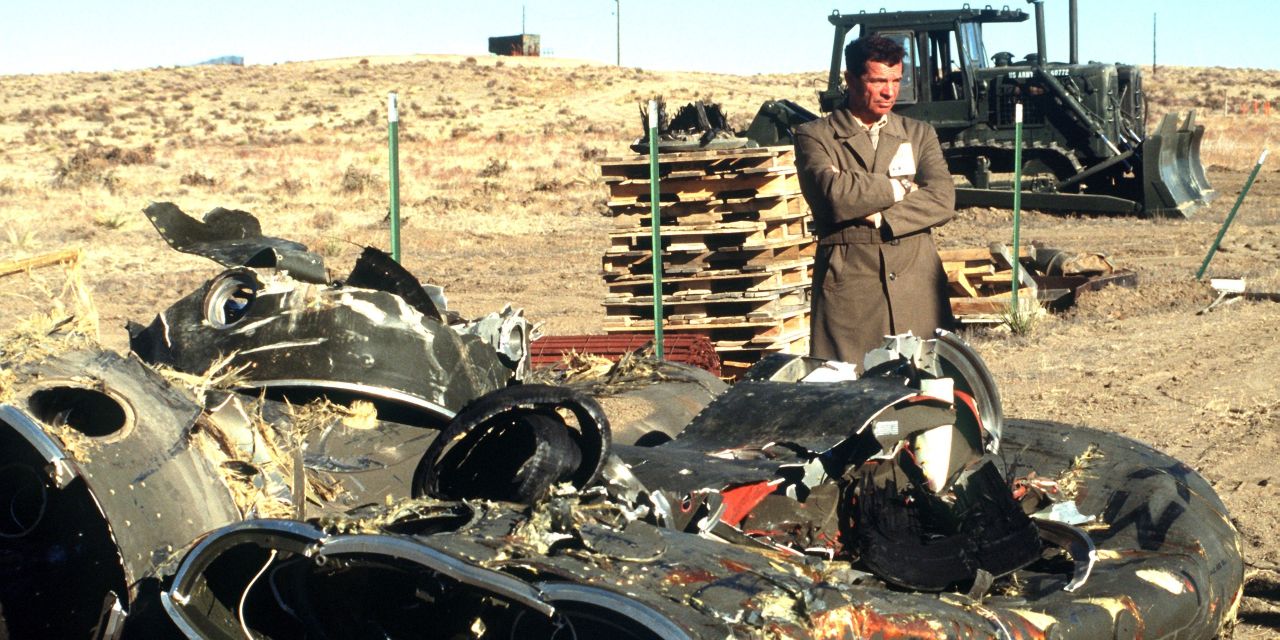
Image: MSGT Jose Lopez Jr. / Wiki Commons
This policy brief sets out a menu of proposals for revitalising UN and ad hoc disarmament and arms control mechanisms in ways that can build mutual reassurance among states. No dedicated multilateral processes systematically address major conventional weapons, including missiles, tanks, combat aircraft, and warships, despite their continued and widespread role in causing civilian harm. Proposing the concept of a COP for Weapons represents a substantial and ambitious undertaking but one that may help respond to the scale and complexity of contemporary weapons governance challenges.
Contents
- Abstract
- Introduction
- Understanding the COP model
- ‘Civilianising’ global security: Lessons and transferable practices from the COP process
- Looking ahead
Abstract
A renaissance of global weapons control is essential to prevent the present turn to militarised anarchy from ending humanity. This policy brief sets out a menu of proposals for revitalising UN and ad hoc disarmament and arms control mechanisms in ways that can build mutual reassurance among states.
The term “COP” carries broad resonance for those engaged in multilateral processes and is used here as a synonym for structured multilateral fora, drawing on the extensive experience of Conferences of States Parties in addressing contemporary disarmament needs. This body of experience is significantly richer than that which existed in the 1970s, when many of the current disarmament mechanisms were established. Yet from both humanitarian and security perspectives, there remains a notable gap: no dedicated multilateral processes systematically address major conventional weapons, including missiles, tanks, combat aircraft, and warships, despite their continued and widespread role in causing civilian harm.The authors recognise that the concept of a COP for Weapons represents a substantial and ambitious undertaking. Yet history suggests that many of today’s foundational disarmament treaties and institutional arrangements were once considered politically inconceivable before becoming integral to the global arms control architecture. In this context, there is both space and necessity for conceptual innovation, provocative questioning, and critical reflection on emerging security developments. This policy brief engages precisely in that exercise, exploring whether and how new process-oriented approaches could help respond to the scale and complexity of contemporary weapons governance challenges.
Introduction
Revitalising disarmament mechanisms is an established policy objective of all 193 UN Member States, yet meaningful progress remains elusive in multilateral forums. The urgency of resolving this impasse is underscored by the fact that, for the first time since the aftermath of the Cuban Missile Crisis, the world is experiencing accelerated rearmament without corresponding efforts toward disarmament, while existing mechanisms are effectively stalled or destroyed. For the tenth consecutive year, states have steadily expanded military spending without parallel disarmament efforts, often justified by geopolitical tensions and framed as a driver of prosperity, economic growth, and job creation, despite mounting evidence that such investments compete directly with more sustainable public priorities and place increasing fiscal burdens on citizens.
States appear to be overlooking a critical reality: existing disarmament and arms-control frameworks are no longer aligned with emerging technologies, evolving actors, and shifting geopolitical variables, and must therefore be revitalised to effectively reflect and respond to today’s rapidly changing security landscape. The latest NPT Preparatory Committee once again failed to reach consensus on recommendations for the 2026 Review Conference, while the consensus-based Conference on Disarmament has remained effectively paralyzed since negotiating the Comprehensive Nuclear-Test-Ban Treaty in 1996, prompting experts to warn that its continued deadlock is eroding the credibility of the multilateral disarmament architecture by “perpetuating a diplomatic charade.” Simultaneously, withdrawals from key humanitarian disarmament treaties, including the Convention on Cluster Munitions and the Mine Ban Treaty, are reversing decades of progress and, as the UN Secretary -General António Guterres has cautioned, “undermining two decades of a normative framework that has saved countless lives.” At the same time, emerging and disruptive technologies are enabling the creation of new ‘non-industrial’ or craft-produced weapons that circumvent existing arms control mechanisms and outpace current law-enforcement capacities, while the accelerated modernisation of nuclear arsenals and renewed threats of use are pushing the world closer to a nuclear winter.
This paper conducts a comparative analysis of the COP (Conference of the Parties) processes to explore how lessons from climate governance and other fora can inform the design of a COP-like framework for weapons governance. The aim is not to duplicate existing disarmament mechanisms but to reimagine dialogue and concrete outcomes that enable continuity, inclusivity, and innovation in global weapons governance.
A COP for Weapons could be an instrument to operationalise the long-standing obligation set out in Article 26 of the UN Charter, which calls for “the establishment and maintenance of international peace and security with the least diversion for armaments of the world’s human and economic resources.” By establishing a standing, process-driven forum for transparency, reporting, and periodic stocktaking on military spending, arms production, and transfer practices, such a mechanism would enable states to assess how national and collective security can be pursued through arms control, non-proliferation, and disarmament, while freeing resources for social and economic development and in line with the obligations to the Charter.
Understanding the COP model
A Conference of the Parties (COP) is the primary decision-making and governance forum established under a treaty, providing a formal setting for negotiation, review, and agenda-setting. Most commonly associated with the UNFCCC (United Nations Framework Convention on Climate Change) and other environmental-related negotiations, COPs are high-level conferences that convene states, regional organisations, and non-state actors. They are attended by representatives of governments (Parties) across the five regional groups as well as by a wide range of accredited (non-party) observer organisations, including civil society groups, the private sector, financial institutions, subnational authorities, and community stakeholders.
A COP’s central function is to review collective and individual progress toward the overall goal of its parent convention and may result in new agreements or protocols, the refinement of targets, the adoption of implementation rules, or the assessment of national contributions and actions.
To understand what sustained, process-driven governance can look like, the evolution of the UNFCCC, which entered into force in 1994 and currently has universal membership, provides a useful roadmap for how a multilateral process can maintain continuity and adapt over time. The UNFCCC established its long-term effectiveness by taking several foundational steps:
- Problem recognition: It formally acknowledged the scale and urgency of climate change, grounding its mandate in scientific assessments.
- Clear long–term objective: It sets a lofty yet specific, science-based global goal informed by expert bodies such as the IPCC.
- Differentiated responsibilities: It placed leadership expectations on developed countries (Annex I and II Parties), reflecting historical responsibility and capacity.
- Directed support: It created dedicated financial and technological assistance for developing countries (Non Annex I Parties), including through the Global Environment Facility (GEF).
- Transparency and accountability: It instituted reporting and review systems requiring Parties to submit regular information on policies, actions, and emissions inventories.
- Balanced pathways: It sought to reconcile environmental ambition with development needs, recognising the projected growth in emissions from developing countries.
- Formalised adaptation processes: It launched mechanisms to address climate impacts and established governance structures for adaptation funding and implementation.
While the UNFCCC faces valid criticism over its ability to meet the scale of the climate crisis, its multi-layered institutional architecture remains a robust model for maintaining the continuity and technical momentum required for global governance. Designed as a layered framework of accountability, it serves as a blueprint for how complex international cooperation can be sustained over decades. Its three governing bodies (COP for the Convention, the CMP for the Kyoto Protocol and the CMA for the Paris Agreement), two permanent subsidiary bodies (Subsidiary Body for Scientific and Technological Advice (SBSTA) and Subsidiary Body for Implementation (SBI), the Secretariat, the Bureau, and multiple constituted technical bodies create a modular system in which scientific, implementation, and political work in tandem. This structure, paired with routinised transparency and reporting under the Enhanced Transparency Framework (ETF), regular expert reviews, and dedicated finance mechanisms such as the GEF and GCF (Green Climate Fund), ensures sustained attention and iterative progress even when high-level negotiations stagnate. For example, theKatowice “rulebook” at COP24 operationalised the Enhanced Transparency Framework, under Article 13 of the Paris Agreement, establishing common reporting guidelines, technical expert review processes, and multilateral consideration of progress. Another example is the first Global Stocktake, concluded at COP28, which catalysed renewed commitments under Nationally Determined Contributions (NDCs) and reinforced efforts to mobilise climate finance through mechanisms such as the Green Climate Fund (GCF).
What makes the UNFCCC distinct is its procedural design—complementary workstreams, continuous technical reviews, nationally driven commitments, and broad engagement of non-state actors. These features prevent the process from collapsing into episodic diplomacy and instead support a long-term, adaptive governance cycle capable of incremental but durable policy advancement.
'Civilianising' global security: Lessons and transferable practices from the COP process
The UNFCCC COP process demonstrates how a politically polarising and technically complex issue can be transformed into a stable, iterative, and increasingly inclusive system of global governance. Its effectiveness lies not in single breakthroughs, but in the institutional ecosystem it built around continuous review, transparency, and broad participation as the core of decision-making. Analysing their institutional mechanisms and rules of procedure offers important lessons for the disarmament and arms control domain.
One of the most valuable features of the COP model is its reliance on standardised national reporting. Under the ETF, countries submit regular, comparable information grounded in agreed methodologies, which is complemented by independent technical review processes that help depoliticise sensitive issues, improve data quality, and build confidence among Parties. The periodic Global Stocktake further provides an additional mechanism for assessing collective progress and identifying gaps, ensuring that the process remains forward-looking rather than reactive. Coupled with a dedicated implementation fund and structured non-state actor participation, such a model could help make it resilient to political pressure and state-centric negotiations.
Adapting these practices to the disarmament and arms control domain could democratise security governance while remaining sensitive to states’ legitimate security concerns.
For example, regularised national reporting, a periodic “Global Stocktake of Weapons and Risk”, and dedicated technical bodies would generate comparable data on the fiscal and opportunity costs of armament. This would build on existing mechanisms and support evidence-based identification of concrete measures—such as spending caps, reallocation benchmarks, or time-bound reduction plans—through which states can progressively align defence policies with Articles 11 and 26 of the UN Charter, while respecting legitimate security needs. [1]
Institutionalising review and follow-up would help translate the least-diversion principle from a declaratory norm into an operational standard for budgetary, industrial, and export-control decisions across the disarmament architecture. Embedding this principle at the core of a COP for Weapons would also strengthen human security by shifting political incentives away from arms racing and towards the social foundations of peace. By fostering transparency, mutual reassurance, and accountability, a COP for Weapons could help de-link security from ever-expanding armament and reduce the risks of escalation, miscalculation, and war.
A COP-for-Weapons could fill core institutional gaps in today’s fragmented disarmament architecture by providing a neutral, process-driven platform for transparency, review, and cross-regime coordination without intruding on the legal mandates of existing treaties. Its value would lie not in negotiation, but in the creation of synergies—a unified rules-based transparency framework and public registry to harmonise reporting; a periodic “Global Stocktake of Weapons and Risk” to assess emerging trends; subsidiary technical bodies to depoliticise expert analysis and generate shared methodologies and verification tools; and formalised channels for civil society, youth, and Global South participation.
There is considerable scope to build on both existing and now-defunct treaty architectures, many of which already contain complementary principles, tools, and verification practices. Practical building blocks for such a framework can be found in the OSCE Vienna Documents and the UN Register of Conventional Arms (UNROCA), which provide established templates for confidence- and security-building through routinised data exchange and transparency regarding conventional armed forces. The rigorous verification and inspection protocols of the Intermediate-Range Nuclear Forces (INF) Treaty, the Strategic Arms Reduction Treaties (START), complemented by the robust monitoring models of the UN Special Commission (UNSCOM) and the UN Monitoring, Verification and Inspection Commission (UNMOVIC), offer technical standards for ensuring compliance. Furthermore, as Ambassador Alexander Kmentt has highlighted, the synergies between the Treaty on the Prohibition of Nuclear Weapons (TPNW) and the Treaty on the Non-Proliferation of Nuclear Weapons (NPT) regarding humanitarian considerations, risk reduction, and the progressive implementation of nuclear disarmament obligations demonstrate that cross-regime learning and alignment are both feasible and beneficial.
Disarmament governance has historically progressed through adaptation, institutional learning, and the recombination of existing mechanisms. A COP-for-Weapons framework could build on this accumulated experience [2] by integrating reporting obligations—such as those under UNROCA, Article 13 of the Arms Trade Treaty (ATT), and national submissions to UNSC Resolution 1540—into interoperable data streams under an ‘accountability pillar’ to help bridge the gap between international norms and domestic enforcement. A COP-for-Weapons process could work to harmonise reporting templates, align weapon categories, and develop common methodological guidance, allowing data already submitted under existing frameworks to be aggregated and comparatively analysed without imposing duplicative burdens on states. In this way, it could strengthen the visibility, coherence, and policy relevance of reporting systems that currently operate in parallel and, in some cases, have lost political momentum. These bodies could develop shared counting rules, risk indicators, and voluntary best-practice guidelines where appropriate.
By convening technical experts, humanitarian actors, finance bodies, and treaty secretariats in one space, a COP-for-Weapons could create sustained, system-level visibility on modernisation trends, emerging technologies, and humanitarian impacts. As an operational convenor for iterative reporting, a COP-for-Weapons would enable continuous problem-framing for renewed commitments and follow-up actions.
Further, a COP-for-Weapons would need to balance state sovereignty with meaningful non-state participation by establishing clear observer categories, rules of engagement, and structured avenues for input, bearing in mind that it does not impede state decision-making authority. It could create voluntary action platforms where industry actors, civil society, and technical communities share and commit to responsible practices, such as improved manufacturing standards, due diligence on dual-use technologies, or non-procurement commitments, thereby generating normative momentum. To ensure genuine inclusivity, the process should institutionalise engagement mechanisms, including advisory panels, curated action agendas, hybrid participation options, and funded access schemes to support Global South actors, victim groups, and smaller NGOs that currently lack meaningful pathways into disarmament forums.
Finally, a COP-for-Weapons should pair transparency obligations with a dedicated implementation and capacity-building facility. This would help states, particularly those with limited resources, with stockpile management, DDR, safe destruction, and reporting requirements, transforming participation from a burden into a collective responsibility.
Looking ahead
A COP-for-Weapons remains an emerging concept. We can sketch possible structures and identify transferable lessons from the UNFCCC and other COP processes, but formulating such a mechanism will require dedicated interdisciplinary collaboration. This brief should therefore be read as a forward-looking exploration and a prompt to visualise, not to prescribe the final model. The next phase, as a community, must be to:
- bring together disarmament practitioners, effective conference mechanisms, climate governance experts, military analysts, humanitarian actors, industry representatives, and affected communities to co-design, test, and refine what a COP-for-Weapons could realistically deliver.
- consider regional and ad-hoc coalitions of willing states supporting a renaissance of law-based security and humanitarian governance. These might include amendments conferences to Nuclear Weapon Free Zone (NWFZ) Treaties, for example.
- map the convergence between climate, weapons, and other governance, particularly as emerging technologies, environmental degradation, and geopolitical fragmentation increasingly intersect the two sectors.
- develop a shared research agenda, identify priority gaps, and outline a phased process for conceptualising a process that is politically feasible, cost-effective, and globally inclusive. If designed well, it can strengthen links within the peacebuilding, sustainable development, and humanitarian law agendas and provide the institutional continuity needed for disarmament to keep pace with rapidly evolving risks. Used strategically, this approach could also help reactivate the call for a UN Fourth Special Session on Disarmament, providing the political momentum required to shape the next generation of multilateral disarmament efforts.
- consider building-block initiatives, such as bans and controls on missiles, that are associated with but not formally linked to other initiatives.
The genesis of a ‘COP for Weapons’ need not be a legal instrument, but a political forum necessary for breaking the current diplomatic deadlock. Many of the world’s resilient multilateral processes began as voluntary, non-binding initiatives that matured as their value became self-evident. By launching as a non-binding convening body, the COP-for-Weapons sidesteps the political hurdles that often stall formal treaty negotiations. A ‘test-drive’ phase, with an initial focus on voluntary reporting and transparency, allows states to engage in technical exchanges and build confidence without altering existing mandates. It would provide a neutral ground for states to align their data and procedures without the weight of new legal mandates. As the process proves its utility and inclusivity over time, it would create a natural trajectory toward formalisation. This approach lowers the threshold for participation, allowing a credible and inclusive culture of disarmament to take root. By prioritising flexibility at the outset, the international community can build a foundation that is both politically viable and capable of evolving into a more formalised regime.
Notes
[1] Recalling Article 2 of the Charter of the 1942 Treaty on Declaration by United Nations, which affirmed that “all of the nations of the world, for realistic as well as spiritual reasons, must come to the abandonment of the use of force…and encourage all other practicable measures which will lighten for peace-loving peoples the crushing burden of armaments.”
[2] See SCRAP Weapons Project and its draft treaty text on General and Complete Disarmament which draws on established instruments and practices, including the OSCE Vienna Documents on Conventional Arms, the UNROCA, INF Treaty, the START, and the inspection and verification models developed by the UNSCOM and the UNMOVIC, as well as the implementation architecture of UNSC resolution 1540.

The Author

Dan Plesch

Monalisa Hazarika
Monalisa Hazarika is the Research and Strategic Engagement Officer at the SCRAP Weapons Project.
Toda Peace Institute
The Toda Peace Institute is an independent, nonpartisan institute committed to advancing a more just and peaceful world through policy-oriented peace research and practice. The Institute commissions evidence-based research, convenes multi-track and multi-disciplinary problem-solving workshops and seminars, and promotes dialogue across ethnic, cultural, religious and political divides. It catalyses practical, policy-oriented conversations between theoretical experts, practitioners, policymakers and civil society leaders in order to discern innovative and creative solutions to the major problems confronting the world in the twenty-first century (see www.toda.org for more information).
Contact Us
Toda Peace Institute
Samon Eleven Bldg. 5thFloor
3-1 Samon-cho, Shinjuku-ku, Tokyo 160-0017, Japan
Email: contact@toda.org