A New Syria in a ‘New Middle East’: Challenges and Opportunities for Democratization
Larbi Sadiki and Layla Saleh
March 03, 2026
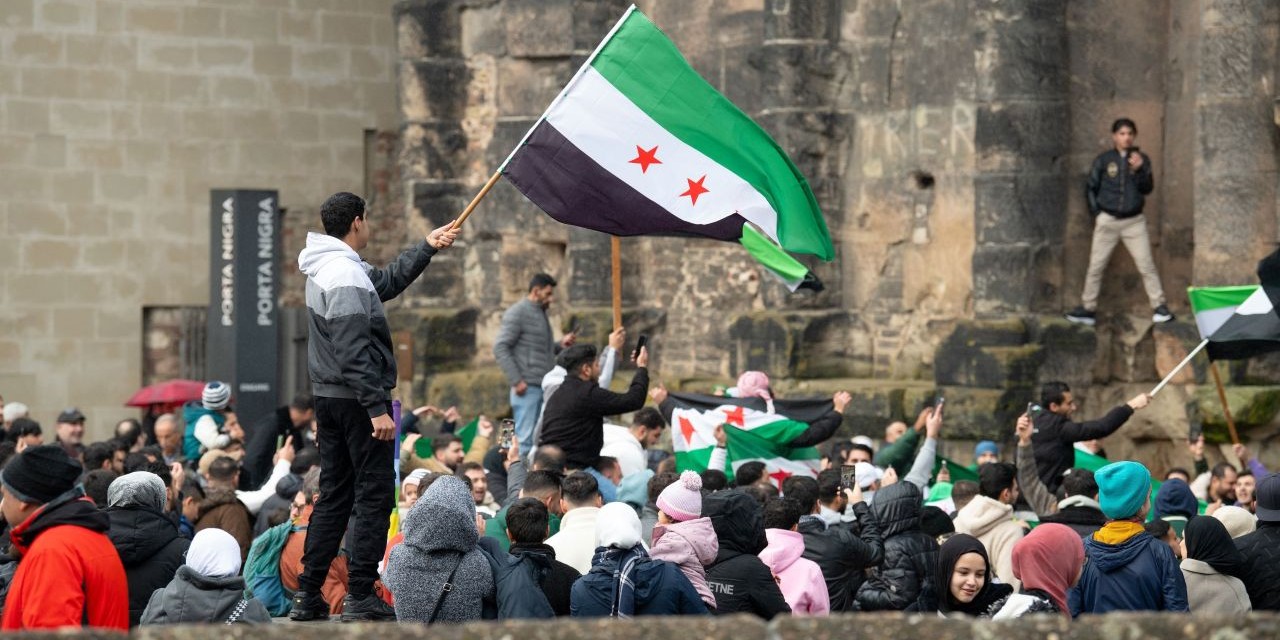
Image: Berit Kessler/ shutterstock.com
This report seeks to chart the political transition and the prospects for pluralist, if not democratic, rule in a situation that remains very much in flux since the fall of the Assad regime in Syria in December 2024. Profound changes in Syria, spearheaded by President (of the Transitional Phase) Ahmed Al-Sharaa and his government, unfold in a setting where issues of security and basic territorial sovereignty remain highly volatile, shaped by regional and international dynamics. Following analysis of the political transition, the civic space and pressing security issues, a set of recommendations suggests ways that civil society and international stakeholders can work towards greater inclusiveness and popular participation.
Contents
- Executive summary
- 1. Political transition ‘from above’
- 2. Uneven civic pace
- 3. Regional and international dynamics: Security over democracy
- 4. Recommendations
Executive summary
The last thirteen months since the collapse of dynastic rule in Syria have been no less eventful than the 12 days of Operation “Deterring Aggression” that suddenly brought down the Assad regime in December 2024. This report seeks to chart the political transition and the prospects for pluralist, if not democratic, rule in a situation that remains very much in flux, domestically and regionally. Profound changes in Syria, spearheaded by President (of the Transitional Phase) Ahmed Al-Sharaa and his government, unfold in a setting where issues of security and basic territorial sovereignty remain highly volatile. These security files are in turn shaped by regional and international dynamics, indeed neighbouring conflicts, that are the painful birth pangs of Trump’s “New Middle East” taking shape. Syria and the region are anything but stable, in some ways deferring concrete measures towards democratization.
Part One lays out Syria’s political transition over the last ten months or so, since Al-Sharaa’s assumption of the presidency. It demonstrates the top-down, centralized bent of the process, which gestures half-heartedly towards institutionalized power-sharing, inclusiveness, and popular participation.
Part Two moves to civil society, noting the combination of eager participation in whatever civic space exists, and dissent over increasing restrictions put in place by the authorities in Damascus. Syria’s political transition remains a highly internationalized affair.
Part Three briefly examines the most pressing security issues facing Al-Sharaa’s government that has firmly crossed over into the US ‘camp’. Security and stability take precedence over democracy, in line with the regionally ubiquitous pattern.
A set of recommendations closes off the analysis, suggesting ways that civil society and international stakeholders can work towards greater inclusiveness and popular participation. These include: capitalizing on whatever civic space exists, rather than ‘boycotting’ the new authorities; supporting local (and diasporic) Syrian initiatives for political and democratic socialization; and recognizing—in analysis and in practice—that Syria’s stability, a condition of sustainable democratization, is tied to regional (in)stability, much of it wrought by Israeli expansionism and US militarism.
1. Political transition ‘from above’
In the face of the myriad (economic, security, social, political) challenges, post-Assad governance of Syria is an enormously daunting undertaking. Such a relatively brief (yet tumultuous) time after Al-Sharaa seized the reins of power in Damascus, one way to assess the (democratizing) performance of the nascent political regime may be on its own terms. The highly controversial Constitutional Declaration followed a largely perfunctory one-day “National Dialogue Conference,” its technical/legal form drafted by a seven-person committee of experts chosen by the current President, former Al-Qaeda-linked Hay’at Tahrir Al-Sham (HTS) leader, Ahmed Al- Sharaa. The Declaration represented a shift from so-called (military) ‘revolutionary legitimacy’ that brought down Assad to what one scholar has called an ‘incomplete constitutional legitimacy’, imposed from above and not explicitly democratic.[1] It was this Declaration that made the transitional period official, a lengthy five years.[2] The five-year transition will conclude with elections and a permanent constitution.
In the meantime, a 210-member legislature would take shape, tasked with passing laws, modifying laws existing from the Assad regime, ratifying international agreements, and issuing pardons.[3] Two-thirds of this legislature would be indirectly elected by a larger body, divided into geographically-based constituencies. This voting body, an ‘Electoral College’ in some generous formulations, included self-nominations; its makeup was determined by the Supreme Committee of Elections (SCE) appointed by Al-Sharaa himself. (An emerging pattern, of presidential appointments to major political institutions, is undeniable.) Members of the legislature ran as individuals, none as party members or representatives, for a 30-month renewable term. The remainder of the legislature would be hand-picked by the President. This power of appointment has the advantage, as SCE members and its Spokesperson Nawar Najma insisted in the lead-up to the vote, of the President compensating for any poor showing of women, people with disabilities, or minorities. A more critical reading suggests that the one-third of the legislature chosen by the President will prevent the formation of any significant bloc that might oppose his policies or put forth independent political programs.
These quasi-elections took place on 5 October 2025. Three governorates, Al-Raqqa and Al-Hasaka in the North-East, and Suwayda in the South, were excluded, their 19 total MPs to be voted for at a later date. North-East Syria (Al-Raqqa and Al-Hasakah) was, until late January 2026, controlled by the Kurdish-led militia, the Syrian Democratic Forces (SDF), in talks with Damascus on integration into the new state since an initial agreement on 10 March 2025. In July 2025, battles in Al-Suwayda, on the border with Israel,[4] between Druze militias, led by Hikmat Al-Hijri (who has notoriously sought help from Israel against the Syrian), left hundreds dead. The government rallied Bedouin fighters as reinforcements. A harsh siege of the governorate, and a dangerous humanitarian situation, ensued. Given this background, the Damascus government admitted a logistical near-impossibility of organizing any kind of vote in areas not under its control. The result was an incomplete casting of ballots, but as of early 2026 two-thirds of the incoming legislature has been chosen. The
deficiency in inclusiveness was not just regional/geographic but also gendered. Despite an estimated 30 per cent of candidates being female in some electoral districts, many of them culturally and ideologically aligned with the (religiously-observant, Sunni) supporters of the new government, only six women were chosen in
October. This result was shocking for many, especially because the two largest cities, Damascus and Aleppo, failed to select any women. It was as though 14 years of widely recognized female involvement and leadership in civil and political society had been ignored. For a few days at least, this surprising, overwhelmingly male result instigated some debate on social and traditional media about why Syrian society, in this first not-quite electoral test, managed to churn out an elite short of even five per cent women.[5] (Here was one small illustration of why political parties are vital to ensuring not just the aggregation of interest but also political recruitment in relatively representative fashion.) Minorities, too, came up short in the October 2025 vote, with Christians nabbing only two seats.
But the most significant aspect of this stalled parliament building is that the legislature has not yet been convened. President Al-Sharaa has yet to nominate his one-third of the members. All eyes are on this next step, its timing as yet unannounced. Before Al-Sharaa are two perhaps conflicting imperatives. To fulfill the
promises made by the SEC, he must make up for the under-representation of women (and religious/ethnic minorities) in the first round, while also meeting his more practical need to ensure that the legislature, despite
its limited powers, remains in line with the political trajectory he is laying out for the country. How he will manage both will be interesting to follow.
The October 5 vote showed in practice the gaping hole that is the absence of political parties in the new Syria, despite their appearance in the Constitutional Declaration. The (future) Parliament’s powers are not extensive. Yet one power granted to the legislature is passing an electoral law, which should include political parties.
Currently, there is no law stipulating the conditions and licensing requirements to form political parties, a major weakness of the current system and the recent vote, democratically speaking. Government officials have spoken of political parties being allowed to take shape by the end of the current five-year transition period. In an interview with Chatham House in London, Foreign Minister Assad Al-Shaibani promised “pluralism” in a future “inclusive” and “elections-based” system.[6] There have even been rumours that the president and his inner circle will form a political party.[7]
Yet critics of the new regime see the deferral of granting political parties legal status a signal of Al-Sharaa’s determination to only tighten his grip on power as time passes, rather than opening up the system to other groups, with alternative (perhaps competing) leaderships, ideologies, and constituencies. Months ago, and before the elections, the close advisor to the President, Dr. Ahmad Mwaffaq Zaidan, publicly suggested that the long-time Islamist opposition party, the Syrian Muslim Brotherhood (Ikhwan),[8] should dissolve itself. He cited the party’s fragility, a domestic transitional situation requiring unity not division, as well as a regional and international climate inhospitable to the Ikhwan, as arguments for the party’s quiet disappearance from the political scene.[9] The public response by the Brotherhood was polite but far from acquiescent. Instead, the party’s leadership noted that no formal instructions to disband had reached them, also asserted the group’s support for the Syrian state and its new President.[10]
Just days after the (still-controversial) article was published, the former General Guide, Ali Sadreddine Al-Bayanouni, made his return to the country after decades in exile. This homecoming was not unlike many other private and public personalities before him, except that it was highly publicized—a political statement, some might say. In October, the party issued a political vision for the new Syria, emphasizing democracy, individual freedoms including the freedom of belief [religion], and popular participation.[1] Still, neither the Ikhwan nor other political forces operate as official political entities in the new Syria. At the same time, some individuals with Brotherhood pedigree have been recruited to high ministerial positions, with others reportedly voted into the new legislature-in-waiting. Whether Islamist, leftist, or anywhere in between, Syria’s political aspirants await formal permission to operate as political parties, the building blocks of any functioning democracy.
2. Uneven civic pace
For many activists, initial euphoria and democratic optimism have been tempered by a year of post-Assad political life. Civil society is being kept at arm’s length by the new regime, although the limited civic space has not stopped the flurry of seminars, workshops, lectures, and cultural activities, especially in Syria’s major cities. Thinktanks, advocacy groups, and even some feminist political collectives (such as the Syrian Women’s Political Movement, from which Social Affairs Minister Hind Kabawat, the only female and Christian Cabinet member, hails) have held numerous events across the country. There is of course a dramatically marked improvement in the freedom of speech and expression since the Assad days, but it is by many reports now diminishing. There have been reports of journalists detained, sometimes with no news of their whereabouts.[12] In an extreme case, a harsh 10-year prison sentence was handed down to a man who is reportedly member of Hizb Al-Tahrir, also a political opponent of Al-Sharaa from the Idlib days.[13]
While even Al-Sharaa’s harshest critics would agree that the civic and political climate is much more free after December 2024, over a year later that bar is perhaps too low for evaluation. The delay in drafting the political party law is not the only obstacle to the uniform exercise of freedom of speech, freedom of assembly, and the right to political participation guaranteed in the Constitutional Declaration. The lengthening arm of the General Directorate of Political Affairs stands out in this regard.[14] Its predecessor was the Political Affairs Administration operating under Abu Mohammed Al-Jolani’s (Al-Sharaa’s former name) Salvation Government in Idlib. The General Directorate was presumably formed to take over former properties and mandates of the now-dissolved Ba’ath party, but its responsibilities are expanding to oversee political and civic life more generally. Formally, as a report in Aljumhuriya explains, civic and political activities dealing with political issues (citizenship, political participation, democracy, sometimes even transitional justice) must be granted approval by the Directorate. In the largest cities Damascus and Aleppo—where sectarian tensions are relatively low—civil society groups have greater room for manoeuvre, according to the report. By contrast, in cities like Homs and Hama, oversight is stricter and some activities have been prohibited, say some activists. Personal relationships with people inside the government can also smooth out the convening of civil society activities, facilitating the ‘appeal’ of initial refusal.[15] At present, then, the situation can be summed up as uneven and often improvised, depending on who is calling the shots at a ‘street-level bureaucracy’ level. And such inconsistency in the latitude for organization, in holding civic or political activities, does not spell freedom or legally enshrined equality across the board.
Further constraining the formal flourishing of civic space are the operating procedures for registering civil society organizations. There has not been an overhaul of Assad-era rules that might be expected in a democratic transition. The Ministry of Social Affairs requirement for government approval of donations by NGOs, based on a law from 1958 generated an outcry by activists whose organizations, like many in the developing world, have long relied on international funding. Thirty-one of these organizations were signatories to a statement objecting to the law, suggesting that it would curtail civic liberties as the military Egypt–Syria ‘union’ government had done even prior to Assad.[16] They recommended repealing this law and putting in place a clear set of registration and licensing procedures for civil society organizations.
A major agenda item for civil society organizations has been the transitional justice portfolio. This specifically post-conflict undertaking is necessary not just for accountability and reparations to victims, but also for national reconciliation, a foundation for social peace.[17] Here there is dissatisfaction across the board with the (slow) pace and (lack of) action on locating the tens of thousands of disappeared, most by the Assad regime but also some by militias including HTS, ISIS, and others. Accountability of former Assad officials has also lagged. The National Commission for the Missing, announced by presidential decree in May 2025, was set up as a putatively independent body tasked with fact-finding and supporting, through various means, the families of the disappeared. Yet it has failed to convince many family members either of its independence or its effectiveness, shutting out civil society groups long active on this file and seeking to “monopolize the file and restrict civic initiatives,” according to some critics.[18] Relatedly, amnesty for former regime collaborators such as businessman Mohammed Hemsho, granted in return for reported cooperation with the new authorities, has generated public anger. The government occasionally tolerates mobilizations of dissent, for instance a Damascus protest on 10 January 2026, featuring the slogan “no settlement without justice.”[19]
A final note on civic life in the new Syria concerns the transformation of religious institutions, under the Ministry of Religious Endowments headed by Mohammed Abu-l Khair Shukri. Shaikh Usama Al-Rifai’, with his Damascus ‘ulema (religious scholar) pedigree, has now been appointed Mufti (top religious scholar who issues jurisprudential rulings) of Syria. Along with his recently departed brother Saria Al-Rifa‘I, the new Mufti had publicly opposed the Assad regime. This was a significant appointment not only because it signalled a political détente between Al-Sharaa and Al-Rifa‘i, a former critic, but also between Islamic doctrinal schools (Sufi Ash‘ari/Salafi)[20] frequently considered at odds. In a parallel development, the Syrian Islamic Council, the diverse umbrella organization of religious leaders formed during the revolution to issue religious rulings on various issues (many of them political) and to ensure continuity of religious education across the fragmented Syrian geography and diaspora, disbanded in late June 2025, apparently based on the new government’s request. This was a highly controversial move, even among many of Al-Sharaa’s supporters.[21] The independent religious body, with a great deal of religious and even ‘revolutionary’ credibility among religiously observant Sunnis, stepped aside in favour of the state-led Awqaf.
At the same time, there are reports of intense religious activity in Syria, from study circles to Qur’an memorization, which would have been unthinkable during the Assad regime. This is not to say that the Ministry does not issue directives about the format and sometimes even the general content of Friday prayer sermons (it does), in favour of breadth, moderation, and avoidance of controversial political topics. The picture is a mixed one, of more freedom of religious activity but only under the watchful tutelage of the new regime. Such interactions between religious authority and political power are important across the Arab world, where the Grand Mufti and other venerated positions typically preach support for the ruling regime. In Syria, the great leap is from an arrangement in which the brutally repressive (Alawite) Assad regime carefully cultivated support by (some) Sunni scholars and religious leaders.[22] What we see now, by contrast, is an emerging set of relationships in which a Sunni president seeks to gain and maintain support from Sunni religious leaders and their observant constituencies. Some sensitive, looming political/diplomatic decisions, such as (potential) normalization with Israel, may require religious justification—unless the ‘ulema opt for silence. Time will tell.
3. Regional and international dynamics: Security over democracy
Democracy is not on the agenda, either regionally or globally. International powers are busy with ongoing conflicts in the region: Lebanon, Libya, Sudan, and Yemen. The Saudi–UAE rivalry, particularly over the UAE’s role in Yemen, which the Saudis now consider dangerous to their own national security, has come to the fore. And Iran, pushed out of Syria after its militias fought alongside the Assad regime, is still a preoccupation for Al-Sharaa’s new Gulf supporters. These US allies have lobbied the US not to interfere with the protests that have alarmed observers on many sides. War with Iran would be destabilizing not just for the Islamic Republic’s regime but for the entire region. The Gulf states and Turkey, now involved in Syria with treaties and economic agreements, have a high stake in stability. Damascus, too, does not wish to see new wars exploding. Syria does not have air cover against Israel, which has bombed the country dozens of times since the fall of the Assad regime and is expanding its ‘military footprint’ within the country, taking over land, building new settlements, and even killing Syrians, including 13 in the village of Beit Jin in November 2025.[23] This despite no offensive moves by Damascus, as the government seeks to stabilize its own rule, including uprisings and clashes in Suwayda and earlier in the northwest coastal areas, where government-aligned forces reportedly carried out massacres in March 2025. Israel has since 1967 occupied the Syrian Golan Heights; peace talks have been attempted on and off for decades. At this point, Al-Sharaa has withstood normalization with Israel despite pressure from the US in Trump’s ‘new Middle East’. A US statement after a tripartite meeting in Paris in January 2026 noted the establishment of a “joint fusion mechanism” for negotiations but also for ill-defined “economic opportunities”. [24] Only days later, battles between government forces and the SDF exploded.
According to news reports, Syrian officials received a “green light” from the Americans to begin an offensive, although they pushed farther than had initially been agreed.[25] Turkey, for whom the SDF is a longtime foe and threat to national security, is expectedly supportive.
The shifts in regional and international alliances are significant here. For the repeal of punishing Caesar sanctions and gain some kind of international legitimacy, Syria’s new leaders have ensconced themselves firmly in the US camp. (Ongoing talks with Russia continue, as evidenced by Al-Sharaa’s visit to Moscow at the end of January 2026.[26]) Al-Sharaa’s meeting with Trump in the White House in November 2025 was the stuff of spectacle (recall the cologne spray). The US President’s repeated praise of the new president is striking. Some might say that Syria’s new leaders are ingratiating themselves with the Americans, as exemplified by the footage of Al-Shibani and Al-Sharaa shooting hoops with Central Command admiral Bradford Cooper.[27] And this closeness with the US is by way of the Gulf: Trump and Al-Sharaa’s first meeting took place in Riyadh in May 2025, and Trump noted that it was Saudi Arabia’s Crown Prince Mohammed ben Salman, as well as Turkey’s Erdogan, who convinced him to suspend sanctions on Syria. After years of punishing sanctions, the country is enthusiastically entering the global financial system, with SWIFT now operating there.
THE END OF SDF?
Perhaps for Al-Sharaa, then, strengthening ties with the US is paying off, since the US has largely sided with Al-Sharaa in the January 2026 battles against the SDF.On 16 January 2026, he issued Presidential Decree 13. It declared that the Kurds are an “essential and authentic component of the Syrian people,” explicitly confirming their full citizenship and cultural/language rights, national holiday of Nawroz, cancelling emergency treatment of Kurds in the Hasakah region active since 1962. The timing, of course, is crucial. (Couldn’t Al-Sharaa have
issued such a decree earlier in his tenure?) The move has been formally and informally framed as a rejoinder to the SDF claims of basic citizenship and cultural grievances against the central government in Damascus. Just two days later, decisive battles raged between government troops, sometimes joined by tribal (‘asha’ir) fighters, some of whom defected from the SDF. The SDF swiftly retreated from Deir Al-Zour and Al-Raqqa to the eastern-most governorate of Al-Hasakah, with larger Kurdish populations. A formal agreement between Damascus and the SDF was published shortly after. The January 18 agreement, as it has come to be known, declares an end to fighting, military withdrawal as well as handover of civilian and government institutions, and control of oil and gas by SDF forces, in Deir Al-Zour, Al-Raqqah, and Al-Hasakah, to the government in Damascus. Syrian individual fighters in the SDF could apply to join security or military service and would be vetted one by one. Finally, Damascus would continue working within the Global Coalition against ISIS, and specifically with the US itself, in fighting ISIS. (During the battles between SDF and Damascus, US Coalition forces bombed and reportedly killed ‘Al-Qaeda-linked’ militants tied to the killing of US service members, and some Syrians, in December 2025.) While the head of US Central Command, Bradford Cooper, and US Special Envoy Tom Barrack himself had initially cautioned against Damascus forces’ fighting the SDF, they quickly approved of the formal agreement between the two sides. This public American approval came after Barrack had met with Turkish Foreign Minister Hakan Fidan, and with SDF leader Mazloum Abdi in a meeting headed by Kurdish leader Masoud Barazani in Erbil, Iraq. Clearly, then, even battles on the ground, or the political outcomes thereof, are still being filtered through regional and international power brokers (Turkey, the US).
However, since 18 January the SDF has backtracked, and the future of the agreement seems uncertain. Battles will likely erupt again in Al-Hasakah.
One point of contention in the competing narratives between SDF and Damascus concerns ISIS prisoners. It is significant that SDF itself was formed from mostly Kurdish leftist-nationalist militias, adherents of the Kurdistan Workers’ Party (PKK) headed by Abdullah Ocalan in Turkey, in 2015. The militia, led by the People’s and Women’s Protection Units (YPG and YPJ), was the ground partner of the US-led Global Coalition against ISIS. That is why the SDF, as well as some of its champions in the US Congress including Republican Senator Lindsey Graham [28], suggested that the newfound American insistence on the 18 January Agreement, and integration into the new Syrian government under Al-Sharaa, as a kind of betrayal. Over the years, the SDF has imprisoned thousands of young men accused of being ISIS fighters, as well as their families. In 2023, 42,000 foreigners (many of them Iraqis) and 23,000 Syrians were held by SDF in Al-Hol and Roj camps, with 60 per cent of them being children. Some were born in the camps. Many adolescent boys were abducted from public places, then separated from their mothers or other siblings, as a Human Rights Watch report indicates. These are family members of suspected ISIS members, held without any legal proceedings, “making their detention arbitrary and unlawful
Detention based solely on family ties is a form of collective punishment, which is a war crime, according to Human Rights Watch, not unbeknownst to its state backers.[29] The rights group’s investigation in 2023 showed that children in particular have suffered a lack of medical attention, shelter, clean water, not to mention the education and recreation that are also basic human rights for children. The fate of suspected ISIS prisoners and their families during the handover from SDF to Syrian government forces has generated widespread concern and featured in negotiations between Damascus, the Kurdish militia, and Washington. Up to 7,000 are being evacuated by the US from Syria to Iraq, according to US Central Command. Yet the (formerly) SDF-controlled prisons and camps are also a pressing conflict-related human rights issue. The misery of a 14-year war endures for some, taking new forms as refugee/prison camps are traded from one country to another. Western countries have refused to repatriate their captured citizens or take in very limited numbers.
For years, the Autonomous Administration of North and East Syria (AANES, called Rojava by the SDF) has been widely celebrated outside Syria as an experiment in emancipatory, democratic, localized governance and full-fledged gender equality.[30] But residents of Al-Raqqa and Deir Al-Zour under SDF rule until 18 January 2028 (most of them Arabs) did not see it this way. Forced conscription of minors and mandatory PKK-style educational curricula in schools have been among the greatest grievances of those living under SDF after the Kurdish militia drove out ISIS. For these residents of the Syrian Jazeera (the country’s East), the AANA was “a form of minority rule that created opportunities for corruption and marginalization,” a life of constant online and offline surveillance and repression, for both Arabs and Kurds, intensified after December 2024.[31] Reports point out that even local songs and political symbols, such as the Syrian flag that was adopted in 2011 by anti-Assad revolutionaries and is now the official state emblem, were prohibited on pain of imprisonment for terrorism.
The still-open conflict between SDF and Damascus renders the question of functioning political institutions, even highly centralized ones as in the rest of Syria under the transitional government’s control, a moot point for the time being. A ceasefire between the Syrian army and SDF, extended by 15 days after the initial 24 January 2026 expiration date, has roughly held, though not perfectly. The priority at present is an end to fighting, ideally through the successful implementation of the 18 January agreement; a return of the displaced; a solution to the refugee and prison camp conundrum that respects human rights and due process; and a gradual return to normalcy to the people of (impoverished, yet natural resource-rich) North-East Syria. A shift to democratic governance, doubtful even in relatively stable areas, is likely to be even farther off in (post)SDF areas. Any ambitions for federalism, a dirty word to Damascus and many supporters of the transitional regime with its connotations of separatism, are less likely than ever. The kind of de-centralization or local governance that will take eventually shape is one development to watch in the coming months.
4. Recommendations
The manifold political, military, and economic changes in Syria over the past 14 months make for a highly fluid situation. It is difficult to say whether democratization will take shape in a country where battles are still being fought, and where some of its territory is still occupied by an increasingly overconfident and expansionist Israel. Post-conflict stabilization does not necessarily spell democratization, as this report has shown. Yet some activists are adamant that civic space be widened rather than narrowed. Whether the country is in for authoritarian resilience after Assad remains to be seen. At this juncture, activists, international stakeholders, and academics can do the following to push for greater democratic openings in the country:
- Civil society groups and even individual activists should not retreat from civic and political life. A more constructive route is to continue to demonstrate their active and vigilant presence in whatever margins exist. The war-torn country, with a decimated economy and largely poverty-stricken population require all hands-on deck, as it were. Boycotting the new political regime on the grounds of antagonism to Al-Sharaa’s background or his centralizing tendencies may do more harm than good, depriving the emerging bureaucracy and civil society from hard-won expertise. It is indeed the time for building a new Syria, and patient participation, as well as pressure, can generate some democratic returns, however gradual.
- International stakeholders should work with local and diasporic civic–political initiatives, taking cues from Syrian needs assessment and knowledge of on-the-ground dynamics. This includes funding for independent media, women’s and youth empowerment groups, civic capacity-building, and even training for new ministry staff and programs. Neither the dire security (or humanitarian) situation in Syria, nor the investment interests of external investors, should overshadow the still-burning aspiration for freedom and dignity, paid for in blood and displacement by Syria’s revolutionaries over 14 long years of war.
- Analysts, journalists, and scholars should ‘read’ Syria within its regional context. It is no coincidence that flare-ups in Syria’s south, for instance, are linked to militias supported by Israel, an occupying power in Syria, Lebanon, and of course Palestine. Israel’s genocide in Gaza has laid bare the impotence of ruling Arab regimes and the shocking ease through which internationally-orchestrated population transfers, under the guise of ‘reconstruction’, take place. Syria’s new leaning towards the US is similarly in sync with the stances of its new Gulf allies, who were powerless to stop the slaughter in Gaza. Moreover, Gulf support of Syria is not disconnected from rivalry with Iran. The revived specter of ISIS has security and political implications for Iraq as well as Syria.
Hence, the near-silence on the question of democracy fits comfortably with the non-democratic Gulf states (financial backers of the Syrian government). Also relevant is the Trump administration’s indifference to good governance and its re-shaping of the region through a mix of military might and economic transactions / threat of sanctions. Writers on Syria should situate their analysis of developments within these disconcerting widertrends.
Notes
[1] Hafez, Mohammed Hosam. 2025, 11 December. “Syria in the New Era…Transitional Pathway to the State.” The Arab Centre for Contemporary Syria Studies, https://bit.ly/4k5LNPR [In Arabic], pp. 5-7, 15.
[2] For this and other provisions, see “Constitutional Declaration of the Syrian Arab Republic.” 2025.
https://constitutionnet.org/sites/default/files/2025-03/2025.03.13%20%20Constitutional%20declaration%20%28English%29.pdf
[3] “Electoral Silence in Preparation for the First Syrian Vote After Assad’s Fall.” 4 October 2025, Aljazeera, https://bit.ly/4r8Lc28 [In Arabic].
[4] Lucente, Adam. 16 July 2025. “Syria Says Army Withdrawing from Suwayda after Deadly Clashes with Druze.” Al- Monitor, https://www.al-monitor.com/originals/2025/07/syria-says-army-withdrawing-suwayda-after-deadly-clashes-druze
[5] Na’mah, Yaman. 8 October 2025. “What are the Reasons for the Weak Represenation of Women in the New Syrian’s People’s Assembly?” Arabi21, https://bit.ly /4kauCwF [In Arabic].
[6] MacDonald, Alex, 14 November 2025. “Syria ‘Does not Have a Sectarian Problem’, Says Foreign Minister.” Middle East Eye, https://www.middleeasteye.net/news/syria-does-not-have-sectarian-problem-says-foreign-minister.
[7] Alaa-Eddin, Omar. 16 November 2025. “Syrian Parties Reveal their Visions for Political Life in the Upcoming Stage.” Enab Baladi, https://bit.ly /4sSuRjM [In Arabic].
[8] The Assad regime (both father Hafez and son Bashar) notoriously repressed political opposition movements. As in many other Arab authoritarian regimes, the Muslim Brotherhood bore the greatest brunt of this repression, many languishing in its torture chambers such as Tadmur and Saydnaya. Law 49, passed in 1980, infamously criminalized membership in the Brotherhood, with the threat of capital punishment. Facing an Islamist insurrection, in February 1982, the Assad regime, led by Hafez’s brother Refaat, meted out brutal collective punishment. Government forces razed the city of Hama to the ground, killing tens of thousands of its residents and jailing countless others.
[9] Zaidan, Ahmed Muwaffaq, 22 August 2025. “When will the Muslim Brotherhood in Syria be Dissolved?” Aljazeera, https://bit.ly /3Lu0bVg [In Arabic].
[10] “What is the Future of the Muslim Brotherhood in Syria After the Regime’s Fall”? 11 September 2025, Aljazeera Mubasher on Youtube, https://www.y outube.com/watch?v=6Y8TrD6OWUQ [In Arabic].
[11] Syria TV, 19 October 2025. “The Muslim Brotherhood Unveil ‘Coexistence’ for [Their] Syrian State Vision.” https://bit.ly /3LXgQ3x [In Arabic].
[12] Reuters. 23 December 2025. “Syria Detains Prominent American Islamist Journalist, Sources Say.” https://www.reuters.com/business/media-telecom/syria-detains-prominent-american-islamist-journalist-sources-say -2025-12-23/
[13] Independent Arabia, 4 January 2026. “What is Hizb Al-Tahrir Whose Members Syria Has Begun to Prosecute?” https://bit.ly /45tQahz [In Arabic].
[14] Shahla, Zeina. 16 January 2026. “Activity is Prohibited By An Order for the General Directorate for Political Affairs!”
Aljumhuriya, https://bit.ly/4pVANFV [In Arabic].
[15] Ibid.
[16] Enab Baladi. 23 October 2025. “Syrian NGOs Oppose Restrictions on Funding Approvals.” https://english.enabbaladi.net/archives/2025/10/syrian-ngos-oppose-restrictions-on-funding-approvals/
[17] Hafez, Mohammad Hosam. 2025, 27 January. “Transitional Justice and Reconciliation are Conditions for Syria’s Stability.” Al-Araby Al-Jadeed, https://tinyurl.com/yzj2dhm8
[18] Matar, Amer. 28 November 2025. “The National Commission for the Missing: Questions and Disillusionment.” Aljumhuriya, https://aljumhuriya.net/en/2025/11/28/the-national-commission-for-the-missing-questions-and-disillusionment/
[19] Megaphone News on X. 10 January 2026. https://x.com/megaphone_news/status/2010035163246264372
[20] Very generally, a key distinction to mention in relation to the theological approaches and method of exegesis practices by Salafis and Ash’aris (both are Sunni) is the following. The former use mostly literalist interpretation of Islamic scripture whereas the latter combine ‘kalam’ (speculative theology), as their mode of rational interpretation coupled with scriptural revelation to understand the Quran and the Hadith (Prophet’s Tradition).
[21] Al-Olabi, Ibrahim. 3 July 2025. “What’s Behind the Disbanding of the Syrian Islamic Council?” Aljazeera, https://bit.ly /45rQVI1 [In Arabic].
[22] See Pierret, Thomas. 2013. Religion and State in Syria: The Sunni Ulema from Coup to Revolution. Cambridge: Cambridge University Press.
[23] EuroNews, 29 November 2025. “At Least 13 People Killed by Israeli Forces During Raid on a Southern Syrian Village.” https://www.euronews.com/2025/11/29/at-least-13-people-killed-by-israeli-forces-during-raid-on-a-southern-syrian-village
[24] U.S. Department of State. 6 January 2026. “Joint Statement on the Trilateral Meeting Between the Governments of the United States of America, the State of Israel, and the Syrian Arab Republic.” https://www.state.gov/releases/office-of-the-spokesperson/2026/01/joint-statement-on-the-trilateral-meeting-between-the-governments-of-the-united-states-of-america-the-state-of-israel-and-the-syrian-arab-republic
[25] Dalatey, Feras, Maya Gebeily, and Humeyra Pamuk. 22 January 2026. “How Syria’s Sharaa Captured Kurdish-Held Areas While Keeping the US Onside.” Reuters, https://www.reuters.com/world/middle-east/how-syrias-sharaa-captured-kurdish-held-areas-while-keeping-us-onside-2026-01-21/
[26] Antonov, Dmitry and Suleiman Al-Khalidi. 2026, 29 January. “Putin Hosts Syria’s Sharaa with Russia’s Military Presence High on the Agenda.” Reuters, https://www.reuters.com/world/middle-east/putin-sharaa-will-discuss-future-russian-military-presence-syria-kremlin-says-2026-01-28/
[27] The Arab Weekly. 10 November 2025. “In ‘Hugely Symbolic Moment’, Sharaa to Meet Trump on Monday Sealing Transformation.” https://thearabweekly.com/hugely-symbolic-moment-sharaa-meet-trump-monday-sealing-transformation
[28] Lindsey Graham on X. 18 January 2026. https://x.com/LindseyGrahamSC/status/2013017417077739998
[29] Becker, Jo and Letta Tayler. 27 January 2023. “Revictimizng the Victims: Children Unlawfully Detained in Northeast Syria.” https://www.hrw.org/news/2023/01/27/revictimizing-victims-children-unlawfully-detained-northeast-syria
[30] See, for instance: Knapp, Michael, Anja Flach and Ercan Ayboga. 2016. Revolution in Rojava: Democratic Autonomy and Women‘s Liberation in Syria, Trans. Janet Biehl. London: Pluto Press.
[31] Zwirahn, Faris. 22 January 2026. “How the Kurds Lost Eastern Syria.” New Lines Magazine, https://newlinesmag.com/reportage/how-the-kurds-lost-eastern-syria/

The Author
Larbi Sadiki
Larbi Sadiki is Japanese Society for the Promotion of Science (JSPS) Scholar, non-resident Senior Fellow at the Middle East Council on Global Affairs (Doha), and Toda Peace Institute Scholar (Japan). He is the author of numerous academic articles and books, including Rethinking Arab Democratization: Elections without Democracy (OUP, 2009), and the editor of The Routledge Handbook of Middle East Politics: Interdisciplinary Inscriptions (2020). He is the Editor-in-Chief of the journalProtest and co-author, with Layla Saleh, of Revolution and Democracy in Tunisia: A Century of Protestscapes (Oxford University Press, 2024).

Layla Saleh
Layla Saleh is Visiting Research Fellow at the Graduate School of Humanities and Studies of Public Affairs at Chiba University (Japan) and Director of Research at Demos Tunisia–Democratic Sustainability Forum. Her publications include US Hard Power in the Arab World: Resistance, the Syrian Uprising and the War on Terror (Routledge, 2017). She is Associate Editor of the journal Protest and co-author, with Larbi Sadiki, of the new book Revolution and Democracy in Tunisia: A Century of Protestscapes (Oxford University Press, 2024).
Toda Peace Institute
The Toda Peace Institute is an independent, nonpartisan institute committed to advancing a more just and peaceful world through policy-oriented peace research and practice. The Institute commissions evidence-based research, convenes multi-track and multi-disciplinary problem-solving workshops and seminars, and promotes dialogue across ethnic, cultural, religious and political divides. It catalyses practical, policy-oriented conversations between theoretical experts, practitioners, policymakers and civil society leaders in order to discern innovative and creative solutions to the major problems confronting the world in the twenty-first century (see www.toda.org for more information).
Contact Us
Toda Peace Institute
Samon Eleven Bldg. 5thFloor
3-1 Samon-cho, Shinjuku-ku, Tokyo 160-0017, Japan
Email: contact@toda.org