Lebanon’s Democratization: The Impasse of Political Parties Reform
Dania Koleilat Khatib and Amine Bashir
March 03, 2026
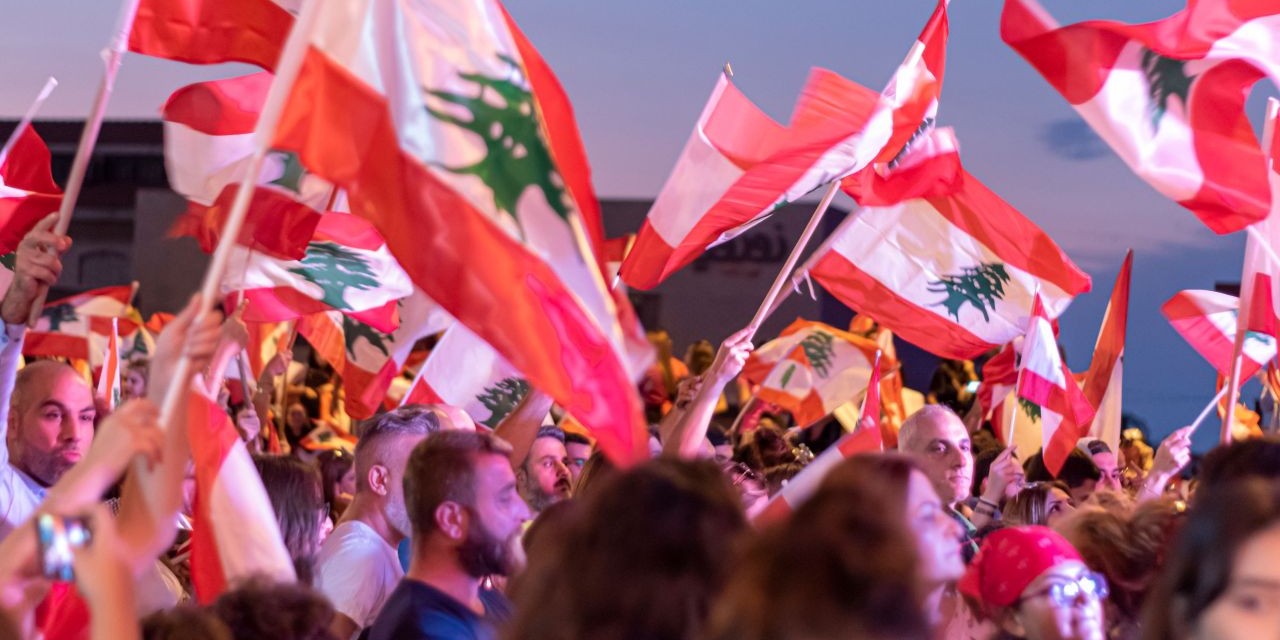
Image: EDDY Bittar/ shutterstock.com
This report focuses on the impasse of legal and political reform in Lebanon, with special reference to political parties. It examines some of the chief challenges Lebanon’s political parties face in a fragile and sectarian political system. In particular, how do the obstacles to reforming political parties limit the prospect of genuine democratization? It addresses how these obstacles historically played out in three different arenas: a) within the country’s existing sectarian political parties, b) within parliament, and c) within the legal profession. It concludes with a policy approach that is key for brokering forms of representation and distribution of power that have the potential to reset state–society relations more inclusively and democratically.
Contents
- Executive summary
- The evolution of political parties in Lebanon from independence until today
- Nature and legal status of political parties in Lebanon
- Past trials to reform party law in Lebanon
- Connection between political parties in Lebanon and election law
- Political and legal challenges
- Policy recommendations
Executive summary
Despite strong pluralism, talking of democratization in Lebanon faces several challenges: ending confessional politics, disarming militias, strengthening state sovereignty in the face of Israeli aggression and, last but not least, reforming the country’s political party system. Political parties’ reform is key both to genuine democratization and more representative and inclusive state-society relations. In a fragile country like Lebanon, the elites and war-lords have since the 1990 Taif Accord that ended the civil war played a major role in mediating relations between the different denominations and the state. This resulted in fragmentary politics, and a quasi-dysfunctional political system. Sectarian elites and leaders played bigger roles than their affiliated political parties. This aspect of Lebanon’s politics contributed to a ‘weak’ state and ‘strong’ sects, in a context of immensely strong confessional politics. In attempting to unpack this political specificity in Lebanon, this report focuses on the impasse of legal and political reform in Lebanon, with special reference to political parties. It examines some of the chief challenges Lebanon’s political parties face in a fragile and sectarian political system. In particular, how do the obstacles to reforming political parties limit the prospect of genuine democratization? It addresses how these obstacles historically played out in three different arenas: a) within the country’s existing sectarian political parties, b) within parliament, and c) within the legal profession, which has since the 1990s spearheaded efforts to reform political parties and election laws.
A key recommendation is that for credible reform, political parties and the political actors operating within them ought to decouple sect and party. A second recommendation is that by moving beyond the confessional blueprints for conducting politics, democratization may be enabled through contests in which political parties contest power and undertake to represent citizens, not sect-affiliated followers. This approach is key for brokering forms of representation and distribution of power that have the potential to reset state-society relations more inclusively and democratically.
The evolution of political parties in Lebanon from independence until today
Political parties are the platform around which people gather to express their political will; hence they are the basis of the democratic process. Political parties aim to exercise political power by participating in elections and forming governments. They differ from civil society groups that represent the will of citizens, outside political structure. They also differ from associations that are more cultural, professional, and social in nature. The laws that govern political parties guide the political process. The laws that govern political parties also are a reflection of the society and the constitution.
Lebanon is different from other countries in the Levant in the fact it is a democracy. It has a vibrant civil society. Since its establishment it has had a free press. Prior to the civil war, the parties in Lebanon on the right were represented by a structured (blocl) alliance. The Christian parties were represented by the Kataeb. On the left, the Socialist progressive party represented the Druze.
In addition to those parties representing confessional factions, Lebanon had ideological parties like the Syrian National Party, the Ba’ath Arab National Party and the Communist Party. Those ideological parties and prominent families represented the Shi’a and the Sunni communities.
The 1975–1990 civil war changed the party dynamics in Lebanon. The Shi’a feudal families lost their power with rise of the ‘deprived’ movement led by the highly charismatic cleric Mousa Al Sadr (who went missing in Libya in August 1978). The movement aimed at reforming the Lebanese political system such that no denomination, especially the Shi’a one, remains marginalized. The ‘Movement of the Deprived’ (Harakat Al-Mahrumin) would evolve during the war to become the Amal Movement and a political party, represented in the country’s parliament and led by Nebih Berri.[1] As a social and political movement, it advocates for the marginalized Shi’a community and other disadvantaged groups, aiming for social justice and reform within Lebanon’s confessional system. These aims shaped the political ideology of the Amal Movement / Party, a powerful political and militant force, during and after the civil war. The Christian parties also evolved during the war. A splinter group emerged from the Kataeb to form its own party, the Lebanese Forces.
During the civil war the Christian parties, representing the right, opposed the presence of Palestinians in Lebanon, while the left, represented by Druze (Progressive Socialist Party), Sunni (Murabitoun), and Shi’a (Amal Movement) were supportive of their presence.
The Israeli invasion was another disruptive force. After the Israeli invasion into Beirut in 1982, Hezbollah was born. It emerged from the need to create a Lebanese deterrent to Israel.[2]
The end of the war and the Taif Agreement was another episode in Lebanese political life.[3] The agreement was negotiated in Ta’if, Saudi Arabia, in September 1989 to end the fifteen-year-old civil war. Political reform was a key condition stated in the Taif Agreement. The reforms, which were approved by parliament in August 1990 via constitutional amendments, were later signed into law by the president a month later. The amendments included the expansion of parliamentary seats to 108 and stipulated equal division of seats between Christians and Muslims in the expanded legislature. After the end of the war, Christians had no proper political presence. The head of the Lebanese Forces party went into prison and General Michel Aoun and other Christian leaders were forced into exile.[4]
Their return in 2005 followed the ‘Cedar Revolution’ protests between February 21 and March 18 of the same year. That revolution was triggered by the assassination on February 14, 2005, of former Lebanese Prime Minister Rafic Hariri, Saudi Arabia’s man in Lebanon. The chain protests forced the withdrawal of Hafiz Assad’ss Syrian troops from Lebanon in April 2005. This event ended close to three decades of Syrian control.
These historic events created new dynamics, especially because the Syrian regime was accused of the assassination. Also, Hezbollah lost its patron, the Syrian regime, and started taking a bigger role in politics to protect its arms.[5] Hezbollah wanted to make sure they had enough control over the government to secure the acceptance of its armed wing. Hence, the group aimed at having enough ministers to have a veto over government decisions.
The assassination also allowed for the reemergence of Christian parties. The head of the Lebanese Forces was released from prison, and the Lebanese Forces, banned in the post-Taif period, was able to resume its activities. The exiled Christian leader, Michel Aoun returned to Lebanon and established the Free Patriotic Movement party. It divided Lebanon into two camps: the 8th March camp and the 14th March camp. The 8 March camp was pro-Assad regime/Iran orbit, while the 14 March was pro-Saudi Arabia/US.[6]
Nature and legal status of political parties in Lebanon
Lebanon adopts the parliamentarian multi-party system. Parties have played a central role in political life since the establishment of the republic in 1920. However, parties are not organised according to a comprehensive law but according to an association law that was issued in 1909.
The Ottoman Law on Associations of 1909 applies to associations in general, including non-governmental organizations.[7] Although it has undergone minor amendments, Lebanon has no law specifically governing political parties. Parties are treated as associations and need only inform government authorities in order to exist, through a process known as ‘ilim wal khabar’. No permit is required for them to operate as political parties.[8]
The associations law does not govern the inner workings of the party. Parties can have their own chosen structures and internal regulations. The law also provides no oversight on the source of financing. The are no clear responsibilities or guidelines on how parties are held accountable. Nor does the law establish transparent and clear provisions for internal governance.
The Lebanese constitution cherishes and guarantees the establishment of association in article 13 [9] and consecrates the concept of confessional plurality, which encouraged parties to be established on a confessional basis.
Though no party claims to represent a certain denomination or faction, in reality they do. The progressive socialist party, though the name suggests a non-sectarian party, is the party representing the Druze faction. The Lebanese Forces is a Christian party. The Future Movement is the Sunni party. Because people identify along sectarian lines, the parties are formed along sectarian lines.[10] The sectarian nature of parties encourages identity politics. People vote based on identity instead of policy. Though everyone recognises the problems of sectarianism, people hold on to it because of the general lack of trust among different identity groups.
Sectarianism has been a problem for the country since gaining independence from France in November 1943. Sectarianism was written into the 1926 Constitution, a by-product of the French Mandate. Thus, religious affiliation was entrenched into the state’s jurid-political structure. Instead of managing confessional differences politically, the 1926 framework created a sectarian and divisive system. Such a system failed to avoid competing sectarian interests and elite patronage, and the resulting political crisis that led to the 1975–1990 Civil War. Political sectarianism was prominent during the civil war and was again institutionalized by the 1989 Taif Agreement. While the Shi’as had enrolled in the communist party or Arab nationalist parties, during the war their political affiliation became sectarian as they joined the ‘Movement of the Deprived’.[11]
There is no regulation to ensure competition over the leadership of a party. It is usually inherited. The left-leaning Progressive Socialist Party, for example, was established by Kamal Jumblat. His son Walid took over, and now the leadership of the party has been passed on to his son Taimur. There are no primaries to choose a leader. The elections that take place are usually symbolic.
The financing of parties is also problematic. Since there is no law to regulate financing, parties do not have to disclose their sources of funds. Parties have traditionally taken funds from foreign countries to finance their campaigns. This pushes them to primarily answer their patrons’ demands. The late head of Hezbollah once said bluntly that all his party resources come from Iran.[12] Jumblat, the Druze leader, has said publicly that he needs to know which candidate Saudi Arabia wants.[13]
Foreign countries directly finance election campaigns and hence have direct interference in domestic politics. This makes internal politics prone to be affected by regional polarization and impacts the country’s stability. It renders Lebanon a site of regional competition and sectarian tensions, making it more difficult for the parties to find a common ground as they are tied to external backing.[14]
Past trials to reform party law in Lebanon
Efforts to establish a special legal framework to govern the emergence, work, and influence of the political elite in Lebanon began a few years after the establishment of the state. Successive governments made several attempts to reform the system and put in place party laws.
The suggested laws were aimed at regulating registration and financing, imposing transparency, accountability and encouraging internal democracy. LADE, the Lebanese Association for Democratic Elections, pushed for a modern law to regulate political parties.[15] However, those propositions were not adopted by the parliament due to political polarization.
The first attempt to regulate political parties was by the government of Saeb Salam that was voted in May 1953, during the presidency of Camille Chamoun. The government pledged to support public freedoms and the democratic system and submitted to the parliament a draft law on parties. The government then thought that parties should not operate under the outdated Ottoman law of association. However, the Salam government was in office for only four months.
The idea to regulate the parties came especially with the emergence of the nationalist movements that threatened the existence of Lebanon within its existing borders. The government, led by Prime Minister Abdullah al-Yafi, presented to the parliament a political proposal on November 3, 1953. The proposal suggested that licences should be given to parties that respect the bylaws of Lebanon. It stated that the Lebanese state should not grant licences to parties that are affiliated to external parties or whose goals contradict with the essence of the Lebanese nation, hinting at Pan-Arab parties. The Najadah Party [16] opposed this proposal and closed its headquarters. Opposition to this proposed law grew. A conference was held by parties of a sectarian nature pushing for withdrawal of the law. The law was eventually put away and never saw the light of day.
Another attempt to regulate political parties was made almost twenty years later during the government of Saeb Salam in 1972 and was triggered by the emergence of many parties just before he took office. From August 1970 until just days before the end of President Charles Helou’s term, the Minister of the Interior had granted licence to several banned parties: the Communist Party, the Communist Labour Organization, the Arab Socialist Ba’ath Party, the National Communist Party, the Arab Nationalist Movement, and the Hanshak Party. [17]
The government of Saeb Salam under the presidency of Sulaiman Frangieh presented another law to regulate the activities of political parties on 3 March, 1972. The law would have imposed a strict control on parties’ operations, but it was considered a suppression of freedoms by leftist parties. The Ba’ath party in Syria and Kamal Jumblatt the Druze leader issued a common statement on the 29 March, 1973 categorically rejecting the law. The law, like its predecessors, remained a draft in the drawers of the parliament and never saw the light of the day.
The third attempt came in 1983, when Parliament authorized Prime Minister Shafiq al-Wazzan to issue legislative decrees on various issues. Legislative Decree No. 153 on 16/9/ 1983 was issued, regulating both non-political, foreign, and political associations. However, this legislative decree did not last for long. The
Rachid Karame government of national unity abolished it by another legislative decree in 1985.
Connection between political parties in Lebanon and election law
In order for political architecture to reflect and represent the various denominations, Lebanon adopted the multiparty system. Multiparty systems are usually less stable than dual party systems as a coalition of different parties with different ideologies and programs is needed to form a majority. At least, this is the case in Lebanon where coalitions tend to produce political gridlocks before reaching a compromise.[18] By contrast, in dual party systems the government crafts and implements a holistic program that includes an economic, political, social and security agenda.
To conduct elections, parties in Lebanon resort to cross-sectarian coalitions. The election law that assigns seats to certain denominations encourages the formation of coalition across sectarian lines.[19] The system is designed in a way where no candidate can run on their own. They need to be part of a list. And the voter needs to choose the entire list. This also favours the creation of coalitions.
The coalitions are not based on a common program or principle. The coalitions are customised per district. They are based on pure pragmatism aimed at maximising the number of seats. A party might ally itself with a certain party in one district while allying itself with its opponent in another district. This drives the different parties for unlikely coalitions. These coalitions usually dissolve after elections take place.
The alliance for Beirut municipal election in 2025 included Hezbollah, Amal movement, free patriotic movement, Kataeb, Al Ahbash, the Tashnag, and the Hunchak. The alliance was set up in a meeting at the residence of MP Makhzoumi, aiming to present a unified front in the capital. The future movement representing the Sunni faction was absent from this election.[20]
In 2017, Lebanon switched from a majoritarian to proportional electoral system with preferential vote,[21] allowing for broader representation. The law was expected to bring greater representation from the civil society; however, the same sectarian leaders were elected.[22]
The system encourages patronage network over policy platform. This drives a confrontational relationship between the denominations constantly seeking to maximise benefits and privileges over others[23]. The Lebanese invented the concept of ‘muhasah’ (in Lebanese spoken Arabic ‘Mahasa’) . It means division of ministries or portfolios among the different denominations in an ‘equitable’ manner. For example, the four sovereign portfolios, defence, interior, foreign affairs, and finance are assigned to the four large denominations in the countries, Shi’a, Sunni, Maronite Christian, and Greek Orthodox Christian, and equally between Christians and Muslim. This division of ministries among the different denominations usually results in a government that has no common program or vision.
Political and legal challenges
Due to the absence of a law regulating parties, there is no oversight over their operations. There is no political or financial transparency. The different parties represent specific denominations which further intensifies divisions along sectarian lines and hinders the building of a true civic state. The financing is not transparent and there is no mechanism for disclosure or for oversight. Internal democracy is weak. Most parties don’t have internal elections that are free and fair. Most parties are run like a family-owned business or like a one-man show.
The 2019 protests, which erupted in response to the government decision to impose new taxes, generated a new public awareness that the existing political structure was contributing to the country’s dire situation.People took the streets and started asking for change. However, the movement was not able to generate a leadership that could break the deep state, and the political parties were able to coopt the movement which then died down with the Covid 19 virus and the accompanying lockdown.[24]
Policy recommendations
Lebanon’s exclusive sectarianism prevents the creation of a democratic system in Lebanon despite multipartyism and periodic elections. Recommendations for the legal and political stakeholders in Lebanon must focus on it as a key problem in political life. The problem does not reside in the fact that Lebanon has many denominations, nor does it reside in the fact that the state recognises the different denominations. Actually, the multitude of denominations enriches the country culturally and socially. The problem lies in the fact that positions in the governments are assigned to different confessional denominations. This structure encourages identity politics.
The Lebanese law categorises people on a sectarian basis. The law does not talk about equality among citizens but equality among denominations. People tend to make their political choice based on sectarian identity rather than pragmatic issues like healthcare, housing, economy etc. Hence parties will continue to be formed on a sectarian basis if there is no political reform.
Such a political reform should start with executing the Taif Agreement. Why?
The Taif Agreement entrenched identity politics, instead of diminishing its practice. It was implemented selectively. The reform to rid parliament of its sectarian modus operandi was ignored. The Agreement stipulated the creation of a two-chamber parliament: a non-sectarian congress and a senate representing the different factions. Again, this reform was never implemented.[25] Revisiting these terms of the Taif Agreement in order to reform the system, by decoupling competition from identity politics, should be reconsidered as one way to democratize Lebanon.
A second layer of reforms must address gaps in Lebanon’s party and election laws. Party law cannot be enacted without election law. Both laws regulate democratic governance and are interdependent. Election law determines who is eligible to be elected. Since most candidates are affiliated to a party, an election law would affect party formation. Again, applying the Taif Agreement by removing or limiting sectarian representation from parliament could potentially promote a form of non-sectarian politics.
Parties should have bylaws that ensure democratic decision-making and operations. The law should encourage internal elections and set term limits for party leadership, and encourage youth and women representation. Though all parties currently hold elections, they are merely symbolic. A law should make sure the structure of the party is democratic, meaning elections and party positions are competitive. The culture of primaries should be encouraged as it promotes competitiveness.[26] In this respect, one reform could open the way for sectarian parties to merge and become cross-sectarian. This much-needed political reform in Lebanon’s party system can promote genuine pluralism.
Also, the problem of buying votes need to be addressed.[27] There should be close monitoring of criminalization of vote-buying, and measures to punish buying and selling of votes.
Related to this, is the need for new regulation on government employment. Such a regulation must stress the principle of meritocracy, not partisanship or sectarian identity.
There should be an independent authority that reviews the hiring process and vets candidates. Lebanon has Diwan Al Muhasabah or Audit Bureau, the independent government oversight body that monitors the state’s public funds and assets. Its role is to ensure their proper management and disbursement in accordance with financial laws and regulations. It should be activated so that contracts are awarded in a competitive and transparent manner, and not to people affiliated with political parties.
Notes
[1] Nasr, S. V. R. (2006). The Shia revival: how conflicts within Islam will shape the future. Norton.
[2] Qāsim, N (2010). Hizbullah: The Story from Within; Edition, 2, illustrated; Saqi.
[3] Karam, K. (2012). The Taif Agreement. Accord, 24, 36–41. Knudsen, A. J., & Kerr, M. (Eds.). (2013). Lebanon: After the cedar revolution. Oxford, UK: Oxford University Press.
[4] Nagle, J., & Clancy, M. A. (2019). Power-sharing after civil war: Thirty years since Lebanon’s Taif agreement. Nationalism and Ethnic Politics, 25(1), 1–8.
[5] Knudsen, A. J., & Kerr, M. (Eds.). (2013). Lebanon: After the Cedar Revolution. Oxford, UK: Oxford University Press.
[6] Bortolazzi, O. (2013). “The Cedar Revolution, Youth Participation, and Youth Organizations in Lebanon’s Post Intifada Civic Engagement Sectarianism and Identity.” Voices on Arab Philanthropy and Civic Engagement-Working Paper, 1.
[7] Gökatalay, S. (2015). The Political Economy of Corporations in the Late Ottoman Empire and Early Turkish Republic (1908–1929). Middle East Technical University (Turkey).
[8] International Center for Non- Profit Law, CSO Framework Legislation, Lebanon, https://www.icnl.org/research/library/Lebanon_ottoman
[9] Lebanese parliament, the Lebanese constitution, https://www.lp.gov.lb/backoffice/uploads/files/ (1)اﻟﻠﺒﻨﺎﻧﻲ20%اﻟﺪﺳﺘﻮر.pdf
[10] Salloukh, B. F. (2006). The Limits of Electoral Engineering in Divided Societies: Elections in Postwar Lebanon. Canadian Journal of Political Science/Revue canadienne de science politique, 39(3), 635–655.
[11] Nasr, S. V. R. (2006). The Shia Revival: How Conflicts Within Islam Will Shape the Future. Norton.
[12] Kuwait Times, June 24 2016 https://q8times.com/7002.html
[13] Al Akhabar (September 21, 2023), ؟ﺪﻳﺮﺗ اذﺎﻣ ﺔﻳدﻮﻌﺴﻟا ﺎﻨﻟ حﺮﺸﺘﻟو …« ﺔﻴﻋﺎﺑر » ﺖﺗﺎﺑ « ﺔﻴﺳﺎﻤﺨﻟا » : طﻼﺒﻨﺟ https://www.alakhbar.com/Politics/370040
[14] Hassan, Z. (2022). Regional Geopolitical Conflict and the Fragile State: Foreign Influence and Lebanon’s Sovereignty.
In Reconciliation, Heritage and Social Inclusion in the Middle East and North Africa (pp. 443–462). Cham: Springer International Publishing.
[15] LADE, (March 15, 2017). https://www.lade.org.lb/News/ واﻻﺣﺰاب-ﻻدي/اﻻﺧﺒﺎر.
[16] Al Najadah is a political party that was established in 1936.The party had many disputes especially with Kataeb party.
They both agreed on the issue of independence of Lebanon; however, they differed on the future vision for the country. Its influence greatly diminished during the civil war; however, it is still operational headed by Mohammed Fayoumi.
[17] Hudson, M, C. (1978). Democracy and Social Mobilization in Lebanese Politics. Analyzing the Third World. London: Routledge.
[18] El Khazen, F. (2003). Political Parties in Postwar Lebanon: Parties in Search of Partisans. The Middle East Journal, 605–624.
[19] Salloukh, B. F., Barakat, R., Al-Habbal, J. S., Khattab, L. W., & Mikaelian, S. (2015). The Politics of Sectarianism in Postwar Lebanon. Pluto Books.
[20] Annahar, (May 16, 2025). https://www.annahar.com/Lebanon/216113/6 ﻦﻴﺑﻲﺋﺎﻨﺜﺘﺳاﻒﻟﺎﺤﺗوﺔﻳﺪﻠﺒﻟاتوﺮﻴﺑﺔﻛﺮﻌﻣﻲﻓﺢﺋاﻮﻟ تاﻮﻘﻟاوﷲبﺰﺣ .
[21] Aljazeera, (June 25, 2017). https://www.aljazeera.net/encyclopedia/2017/6/25/ ﻣﺠﻠﺲ-ﻻﻧﺘﺨﺎب-اﻟﺠﺪﻳﺪ-اﻟﻘﺎﻧﻮن-ﻋﲆ-ﺗﻌﺮف.
[22] Felsch, M. Electoral Reform in Lebanon. Z Vgl Polit Wiss 16, 427–446 (2022). https://doi.org/10.1007/s12286-022-00547-3
[23] Zakaria, P. (2019). Assessing the Impact of Sectarian Patronage in Lebanon In Corruption and Informal Practices in the Middle East and North Africa (pp. 65–76). Routledge.
[24] Khatib, D. K. (2022). 17 October (2019) Revolution in Lebanon: A Preliminary Analysis. In New Wave of Revolutions in the MENA Region: A Comparative Perspective (pp. 75–93). Cham: Springer International Publishing.
[25] Abdallah, G. (2003). Lebanon‘s Political System: An Analysis of the Taif Accord. University of Houston.
[26] Slough, T., York, E. A., & Ting, M. M. (2020). A Dynamic Model of Primaries. The Journal of Politics, 82(4), 1443–57.
[27] Corstange, D. (2012). Vote Trafficking in Lebanon. International Journal of Middle East Studies, 44(3), 483–505.

The Author

Toda Peace Institute
The Toda Peace Institute is an independent, nonpartisan institute committed to advancing a more just and peaceful world through policy-oriented peace research and practice. The Institute commissions evidence-based research, convenes multi-track and multi-disciplinary problem-solving workshops and seminars, and promotes dialogue across ethnic, cultural, religious and political divides. It catalyses practical, policy-oriented conversations between theoretical experts, practitioners, policymakers and civil society leaders in order to discern innovative and creative solutions to the major problems confronting the world in the twenty-first century (see www.toda.org for more information).
Contact Us
Toda Peace Institute
Samon Eleven Bldg. 5thFloor
3-1 Samon-cho, Shinjuku-ku, Tokyo 160-0017, Japan
Email: contact@toda.org