Breaking Point Bengal: An Election Heralds India’s Managed Democracy
Debasish Roy Chowdhury
May 20, 2026
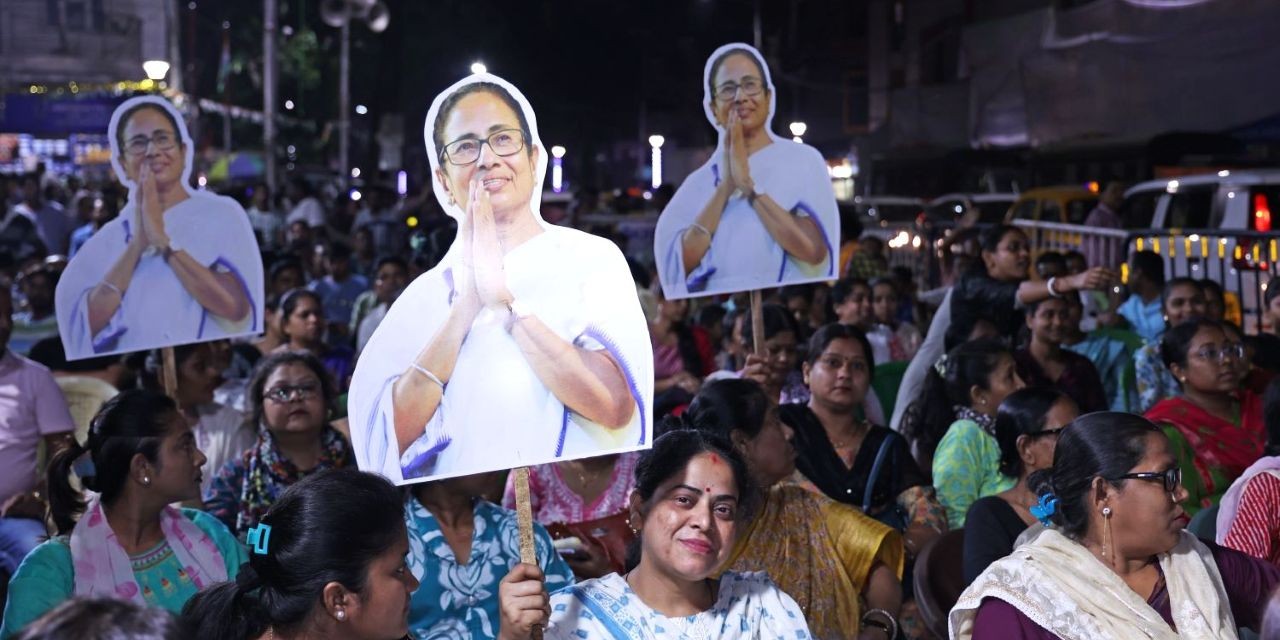
Image: Suvendu Das India / shutterstock.com
This report asks whether the results of the provincial elections in India in April 2026 indicate that India’s backsliding has hit a new low. An election custom-made for Modi’s triumph marks the country’s transition to a Russia-style hybrid regime where elections exist to lend legitimacy to hegemonic power through procedural ritual. India blazed a trail three-quarters of a century ago embarking on an improbable democratic journey in a hyper-diverse and poor country to buck the trend of post-colonial democratic basket cases. With the emergence of a hybrid regime in ‘the world’s largest democracy’, the global spread of autocratization now breaches a prized frontier.
Contents
- A watershed moment for Indian democracy
- The capture of the Election Commission
- The ‘Bangladeshi’ bogeyman
- Justice denied
- Complete institutional collapse
India’s backsliding hits a new low as an election in Bengal state custom-made for Modi’s triumph marks the country’s transition to a Russia-style hybrid regime where elections exist to lend legitimacy to hegemonic power through procedural ritual
A watershed moment for Indian democracy
It’s not every day that the US president commends a foreign leader for winning a provincial election. So, it came as a surprise when the White House spokesman conveyed Donald Trump’s congratulatory message to Indian Prime Minister Narendra Modi on his “historic and decisive election victory” this month.
But this was no ordinary election. Modi had just conquered the eastern province of Bengal, a “bastion of India’s opposition” and one of the toughest political frontiers for his party that even a decade ago had a negligible presence in the state.
Bengal was among the four provinces and one federally administered territory that went to the polls last month. Three of them were won by Modi’s Bharatiya Janata Party (BJP), one by the opposition Congress party and its allies, and another by a new party (the BJP is not a major player in the last two states in the south). But the only result that mattered was that of Bengal, where the BJP has never won power but which has been at the centre of its politics in recent years.
Bengal has for the last 15 years been governed by a regional party commonly called the Trinamool Congress, or TMC (officially, All India Trinamool Congress, or AITC), led by Mamata Banerjee, popularly known as ‘Didi’, or elder sister in Bengali. Credited with ending in 2011 the 34-year reign of a Leftist coalition, Banerjee is a firebrand populist whose cult of personality and centralisation of power rivals that of Modi himself even though she is often fancied as his liberal antidote for her secular credentials. She paints government offices in the shades of her signature blue-bordered white saree, doesn’t take kindly to dissent, invokes the “Royal Bengal Tiger” metaphor to project strength, and has run her party and government like her fief.
Her iron grip on power had been threatened for some time now by the BJP looking to bank on the grievances bred by the corruption and thuggery of her party. She had so far managed to ward off the challenge with her popularity with women voters beholden to her targeted welfare transfers. The support of the state’s 27 percent Muslims fearful of the BJP’s anti-Muslim politics and a well-oiled grass-roots party organisation also stood her in good stead. But the BJP this time finally broke through with a major upset as it swept to power with a two-thirds majority in the State Assembly, arcing a meteoric rise in the state.
From zero seats in the 294-seat Bengal Assembly, it won three in the 2016 state election, 77 in 2021, and 207 this time. From just four per cent vote share in the 2011 state election, its vote share has risen over time to 46 per cent in this election, compared with the TMC’s 41 per cent vote share and 80 seats (the first-past-the post system in India can amplify even small differences in vote shares into large seat differences).
With the conquest of Bengal, which is the size of South Korea and has a population as big as France’s, Modi’s party now controls 22 of the 28 states with 73 per cent of the country’s total geographical area and 78 per cent of its 1.45 billion population, making India a one-party state for all practical purposes.
Much of this is credited to Modi’s helmsmanship that has transformed the BJP from a north‑centric force into a near‑pan‑India juggernaut, bringing into its fold even states like Bengal, where the local syncretic culture has so far been considered antithetical to the BJP’s politics of Hindu supremacism.
A preening Modi, symbolically dressed in traditional Bengali attire, addressed his party workers on the evening of the election results on May 4 in a nearly hour-long speech. Even at 75, Modi works hard for every election. For Bengal, he worked extra hard, staying put in the state for days to marshal his party’s campaign. Savouring the reward of his labour in the moment of his political pinnacle and basking in the felicitations, he spoke about the record turnout and significance of the result. BJP’s win in Bengal was a high point for India’s democracy and Constitution, he declared.
Nothing could be further from the truth.
It was a watershed moment for Indian democracy all right, but for all the wrong reasons. Bengal marked India’s first illegitimate election in the country’s plunge into despotism and the arrival of a Russia-style managed democracy where elections can be made to order for the ruler thanks to an all-round capitulation of governing institutions.
Bengal was among the states that has just been through an electoral housekeeping exercise called Special Intensive Revision (SIR), in which some 9.1 million voters were removed from the rolls. Of them, some 5.8 million were marked as absentee or deceased voters, while the cases of 3.4 million remained unresolved, including 2.7 million who were filtered out through an arbitrary method used only in this one state.
This caused disproportionately high deletions among Muslims and women, Banerjee’s biggest support bases. Despite submitting all the necessary documents to contest their deletion, 3.4 million people had to sit this election out because the country’s highest court reasoned there was no time left to complete their verification, and it was fine if they did not vote.
An election excluding millions of people just because the government could not complete voter verification in time, should ordinarily carry no popular legitimacy.
But these are extraordinary times for India.
Tired of the corruption and arrogance of the TMC, the people are said to have spoken, the verdict a triumph of democracy. Pollsters have been calculating vote swings and trends like this was a regular election. The captured mainstream media’s enthusiastic coverage of the cut and thrust of campaigns and the changing order in Bengal would suggest nothing is amiss. Yet, the grudges against the TMC after 15 years in power notwithstanding, overlooking the impact of this level of exclusion on the results betrays suspension of common sense at best and intellectual dishonesty at worst.
This election was historical, marking a new low in India’s democratic backsliding. In the past decade under Modi, concentration of power, erosion of civil liberties and minority rights, suppression of dissent and creeping capture of democratic institutions have incrementally undermined India’s democracy. The government’s control over media and torrents of dark money in politics have made elections anything but free and fair. These pathologies have defined Modi as much as smaller despots like Banerjee—the reason why many welcome her departure. But through all this, at least the electoral process itself was still largely considered fair. Bengal 2026 shows it isn’t anymore.
There is a clear pattern of the heaviest deletions being in TMC bastions. In 150 seats, or more than half of the 294 at play, total deletions were greater than victory margins. BJP won 100 of them in this election and TMC won two. In the last state election of 2021, the BJP had won just 19 of these and the TMC, 131. A similar study based on data compiled by Kolkata-based Sabar Institute finds that in 105 seats, the BJP won by fewer votes than the total number purged from the electoral rolls. In 86 of these seats, the BJP had never won before, showing how central SIR has been to the party’s historical Bengal ‘win’.
Analyses abound on how voters turned against the TMC and towards the BJP, and whether or how the millions of voter deletions influenced the elections. Much of it is moot, for the simple fact that the mass exclusion of voters precipitated by the deeply flawed voter verification process casts a shadow on this election like never before in India.
Voter verification processes typically unleash procedural violence by embedding bureaucratic hurdles that disproportionately burden marginalized groups. Bengal’s was no different. The tyranny of SIR, manifestly skewed against minorities and the economically weak lacking social capital and documentation strength, in any case demolishes the very idea of equal citizenship on which elections rest. The result of the election is secondary.
SIR was railroaded without political consensus or legal affirmation, conducted with unexplained haste without a transparent and rule-bound procedure, constantly shifting goalposts as it went about remaking the citizenry. Opacity marked its every step as the Election Commission built a wall around its data to hide the evidence of its crime; its public data deliberately unstructured, hard to access, and difficult to study. But even this deeply flawed process, ridden with glaring red flags of malintent, was not duly completed.
Millions neither dead nor displaced were left hanging, deprived of the constitutional right to vote. How these millions might have voted isn’t quite the point; the grave democratic injury of their exclusion is. Not to mention the other stabs at electoral integrity, such as the quiet addition of nearly 700,000 new voters just before election without much explanation. Or, the exclusion of 550,000 people over and above other deletions based purely on crowdsourced complaints, a questionable provision strategically used by Hindu extremist groups as an instrument of targeted mass disenfranchisement of Muslims.
An election with a voter list thus manufactured puts India in the territory of managed democracy—a hybrid regime of ostensible electoral competition but with limited real choice, where elections exist to lend legitimacy through procedural ritual even as substantive power remains centralized and genuine political pluralism severely constricted. The electoral process is the final frontier that is breached before a country gets to this stage. Once the process loses its legitimacy, the result loses its meaning.
If a customised voter list wasn’t enough, details are now emerging of how counting was deliberately slowed in the seats where the TMC was leading, its polling agents forced out of counting stations, and extra rounds of counting added to change the final tally of individual seats in BJP’s favour.
In this new order, crumbs of power are still attainable for the opposition as part of the need to maintain the façade of democracy—a state here, a seat there—but real power is now the despot’s monopoly. If the despot wills to win an election, he will. If he can choose voters before voters get to choose him, there’s nothing stopping him.
The capture of the Election Commission
An unfortunate exemplar of the 21st century authoritarianism cloaked in electoral legitimacy, India is already considered an ‘electoral autocracy’ and one of the world’s ‘worst autocratisers’ by international democracy trackers. The capture of governing institutions has been central to this transformation. Federal investigative and regulatory agencies are freely used to tame the regime’s discontents; the Enforcement Directorate strategically incapacitated the TMC’s key political consultancy before the election. The Election Commission is the newest member to join the club.
A formally autonomous constitutional authority with a long history of august conduct, the three-member commission took a turn for the worse when its three commissioners were installed before the parliamentary elections in 2024 under a cloud of allegations of procedural impropriety. A new selection process for the commissioners significantly tilted the balance in favour of the executive, allowing it to stack the commission with its men.
The most controversial pick was the chief election commissioner from one of the three last year, a bureaucrat who has since earned his keep with SIR. In a country with high poverty rates and low levels of documentation, the constitutionally dubious verification process initiated by him, with its onerous documentary obligations, has disenfranchised many poor and minority voters, clearly recasting the electoral rolls in a way that is affecting elections.
With SIR, for the first time the commission has privileged verification over inclusion, a significant shift for a body whose motto is “No voter to be left behind.” The commission has in the past set up polling stations in the most sparsely populated and remotest parts of India to showcase its principle of inclusion. In the last parliamentary election in 2024, polling officials made a two-day trip through the Gir forest in Gujarat state to set up a voting booth for just one voter, a monk. Another group of polling officials travelled 500 km over four days across winding mountain roads and river valleys, again to register the vote of a single voter in a remote village in forested mountains near the border with China.
The same Election Commission is now moving mountains to de-register millions of voters. In the SIR process conducted across 13 states and federally administered regions in the past year, some 52 million people, more than the population of Spain, have been removed from the electoral rolls in net term—some 7.2 million deleted and 2 million added—with both the additions and the deletions triggering fears of electoral manipulation.
Uttar Pradesh, India’s biggest state, saw some 20 million net deletions while the western state of Gujarat, 6.8 million. Reports of targeted deletions of Muslims have come from all over. A government teacher working as an enumeration worker in the northern state of Rajasthan reportedly threatened suicide for the “pressure” on him to “delete Muslim votes”. Some 3.1 million names were deleted in the state.
But nowhere has the excesses of SIR been as glaring as in Bengal, where the treatment meted out to the 3.4 million excluded as a result of unheard appeals stood out. With four days to go for elections, the 19 designated tribunals had heard all of one case.
Bengal is the only state where a special provision of adjudication by quasi-judicial tribunals was introduced in the form of an additional layer of verification using an opaque AI-driven process to detect ‘logical discrepancies’ in document consistency. This placed over 6 million people in a special category called ‘under adjudication’, who would stay on the electoral rolls but would not be eligible to vote. The appeals of 2.7 million of them were part of the 3.4 million total appeals against deletions that remained unresolved.
‘Logical discrepancy’ is supposedly a software flag triggered by inconsistencies in voter records such as name spellings and variations in kin names. Though the flags are triggered by an algorithm that is claimed to have been applied uniformly across communities, the pattern of exclusion is hardly uniform, disproportionately affecting Muslims and women.
Women account for more than half of the removed names. Dalit Hindus also suffered heavy deletions. But Muslims were hit the hardest. Districts with higher Muslim populations saw higher absolute numbers of people being removed from the rolls. Nine of 10 districts in Bengal with the highest number of voters under adjudication are Muslim-majority. In some constituencies, more than 90 per cent of those placed under adjudication are Muslims.
Of the 2.7 million voters excluded through adjudication, some 65 per cent are Muslims. Overall, Muslims account for 34 per cent of the total deletions, even though they account for 27 per cent of Bengal’s population. Hindus account for 63 per cent of the deletions though they are 72 per cent of the state’s population.
Most districts that saw the highest number of voter deletions happened to be TMC strongholds. In Banerjee’s home constituency, which she lost, Muslims constitute 20 per cent of the population but accounted for 40 per cent of voters deleted under adjudication.
Neither is the demographic profile of voter deletions an accident, nor are the opposition’s claims that SIR helps BJP irrational. Initially framed as a routine procedure to cleanse the rolls of duplicate or deceased voters, SIR’s entanglement with politics was inevitable given its messaging as an exercise to remove from the rolls ‘Bangladeshi infiltrators’—a polarizing bugbear the party increasingly uses to otherise Indian Muslims as outsiders.
No election in India is now fought without invoking the dog whistle of ‘Bangladeshi infiltrators’ who have supposedly populated India’s voter rolls to such an extent that they pose a threat to the integrity of the electoral process. Top BJP leaders work campaign crowds with rousing stump speeches promising to rid the nation of them, even though no proof is ever provided of these fantastical claims.
The Election Commission had started the nationwide SIR with the eastern state of Bihar last yearwith exactly the same claims. Yet, at the end of it all, after shrinking the electoral rolls by 4.7 million, it simply said it had no data on the number of illegal foreigners. Independent researchers and journalists mining Election Commission data found barely 0.012 per cent of Bihar voters were ‘foreigners’, most of them Nepali women married to Indian men, not Bangladeshis, as it has been sold.
Yet, the idea of ‘Bangladeshi infiltrators’ has only gained resonance thanks to the BJP’s consistent propaganda. Especially in Bengal, thanks largely to a servile media that has helped sharpen the narrative. The local media has also turbocharged Bengal’s religious polarization with exaggerated accounts of the plight of Bangladeshi Hindus at the hands of the Islamists there following the fall of Sheikh Hasina in the 2024 Gen Z revolution, marking out the ‘Bangladeshi’ as an enemy of Bengal’s Hindus.
The ‘Bangladeshi’ bogeyman
India shares a 4,096 km border with Bangladesh, much of it through Bengal. The border is significantly porous and riverine, lending weight to the BJP’s claims about ‘Bangladeshi infiltrators’ creeping in. The past couple of years have witnessed Hindu vigilante attacks on Bengali migrant workers in BJP-ruled states, reinforcing the Bangladeshi infiltrator claim.
Bangladesh and the adjoining Indian state of [West] Bengal share the same Bengali language and ethnicity, both having been part of the undivided Bengal province in colonial India. The British divided Bengal into a Hindu-majority West Bengal and Muslim-majority East Bengal. The first stayed with India while the second went to Muslim-majority Pakistan at the time of the independence and partition of India in 1947 and was renamed East Pakistan. In 1971, East Pakistan seceded as the independent nation of Bangladesh after a liberation war against Pakistan.
Despite India’s overwhelming Hindu majority, Muslims still constitute about 27 per cent of India’s [West] Bengal, which, as a poor state, is a major source of migrant workers within the country. Bengal is home to India’s second-largest Muslim population, accounting for roughly 14 per cent of the country’s 172 million Muslims. Indian Bengali-speaking migrant workers, especially if they are Muslim, are thus easy prey in this new hunt for ‘Bangladeshis’ outside Bengal because the two are ethnically and culturally indistinguishable.
The BJP accuses the TMC of promoting and sheltering illegal Bangladeshi infiltrators in exchange for their votes. It points to Bengal’s 27 per cent Muslim population—rising from about 20 per cent at independence—as proof of an Islamic conspiracy to alter India’s demography. This framing of Bengal’s Muslims as a national security threat bedrocks the Hindu supremacist propaganda of a supposed demographic imbalance and the urgent need to correct it by ousting Bangladeshis—a code word for Indian Muslims—from the land.
In the polarised majoritarian mind, SIR is a step in this direction by expelling the Muslim from the electoral rolls. “Detect, delete, and deport,” went the BJP’s popular campaign catchphrase. This is why the vast majority of Hindu voters welcomed SIR, overlooking the manifest unfairness of it.
Media visuals of hardships by poor voters forced to sacrifice their daily wages to queue up at the tribunals with their meagre ‘documents’ to contest wrongful disenfranchisement can have little effect when those in the frame have been framed as dangerous outsiders. With the extent of religious polarization that Modi’s party has achieved with its fear-mongering of Muslims, all of the injustices of the means of SIR has been made palatable—even desirable—by the stated goal to secure a government that will protect the national interest and Hindus.
Justice denied
The Election Commission is hardly the only governing institution that has enabled what has unfolded in Bengal. A far more duplicitous role has been played by the Supreme Court, once among the country’s most respected public institutions but increasingly seen as the despot’s handmaiden meekly caving in to a self-aggrandizing executive.
Its capitulation has been all the more catastrophic for India’s democracy given its institutional independence. Unlike many democracies like the US, judges in India’s higher judiciary are not nominated by the executive, but by a body of senior-most judges themselves. In comparison, though the Election Commission is notionally autonomous, the election commissioners are appointed by the federal government, rendering the election panel’s abject submission relatively more benign.
The Supreme Court from the beginning has deliberately refused to address the core constitutional arguments against SIR. And there are many. Like, does the Election Commission have the competence and the power to conduct citizen verification? Is it legal to place the burden of proof on individuals to demonstrate eligibility for voting? Can the commission adopt a wholly new procedure for creating electoral rolls by overriding one that has been enacted by the Parliament? What is the legal rationale of the tearing hurry to conduct SIR? Instead of trying to settle these many basic questions about SIR’s legality, the court has drawn out the cases lodged against it with hearings on the nitty-gritty of the process while the government kept expanding the scope of it.
As constitutional scholar Gautam Bhatia puts it, “This is a drearily familiar story: constitutional challenges languish until they become infructuous, until what they were challenging has become a fait accompli. In the meantime, the Court holds multiple—and chaotic—hearings on issues that are entirely disconnected from the substance of the challenge itself…the Court has, in effect, liberated itself from accountability. Judicial evasion is one of the most potent weapons through which it does so.”
Urgency has been implicit in the petitions against SIR. But the court at no point appeared to be in a hurry, or even troubled by the havoc SIR was unleashing on the ground, creating fear and panic over possible statelessness and loss of welfare access on failing the test of electoral eligibility. Just days to go for the election in Bengal and the fate of millions of people hanging in balance, the Bengal government pleaded with the court to set a deadline for tribunal hearings to quicken things up. The two-judge Bench hearing the case, including the chief justice, said, “We do not want to rush it.”
Eventually, the Supreme Court simply froze the voter list as elections were about to begin—on April 23—leaving the 3.4 million people awaiting tribunal decision in a limbo. It did so with what must be one of history’s most cavalier judicial pronouncements: for those who can’t vote in this election, there’s always the next time.
Throughout the year-long court saga over the controversial revision process, the Supreme Court not only refused to engage substantively with the issue at hand, it even lent it judicial legitimacy by summoning its ‘extraordinary powers’ to deploy judicial officers and tribunals to expedite the process only in Bengal, while doing the opposite. By giving SIR a judicial shield of legitimacy, the court only made the process more immune to political contestation. The court was meant to be the constitutional ombudsman balancing executive power with citizen rights, but became an “anxious co-manager” of an executive project of mass disenfranchisement, instead.
This is of a piece with the Supreme Court’s ongoing drift ever since Modi’s rise to national power in 2014. It has in these past years not only taken the path of least resistance to the government and collaboration, but has also transformed into what Bhatia calls an “executive court”, especially when it comes to citizenship matters.
In a citizenship verification drive in the eastern state of Assam earlier that left 1.9 million people disenfranchised and resulted in arbitrary detentions, suicides, and penury, especially among the poor who lacked the privilege of ‘documents’ to establish their ancestry and the financial resources for legal recourse, the court similarly took over the role of administrator of the government’s project rather than fulfilling its constitutionally mandated role of being the arbiter of it.
Complete institutional collapse
Despite this track record, the opposition parties’ only resistance to SIR has still been approaching the same court again and again. They have alleged “vote theft”, even launching a movement against it when SIR was first introduced in Bihar last June. But they still have chosen to fight out the elections they themselves call stolen rather than question the point of it all, while knocking on the court’s door knowing full well it is futile.
When SIR was introduced in Bihar, Banerjee vowed that she would never allow it in Bengal. But once it was, she quickly fell in line to facilitate the procedure even while staging marches and sit-ins and making dramatic court appearances to register her protest. Despite reasonable fears of what SIR was doing, she or the rest of the opposition never entertained the idea of a mass movement against a process they say is hollowing out Indian democracy.
Even before SIR, questions about the integrity of recent elections have abounded. In the state election of Maharashtra a couple of years ago, more new voters, 4.1 million, were added in the five months between the national and state elections than in the previous five years, prompting opposition allegations of “industrial scale rigging.” In the 2024 June national elections that reduced Modi’s absolute majority in Parliament for the first time, the BJP-led alliance won just 35 per cent of the parliamentary seats in Maharashtra, yet just five months later it swept the state election winning 82 per cent of Assembly seats.
There have been no satisfactory explanations either of the discrepancy between votes polled and votes counted in elections, or the mystery of late-night surges in turnout figures amounting to hundreds of thousands of extra votes. Or, the delays in the release of final voter turnout data. Or, the erratic changes in electoral rolls, like in Maharashtra. In Bengal’s neighbouring state of Odisha, vote tallies from the provincial and parliamentary elections do not match, and the Election Commission has not bothered to explain the anomaly.
SIR further entrenches doubts of electoral foul play. In Bihar, the BJP-led alliance in the 2020 election had beaten the opposition bloc by a thin margin of 0.03 per cent, or just 12,768 votes, in a state of 130 million people. In the election of 2025, after the completion of SIR, which removed 6.8 million voters and added 2.1 million new ones, the BJP front won a historic landslide with a 10 per cent difference in vote share. Like in Bengal, Muslims—16 per cent of Bihar’s population—were disproportionately affected, accounting for 33 per cent of the deletions.
If SIR is indeed an egregious escalation in gaming the elections and the opposition still feels compelled to play along because the cost of staying out far outweighs the benefits of staying in a compromised system, India is already living in a managed democracy. These are the kind of calculations that the opposition in tenuous democracies like Zimbabwe and Venezuela have had to make. That the governing institutions in ‘the world’s largest democracy’ are now so skewed that the opposition calls elections stolen yet can do nothing about it, puts not just India but global democracy in uncharted waters.
It can of course be argued that only voter list alterations may not fully explain the recent electoral outcomes. In Bihar, the opposition may not have inspired enough hope to unseat the governing BJP bloc. In Bengal, the outgoing small despot may have been up against an invisible mountain of resentments. We will never know for sure, because India’s democracy has reached a stage where it has become impossible to determine who, why and how people are voting. Popular will is now subordinate to the ruler’s will. From being the “greatest show on earth”, as Indian elections are often called, they have been reduced to the despot’s sideshow.
The elements of a Russia-style managed democracy have been lining up for a while in Modi’s India: a strong executive with the power to override countervailing institutions like the Parliament; a supine judiciary eager to cooperate with the executive; a cult of personality that centres on systematic glorification of the leader to weaken institutional checks on power; a Big Business aligned firmly with the despot (the BJP gets 10 times more corporate donations than all other national parties put together); and a pliant media that unquestioningly amplifies the ruler’s narratives. With managed elections through manipulated voter lists, the despot has finally all his ducks in a row.
India blazed a trail three-quarters of a century ago embarking on an improbable democratic journey in a hyper-diverse and poor country to buck the trend of post-colonial democratic basket cases. With the emergence of a hybrid regime in India, the global spread of autocratization now breaches a prized frontier.

The Author
Toda Peace Institute
The Toda Peace Institute is an independent, nonpartisan institute committed to advancing a more just and peaceful world through policy-oriented peace research and practice. The Institute commissions evidence-based research, convenes multi-track and multi-disciplinary problem-solving workshops and seminars, and promotes dialogue across ethnic, cultural, religious and political divides. It catalyses practical, policy-oriented conversations between theoretical experts, practitioners, policymakers and civil society leaders in order to discern innovative and creative solutions to the major problems confronting the world in the twenty-first century (see www.toda.org for more information).
Contact Us
Toda Peace Institute
Samon Eleven Bldg. 5thFloor
3-1 Samon-cho, Shinjuku-ku, Tokyo 160-0017, Japan
Email: contact@toda.org