Strategic Stability without Illusions: Rethinking Taiwan in an Era of Coercion and Constraint
Taiyi Sun
April 2, 2026
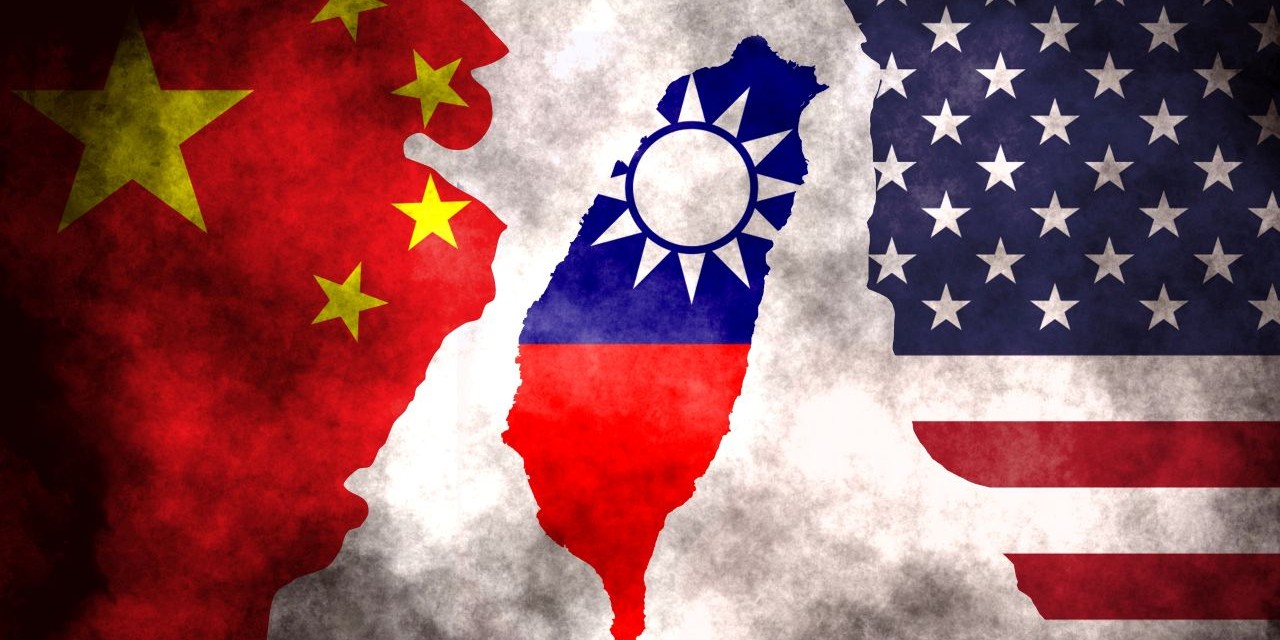
Image: Andy.LIU / shutterstock.com
Recent discussions linking the US–Iran escalation to cross-Taiwan Strait dynamics have revived familiar anxieties about Taiwan, particularly as Washington redeploys key missile defence assets such as the Terminal High Altitude Area Defense (THAAD) from East Asia to the Middle East and struggles to replenish munitions at the pace demanded by ongoing operations. Yet the latest US intelligence community’s 2026 Annual Threat Assessment offers a notable corrective: Chinese leaders are assessed not to have a plan to invade Taiwan in 2027, nor a fixed timeline for unification. This finding, while unsurprising to those closely following Beijing’s strategic thinking, is nevertheless significant in recalibrating policy debates that have increasingly drifted toward worst-case assumptions.
At the core of the issue is a fundamental misreading of Beijing’s priorities. Contrary to popular narratives, there has never been a fixed timetable for ‘forcible unification’. Peaceful unification has consistently remained Beijing’s preferred pathway. This is not merely rhetorical. In our book, The Myth of War in the Taiwan Strait, Dennis Lu-Chung Weng and I draw on extensive interviews with elites in Beijing, Taipei, and Washington. While many respondents across all three sides identified a potential conflict window between 2027 and 2035, roughly a quarter of mainland Chinese policy elites rejected the inevitability of war altogether. This divergence is telling: even when pressed to specify timelines, a substantial segment of Beijing’s strategic community continues to prioritize war avoidance.
More importantly, these interviews reveal a nuanced operational logic on the mainland side. Beijing seeks simultaneously to deter perceived provocations and to avoid a ‘hot war’, particularly one that could invite third-party intervention and escalate uncontrollably. Within this framework, not all uses of force are equivalent. Military exercises, including high-profile encirclement drills around Taiwan, are often better understood as coercive signalling rather than preludes to invasion. They are reactive instruments, designed to respond to actions by Taipei or external actors that Beijing deems escalatory. This helps explain the intensity of China’s recent responses to statements by foreign leaders, such as Japanese Prime Minister Sanae Takaichi’s explicit framing of Taiwan contingencies.
This dynamic aligns with what we conceptualize as the ‘Yizhou dilemma’, drawing on the Three Kingdoms period in ancient China. In that historical analogy, military action was used not necessarily to conquer outright, but to establish credible coercive leverage—creating conditions in which submission could be achieved without full-scale war. Applied to the Taiwan context, the implication is clear: if peaceful negotiations remain elusive and perceived provocations accumulate, Beijing may increasingly rely on coercion short of war—what Richard Bush described in his foreword to our book as “coercion without violence”—to shape outcomes.
Against this backdrop, the Trump administration’s policy posture adds an additional layer of complexity. Compared to the Biden administration, which at times signalled a departure from longstanding strategic ambiguity—most notably through repeated presidential statements about the US helping with defending Taiwan—Trump’s approach has been more restrained, if not indifferent. This restraint is not rooted in a fundamentally different strategic assessment of Taiwan’s importance, but rather in Trump’s prioritization of economic and great-power considerations.
For Trump, issues such as balance of trade, tariffs, technological competition, and industrial policy occupy a higher rung on the policy hierarchy. Taiwan, in this view, is less a geopolitical flashpoint than an economic asset—a critical node in global semiconductor supply chains that can be leveraged in negotiations. At the same time, Trump places considerable value on personal relationships with major world leaders and has shown little inclination to allow the Taiwan issue to derail broader US–China relations. This has translated into a more transactional approach: Taiwan is treated less as a strategic partner in the geopolitical arena and more as an economic entity like a corporation that excels at producing high-end computer chips.
It is within this context that the 2026 Threat Assessment should be interpreted. Its conclusion reflects not only a more accurate reading of Beijing’s intentions but also Washington’s own preference—under Trump 2.0—to preserve a fragile strategic stability with China. Avoiding unnecessary escalation over Taiwan aligns with a broader objective of stabilizing great power relations, particularly in a global environment already strained by conflicts such as the US–Iran confrontation or the war in Ukraine.
However, this apparent stabilization rests on inherently unstable foundations. The core contradiction between Beijing and Washington over the meaning of the ‘status quo’ remains unresolved. For Beijing, maintaining the status quo implies a halt to actions that incrementally strengthen Taiwan’s military capabilities, particularly through US arms sales. For Washington, by contrast, the status quo is dynamic: it requires sustaining a balance of power across the Strait, including the provision of asymmetric defense capabilities to Taiwan under the so-called ‘Porcupine Strategy’.
This divergence creates a recurring cycle of tension. The Trump administration’s reported decision to temporarily pause a major arms sales package to Taiwan—likely to avoid jeopardizing his high-level visit to Beijing—illustrates how tactical restraint can serve short-term stability. Yet such measures are unlikely to endure. Once diplomatic priorities shift, arms sales are likely to resume, triggering predictable reactions from Beijing. Ironically, policies intended to preserve peace may, in practice, generate new rounds of instability.
In sum, while the immediate risk of a Taiwan contingency may be lower than alarmist narratives suggest, the structural drivers of tension remain firmly in place. The Taiwan Strait is less on the brink of imminent war than it is embedded in a complex equilibrium—one shaped by coercion, ambiguity, and competing interpretations of stability itself. The challenge for policymakers is not merely to prevent conflict, but to navigate this equilibrium without inadvertently destabilizing it.
Related articles:
Trump Comes Calling on Xi: Summit of the Strongmen? (3-minute read)
Trump’s China Trip: Aiming for Deliverables (3-minute read)
Toward A ‘Reassurance Spiral’ in US-China Relations (10-minute read)
Transformation in the Strait: Prospects for Change in China-Taiwan-US Relations (10-minute read)