Trump Comes Calling on Xi: Summit of the Strongmen?
Andrew Scobell
March 19, 2026
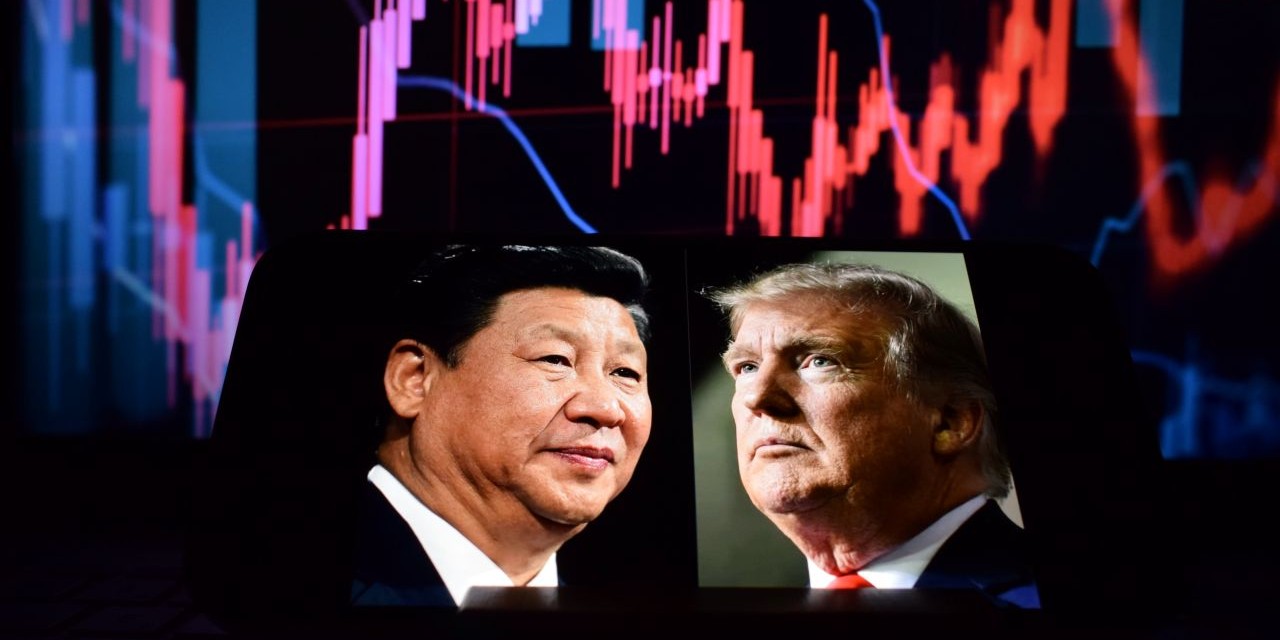
Image: miss.cabul / shutterstock.com
President Donald Trump was scheduled to travel to Beijing at the end of March for the first face-to-face meeting with Xi Jinping since the two leaders met on the sidelines of the APEC gathering in October 2025 in Busan, South Korea. It would have been the first fully-fledged summit between the two men since 2017. Then in mid-March, Trump, citing the ongoing war with Iran, indicated he felt it necessary to postpone his visit. While there are few certainties in geopolitics, the summit is all but certain to go ahead at a later date because both Trump and Xi very much want it to happen.
Is this on-again off-again tete-a-tete best characterized as a summit of equals or as the latest in a string of supplicants from major democracies to journey to Beijing seeking strategic reassurance and economic largesse? The answer is less clear cut than one might suppose. On the one hand, Trump will arrive in Beijing having amassed more authority than any other US president in living memory and having exercised this power in stunning displays of executive overreach and brute force in domestic and foreign affairs. Overseas, Trump has coerced dozens of states from allies to adversaries. He has toppled a dictator in Latin America and launched multiple waves of airstrikes against a Middle East state, killing top echelon leaders and hundreds of ordinary people, and obliterating military and civilian targets.
Arguably Trump is at the height of his power. And yet, on the other hand, the American leader eagerly comes to Xi keen to restore some semblance of stability to US–China relations. Similarly, Xi has accumulated more personal political power than any Chinese leader since Mao Zedong, purging anyone who appears to challenge his authority. Yet Xi also craves a successful summit with Trump. In short, although both Trump and Xi are undisputed strongmen of their respective countries, they both need each other.
Swirling speculation as to whether the summit would be postponed has been vindicated. Some suggested that the summit would be scratched because either the Trump administration was preoccupied with ongoing Operation Epic Fury or that Xi might baulk at the optics of hosting an American head of state while the US military was engaged in waves of strikes against Iran. It would be potentially very awkward for Xi to be publicly making nice with Trump while Washington pulverizes a longtime Beijing strategic partner in the Middle East which in the process disrupts critical energy flows from the Persian Gulf to China.
The most recent tempest in a teacup brewed up in mid-March. First, Trump warned in an interview that he might reconsider traveling to Beijing if China did not agree to help protect oil tankers transiting the Strait of Hormuz. Xi was always unlikely to directly accept this American ask but it was remotely conceivable that Beijing might have made some gesture in this direction, perhaps redeploying the three-ship People’s Liberation Navy task force currently engaged in counter-piracy operations off the Gulf of Aden. Second, a day later, Trump announced he would have to postpone. Despite the Trump-induced hiccup, both US and Chinese leaders are almost certain to figure out a way to bridge any geostrategic turbulence to make the summit happen.
Trump seems to crave the company of dictators such as Xi or Putin. Perhaps the US president sees it as a way to validate his self-image as a powerful and resolute leader. Xi too wants photo ops with Trump as validation of his status as a respected statesman who is his American counterpart’s equal. By playing the high-profile role of gracious host to the leader of the world’s most powerful state, Xi believes he benefits. Trump meanwhile gets to look presidential. Hence, both strongmen believe they gain simply by showing up.
Yet the two leaders seek more from this meeting. Trump is eager to make a deal to help steady the US economy ahead of the November midterm elections. Xi, meanwhile, wants relief from tariffs and concessions on Taiwan—and just as important Xi craves more predictability in US–China relations. While Trump can deliver on tariffs, he is unlikely to satisfy Xi on Taiwan or predictability. Why? Trump is not likely to make the concessions Xi seeks. Yet, even if Trump appears willing to agree to a deal favourable to Beijing, Xi will almost certainly be wary because the Chinese leader fundamentally does not trust Trump on Taiwan. Xi’s wariness is founded upon the Trump administration’s elevated security support for Taiwan combined with Beijing’s enduring perception that successive US administrations have been duplicitous despite their repeated affirmations of a ‘one China policy’ and 1982 commitment to ending arms sales to the island. Predictability, meanwhile, is not part of Trump’s modus operandi. In other words, Xi will have little confidence that any deal struck with Trump would still be honoured a year—or even a month—hence.
So, what can we expect? An event long on pomp and spectacle but short on actual substance and enduring deliverables. Another interim agreement for a truce on tariffs seems eminently possible and perhaps an announcement about a decision to convene a bilateral working group on one or more of an array of thorny bilateral issues.
In the end, the summit will happen because both men want it to happen. When it does, the event will project a picture of two implacable strongmen who still find ways to grudgingly get along. Nevertheless, the meeting will mask the vulnerabilities of two leaders who incessantly fret about their respective economies and routinely fear real and imagined rivals at home.
Related articles:
Trump’s China Trip: Aiming for Deliverables (3-minute read)
Look to China (3-minute read)
Is China’s “Great Power Status” a Plus or Minus? (3-minute read)
Trust but Talk: How to Manage China–US Strategic Competition (10-minute read)
Toward A ‘Reassurance Spiral’ in US–China Relations (10-minute read)