Climate Security and Cultural Security: Early Career Researchers Workshop
April 21 - 23, 2026
Queensland, Australia
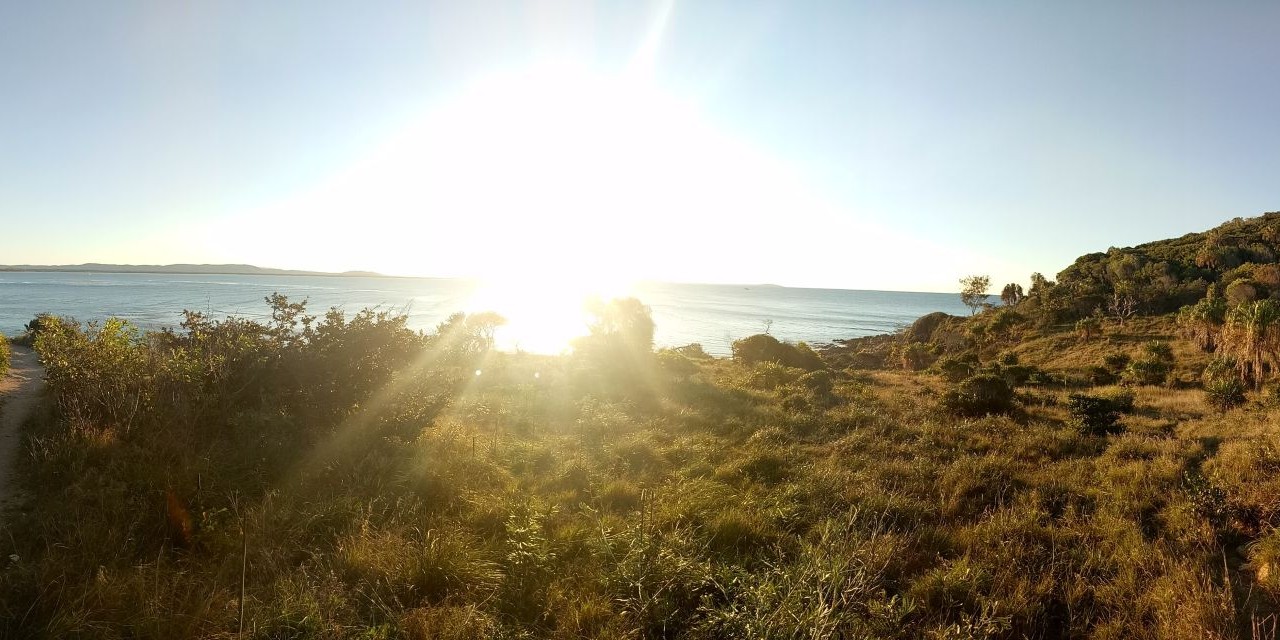
Image: BrandonSmart – Wiki Commons
An Early Career Researcher workshop was held from April 21-23 in Agnes Water, Queensland. The workshop theme was Climate Security and Cultural Security, in the context of small island states. Early career participants who attended in person were Claudia Fry (University of Exeter), and Zaahie Saeed and Anna Gero (Griffith University). Jason Titifanue (University of Melbourne) was an additional ECR participant who joined for one session online. All the ECR participants are currently undertaking their PhD, with the exception of Jason Titifanue who just received news their PhD is awarded. Participants each presented their own PhD research, with feedback and discussion with Griffith University researchers Carol Farbotko (in person) and Samid Suliman (online), and University of Melbourne researcher Sergio Jarillo (online). Participants were joined for dinner one evening by Tuvaluan indigenous knowledge holder and cultural researcher Taukiei Kitara.

Presentations were made on the topics: Necropolitics versus cultural security in the Pacific (Jason Titifanue); A cultural perspective on women’s participation in adaptation in the Maldives (Zaahie Saeed); Climate adaptation in Fiji: A cultural security perspective (Claudia Fry); Opportunities for cultural security in the Pacific adaptation machine (Anna Gero). There was also a collective session led by Claudia Fry examining how Indigenous communities resist climate adaptation and mobility regimes in ways that reinforce their authority and self-determination.
Participants had the benefit of learning about Toda Peace Institute’s work, both in the Pacific and more broadly, and how this work is informing regional policy development on climate security. Ideas about the value of public writing were workshopped in the context of emergent research on how climate security and cultural security are mutually interdependent with peacebuilding in any context, but particularly so in small island developing state contexts where adaptation agendas are often dominated by external or powerful actors with non-local worldviews or priorities. Participants collectively agreed to collaborate on one policy brief drawing on specific case studies of communities from the Maldives and Fiji, that demonstrate the multi-faceted, dynamic nature of cultural security and peace-building (people-place relationships, customary governance, social inclusion and protection, cultural innovation and adaptation, intergenerational transfer of traditional knowledge) and local adaptation within the context of a more dominant adaptation machine that often diminishes or ignores cultural issues altogether. Drafting of this policy brief commenced during the workshop and will be finalized in the coming weeks. Three participants also agreed to contribute individually authored Global Outlook articles on the following topics in the coming weeks. The following working titles have been defined for the Global Outlooks:
Claudia Fry: Cultural Security and Indigenous Governance in Oceanic Worlds – insights from Qoma island, Fiji
Zaahie Saaed: Adaptation as Cultural Practice: The Maabaidhoo Koaru Project and Community Defined Resilience in the Maldives.
Anna Gero: When Metrics Miss the Point: What Climate Adaptation Can Learn from Plural Worldviews
Image: BrandonSmart – Wiki Commons